

Investment Grade: Why Mukesh Work Lasts Generations (and Why You Should Care)

Read time: 3 min · Last updated: 2026-01-12
Average clothes have a "shelf life" of 6 months.
You wear them. You wash them. They pill. They fade. They go in the back of the closet. You’ve just wasted ₹2,000.
That is an Expense.
Premium heritage craft has a shelf life of decades. You wear them. You care for them. They get better. You pass them to your daughter.
That is an Investment.
At SAROJ JAIN, we only build "Investment Grade" ethnic wear.
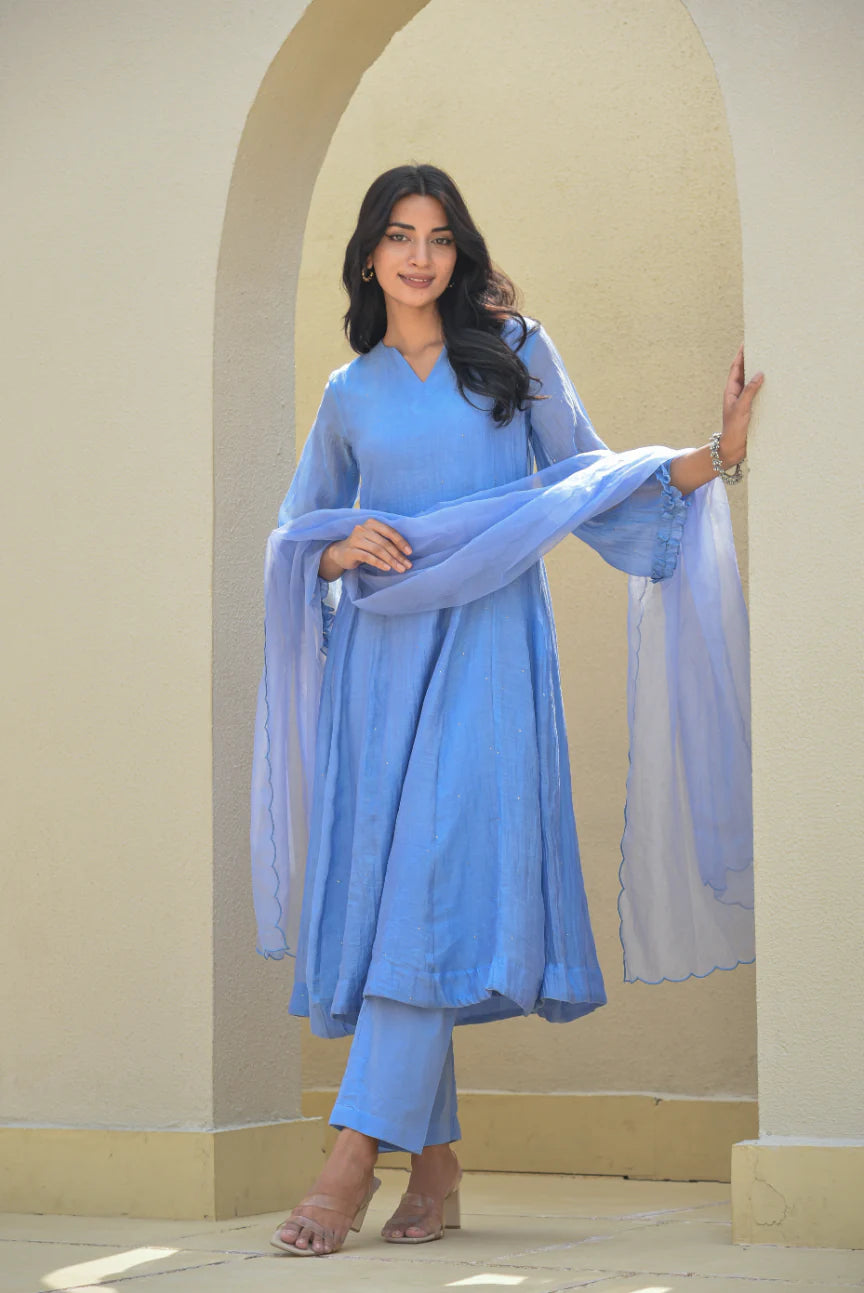
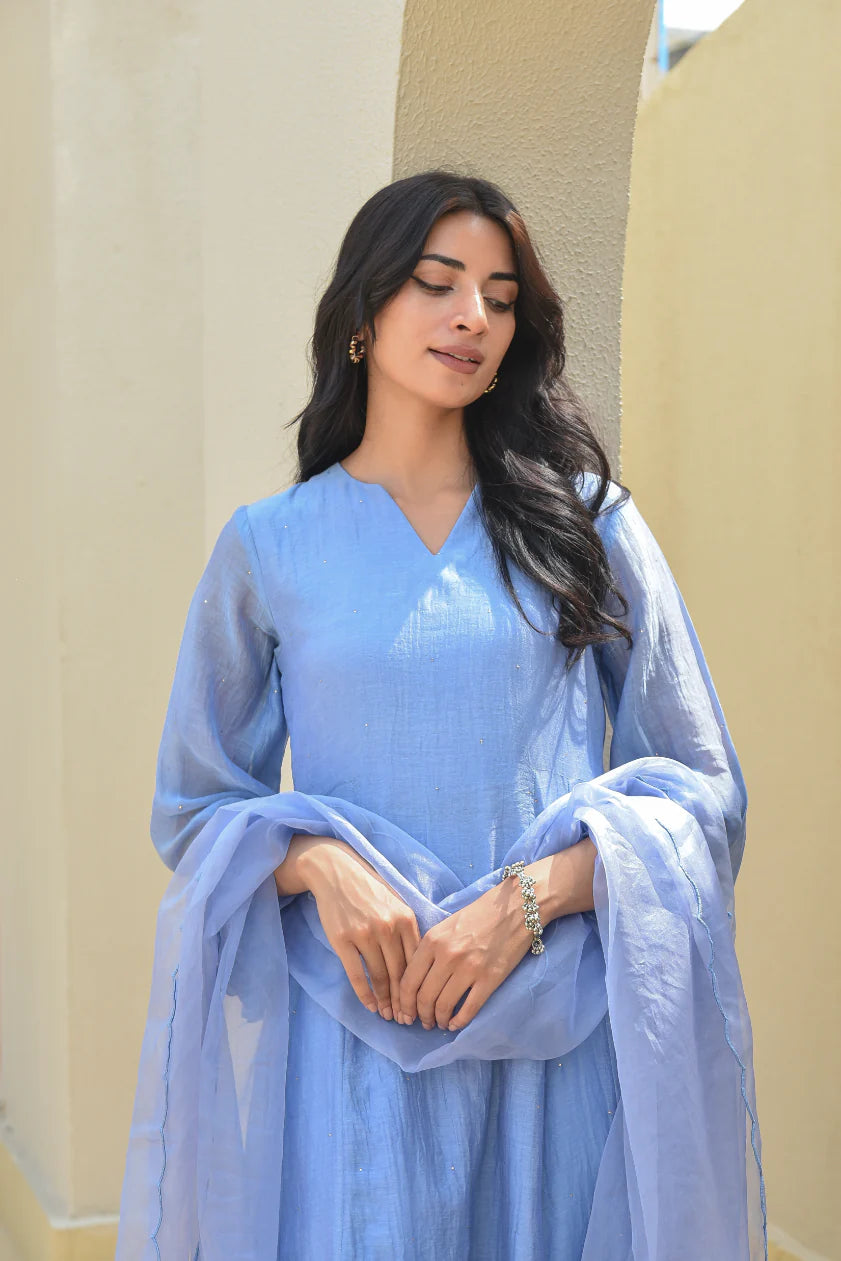
Our Ice Blue Mukesh Work set is the definition of a long-term asset. Here is the math of why you should care.
1. The Fabric Durability
We use high-tensile fabric blends that are built to withstand the rigors of Indian wedding seasons. They don't lose their luster. They don't thin out.
2. The Handmade Resilience
Machine embroidery uses thin, multi-filament threads that can snag on a ring and unravel the whole garment in seconds.
Mukesh is different. Each dot is an individual metallic "twill." If one gets damaged (rare), the other 500 stay perfect. It’s a modular, resilient way of decorating fabric.
3. The "Ageless" Aesthetic
In 1920, Mukesh on light blue was stylish. In 1970, it was stylish. In 2026, it's the signature of the year.
By buying this set, you are stepping out of the "Fast Fashion" cycle. You are buying something that doesn't have an expiration date.
4. The Resale & Emotional Value
In many Indian families, Mukesh work kurtas are heirlooms. They hold their value because the art is dying.
In 10 years, genuine hand-done Mukesh will be even rarer and more valuable than it is today.
FAQs
Q: Does 'investment' mean it's expensive? A: It means the Cost-Per-Wear (CPW) is low. If you wear a ₹6,000 kurta 30 times over 5 years, it costs you ₹200 per wear. A cheap ₹1,000 top worn once is ₹1,000 per wear.
Q: Will the Ice Blue color go out of style? A: Pastels have been the cornerstone of luxury ethnic wear for a century. They are never "out."
Q: Can it be resized easily for the future? A: Yes. We leave generous margins inside specifically so our pieces can grow with you.
Q: Why don't you use plastic sequins? A: Plastic is an expense. It melts, it scratches, it looks cheap after one use. Metal (Mukesh) is an investment.
Q: Is SAROJ JAIN a 'Sustainable' brand? A: We believe the most sustainable thing you can do is buy one good thing and wear it forever.
Don't buy for today. Buy for tomorrow.
Start Your Investment → Ice Blue Mukesh Kurta Set
Case Studies
Work-to-Dinner in a Hurry — Gurugram
Neutral co-ord + loafers by day; swap to strappy heels and cuff at night.
Wedding Guest in the Rain — Mumbai
Viscose-blend kurta set with ankle hems and rubber-soled block heels—no drags, clean photos.
Temple Ceremony Minimalism — Chennai
Plain Kanjeevaram-inspired saree, delicate gold, and low bun—elegant and respectful.
Buying Checklist
-
Shoulders clean, bust ease, hem length right for your shoes
-
Breathable lining; test arm movement and sit/stand
-
One neutral piece to mix across outfits
City Notes
- Global: Pick breathable fabrics and repeatable colors.
Ready to build your look? Explore New Arrivals
Related Reads
- The 2026 Signature: Why Ice Blue is No Longer Optional
- 400 Years of Evolution: Why Mukesh Work is Still the Peak of Luxury in 2026
- A-Line vs Anarkali: The Honest Truth About Which One You Should Buy
- The 9-to-9 Hack: How Ice Blue Moves from the Office to the Afterparty
- A-Line Magic: Why This Silhouette is a Game Changer for Your Wardrobe







Leave a comment
This site is protected by hCaptcha and the hCaptcha Privacy Policy and Terms of Service apply.