

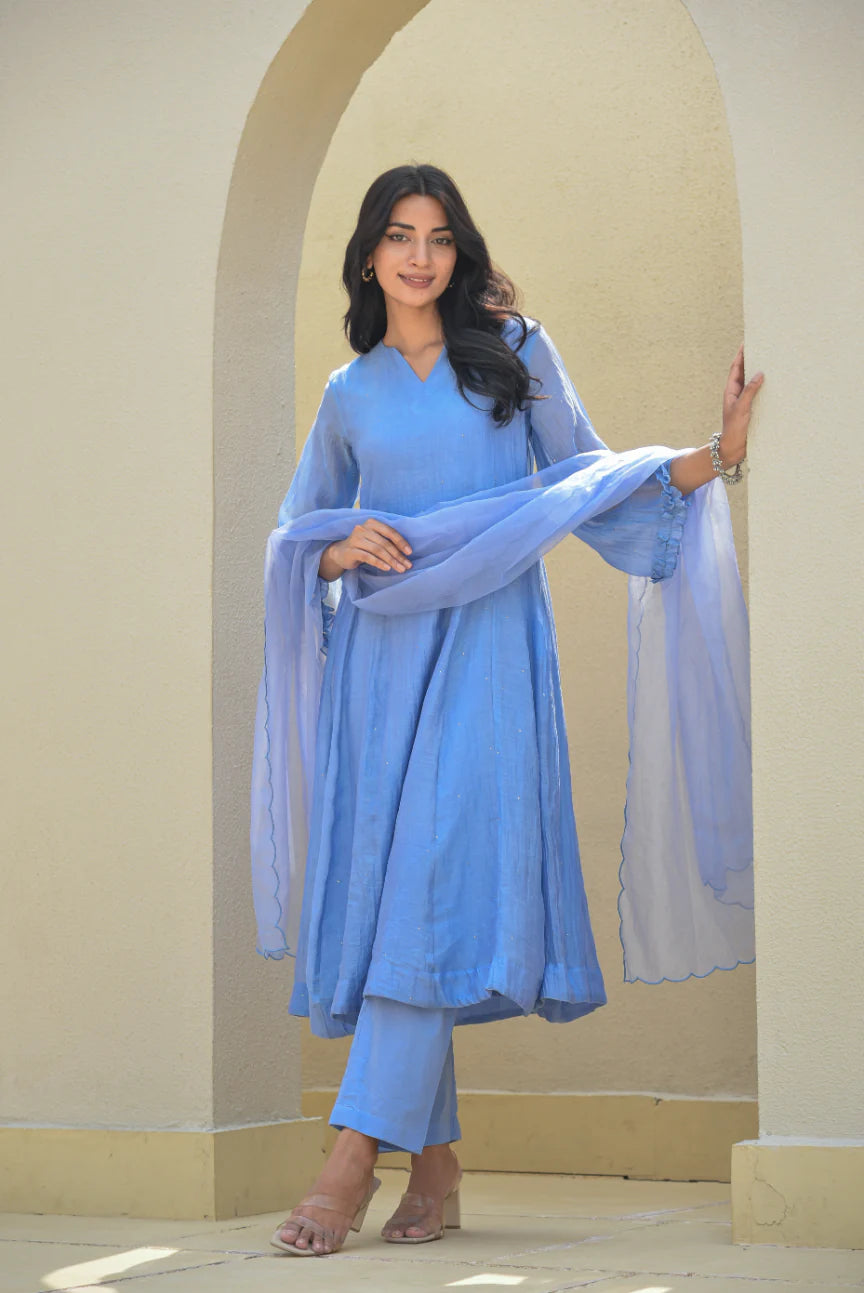
Royal History: How Mukesh Work Went from Mughal Palaces to Your Wardrobe

Read time: 3 min · Last updated: 2026-01-12
You aren't just wearing a "kurta."
You are wearing a 400-year-old story.
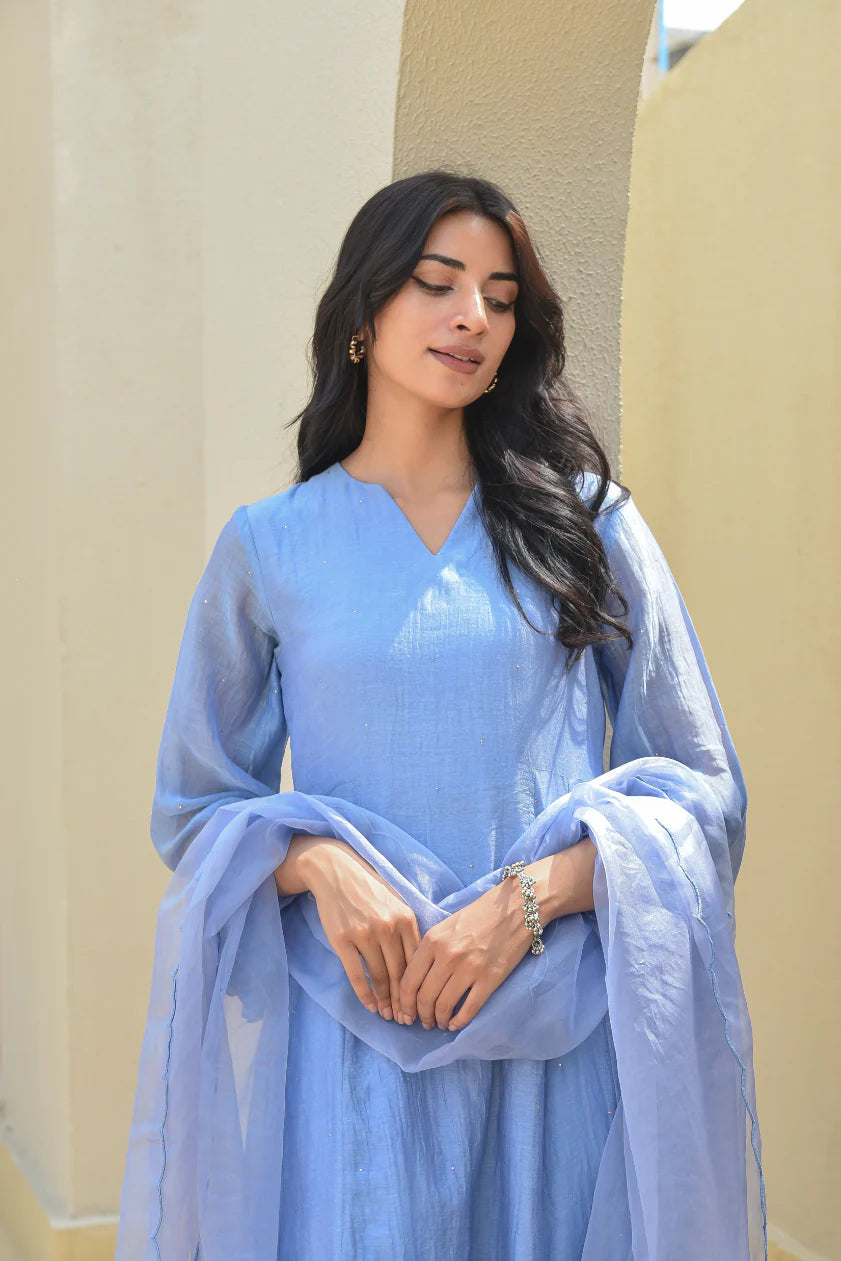
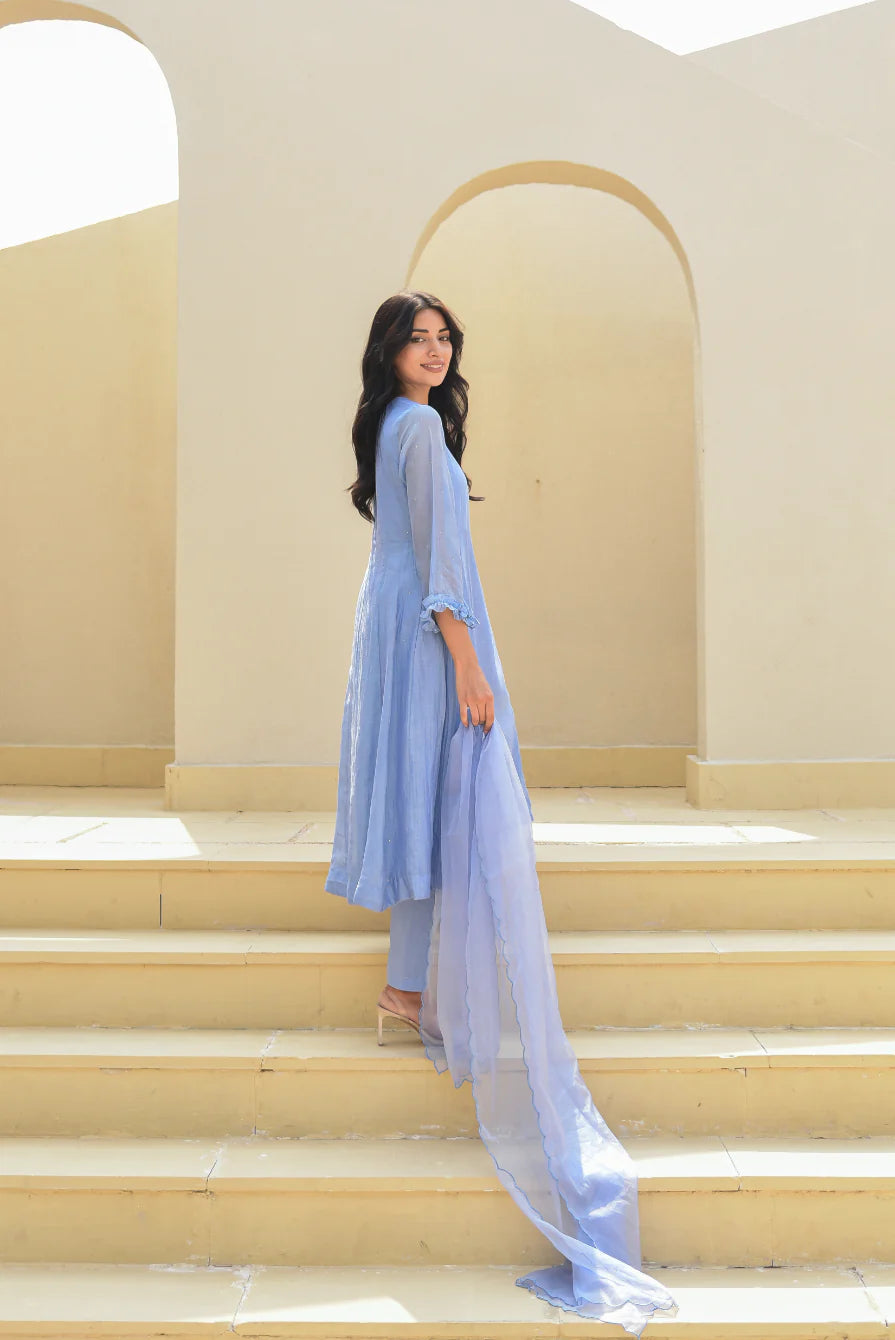
When you put on our Ice Blue Mukesh Work A-line set, you are participating in a lineage that includes Nawabs, Begums, and Mughal Emperors.
Mukesh (or Mukaish) wasn't invented in a factory. It was perfected in the royal courts of Lucknow.
At SAROJ JAIN, we aren't just selling clothes. We are preserving a palace secret.
The Silver Thread of Time
In the 17th century, royalty wanted something that looked like jewelry but felt like fabric.
They wanted to shine under the moonlit gardens of the Taj Mahal or the Chota Imambara.
The Solution: Artisans found a way to "stitch" precious metals into fine muslin and silk.
Back then, they used real Silver and Gold. The garments were so heavy and expensive that only the absolute elite could own them.
From Royalty to Modernity
Over time, real gold became too rare for the common wardrobe.
But the "spirit" of the craft remained.
The artisans of Lucknow kept the technique alive—passing it down from father to son.
The Challenge Today: Fast fashion is killing the art. People want cheap glitter. They don't want to wait 48 hours for an artisan to twill wires by hand.
The SAROJ JAIN Mission: We went back to the source. We worked with traditional Mukaish clusters to ensure the technique used on our Ice Blue set is authentic to the royal style.
It’s the same "fardin" (dot) work that graced the courts of Awadh.
Now, it’s ready for your 2026 wedding season.
FAQs
Q: Why is Lucknow the center of Mukesh work? A: It was the heart of the Oudh/Awadh culture where the Nawabs patronized fine arts and crafts like no other region in India.
Q: Is it called 'Kamdani' as well? A: Yes. Kamdani is a broader term for metallic wire work. Mukesh is the style characterized by the distinct "dots" and "twills."
Q: Why is it always on light colors? A: Historically, it was done on white or pastel muslin because the metal wires pop the most against light backgrounds. Our Ice Blue is a nod to that tradition.
Q: Can I see the artisans working? A: We occasionally share behind-the-scenes footage on our social media and here at SAROJ JAIN Journal.
Q: Does wearing it make me look 'old-fashioned'? A: Not in our A-line cut. Heritage craft + Modern silhouette = The most powerful look in fashion today.
You don't need a crown to look like royalty. You just need the right craft.
Shop the Heritage → Ice Blue Mukesh Kurta Set
Case Studies
Work-to-Dinner in a Hurry — Gurugram
Neutral co-ord + loafers by day; swap to strappy heels and cuff at night.
Wedding Guest in the Rain — Mumbai
Viscose-blend kurta set with ankle hems and rubber-soled block heels—no drags, clean photos.
Temple Ceremony Minimalism — Chennai
Plain Kanjeevaram-inspired saree, delicate gold, and low bun—elegant and respectful.
Buying Checklist
-
Shoulders clean, bust ease, hem length right for your shoes
-
Breathable lining; test arm movement and sit/stand
-
One neutral piece to mix across outfits
City Notes
-
Lucknow: Pick breathable fabrics and repeatable colors.
-
North India: Pick breathable fabrics and repeatable colors.
-
Global: Pick breathable fabrics and repeatable colors.
Ready to build your look? Explore New Arrivals
Related Reads
- The 2026 Signature: Why Ice Blue is No Longer Optional
- 400 Years of Evolution: Why Mukesh Work is Still the Peak of Luxury in 2026
- The 9-to-9 Hack: How Ice Blue Moves from the Office to the Afterparty
- A-Line Magic: Why This Silhouette is a Game Changer for Your Wardrobe
- A-Line vs Anarkali: The Honest Truth About Which One You Should Buy






Leave a comment
This site is protected by hCaptcha and the hCaptcha Privacy Policy and Terms of Service apply.