
Bridal Blouse Stitching In Koramangala
Updated: August 2026 | Written by: Saroj Jain Styling Team | Reviewed by: Saroj Jain Boutique Team
Bridal blouse stitching in Koramangala is the detail that decides whether a bride feels held together or hassled on her wedding morning. Most brides reach our JP Nagar boutique with a Kanjeevaram in one hand and a screenshot in the other. The saree is almost always beautiful. The trouble starts at the blouse. Armholes cut too high, cups that slide, hooks that dig in by the second hour of the muhurtham. We fit bridal blouses for brides driving in from Koramangala, HSR Layout and Jayanagar every week. This guide covers fabric behaviour, the four fittings that actually matter, and the small corrections that keep a heavy blouse comfortable from haldi to reception.
Quick answer: Book bridal blouse stitching in Koramangala eight to ten weeks before the wedding. Insist on four fittings: measurement, cotton shell, embroidery stage, and a final check with the saree draped. Confirm lining, cups, hook strength and alteration rounds in writing. Tissue, organza and velvet need a cotton lining and light interfacing. Raw silk and brocade are more forgiving. Never approve embroidery before the shell fits your armhole and back depth.
What This Guide Covers
- Why Koramangala brides need a physical fitting room
- The four-fitting schedule that prevents disasters
- Fabric-specific construction for raw silk, brocade, velvet, tissue and organza
- South Indian bridal precision: necklines, pallu and temple jewellery
- Back designs that survive a bridal hairstyle
- Sleeves, armholes and ritual mobility
- Cups, padding and bust support for long ceremonies
- Booking timeline and what to bring
- Saroj Jain pieces that pair with a new blouse
- Comparison table
- Body type and silhouette guide
- What to avoid
- FAQs
Why Bridal Blouse Stitching in Koramangala Needs a Physical Fitting Room
Photos of a blouse tell you nothing about how it behaves when you sit cross-legged for two hours. That is the reality of a South Indian muhurtham. We watch brides do exactly this in our trial room before we release a blouse.
A blouse that looks sharp standing can pinch at the armhole the moment you fold your arms for the nalangu. The fix is rarely major. Usually it is 1 cm at the armhole curve or a repositioned hook.
Our second observation is Bangalore weather. JP Nagar afternoons are humid from June to October. Tissue and heavy raw silk trap heat at the back and under the bust. We pick lining weight by season, not by habit. A bride marrying in November gets a different lining than one marrying in May.
The third is daylight. Our boutique window faces east, so morning fittings show embroidery alignment honestly. Brides often spot a crooked motif here that looked fine under yellow trial-room light. Fix it now, not on the wedding album.
The Four-Fitting Schedule That Prevents Wedding Day Disasters
Custom bridal blouse Bangalore brides ask about most is scheduling. Here is the exact sequence we run.
Fitting 1: Measurement and design marking
Bust, underbust, shoulder, armhole, sleeve length, blouse length, back depth and neck width. We mark neckline depth directly on your body with tape so you see it before cutting.
Fitting 2: Cotton shell fitting
We stitch a basic shell in cotton first. It costs one extra visit and saves the entire blouse. Check armhole comfort, back depth when seated, and whether the shoulder point sits on bone or fabric.
Fitting 3: Embroidery stage fitting
Heavy handwork adds weight and stiffens the fabric. A blouse that fit at shell stage can tighten by 1 cm once zardosi is loaded. We adjust side seams here, not later.
Fitting 4: Final saree drape test
Come with the actual saree, the actual petticoat, and the actual jewellery if possible. Test the pallu shoulder, the pin points and how the blouse sits under temple jewellery. Walk, sit, raise both arms.
Brides from Koramangala usually combine fittings 1 and 2 into one visit to save the Drive. Tell us in advance and we will block a longer slot.
Fabric-Specific Construction: What Changes for Each Fabric
This is where most stitching goes wrong. The same pattern cannot be used across fabrics.
Raw silk: The most forgiving bridal fabric. Holds structure, takes embroidery cleanly and resists fraying. Use 1.5 cm seam allowance and a cotton lining. Minimal interfacing needed.
Brocade: Zari threads slip at cut edges. We overlock immediately and add a firm cotton lining so the weave does not pull. Avoid sharp V necklines in heavy brocade, they distort.
Velvet: Thick, so seam bulk is the enemy. Use a smooth satin or cotton lining and press seams open. Hook plackets need extra length, and back embroidery needs to be planned around pile direction.
Tissue: Beautiful, fragile, and quick to fray. Needs a cotton lining, light interfacing at the placket, and gentle needle size. Tissue blouses wrinkle at the waist within an hour of wearing, so plan a slightly relaxed fit.
Organza: Best used as a top layer over a solid lining. Never stitch an unlined organza blouse for a full wedding day. The seams will read through.
Stretch and lycra blends: Avoid for bridal blouses unless the design demands it. They relax with body heat. If used, stitch with a slight negative ease and skip side zips.
South Indian Bridal Precision: Necklines, Pallu and Temple Jewellery
Temple jewellery sits high on the neck and often runs wide across the collarbone. That changes everything about your neckline.
A deep round neck fights a heavy choker. We usually choose a wider boat or a shallow sweetheart that leaves clean skin for the necklace to sit on.
The pallu shoulder needs a flat, stable surface. If your blouse has a keyhole back or heavy dori there, the pallu will slip all evening. Mark the pallu pin point at the final fitting and check it under the actual weight of the border.
Kanjeevaram borders are wide. Elbow-length sleeves in the same border look correct on a traditional muhurtham and wrong on a cocktail reception. Decide the ceremony first, then the sleeve.
We also check border alignment across the sleeve seam. A Kanjeevaram border cut mid-motif looks unfinished in photos. We plan the sleeve cut around the motif repeat.
Back Designs That Survive a Bridal Hairstyle
Brides pick a back design from a photo, then choose a low bun on the wedding day. The two cancel each other out.
If you want a gajra bun or a low braided plait, avoid a high dori tie and deep U backs. The hair covers the design and the dori knot sits under the bun, causing pressure headaches by hour three.
For open hair with a maang tikka, a mid-depth round back with a single button closure works best. Nothing to untie, nothing to press into the spine.
For a high bun, a low scoop back or a full back with a side zip is the smarter choice. The hairstyle and the back stay visible together.
Sleeves, Armholes and Ritual Mobility
Armhole height is the number one comfort complaint we correct on ready-made blouses.
Too high and the blouse digs into the armpit when you lift your hand for the garland exchange. Too low and the bust sags.
We test three movements at the shell fitting: hand raised overhead, arms folded, and sitting cross-legged with a plate in your lap. If the blouse lifts at the waist in any of these, the armhole or blouse length needs a change.
Elbow sleeves look elegant but restrict. If you are doing the kashi yatra or a long varapooja with raised hands, a short or cap sleeve in the same fabric reads cleaner and moves easier.
Cups, Padding and Bust Support for Long Ceremonies
A bridal blouse should not depend on a separate bra. Two hours in, straps slide and cups shift.
We build in padded cups for brides who want shape without a bra. For heavier busts, we add a wide underbust elastic band inside the lining. That single strip does more for comfort than any hook adjustment.
Sweat is a real factor. Under-bust sweat pads stitched into the lining protect both the blouse and the saree. Ask for them if your wedding is an outdoor mandap or a long daytime muhurtham.
Hooks matter more than brides expect. Standard hooks fail under heavy embroidery. We use reinforced metal hooks and double-stitch the placket.
Booking Timeline and What to Bring to Your First Visit
Eight to ten weeks is comfortable. Six weeks is workable. Four weeks means you accept compromises on handwork.
Bring the saree, the petticoat you plan to wear, the blouse fabric if it is separate, and screenshots of the neckline and back you like. Bring your jewellery photos too. Necklace width changes neckline decisions.
If you are travelling from Koramangala, allow 45 minutes each way in weekday traffic on the 100 Feet Road stretch. Weekend mornings are easier.
Every blouse leaves our boutique with two alteration rounds included. Anything beyond that is charged, so get the fit right at fitting three.
Saroj Jain Pieces That Pair With a New Blouse
Sometimes the fastest way to reduce stitching stress is to reduce the number of blouses you need. These four pieces from our catalog solve specific wedding-week moments.
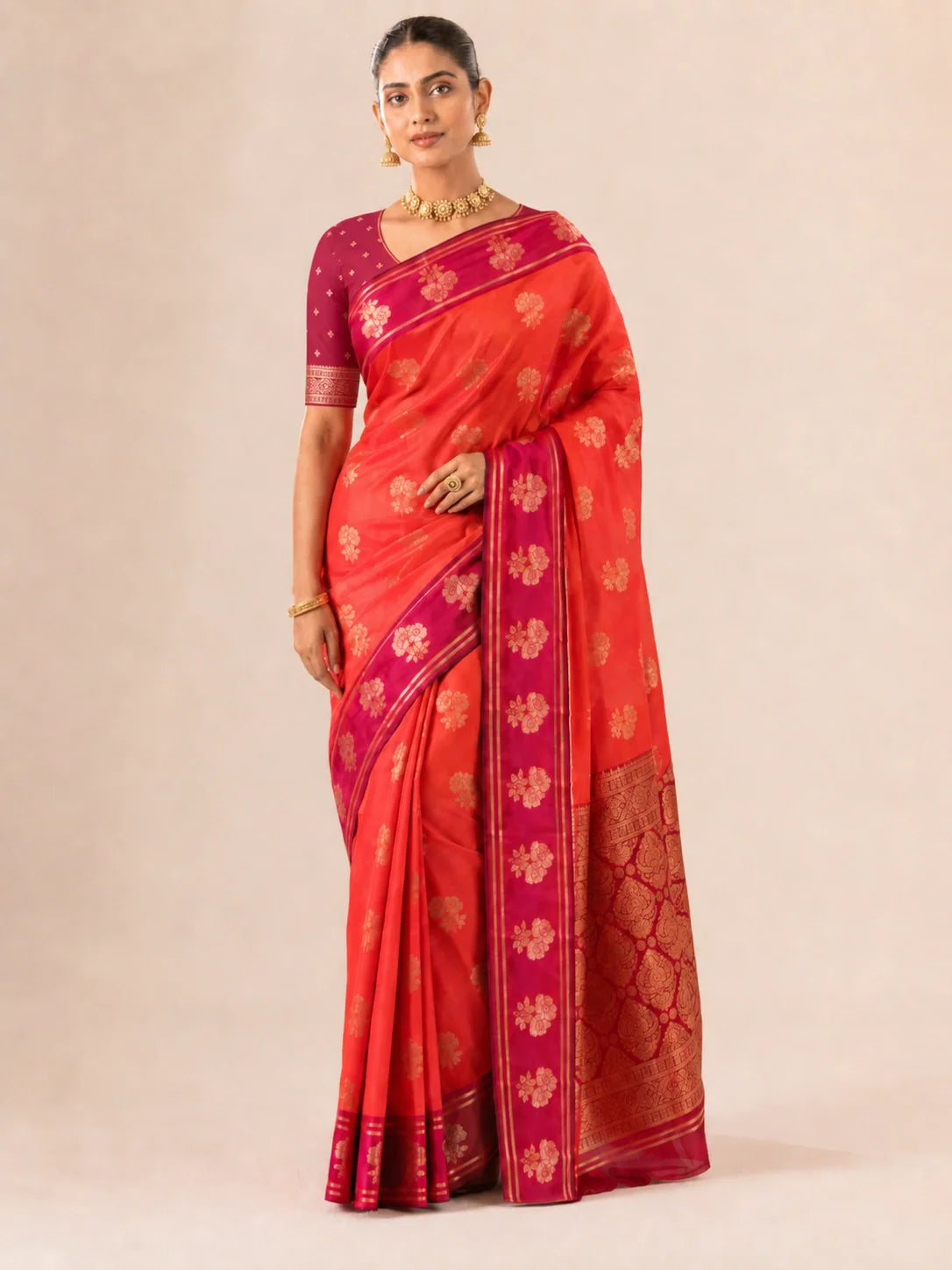
Saroj Jain pick: Scarlet Radiance Handwoven Tissue Fusion Saree (With Rich Fuchsia Woven Blouse)

Price: ₹946.05
Why it works: It arrives with a woven blouse, so there is no stitching window to manage. One less fitting on a packed calendar.
Best for: The reception or a family dinner the night before the wedding.
Style with: A slim gold choker and flat juttis, since tissue already carries shine.
Avoid if: You want a heavily embroidered blouse. Woven blouses are clean and light by design.
Shop the Scarlet Radiance Handwoven Tissue Fusion Saree (With Rich Fuchsia Woven Blouse)
Saroj Jain pick: The Crimson Blossom

Price: ₹139,125
Why it works: A statement drape that deserves a stitched blouse built around it. The colour does the work, so the blouse can stay quiet.
Best for: The main muhurtham or a grand evening reception.
Style with: Temple jewellery in antique gold and a low bun so the neckline stays visible.
Avoid if: You are still undecided on the neckline. Fit the blouse first, then buy the blouse fabric.
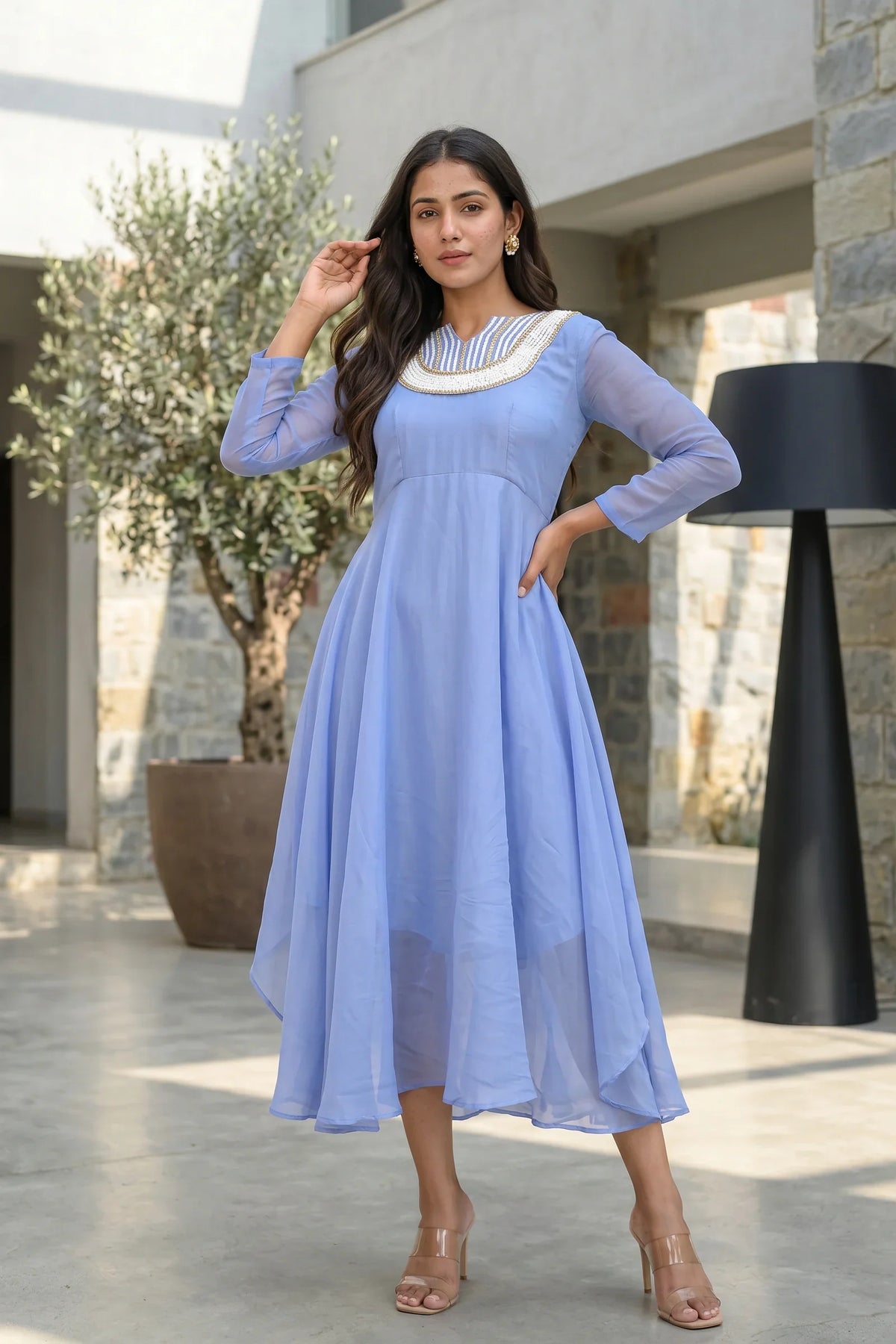
Saroj Jain pick: Baby Blue Asymmetrical Dress

Visit the Saroj Jain Boutique
Discover our collections in person.
57/1, 1st Cross Rd, opposite to Iyengar's Bakery, Dollar Layout, J. P. Nagar Phase 5,Bengaluru, Karnataka 560078
+91-9314078524