

Chanderi Fabric Selection, Styling, And Maintenance
Updated: August 2026 | Written by: Saroj Jain Styling Team | Reviewed by: Saroj Jain Boutique Team
Chanderi fabric selection, styling, and maintenance become much easier once you identify the fibre, surface work, and occasion first. Cotton Chanderi feels airy for daytime Bengaluru, silk-cotton gives a smoother fall, and pure silk brings a richer finish for formal dressing. The wrong care routine can cause colour transfer, permanent creases, zari dullness, or snags. At our JP Nagar 5th Phase fitting room, we check how the fabric moves while sitting, walking, and pinning the pallu. We also assess it in daytime light, where sheer layers and metallic details look different from a shop’s warm lighting.
Quick answer: Choose cotton Chanderi for breathable daytime wear, silk-cotton for polished versatility, and pure silk, tissue, or zari-rich Chanderi for formal occasions. Dry-clean silk, embellished, tissue, and zari-heavy pieces. Hand-wash simple cotton Chanderi only when the care label allows it. Use a smooth lining, moderate pleat tension, a pressing cloth, and breathable muslin storage.
- How to choose Chanderi fabric
- Chanderi fabric types explained
- Match the fabric to the occasion
- Chanderi saree styling and drape control
- Blouse, lining, and jewellery decisions
- Saroj Jain Chanderi picks
- Quick comparison table
- Body type and silhouette guide
- How to wash Chanderi safely
- Ironing and storage
- What to avoid
- Frequently asked questions
How to Choose Chanderi Fabric
Start with the fibre content, the colour or motif. A light, sheer cotton Chanderi behaves very differently from silk-cotton or pure silk.
Run the fabric gently between your fingers. Cotton feels drier and more breathable. Silk-cotton has a smoother touch and better fall. Pure silk feels richer, catches light more strongly, and needs stricter care.
Check the reverse side for loose zari, uneven embroidery, or rough finishing. At our boutique, we also ask clients to sit cross-legged for a few minutes. If the fabric pulls at the knees or the pallu slips repeatedly, the drape needs adjustment before purchase.
Chanderi Fabric Types Explained
- Cotton Chanderi: Light, airy, and suited to daytime use. Select it for warm weather, work events, and long hours of sitting.
- Silk-cotton Chanderi: Offers a graceful fall with moderate sheen. It works well for lunches, small celebrations, and versatile festive dressing.
- Pure silk Chanderi: Smoother, richer, and more formal. It needs careful storage and professional cleaning.
- Tissue Chanderi: Has a brighter, more reflective surface. Use it when you want visible light play, but protect it from snags and rough accessories.
- Zari-rich Chanderi: Best for festive styling. Metallic work should not be soaked or exposed to harsh detergent.
- Embellished Chanderi: Requires careful handling because embroidery, beads, sequins, or handwork can catch on jewellery and bags.
Match the Fabric to the Occasion
For office wear or a daytime appointment, choose cotton or a restrained silk-cotton weave. Keep the blouse clean, the jewellery light, and the pallu easy to manage.
For a puja, family lunch, or intimate celebration, silk-cotton Chanderi gives enough sheen without feeling heavy. A fitted blouse and small earrings keep the look composed.
For evening festivities, pure silk, tissue, zari-rich, or embellished Chanderi creates more presence. Use a structured blouse, secure the pallu, and avoid stacking too many textured accessories.
Bengaluru weather can shift from warm to humid quickly. We recommend breathable layers and a smooth lining rather than heavy underskirts that trap heat.
Chanderi Saree Styling and Drape Control
Chanderi is light, so the saree can move more than a heavier silk. Use a smooth, close-fitting petticoat or skirt to give the pleats a stable base.
- Make medium-width pleats instead of very narrow, tight folds.
- Keep pleat tension moderate to avoid stressing the weave.
- Use a small number of secure pins inside the waistband and shoulder area.
- Support a light pallu with a discreet pin near the shoulder.
- Keep the pallu length consistent so it does not drag across the floor.
In our JP Nagar fitting room, we check the saree while walking and turning, while standing still. A drape that looks perfect in a mirror can slip when you sit, especially on a smooth silk-cotton base.
Blouse, Lining, and Jewellery Decisions
Choose a fitted blouse with clean seams. A loose armhole can rub against the saree and disturb the pallu. A very rough or heavily textured blouse can also catch delicate Chanderi.
For sheer styles, match the petticoat or lining closely to the saree colour. Strong contrast underneath can interrupt the border and make the fabric look patchy in bright daylight.
Use smooth jewellery backs and remove sharp-edged bangles before draping. Long necklaces, metal watch straps, and rough handbags are common causes of snags.
Saroj Jain Chanderi Picks
Saroj Jain pick: Crimson Red Chanderi Silk Kurta Set

Price: ₹4,450.89
Why it works: Chanderi silk gives the crimson colour a polished finish while keeping the outfit lighter than a heavily layered festive set.
Best for: Evening family events, festive lunches, and intimate celebrations.
Style with: Antique gold earrings, a compact potli, and low block heels.
Avoid if: You need a very casual outfit for extended outdoor walking.
Shop the Crimson Red Chanderi Silk Kurta Set
Saroj Jain pick: Marine Blue Chanderi Silk Kurta Set

Price: ₹4,450.89
Why it works: The deeper blue reads refined in daytime lighting and transitions easily into an evening setting.
Best for: Work celebrations, dinners, cultural events, and festive visits.
Style with: Silver or pearl jewellery, a clean clutch, and pointed flats or heels.
Avoid if: You prefer a soft, low-contrast palette for daytime dressing.
Shop the Marine Blue Chanderi Silk Kurta Set
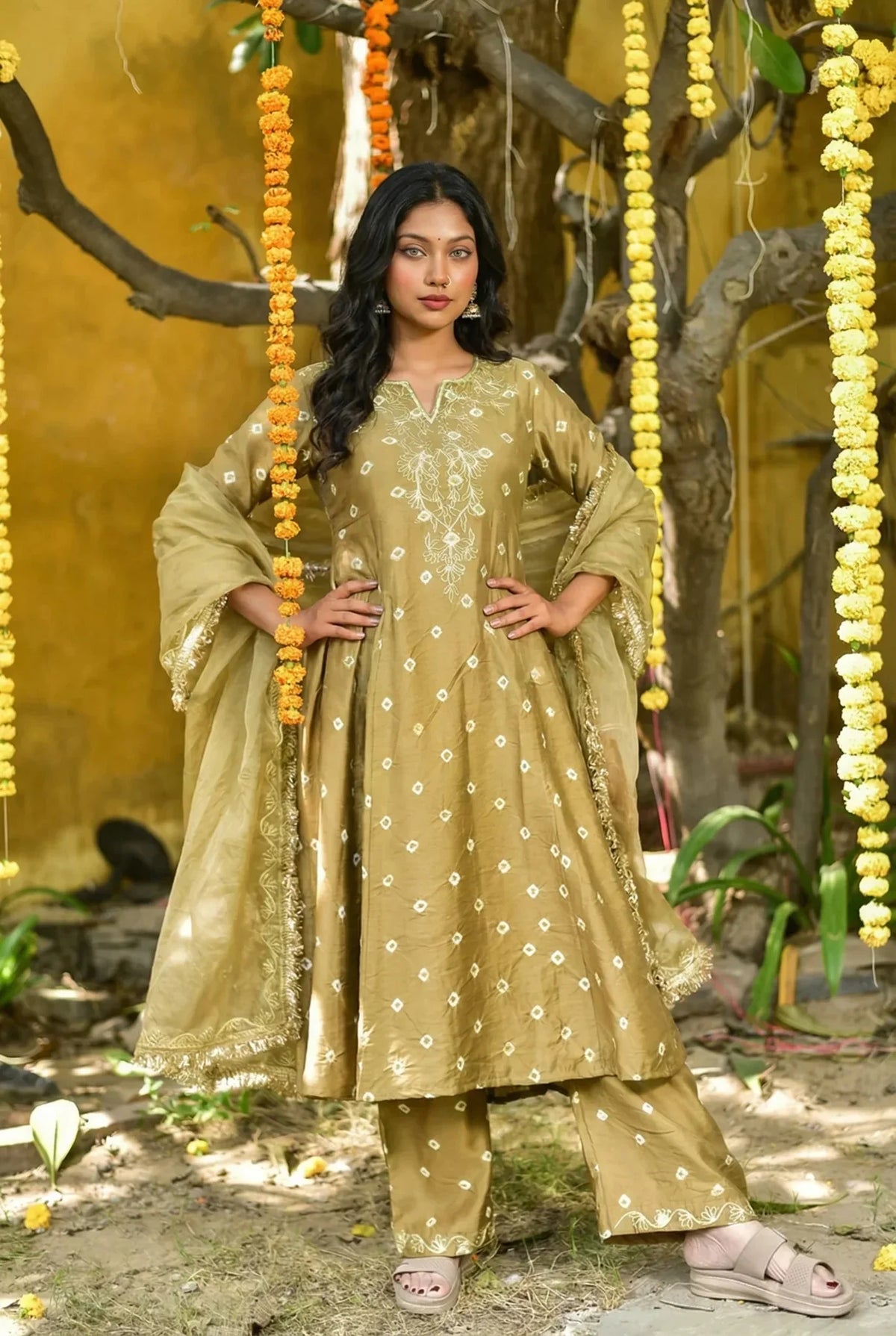
Saroj Jain pick: Bandhej Kurta and Pant Set

Price: ₹5,563.89
Why it works: The kurta and pant shape gives a practical alternative to a saree while keeping the colour and textile story festive.
Best for: Day events, travel-friendly celebrations, and long appointments.
Style with: Gold hoops, a structured sandal, and a small shoulder bag.
Avoid if: You want a very formal silk-only finish.
Shop the Bandhej Kurta and Pant Set
Saroj Jain pick: Bandhej Kurta Set

Price: ₹4,673.49
Why it works: The coordinated set makes styling quick and leaves room for a Chanderi-inspired festive accessory story.
Best for: Daytime gatherings, small functions, and relaxed festive dressing.
Style with: Pearl studs, flat kolhapuris, and a lightweight dupatta.
Avoid if: You need a high-shine evening silhouette.
Quick Comparison Table
| Outfit | Fabric or finish | Festive scale | Price |
|---|---|---|---|
| Crimson Red Chanderi Silk Kurta Set | Chanderi silk | Medium to high | ₹4,450.89 |
| Marine Blue Chanderi Silk Kurta Set | Chanderi silk | Medium to high | ₹4,450.89 |
| Bandhej Kurta and Pant Set | Bandhej coordinated set | Medium | ₹5,563.89 |
| Bandhej Kurta Set | Bandhej coordinated set | Low to medium | ₹4,673.49 |
Body Type and Silhouette Matrix
| Silhouette | Chanderi guidance | Styling adjustment |
|---|---|---|
| Petite | Choose smaller motifs and controlled volume. | Keep the pallu compact and use a similar-colour blouse for a longer visual line. |
| Tall | Use a wider border or longer pallu. | Try stronger colour contrast between blouse and saree. |
| Curvy | Choose fluid silk-cotton or silk with enough fall. | Use medium pleats, a smooth petticoat, and a blouse with stable shoulder seams. |
| Lean | Layer with a softly structured blouse or light dupatta. | Use tasteful zari or a slightly fuller pallu for added visual balance. |
How to Wash Chanderi Safely
Read the care label first. Silk-cotton, pure silk, tissue, zari-heavy, and embellished Chanderi should go to an experienced dry cleaner, especially for the first wash.
Simple cotton Chanderi may be hand-washed only when the label permits it. Test a hidden corner for colour transfer before wetting the full garment.
- Turn the garment inside out.
- Use cold water and a small amount of mild, pH-neutral liquid detergent.
- Swirl gently for a short time. Do not soak for long.
- Never scrub the border, zari, embroidery, or motifs.
- Rinse in cold water without twisting or wringing.
- Press excess water out between clean towels or roll the fabric gently in a towel.
- Dry flat or over a smooth, padded support in shade.
Do not machine-wash Chanderi. Agitation, spinning, hooks, and zips can distort the weave or create snags.
Ironing and Chanderi Saree Care and Storage
Iron on low to medium heat while the fabric is slightly damp. Place a thin cotton pressing cloth between the iron and Chanderi, particularly around zari and embroidery.
Air the saree after wearing before folding it away. Body heat and humidity can remain near the blouse area and create an unpleasant smell or mildew over time.
Fold with clean tissue or breathable muslin. Avoid airtight plastic, damp cupboards, direct sunlight, and heavy items placed on top.
Refold every three to four months along different crease lines. This reduces stress at one permanent fold and helps protect delicate zari.
What to Avoid
- Hot water, bleach, fabric softener, and strong stain removers.
- Long soaking, hard scrubbing, twisting, or wringing.
- Direct sunlight during drying.
- Ironing directly over zari or embellishment.
- Rough jewellery, sharp handbag hardware, and textured blouse seams.
- Storing damp fabric in plastic.
- Holding a wet saree from one corner, which can stretch the weave.
- Using naphthalene balls close to zari, as they may affect metallic threads.
Frequently Asked Questions
Can Chanderi sarees be washed at home?
Only simple cotton Chanderi should be considered for home washing, and only when the care label permits it. Silk-cotton, pure silk, tissue, zari-rich, and embellished pieces are safer with professional dry cleaning.
Is Chanderi silk better than Chanderi cotton?
Neither is universally better. Cotton suits breathable daytime wear. Silk-cotton gives a smoother fall and moderate sheen. Pure silk is richer and more formal but needs stricter care.
How do I prevent a Chanderi saree from slipping?
Use a smooth, fitted petticoat, moderate pleat tension, a secure waistband, and a discreet shoulder pin. Avoid slippery lining that does not support the pleats.
How should zari-rich Chanderi be cleaned?
Do not soak or rub it. Take it to a dry cleaner who handles silk and metallic zari. Keep the care receipt with the garment if the cleaner provides specific storage instructions.
Can I iron Chanderi directly?
No. Use low to medium heat and a thin cotton pressing cloth. Keep the iron away from zari, embroidery, sequins, and raised motifs.
Why should Chanderi be stored in muslin?
Muslin allows air movement. Plastic can trap humidity, which may encourage mildew, odour, or zari deterioration.
How often should Chanderi folds be changed?
Every three to four months is a practical routine. Air the garment in shade, then refold it along different lines before returning it to storage.
Ready to Find Your Fit? Visit Our JP Nagar Boutique
Bring the occasion, your preferred neckline, and the amount of movement you need. We will check the fabric in daylight, adjust the pallu, and help you decide whether cotton, silk-cotton, or silk suits the way you actually dress.
Visit SAROJ JAIN at 57/1, 1st Cross Rd, opposite to Iyengar's Bakery, 5th Phase, Dollar Layout, JP Nagar Phase 5, Bengaluru, Karnataka 560078.
WhatsApp the Styling Team View the Lookbook Shop Collections Book a Boutique Meet
For a fabric choice that looks right, drapes comfortably, and lasts through careful wear, use this practical guide to chanderi fabric selection, styling, and maintenance.
Visit the Saroj Jain Boutique
Discover our collections in person.
57/1, 1st Cross Rd, opposite to Iyengar's Bakery, Dollar Layout, J. P. Nagar Phase 5,Bengaluru, Karnataka 560078
+91-9314078524