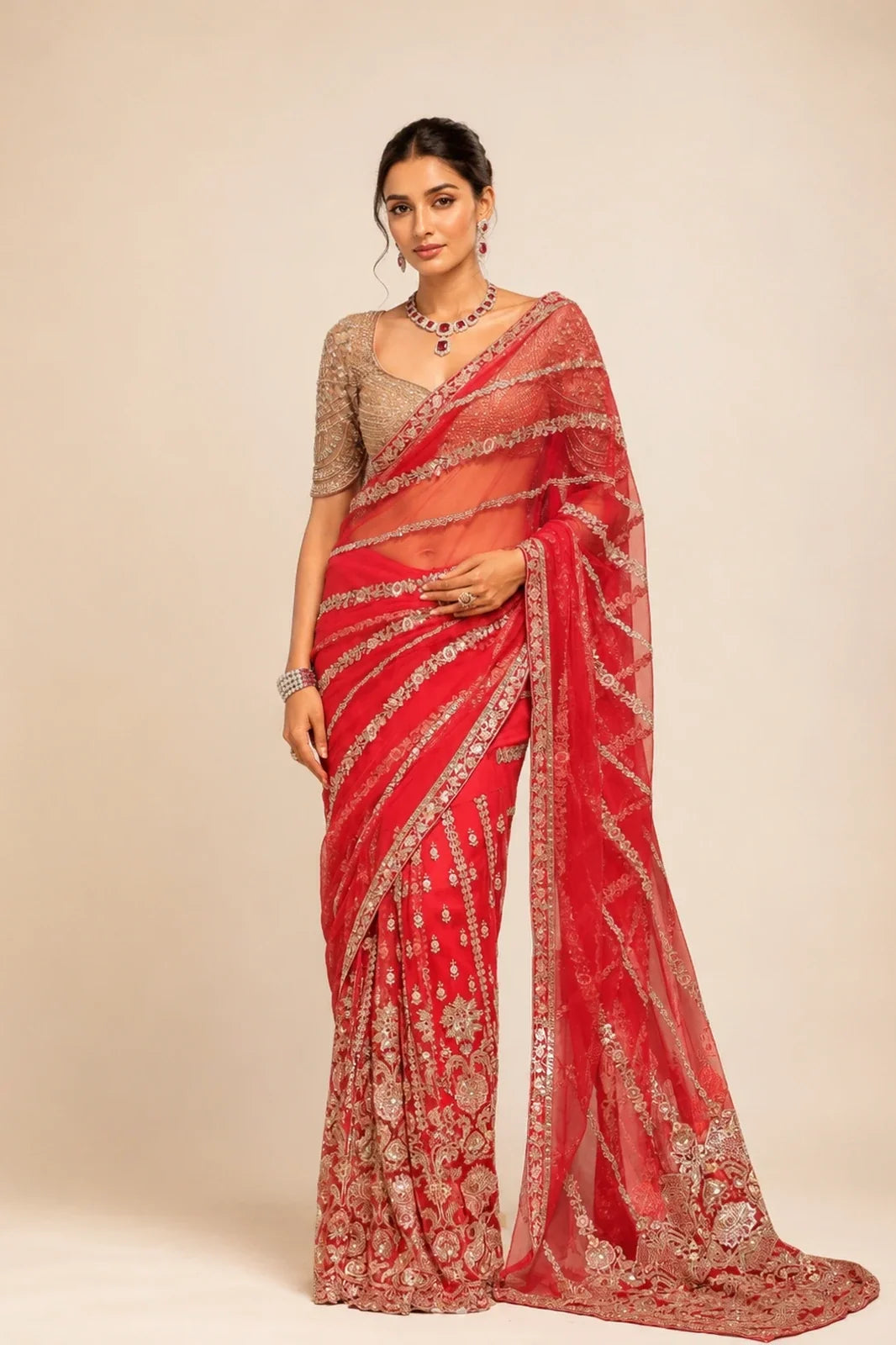


Chanderi Styling And Fabric Maintenance
Updated: August 2026 | Written by: Saroj Jain Styling Team | Reviewed by: Saroj Jain Boutique Team
Chanderi styling and fabric maintenance is where most wardrobes quietly fall apart, not on the wedding day but six months later when the zari has gone dull and the fall line sits crooked. Chanderi is a light, translucent handloom weave from Madhya Pradesh and it behaves nothing like a heavy Kanjivaram. It snags on a ring, frowns at a machine spin, and remembers every damp fold. In our JP Nagar 5th Phase boutique we drape, pin and alter these pieces daily. This guide gives you the real rules: what to hand wash, what to dry-clean, how to iron, and how to style a sheer Chanderi for a wedding without a visible lining mess.
Quick answer: Chanderi styling and fabric maintenance comes down to three rules by blend. Plain Chanderi cotton gets a cold hand wash. Chanderi silk-cotton gets a cold hand wash with a dry clean after the first few wears. Pure Chanderi silk with zari goes to the dry cleaner, always. Iron on low heat with a cotton cloth between the iron and the fabric. Store in muslin, never plastic. For a wedding, choose a fitted same-tone blouse and pin the pallu with a small brooch so the zari does not snag.
What This Guide Covers
- What Chanderi actually is, and why it behaves the way it does
- Three blends, three care rules
- Styling a sheer Chanderi for a wedding
- Bangalore weather playbook for Chanderi
- How to wash Chanderi step by step
- How to iron a Chanderi saree without crushing the zari
- How to store Chanderi sarees and kurtas
- Our JP Nagar picks
- Comparison table
- Body type and silhouette guidance
- What to avoid
- FAQs
What Chanderi Actually Is, And Why It Behaves This Way
Chanderi is a handloom weave built from fine yarn and a light twist. That is why it looks almost transparent in daylight and weighs less than your phone.
The same lightness is the problem. Thin yarn breaks under friction, so a machine spin, a rough hanger or a handbag zip does damage a heavier silk would shrug off.
Real Chanderi has a slight starch feel when new and softens with wear. If your piece stays stiff after three wears, check the yarn before you spend on alterations.
Three Blends, Three Care Rules
Most care advice online treats Chanderi as one fabric. It is not. Here is how we divide it at the boutique counter.
Chanderi cotton
The toughest of the three. Cold hand wash with mild liquid soap works. Iron on medium heat, inside out. Shrinkage is small but real, so never use hot water.
Chanderi silk-cotton
Half the strength, twice the shine. Hand wash cold and gently for the first few wears, then move to dry cleaning. Do not soak. Do not wring. Dry in shade only.
Pure Chanderi silk, especially with zari or gota
Dry clean only. Zari is metallic thread wrapped around a core, and water plus rubbing dulls it fast. If the piece is lined, unstitched or heavily embroidered, do not attempt a home wash at all.
Our fitting room note: customers who hand wash a zari Chanderi once usually come back with a matte grey zari line within a month. It cannot be reversed cheaply.
Styling a Sheer Chanderi for a Wedding
A translucent Chanderi fails at weddings for one reason. People treat it like a heavy silk and pile on contrast.
Get the lining right first. A same-tone or one-shade-darker lining keeps the drape calm. A stark white lining under a coloured Chanderi reads cheap in photographs.
Blouse fit beats blouse design. A well-fitted blouse with three-quarter sleeves anchors a sheer saree. A loose padded blouse makes the pallu look bulky and shifts all evening.
Pleat with purpose. Keep pleats narrow, four to five inches, and place them slightly off the centre so the drape does not sit on the belly when you sit for long pujas.
Accessories should be structured, not heavy. A single kada, small studs and a slim necklace. Heavy jhumkas and layered chains catch the zari border every time you lift the pallu.
Pin small. One slim brooch at the shoulder instead of three big pins. Each extra pin hole is a permanent mark in a thin weave.
In the boutique we raise the fall by two inches for brides who will sit cross-legged for hours. Ask for that alteration before the wedding week, not on the morning of the muhurtam.
Bangalore Weather Playbook for Chanderi
Bengaluru is kind to Chanderi for nine months and hard on it for three. The November rains and the long humidity are the real risk.
Never fold a Chanderi away while it still feels cool or slightly damp. A faint grey line along the fold is mildew, and it appears within one monsoon.
Shade dry completely, then give it thirty minutes near a running fan before folding. Skip the plastic cover your tailor gave you. Plastic traps moisture and holds it against the yarn.
During monsoon, air the piece in shade once a month and refold along a different line. Same fold, same crease, same weak point.
Observation from our store near Iyengar's Bakery: silk-cotton Chanderi stored in a closed wardrobe through October shows damp smell by December. Muslin and airflow prevent it.
How to Wash a Chanderi Saree or Kurta Step by Step
Use this only for plain Chanderi cotton and light silk-cotton pieces with no zari.
- Fill a bucket with cold water and a cap of mild liquid soap or baby shampoo. No detergent powder, no bleach, no fabric whitener.
- Dip and press with your palms. Do not scrub, do not twist, do not hold the piece by the border.
- Keep total soak time under five minutes. Colour bleeding starts after that.
- Rinse twice in cold water until the water runs clear.
- Squeeze water out by pressing between both palms, never by wringing.
- Roll the piece in a cotton towel for two minutes, then shade dry on a plastic or wooden drying rack, not on a metal wire.
First three washes: wash the piece alone. Dark reds, crimsons and indigo bleed the most and will tint a lighter garment kept in the same bucket.
Never dry Chanderi in direct afternoon sun. The light weave fades unevenly and silk-cotton loses its sheen faster than cotton.
How to Iron a Chanderi Saree Without Crushing the Zari
Set the iron to the lowest heat setting, no steam burst on the zari.
Place a thin cotton cloth between the iron and the fabric. Press from the inside out, working in short strokes. Never rest a hot iron directly on zari, gota or a woven border.
For a saree, iron the body first, then the border face-down over a folded towel so the zari does not get flattened against the board.
Steam from three inches away if you must, use light passes, and hang the piece for ten minutes before folding. Folding while warm creates the creases you will fight all evening.
How to Store Chanderi Sarees and Kurtas
Wrap in unbleached muslin. Cotton cloth breathes, plastic does not.
Store flat on a dry wooden shelf or in a cotton saree bag. Avoid wire hangers for long periods, the shoulders stretch and the fall line distorts.
Refold every three months along a new line. Keep a silica sachet on the shelf, never touching the fabric. Neem leaves or a small clove pouch handle silverfish without perfume.
Keep zari pieces away from direct contact with perfume, deodorant and hairspray. Alcohol dulls metallic thread with repeated exposure.
Do not stack five heavy silks on top of one Chanderi. The weight presses permanent creases into a light weave.
Our JP Nagar Picks
Saroj Jain pick: Crimson Red Chanderi Silk Kurta Set

Price: ₹4,450.89
Why it works: A deep red Chanderi silk reads festive in November lighting without the weight of a heavy silk. The colour holds up in photographs taken indoors and outdoors.
Best for: Sangeet, reception, and family puja where you sit for long stretches.
Style with: Small gold studs, one slim kada, and a low block heel in nude or gold. Keep the dupatta pinned with a single small brooch.
Avoid if: You want a machine wash piece. This one is dry clean only, so plan the wear around a cleaner's turnaround.
Shop the Crimson Red Chanderi Silk Kurta Set
Saroj Jain pick: Marine Blue Chanderi Silk Kurta Set

Price: ₹4,450.89
Why it works: Blue flatters most Indian skin tones in daylight, and Chanderi silk keeps the drape light enough for a long day of events. The tone is calm enough for daytime functions.
Best for: Daytime mehendi, engagement lunch, and office-to-dinner festive wear.
Style with: Pearl studs, a thin silver bangle stack, and tan or metallic flats. Avoid chunky oxidised jewellery, it fights the colour.
Avoid if: You are outdoors in direct sun for hours. Chanderi silk fades unevenly when it stays in strong light.
Shop the Marine Blue Chanderi Silk Kurta Set
Saroj Jain pick: Bandhej Kurta and Pant Set

Visit the Saroj Jain Boutique
Discover our collections in person.
57/1, 1st Cross Rd, opposite to Iyengar's Bakery, Dollar Layout, J. P. Nagar Phase 5,Bengaluru, Karnataka 560078
+91-9314078524