

Chikankari Care
Updated: August 2026 | Written by: Saroj Jain Styling Team | Reviewed by: Saroj Jain Boutique Team
Chikankari care starts with one simple rule: treat the embroidery gently and the base fabric according to its fibre. Cold water, mild detergent, no harsh rubbing and shade drying protect most cotton pieces. Georgette, silk, organza, metallic thread, mirrors and dense embroidery need a more cautious routine. At our JP Nagar 5th Phase fitting room, we see the same problems repeatedly: loose threads from machine cycles, yellowing from damp storage and stretched shapes from hanging wet garments. This guide covers how to wash Chikankari, remove stains, iron safely and store pieces through Bangalore’s heat, rain and humidity.
Quick answer: Hand wash most cotton and mulmul Chikankari in cold water with a mild liquid detergent. Soak for only five to ten minutes, swish instead of scrubbing, rinse well and press out water without wringing. Dry flat or supported in shade. Dry-clean silk, organza, pure georgette, zari, mirror work and heavily embroidered pieces unless the care label says otherwise.
- How to wash Chikankari safely
- Fabric-specific Chikankari care
- Care by embroidery density
- How to remove stains from Chikankari
- Drying without shrinkage or stretching
- How to iron Chikankari safely
- Storage for Bangalore weather
- Saroj Jain Chikankari picks
- Care comparison table
- Silhouette guide
- What to avoid
- Frequently asked questions
How to wash Chikankari safely
Read the care label before starting. If the garment is hand-dyed, dark, embellished or made from a delicate fibre, test a hidden seam with a damp white cloth for colour transfer.
Fill a clean basin with cold or slightly cool water. Add a small amount of mild, pH-balanced liquid detergent. Baby shampoo can work for a delicate hand-wash piece, but use very little.
- Turn the garment inside out.
- Soak for five to ten minutes only.
- Swish the garment gently. Do not scrub the embroidered areas.
- Rinse in fresh cold water until the water runs clear.
- Press water out between clean towels or with both palms.
- Dry in shade with the garment supported evenly.
Machine washing is only a possibility for simple, sturdy cotton work. Use a cold, delicate cycle, a mesh bag and no spin-heavy setting. We still prefer hand washing because a machine can catch loose embroidery on zips, hooks and other garments.
Fabric-specific Chikankari care
| Fabric | Washing method | Drying | Ironing |
|---|---|---|---|
| Cotton or mulmul | Gentle hand wash in cold water. Short soak only. | Flat or supported in shade. | Medium heat on the reverse. |
| Georgette | Hand wash only if the label allows it. Dry-clean dyed or pure georgette pieces. | Do not wring or tumble dry. | Low heat with a pressing cloth. |
| Silk | Dry-clean, especially with zari, lining or deep dye. | Air in shade after wear. | Low heat on the reverse. |
| Organza or tissue | Dry-cleaning is the safer option. | Support the fabric and keep away from strong sun. | Low heat with a thin cotton cloth. |
| Hand-dyed fabric | Cold water, separate wash and minimal soaking. Test colour first. | Shade dry inside out. | Low to medium heat according to the fibre. |
Match care to the embroidery density
Simple white thread work on cotton is the easiest to maintain. Dense thread work needs more support because wet fabric becomes heavier and can pull at the embroidery.
Loose threads, antique work, zari, pearls, mirrors, sequins and raised motifs should not be put through a washing machine. Spot-clean small marks and use a professional cleaner familiar with hand-embroidered garments.
At our boutique opposite Iyengar’s Bakery, we check shoulder seams, cuffs and underarm areas before advising a wash method. Those zones show sweat, deodorant and friction first, especially after long daytime wear.
How to remove stains from Chikankari
Act quickly, but do not panic-rub. Place a clean towel behind the stain and blot from the front, then rinse cold water through the reverse side.
- Oil or ghee: Cover the spot with talc or cornstarch for about ten minutes. Brush away gently, then use a tiny amount of mild detergent.
- Turmeric: Remove excess powder without rubbing. Use a small baking soda and water paste only after testing a hidden area, then rinse cold.
- Foundation or lipstick: Blot first. Avoid warm water and aggressive rubbing near the embroidery.
- Mud: Let it dry completely, brush off the surface and rinse from the reverse.
- Blood or other biological stains: Use cold water only. Hot water can set the stain.
- Old or spreading stains: Stop home treatment and consult a cleaner who handles hand embroidery.
Never use chlorine bleach. Strong stain removers can fade the base colour and weaken embroidery threads.
Drying without shrinkage or stretching
Never wring Chikankari. Twisting can distort the fabric, open seams and pull embroidered motifs out of shape.
Lay the garment on a clean towel, roll the towel gently to absorb excess water and then lay the piece flat or support it evenly in shade. Do not leave wet cotton hanging from one shoulder.
In Bangalore monsoon weather, use a fan or a well-ventilated room, but do not use high heat. Store only after the garment is completely dry. Damp folding is a common cause of musty odour, yellowing and mildew.
How to iron Chikankari safely
Turn the garment inside out before ironing. Select the lowest safe temperature for the fabric, not the highest setting for removing creases quickly.
Place a thin, clean cotton pressing cloth over raised embroidery. Lift the iron between sections instead of dragging it across threads, mirrors or sequins.
For cotton, medium heat usually works. For georgette, silk and organza, use low heat. If the garment is damp, dyed or heavily embellished, steam from a safe distance or use professional pressing.
Storage for Bangalore weather
Fold heavy embroidered garments rather than hanging them for months. Long-term hanging can pull the shoulders and lengthen the garment.
- Use breathable cotton or muslin bags.
- Keep pieces away from direct sunlight and damp walls.
- Do not seal garments in plastic for long periods.
- Refold every few months to prevent permanent fold lines.
- Place clean, dry tissue around fragile embellishments if needed.
- Air garments after wearing before returning them to storage.
We notice this often in JP Nagar homes: a kurti looks clean after one wear but still holds body moisture around the neckline and underarms. Air it fully before folding, particularly during humid November and monsoon weeks.
Saroj Jain Chikankari picks
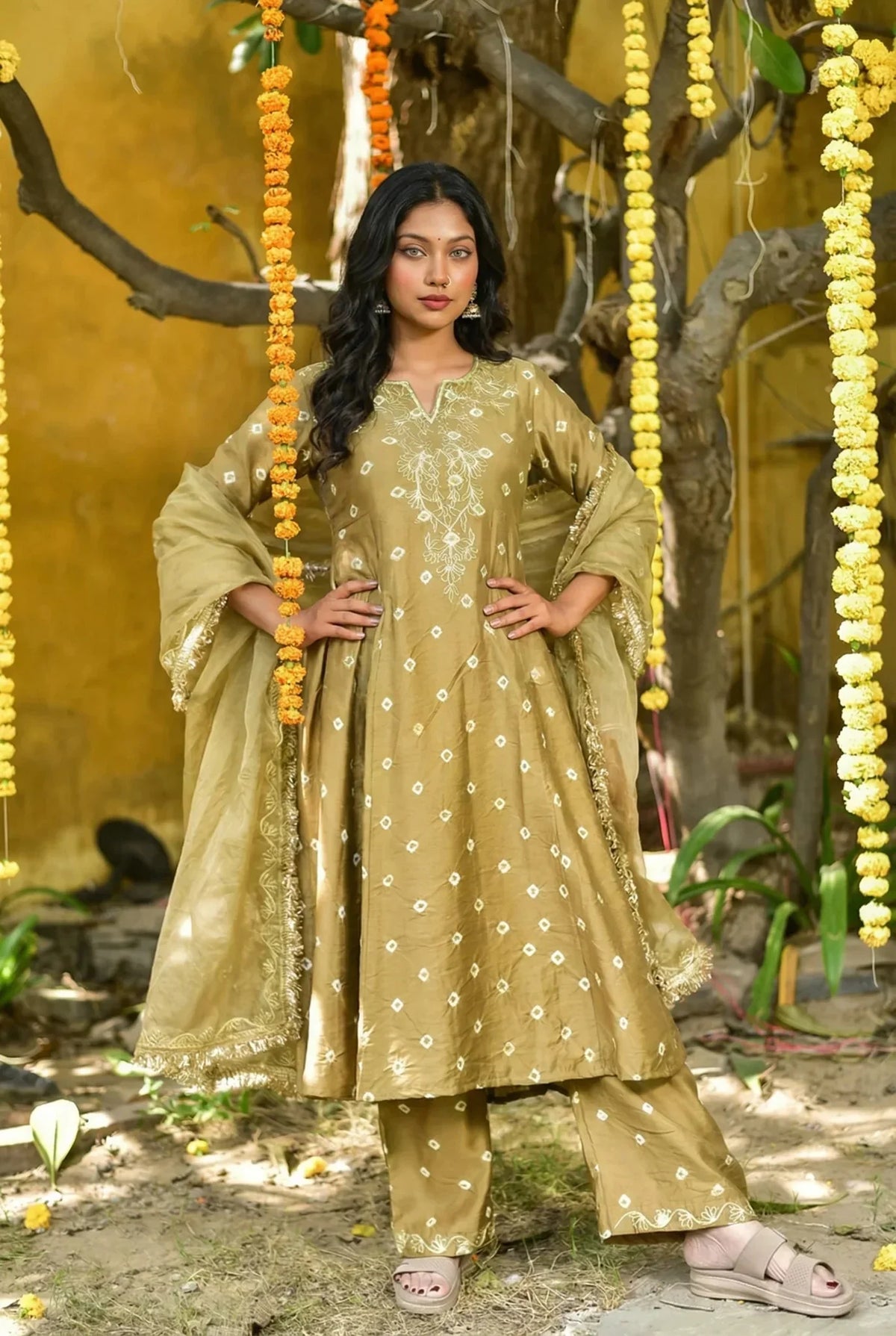
Saroj Jain pick: Chikankari Co-Ord Set

Price: ₹2,771.37
Why it works: A coordinated set gives you a complete daytime look while keeping the styling simple. That makes it easier to protect the embroidery from excess jewellery friction.
Best for: Workdays, lunches, travel and relaxed festive gatherings.
Style with: Pearl studs, tan sandals and a compact cotton tote.
Avoid if: You need a low-maintenance piece for frequent machine washing.
Shop the Chikankari Co-Ord Set
Saroj Jain pick: Mint Sea Green Lucknowi Chikankari Anarkali Gown

Price: ₹4,399
Why it works: The soft mint tone keeps an Anarkali fresh for daytime events, while the flowing shape allows comfortable movement and sitting.
Best for: Day functions, family lunches and festive visits.
Style with: Silver jhumkas, neutral flats and a light dupatta drape that does not catch on the motifs.
Avoid if: You cannot commit to careful washing and supported drying.
Shop the Mint Sea Green Lucknowi Chikankari Anarkali Gown
Saroj Jain pick: Ombre Lavender Pink & Crimson Red Lucknowi Chikankari Anarkali Gown

Price: ₹4,499
Why it works: The ombre colour gives the Anarkali enough presence for an evening event without needing heavy accessories.
Best for: Sangeet evenings, festive dinners and wedding guest dressing.
Style with: Small gold earrings, a simple ring and comfortable block heels.
Avoid if: You plan to store it damp after a long event or expose it to heavy rain.
Shop the Ombre Lavender Pink & Crimson Red Lucknowi Chikankari Anarkali Gown
Saroj Jain pick: Ombre Pink & Lime Green Lucknowi Chikankari Anarkali Gown

Price: ₹4,799
Why it works: The pink and lime combination brings colour to a festive wardrobe while the Anarkali shape stays easy to move in.
Best for: Haldi celebrations, daytime weddings and festive lunches.
Style with: Fresh-tone bangles, understated earrings and cushioned sandals.
Avoid if: You prefer garments that can be washed with ordinary daily laundry.
Shop the Ombre Pink & Lime Green Lucknowi Chikankari Anarkali Gown
Which Chikankari piece suits your routine?
| Outfit | Fabric care approach | Festive scale | Price |
|---|---|---|---|
| Chikankari Co-Ord Set | Gentle care, check label before washing | Daytime and relaxed | ₹2,771.37 |
| Mint Sea Green Lucknowi Chikankari Anarkali Gown | Careful hand wash or professional cleaning according to fabric | Soft festive | ₹4,399 |
| Ombre Lavender Pink & Crimson Red Lucknowi Chikankari Anarkali Gown | Protect colour and embroidery from friction | Evening festive | ₹4,499 |
| Ombre Pink & Lime Green Lucknowi Chikankari Anarkali Gown | Use supported drying and careful storage | Bright festive | ₹4,799 |
Body type and silhouette matrix
| Body type | Best direction | Practical fitting note |
|---|---|---|
| Petite | Choose a shorter hem, smaller motifs and a clean vertical fall. | Keep the dupatta light so the outfit does not feel crowded. |
| Tall | Use longer Anarkali lengths, broader borders and fuller dupatta drapes. | Check sleeve and lining lengths while standing and sitting. |
| Curvy | Look for movement through the waist and a neckline that frames the face. | Ensure the embroidery does not pull across the bust or upper arm. |
| Lean | Layer with a dupatta, fuller skirt or textured embroidery placement. | Use a comfortable lining that prevents the fabric from clinging. |
At the boutique, we ask clients to sit cross-legged before finalising length and ease. Chikankari should look polished while standing and remain comfortable through hours of sitting, meals and conversation.
What to avoid
- Hot water, which can shrink cotton and weaken threads.
- Chlorine bleach and strong stain removers.
- Long soaking, especially for dark, hand-dyed or delicate fabrics.
- Scrubbing directly over embroidery.
- Wringing, twisting and high-speed spinning.
- Direct midday sun for prolonged drying.
- High-heat ironing over raised motifs.
- Hanging a wet Anarkali from one shoulder.
- Plastic storage in humid rooms.
- Washing zari, mirrors, pearls or dense embellishment without checking the label.
Frequently asked questions
Can Chikankari garments be machine-washed?
Hand washing is safest. A simple, sturdy cotton piece may tolerate a delicate cold cycle inside out, but heavily embroidered, loose-thread, embellished, georgette, silk and organza pieces should stay out of the machine.
How long should Chikankari be soaked?
Five to ten minutes is enough for most cotton pieces. Longer soaking can weaken threads and increase colour bleeding, particularly in dark or hand-dyed garments.
How should a Chikankari kurti be washed?
Turn it inside out, use cold water and mild liquid detergent, swish gently, rinse thoroughly and press out water without twisting. Dry it in shade with the fabric evenly supported.
What removes deodorant stains from Chikankari?
Blot the area and rinse from the reverse with cold water. Use a small amount of mild detergent with light fingertip pressure. Do not scrub the embroidery or use bleach.
Can Chikankari shrink?
Cotton can shrink when exposed to hot water, high heat or harsh drying. Cold washing, short soaking and shade drying help reduce the risk.
Why does Chikankari turn yellow in storage?
Dampness, trapped moisture, product residue and plastic storage can contribute to yellowing and odour. Clean and dry the garment fully, then store it in breathable cotton or muslin.
Should Chikankari with zari or mirrors be dry-cleaned?
Usually, yes. Ask the cleaner whether they handle hand embroidery and embellishment before handing over the garment. Spot-cleaning is safer than home washing when the decoration is dense or delicate.
Ready to Find Your Fit? Visit Our JP Nagar Boutique
Visit SAROJ JAIN at 57/1, 1st Cross Rd, opposite to Iyengar's Bakery, 5th Phase, Dollar Layout, JP Nagar Phase 5, Bengaluru, Karnataka 560078. We can check the fall, lining, sleeve ease and care needs before you take a piece home.
WhatsApp the Styling Team View the Lookbook Shop Collections Book a Boutique Meet
With the right chikankari care, your embroidered pieces stay comfortable, presentable and ready for many more occasions.
Visit the Saroj Jain Boutique
Discover our collections in person.
57/1, 1st Cross Rd, opposite to Iyengar's Bakery, Dollar Layout, J. P. Nagar Phase 5,Bengaluru, Karnataka 560078
+91-9314078524