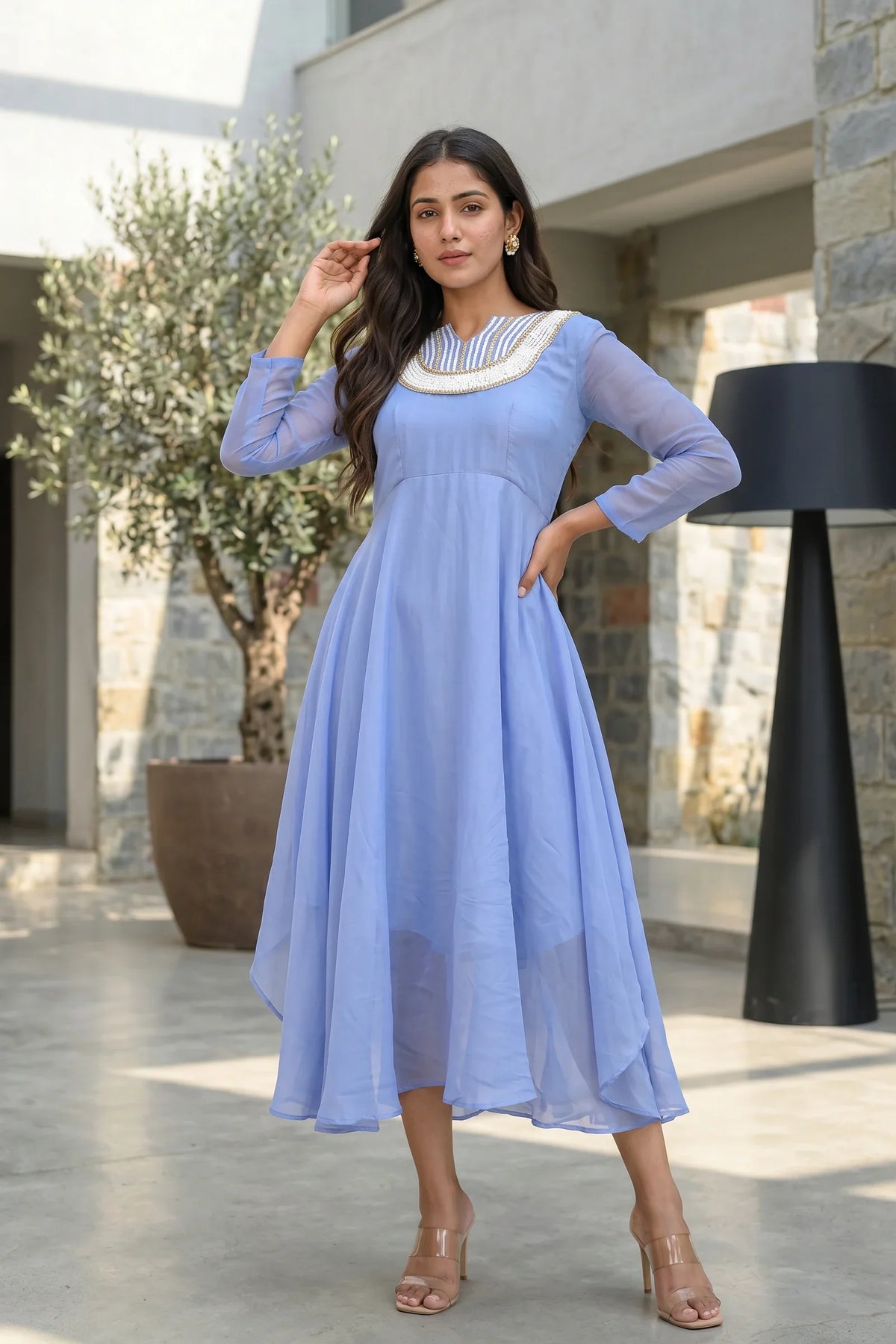

Chikankari Sarees And Suits
Updated: August 2026 | Written by: Saroj Jain Styling Team | Reviewed by: Saroj Jain Boutique Team
Chikankari sarees and suits look refined only when the fabric, lining and silhouette work together. The wrong base can make a beautiful chikankari saree feel too sheer, stiff or plain. The right one gives you comfort for Bengaluru afternoons, clean movement and enough detail for festive dressing. At our JP Nagar 5th Phase boutique, we check how the outfit behaves when you sit cross-legged, walk, lift your arms and stand in daytime light. This guide covers fabric choices, handwork checks, care, body-shape styling and practical ways to wear Lucknowi chikankari beyond everyday dressing.
Quick answer: Choose cotton or mul cotton for breathable daily wear, georgette for fluid festive movement, organza for structure and net for a dressier layered look. Chikankari is not automatically see-through. Check the lining, embroidery density and fabric under daytime light before buying.
- Choose the right fabric
- Summer comfort and transparency
- Identify hand-embroidered chikankari
- Saree or suit: which works better?
- Style chikankari for festive wear
- Saroj Jain product picks
- Outfit comparison
- Body type and silhouette guide
- Care and storage
- What to avoid
- Frequently asked questions
- Visit our JP Nagar boutique
Choose the Right Fabric Before You Choose the Design
Fabric decides the fall, comfort and visual weight of chikankari embroidery. Start with where you will wear the outfit, not just the colour.
- Cotton: Breathable, soft and practical for work, daytime events and warm weather. It can look slightly crisp after starching.
- Mul cotton: Softer and lighter than many cotton weaves. It gives an easy, relaxed drape for long wear.
- Georgette: Fluid, light and flattering for suits and sarees. It can be sheer, so check the lining carefully.
- Organza: Crisp and structured. It holds pleats and sleeves well but can feel less forgiving around the body.
- Net: Decorative and transparent. It works best as a dupatta, sleeve or overlay with a proper inner layer.
At our boutique, we test the fabric in natural daytime lighting because indoor warm lights can hide transparency. We also check whether the embroidery remains comfortable when the garment bends at the waist.
Is Chikankari Good for Summer or Too Sheer?
Chikankari can be excellent for summer when the base fabric allows airflow and the garment has a sensible lining. Cotton and mul cotton are the safest options for long daytime wear.
A georgette suit can feel light, but the inner layer matters. Choose breathable cotton lining where possible. Avoid a heavy synthetic slip that traps heat in Bengaluru weather.
For a saree, inspect the pallu and blouse separately. A transparent pallu may be comfortable, while a blouse with the same fabric may need a fitted lining for coverage and shape.
How to Tell Hand-Embroidered Chikankari from Machine Work
Turn the garment inside out. Hand-embroidered Lucknowi chikankari commonly shows thread trails, knots and small variations in stitch tension. Machine work often looks highly uniform on both sides.
Look closely at jaali and shadow work. Hand-pulled openwork tends to have a natural variation in spacing. Perfect repetition across every motif can indicate mass production.
- Check the reverse side before buying.
- Look for slight variations in stitch size and spacing.
- Feel whether the fabric remains soft around the embroidery.
- Ask what the base fabric is and how the garment should be washed.
- Be cautious when unusually low pricing is paired with claims of extensive handwork.
Lucknow chikankari has a Geographical Indication status, but a label alone does not replace checking the actual garment construction and embroidery.
Chikankari Saree or Chikankari Suit?
Choose a chikankari saree when you want a graceful drape, a more traditional silhouette and flexibility in blouse styling. It works well for pujas, daytime celebrations and intimate wedding functions.
Choose a chikankari suit when you want easier movement, faster dressing and more coverage. Anarkali silhouettes add volume and occasion presence without needing extensive jewellery.
For first-time buyers, we usually recommend a suit when the event involves travel, standing or repeated movement. A saree wins when the blouse, pallu and pleats are part of the styling plan.
How to Style Chikankari for Weddings and Festive Wear
Plain white chikankari can look everyday if every styling element is also quiet. Add contrast through colour, jewellery or a stronger silhouette.
- Pair a white or pastel chikankari saree with a jewel-tone blouse.
- Use pearl, kundan or polished silver jewellery instead of stacking many small pieces.
- Choose a structured potli or metallic clutch for evening functions.
- Let a detailed dupatta balance a simpler kurta.
- Use pointed flats or low block heels when comfort matters.
- Keep makeup fresh and defined. A soft lip and clean kajal are enough for daytime.
At the JP Nagar boutique, we see clients test their outfits by sitting cross-legged for hours at family functions. A suit with a generous hem and comfortable armhole often performs better than a narrow, heavily styled option.
Saroj Jain Picks for Chikankari Dressing
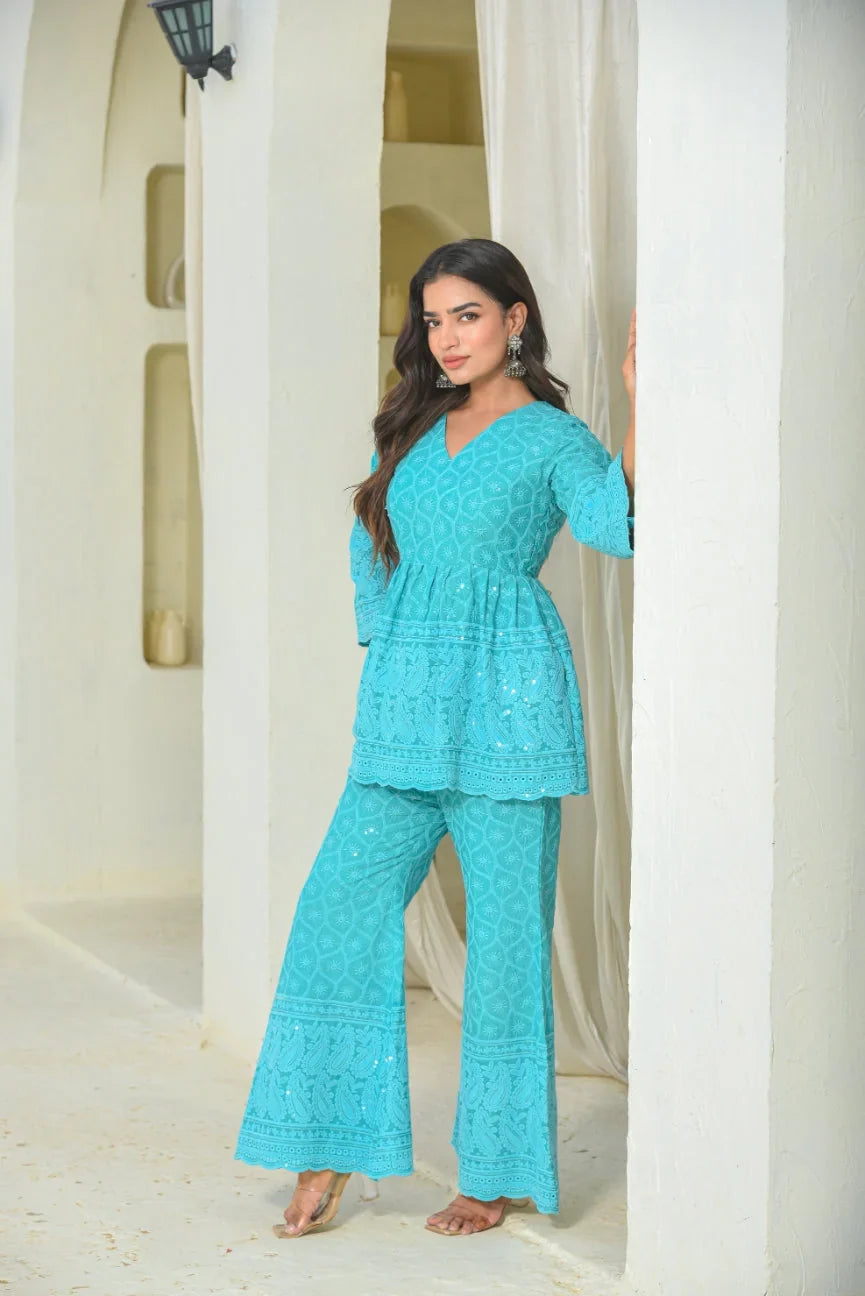
Saroj Jain pick: Chikankari Co-Ord Set

Price: ₹2,771.37
Why it works: A coordinated silhouette gives you the polish of chikankari without the time needed to balance separate kurta, bottom and dupatta pieces.
Best for: Brunches, travel, casual celebrations and smart daytime dressing.
Style with: Pearl studs, a slim watch and neutral flats. Add a woven clutch for a sharper finish.
Avoid if: You prefer a heavily layered festive look or need a long, dramatic hemline.
Shop the Chikankari Co-Ord Set
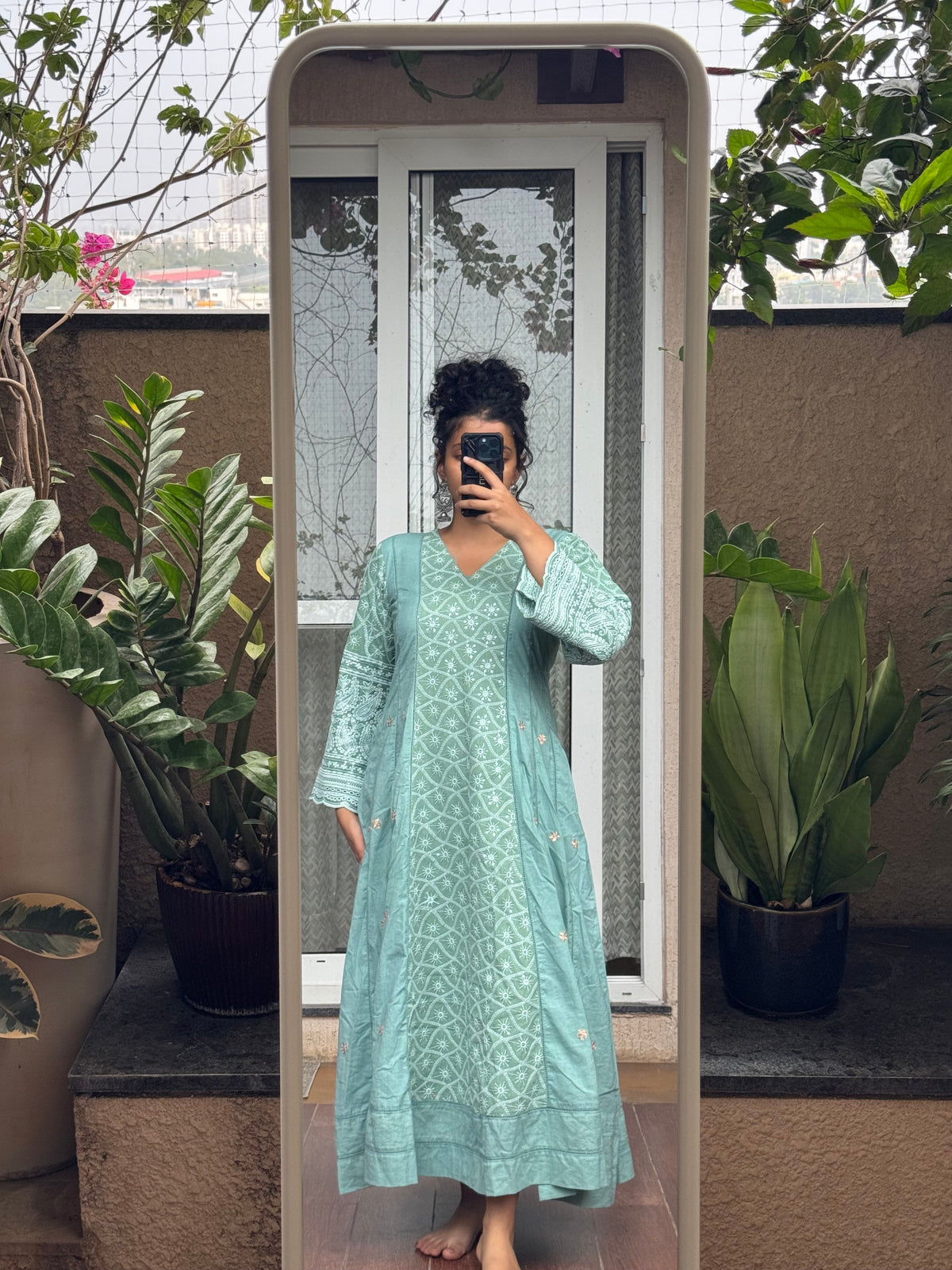
Saroj Jain pick: Mint Sea Green Lucknowi Chikankari Anarkali Gown

Price: ₹4,399
Why it works: The Anarkali shape adds movement and festive presence while the mint sea green colour keeps the outfit fresh for daytime events.
Best for: Engagement functions, festive lunches and family celebrations.
Style with: Pearl drops, nude or metallic sandals and a compact clutch.
Avoid if: You need a close-fitting silhouette or prefer minimal flare.
Shop the Mint Sea Green Lucknowi Chikankari Anarkali Gown
Saroj Jain pick: Ombre Lavender Pink & Crimson Red Lucknowi Chikankari Anarkali Gown

Price: ₹4,499
Why it works: The ombre colour progression creates depth, so the outfit feels festive without needing excessive accessories.
Best for: Evening celebrations, sangeet functions and wedding guests.
Style with: Crimson earrings, simple bangles and metallic heels.
Avoid if: You want a neutral outfit that can move between many dress codes.
Shop the Ombre Lavender Pink & Crimson Red Lucknowi Chikankari Anarkali Gown
Saroj Jain pick: Ombre Pink & Lime Green Lucknowi Chikankari Anarkali Gown

Price: ₹4,799
Why it works: The pink and lime green contrast gives chikankari a brighter festive direction while the Anarkali shape keeps the proportions graceful.
Best for: Haldi events, festive gatherings and colourful daytime weddings.
Style with: Green or gold earrings, soft metallic flats and a small potli.
Avoid if: Your event calls for muted neutrals or formal black-tie styling.
Shop the Ombre Pink & Lime Green Lucknowi Chikankari Anarkali Gown
Chikankari Outfit Comparison
| Outfit | Fabric direction | Festive scale | Price |
|---|---|---|---|
| Chikankari Co-Ord Set | Light coordinated set | Low to medium | ₹2,771.37 |
| Mint Sea Green Lucknowi Chikankari Anarkali Gown | Flowing Anarkali silhouette | Medium | ₹4,399 |
| Ombre Lavender Pink & Crimson Red Lucknowi Chikankari Anarkali Gown | Colour-led festive gown | High | ₹4,499 |
| Ombre Pink & Lime Green Lucknowi Chikankari Anarkali Gown | Bright ombre Anarkali | High | ₹4,799 |
Body Type and Silhouette Matrix
| Body type | Best direction | Styling adjustment |
|---|---|---|
| Petite | Small motifs and controlled flare | Keep the dupatta narrow and choose footwear with a slight lift. |
| Tall | Long Anarkalis, broad borders and full-length sarees | Use larger jewellery or a wider dupatta to balance the height. |
| Curvy | Fluid georgette or softly falling silhouettes | Choose lining that skims rather than clings. A V neckline can add length. |
| Lean | Layered dupattas, organza accents and fuller sleeves | Use texture and controlled volume to add visual balance. |
How to Wash, Iron and Store Chikankari
For cotton chikankari, hand wash in cold water with a mild liquid detergent. Keep soaking brief. Do not scrub the embroidered areas or twist the garment.
For georgette, organza, net or heavily worked pieces, follow the care label and consider professional dry cleaning. Delicate jaali can stretch when wet.
- Dry in shade, preferably flat on a clean towel.
- Iron from the reverse side on low to medium heat.
- Place a thin cloth between the iron and raised embroidery.
- Store in breathable cotton or muslin, not sealed plastic.
- Refold occasionally so strong creases do not remain in one place.
Colour bleeding is more likely with richly dyed garments. Test a hidden seam first if the care label allows washing at home.
What to Avoid When Buying or Styling Chikankari
- Do not judge transparency under only warm shop lighting.
- Do not assume every Lucknowi label means every stitch is hand embroidered.
- Do not pair a detailed chikankari outfit with a heavily worked dupatta and large jewellery unless the event is very formal.
- Do not starch delicate georgette, organza or net without checking the care instructions.
- Do not use a dark inner layer under pale sheer fabric unless the contrast is intentional.
- Do not hang a wet, heavy embroidered garment because the fabric can stretch.
Frequently Asked Questions
Are chikankari sarees and suits suitable for summer?
Yes. Cotton and mul cotton are breathable choices for hot days. Lightweight georgette also works when it has a comfortable, breathable lining.
Will a chikankari saree look too sheer?
Not always. Transparency depends on the base fabric, colour, embroidery coverage and lining. Check the pallu, blouse and pleats separately in daylight.
What is the best fabric for a chikankari suit?
Choose cotton or mul cotton for regular daytime wear, georgette for fluid festive movement, organza for structure and net for overlays or dupattas.
How can I tell if the embroidery is handmade?
Inspect the reverse side. Thread trails, knots and minor variations are common in handwork. Machine embroidery is usually more uniform and clean on both sides.
How do I style a chikankari suit for a wedding?
Select an Anarkali or fuller silhouette, add a considered dupatta, and use pearl, kundan or metallic jewellery. Keep the footwear comfortable enough for standing and walking.
Does starch damage chikankari?
Heavy starch can make some cotton garments stiff and may affect delicate openwork. Avoid starch unless the fabric and care instructions support it.
How should I preserve jaali and shadow work?
Do not scrub or wring the garment. Dry it flat in shade, iron from the reverse with a protective cloth and store it in breathable fabric.
Ready to Find Your Fit? Visit Our JP Nagar Boutique
Visit SAROJ JAIN at 57/1, 1st Cross Rd, opposite to Iyengar's Bakery, 5th Phase, Dollar Layout, JP Nagar Phase 5, Bengaluru, Karnataka 560078.
We can check the fit while you sit, walk and move naturally. That matters more than a mirror pose, especially when you plan to wear the outfit for several hours.
WhatsApp Us View Lookbook Shop Collections Book a Boutique Meet
For a comfortable, well-balanced look, start with the fabric and let our JP Nagar team help you choose the right chikankari sarees and suits.