
Chikankari Styling And Occasion Wear
Updated: August 2026 | Written by: Saroj Jain Styling Team | Reviewed by: Saroj Jain Boutique Team
Chikankari styling and occasion wear become easy when you stop treating every embroidered piece the same. A light cotton kurta works for office and brunch. A lined chanderi, silk, or georgette piece with denser embroidery can work for a roka, engagement, or wedding guest look. The deciding factors are fabric weight, embroidery coverage, lining, silhouette, and accessories. At our JP Nagar 5th Phase boutique, we check how an outfit moves in daylight, whether it stays comfortable while sitting cross-legged, and whether the fabric feels workable in Bengaluru’s warm, humid weather. Use this guide to build a chikankari look that feels polished without becoming heavy.
Quick answer: For daytime chikankari, choose cotton, mulmul, or light muslin with small motifs and breathable layers. For functions, move toward chanderi, lined georgette, silk, or a denser embroidered surface.
Pair a straight kurta with cigarette pants for office, palazzos for brunch, and shararas or a flowing skirt for festive events. Add one strong element, such as a contrasting dupatta, chandelier earrings, or embellished footwear.
Always check transparency in natural light. A fitted camisole, slip, or attached lining can make a light-coloured outfit feel secure and comfortable.
- Choose the right look for the occasion
- Choose fabric by weather and formality
- Use embroidery density to set the dress code
- Build a chikankari kurta outfit
- Style a chikankari saree
- Style a chikankari lehenga
- Saroj Jain outfit picks
- Body type and silhouette guide
- What to avoid
- Frequently asked questions
Choose the Right Chikankari Look for the Occasion
Start with the event, not the embroidery. A relaxed brunch needs movement and air. A wedding requires stronger finish, more surface detail, or a richer accessory plan.
| Occasion | Best silhouette | Fabric direction | Accessories |
|---|---|---|---|
| Office | Straight kurta and cigarette pants | Cotton, mulmul, light muslin | Studs, watch, loafers |
| Brunch | Short kurta and palazzos | Cotton, linen blend, soft chanderi | Jhumkas, sandals, compact sling |
| Roka | Anarkali, long kurta, or saree | Chanderi, silk blend, lined georgette | Polki-style earrings, embellished flats |
| Engagement | Lehenga, saree, or full-length Anarkali | Silk, structured georgette, detailed chanderi | Statement earrings, clutch, heels |
| Wedding guest | Sharara set, saree, or dense kurta set | Lined georgette, silk, chanderi | Bangles, textured clutch, juttis or heels |
Choose Fabric by Weather, Transparency, and Formality
Cotton and mulmul: Best for warm days, office hours, and casual gatherings. They breathe well and sit comfortably when you are seated for long periods.
Muslin: Light and soft, but inspect it under direct light. Pale colours may need a slip or lining around the bodice and hips.
Chanderi: A strong choice for daytime festive wear. It has a crisp fall and a subtle surface interest, but check its sheerness before finalising the blouse or kurta layer.
Georgette: It drapes close to the body and works well for sarees, Anarkalis, and flowing sets. Use a secure inner or lining so the garment does not cling or become too transparent.
Silk: Best for evening occasions when you want structure and a richer finish. In Bengaluru humidity, choose a lighter silk or a silk blend rather than an overly thick layer.
Our practical check is simple. Stand near a window, sit down, walk, and raise your arms. If the fabric pulls, clings, or turns transparent, the outfit needs a different inner or a different size.
Use Embroidery Density to Set the Dress Code
Light motifs: Small butis, scattered florals, and open spaces create an understated look. Pair them with tailored bottoms and minimal accessories.
Medium coverage: Motifs around the neckline, sleeves, hem, or yoke make the outfit feel dressed without becoming difficult to wear. This is the safest level for rokas, festive lunches, and family functions.
Full jaal: An all-over embroidered surface creates a stronger occasion statement. Balance it with a clean silhouette and avoid adding heavy jewellery, a busy dupatta, and ornate footwear all at once.
Embroidery changes the weight and fall of the garment. Dense work may look beautiful on a hanger but feel warm or restrictive after hours of movement. We test this in the fitting room before recommending it for a long function.
Build a Chikankari Kurta Outfit
For office, pair a straight chikankari kurta with ankle-length cigarette pants. Use a tonal inner, small earrings, and pointed flats or loafers.
For brunch, switch to palazzos or relaxed trousers. A woven belt, compact sling, and comfortable kolhapuris keep the look useful without making it formal.
For a wedding guest outfit, use a longer kurta with sharara pants or a flared skirt. Add a contrasting dupatta in silk, organza, or a softly textured weave.
Keep the neckline and accessories in proportion. A high-neck kurta looks cleaner with earrings and a bracelet. A simple round neck can take a necklace, but not always a large necklace and large earrings together.
Style a Chikankari Saree
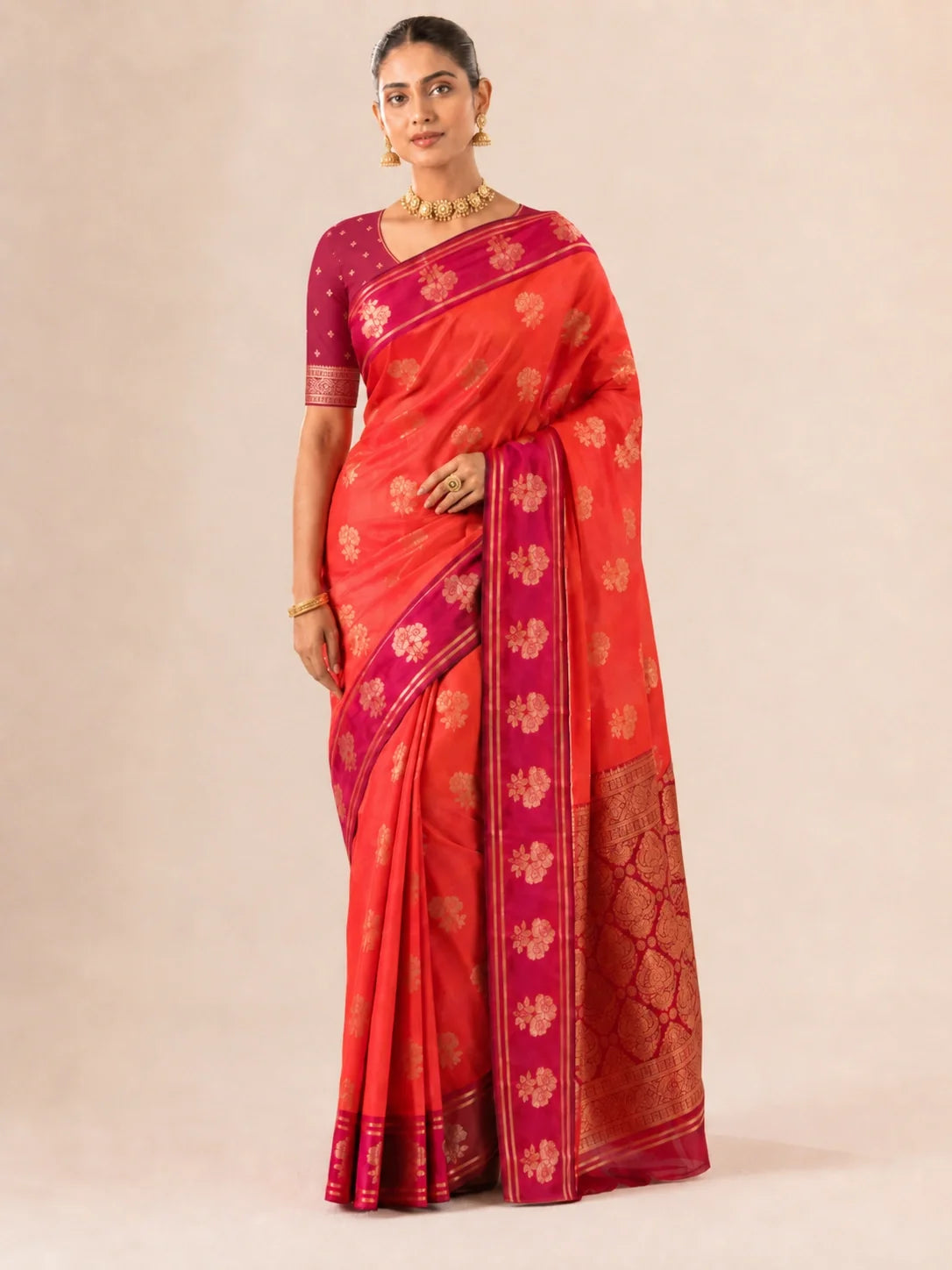
A chikankari saree works best when the blouse gives the outfit shape. Choose a fitted blouse with embroidery on the sleeves, neckline, or back, then keep the saree drape clean.
For daytime, use pearl studs, a slim bangle stack, and flat sandals. For an evening event, add chandelier earrings, a structured clutch, and a low bun.
Check the pallu length before leaving the store. A pallu that slips repeatedly will distract you during conversations, photographs, and meals. Secure it with discreet pins at the shoulder and waist.
Style a Chikankari Lehenga
Choose a lighter cotton or chanderi lehenga for a daytime mehendi or intimate family function. A silk or lined georgette lehenga works better for evening events.
Use a fitted blouse with a fuller skirt to create contrast. If the skirt already has full jaal work, choose a quieter dupatta. If the skirt has scattered motifs, a detailed border or richer dupatta can add the needed festive finish.
For comfort, check the waistband while sitting and walking. The outfit should not dig in when you sit cross-legged, a common requirement at home functions and smaller ceremonies.
Use Accessories to Make Chikankari Feel Occasion-Ready
Jewellery: Pearl earrings suit pale chikankari for day events. Gold-toned jhumkas, kundan-style earrings, or polki-inspired pieces work better for weddings and evening functions.
Dupatta: A plain light dupatta keeps a detailed outfit calm. A zari-edged, silk, or textured dupatta adds festive weight to a simpler kurta.
Footwear: Juttis and kolhapuris are practical for daytime. Block heels or embellished flats give more finish without the instability of very high heels.
Bag: A structured clutch or small potli suits functions. For office and brunch, use a clean shoulder bag that does not compete with the embroidery.
In our JP Nagar fitting room, we often remove one accessory rather than add another. Chikankari already has surface detail. The goal is to direct attention, not create noise.
Saroj Jain Picks for Occasion Dressing
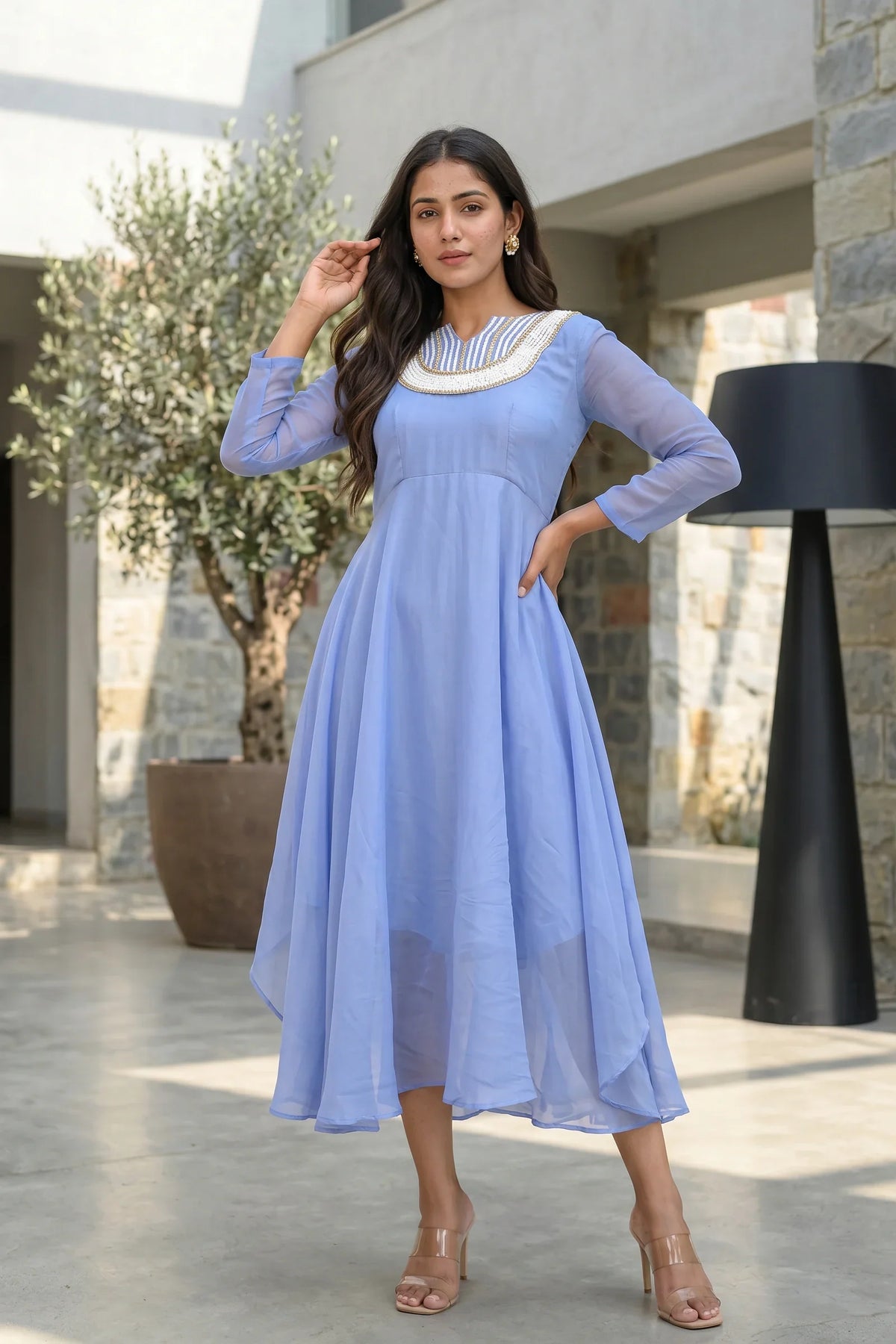
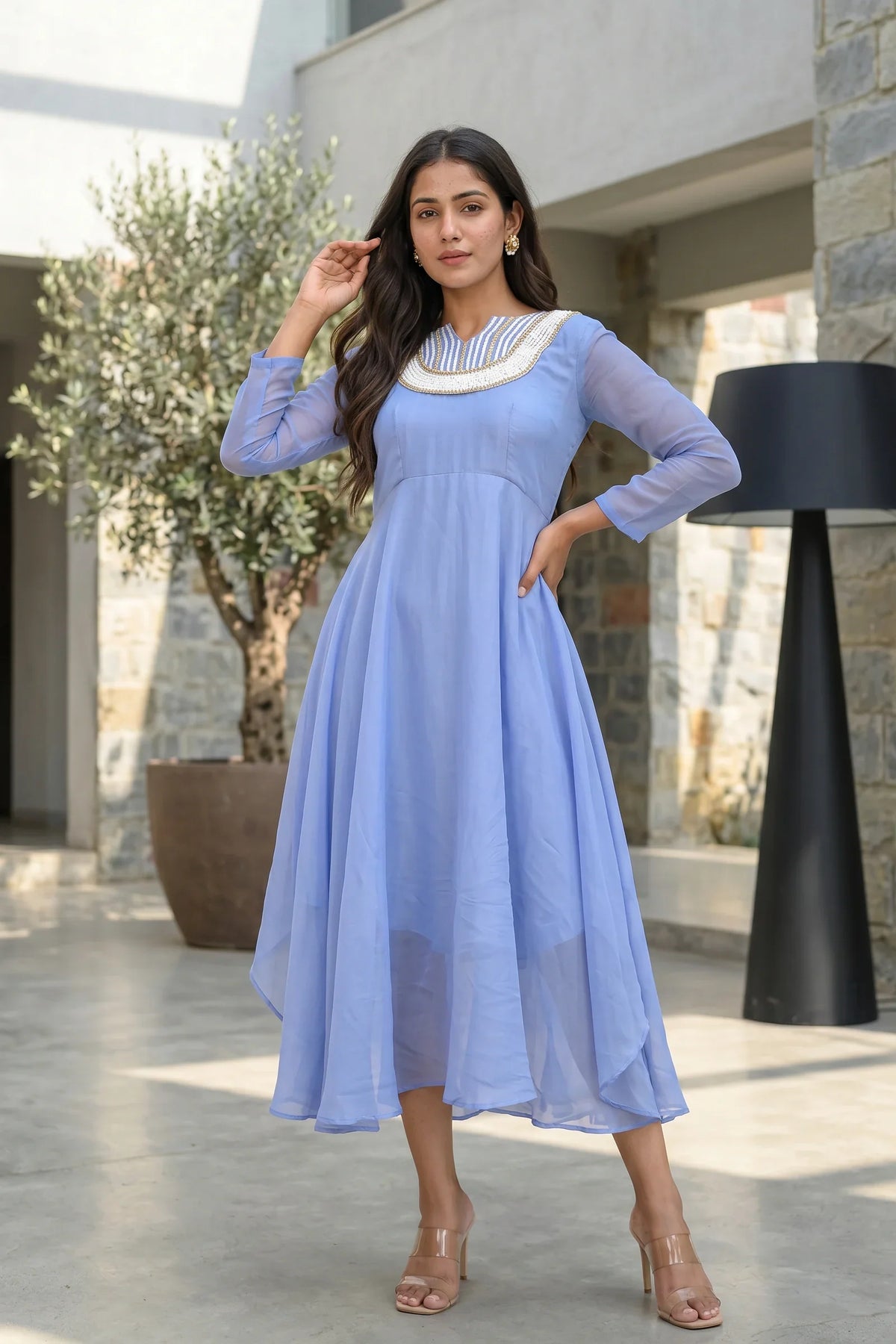
Saroj Jain pick: Baby Blue Asymmetrical Dress

Price: ₹2,336.19
Why it works: The asymmetrical hem adds movement and gives a modern option when you want the softness associated with chikankari styling without wearing a traditional kurta set.
Best for: Brunches, daytime celebrations, resort dinners, and informal festive gatherings.
Style with: Pearl drops, metallic flats, and a compact shoulder bag.
Avoid if: You need a traditional ethnic silhouette or a heavily embroidered wedding look.
Shop the Baby Blue Asymmetrical Dress
Saroj Jain pick: Bandhej Kurta and Pant Set

Price: ₹5,563.89
Why it works: The coordinated kurta and pant shape gives you the clean proportion needed when you want to translate chikankari kurta styling into a sharper occasion outfit.
Best for: Office celebrations, festive lunches, family gatherings, and daytime roka events.
Style with: Gold-toned earrings, a slim watch, and embroidered juttis.
Avoid if: You prefer a very loose, layered look or need significant skirt volume.
Shop the Bandhej Kurta and Pant Set
Saroj Jain pick: Bandhej Kurta Set

Price: ₹4,673.49
Why it works: The coordinated set gives a complete outfit base, so you can bring in the chikankari-inspired softness through a delicate dupatta, pearl jewellery, or embroidered footwear.
Best for: Brunches, intimate ceremonies, festive daytime visits, and comfortable travel dressing.
Style with: Pearl studs, a light dupatta, and neutral sandals.
Avoid if: You are attending a black-tie evening reception that calls for heavier surface detail.
Saroj Jain pick: Beige Zari Silk Anarkali Set

Price: ₹2,781.39
Why it works: The Anarkali shape and zari finish provide the structure and light needed to take chikankari occasion wear into evening dressing.
Best for: Roka ceremonies, engagement dinners, festive receptions, and family photographs.
Style with: Statement earrings, a metallic clutch, and block heels.
Avoid if: You need an ultra-light outfit for long outdoor events in peak daytime heat.
Shop the Beige Zari Silk Anarkali Set
Compare the Outfit Direction Before You Buy
| Outfit | Fabric or finish | Festive scale | Price |
|---|---|---|---|
| Baby Blue Asymmetrical Dress | Soft occasion dress | Light | ₹2,336.19 |
| Bandhej Kurta and Pant Set | Coordinated printed set | Medium | ₹5,563.89 |
| Bandhej Kurta Set | Coordinated festive set | Light to medium | ₹4,673.49 |
| Beige Zari Silk Anarkali Set | Zari silk | Medium to high | ₹2,781.39 |
Body Type and Silhouette Matrix
| Silhouette | What usually works | Watch for |
|---|---|---|
| Petite | Shorter kurtas, narrow borders, monochrome sets, and ankle-length bottoms. | Very long layers and oversized motifs can reduce visible height. |
| Tall | Long Anarkalis, wide palazzos, strong borders, and contrast dupattas. | Very short kurtas may make the outfit look visually divided. |
| Curvy | Clean straight cuts, V-necks, medium-weight fabrics, and dupattas with controlled drape. | Stiff fabric and bulky gathers can add volume where you do not want it. |
| Lean | Layered dupattas, flared Anarkalis, shararas, and textured fabrics. | Very thin fabric with no lining may look flat or cling unevenly. |
Length matters as much as size. We check where the kurta ends in relation to the widest part of the hip, then adjust the bottom volume. The right hem can make a simple chikankari outfit look considerably more balanced.
What to Avoid When Styling Chikankari
- Do not assume pale fabric is opaque. Test it in daylight and check the bodice, hip, and sleeve areas.
- Do not pair full jaal embroidery with a heavily worked dupatta, large necklace, bold earrings, and ornate footwear at the same time.
- Do not choose thick silk for a hot daytime event unless the venue is cool and the garment has enough movement.
- Do not wear a loose inner under a fine fabric. It can bunch, show through, and disturb the fall.
- Do not ignore sitting comfort. A waistband that feels fine while standing can become uncomfortable during a long ceremony.
- Do not use a very busy print under detailed chikankari. Solid or softly textured layers keep the embroidery readable.
- Do not leave the dupatta unsecured if you will be greeting guests, eating, or moving between indoor and outdoor spaces.
Frequently Asked Questions
How do I make chikankari festive enough for a wedding?
Choose medium or dense embroidery, then add a richer dupatta, statement earrings, dressy footwear, and a structured clutch. Silk, chanderi, and lined georgette can add the right level of finish.
Which fabric is best for chikankari occasion wear?
Cotton and mulmul suit daytime dressing. Chanderi gives a crisp festive look. Georgette drapes beautifully but needs a reliable lining. Silk works for evening events when you want more shape.
How can I prevent a white chikankari outfit from looking see-through?
Check it beside a window or under strong indoor light. Use a fitted camisole or slip in a close skin tone, and confirm whether the bodice, hips, and sleeves have lining.
What bottoms work best with a chikankari kurta?
Cigarette pants create a sharp office outfit. Palazzos give comfort for brunch. Churidars keep the look traditional. Shararas and flared skirts add festive volume.
Can I wear chikankari to the office?
Yes. Choose light motifs, a straight kurta, tailored trousers, small earrings, and comfortable flats. Keep the colour soft and the accessories controlled.
How do I style chikankari for an engagement or roka?
Choose a longer kurta, Anarkali, saree, or lehenga with medium to dense work. Add a contrasting dupatta, polished jewellery, and footwear that stays comfortable while standing and walking.
How should I dress for Bengaluru weather?
Choose breathable cotton, mulmul, light muslin, or a lighter chanderi for daytime. For evening functions, use lined georgette or silk blends, but avoid too many heavy layers if the venue is warm.
Ready to Find Your Fit? Visit Our JP Nagar Boutique
Visit SAROJ JAIN at 57/1, 1st Cross Rd, opposite to Iyengar's Bakery, 5th Phase, Dollar Layout, JP Nagar Phase 5, Bengaluru, Karnataka 560078.
We can help you compare lengths, inner layers, embroidery density, dupatta drapes, and footwear while you move through a real fitting. That is how you find an outfit that works beyond the mirror.