
How to Coordinate Family Ethnic Wear for Raksha Bandhan
Raksha Bandhan is two days away and your brother just asked what colour you are wearing so he can match. This happens at our JP Nagar boutique every single year. Sisters walk in frantically on August 12th looking for a kurta that pulls the family look together without looking like a uniform.
Coordinating family outfits is not about everyone wearing the exact same thing. It is about a shared palette, complementary silhouettes, and letting each person's personality breathe. Here is how we help families pull it off.

Key Takeaways
- Pick 2-3 shared colours, not identical outfits. A sister in a pink anarkali pairs beautifully with a brother in a pink-accent kurta.
- Fabric weight matters. Lightweight cottons and Chanderi silks work for August humidity. Reserve heavy brocade for evening events.
- Start with the sister's outfit as the anchor piece. Coordinate everyone else around her colour palette.
- At our boutique, 70% of Rakhi shoppers come as families. The most common request is "make us look related but not matching."
Table of Contents
- Why Colour Palette Matters More Than Matching
- Fabric Guide for August Rakhi Celebrations
- Outfit Pairings That Work for Every Family
- What to Avoid When Coordinating
- FAQs About Family Ethnic Wear Coordination
Why Colour Palette Matters More Than Matching
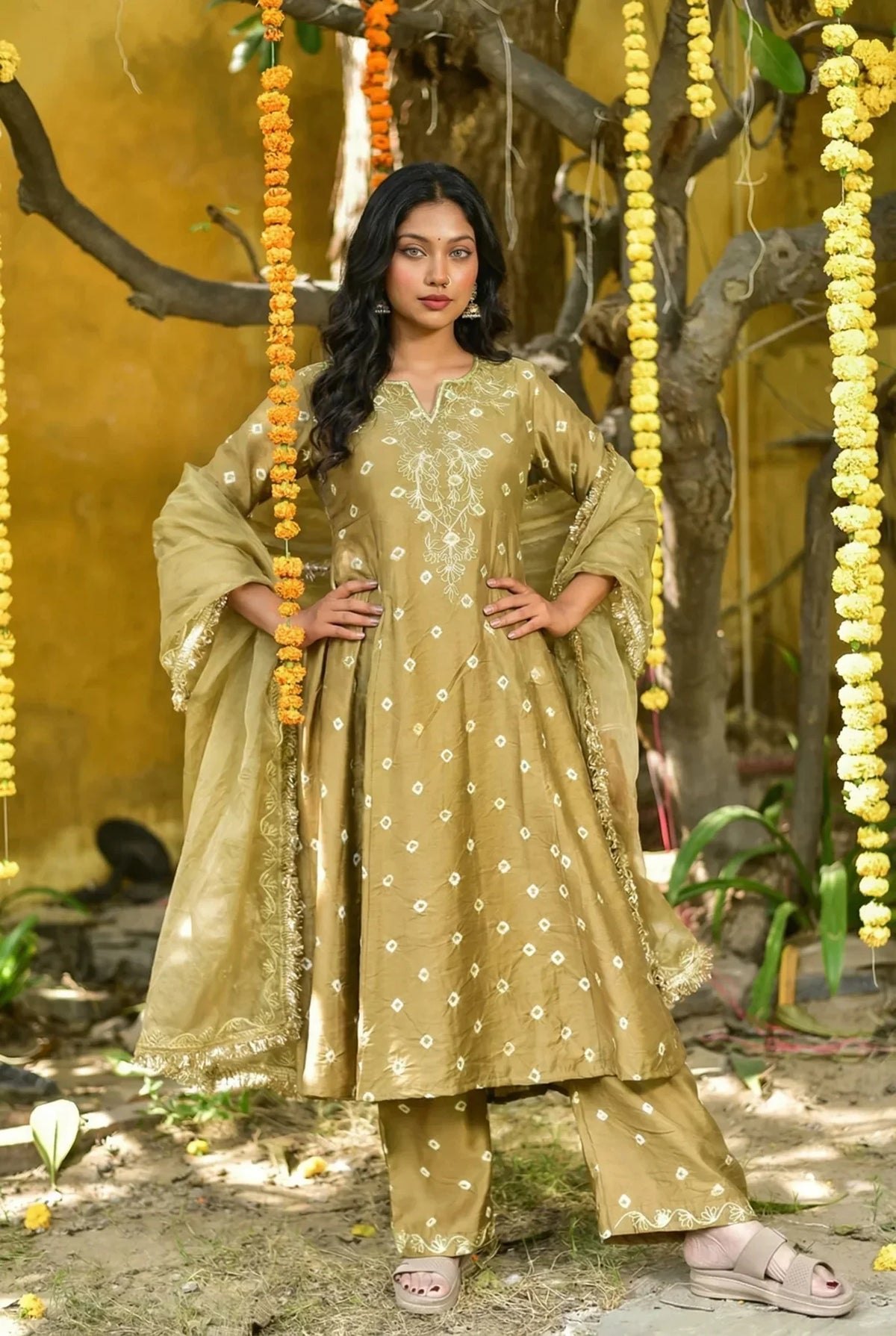
A family of five in identical maroon kurtas looks like a wedding baraat, not a Rakhi gathering. What works instead is a shared colour story. Pick a dominant colour and let each person interpret it differently. The sister wears a baby pink Bandhej kurta set. The brother picks a white kurta with a pink pocket square or subtle pink embroidery. Mom chooses a dusty rose saree. Each outfit stands alone but the photographs look intentional.
At our boutique, we suggest families pick two anchor colours and one neutral. The neutrals (cream, ivory, off-white, beige) give everyone breathing room. The anchor colours create the thread that ties the group together.
Fabric Guide for August Rakhi Celebrations
August in Bangalore means humidity with a chance of afternoon showers. The fabric you pick determines whether you enjoy the ritual or spend the morning tugging at your collar.
| Fabric | Best For | Avoid If |
|---|---|---|
| Cotton | Daytime Rakhi, outdoor setups, kids | You want a dressy evening look |
| Chanderi Silk | Lightweight festive feel, photoshoots | Heavy rain expected, it spots easily |
| Georgette | Draped silhouettes, sarees, flowy kurtas | You prefer structured fits |
| Bandhej Cotton | Siblings who want colour without weight | Minimalist aesthetic (it is naturally textured) |
Outfit Pairings That Work for Every Family
Here are three combinations we have helped real families put together this Rakhi season. Each one uses products from our boutique.
Sister in Bandhej, Brother in Coordinated Tone
A sister in the Baby Pink Bandhej Kurta Set (Rs. 4673.49). A brother in a cream kurta with a baby pink pocket square or subtle trim. The Bandhej texture gives her outfit a festive quality without the weight of embroidery. His outfit stays understated while still feeling connected to hers.

Sister in Anarkali, Mom in Silk Suit
The Beige Zari Silk Anarkali Set (Rs. 2781.39) anchors the look. Zari detailing catches light beautifully in photographs. Mom pairs a complementing silk suit in ivory or gold. Both outfits feel festive without competing. Cousins and aunts can add their own colours around the beige-gold base.
Sister in Lehenga, Everyone Else in Soft Neutrals
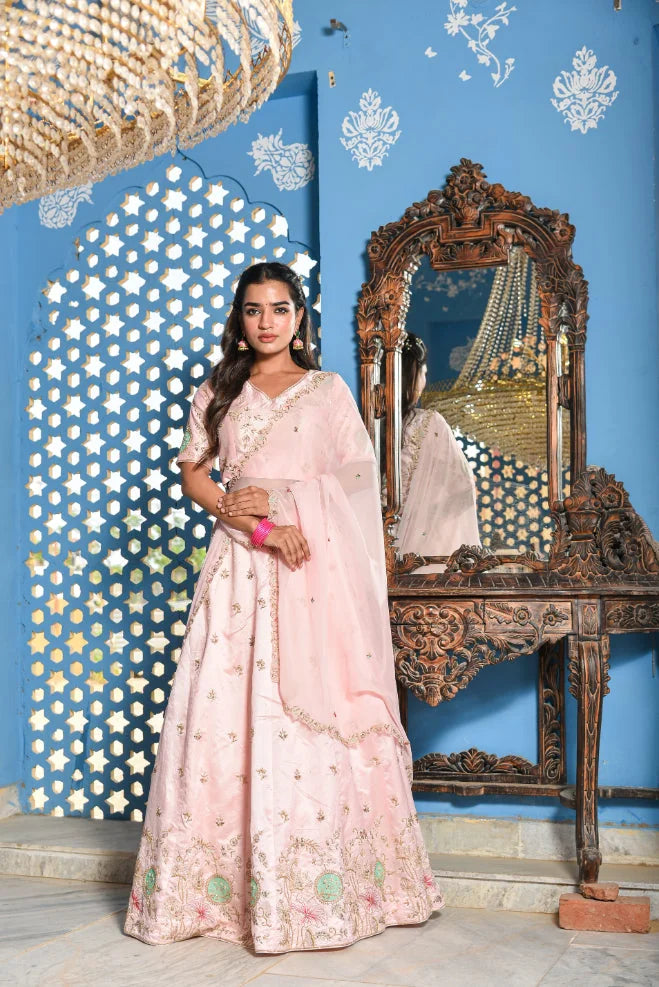
For sisters who want to go all out, the Blush Pink Heavy Embroidery Lehenga Set (Rs. 33388.89) makes a statement. Everyone else sticks to soft neutrals: cream kurtas, beige sarees, off-white salwar suits. The lehenga becomes the focal point and the rest of the family frames it. This works especially well when the sister is celebrating her first Rakhi after marriage.
What to Avoid When Coordinating
Do not buy identical outfits for everyone. It photographs flat and feels forced. Do not mix more than three colours in the family palette. After three, it stops looking coordinated and starts looking chaotic. Do not ignore fabric weight. A heavy silk lehenga next to a thin cotton kurta creates a visual imbalance in photos. Do not forget footwear. Mismatched shoes can undo an otherwise cohesive look faster than anything else.
FAQs About Family Ethnic Wear Coordination
How do I coordinate outfits for a mixed-gender family group?
Start with the colour palette first, silhouette second. Women can express colour through their entire outfit. Men can carry the palette through smaller accents: pocket squares, dupatta borders, kurta buttons, or even a wristwatch strap. Kids can go brighter within the same palette.
What if my family members live in different cities and cannot try on together?
Share a colour palette photograph over WhatsApp. Pick two specific shades from a colour wheel or paint swatch. Send fabric swatch photos if you can. At our boutique, we help remote families coordinate via WhatsApp video calls. We hold up fabrics side by side so everyone can see the palette in real time.
Can I coordinate if some family members prefer western wear?
Yes. A sister in a Bandhej co-ord set and a cousin in a solid-colour dress in a matching tone still look connected. The key is colour continuity, not garment type. We have styled families where the younger cousins wore fusion pieces and the elders wore sarees. The shared palette made it work.
What is the best colour palette for Raksha Bandhan 2026?
Pastels with gold accents are strong this season. Baby pink, mint green, and powder blue with zari or gota detailing. For traditional families, deeper jewel tones like emerald, ruby, and amethyst with gold embroidery never go out of style. At our boutique, we are seeing more families choose soft palettes for daytime Rakhi and jewel tones for evening celebrations.
How far in advance should we plan coordinated outfits?
Two to three weeks minimum if you are ordering custom or made-to-measure pieces. Off-the-rack shopping can be done a week before. But waiting until the day before limits your options. We recommend families visit us at least 10 days before Rakhi so we have time for any alterations.
Plan Your Family Rakhi Look
Coordinating family ethnic wear does not require a stylist or a massive budget. It requires a shared colour palette, thoughtful fabric choices, and at least one person taking the lead. At our JP Nagar boutique, we walk families through the entire process, from swatch selection to final fitting. You can browse our full collection at sarojjain.com or WhatsApp us at 919314078524 to start your family coordination. See real outfit combinations on our lookbook at lookbook.sarojjain.com.
Updated: August 10, 2026
Written by: Saroj Jain Styling Team
Reviewed by: Saroj Jain Boutique Team