
How to Coordinate Family Outfits for a Wedding Without Looking Too Matchy
At our JP Nagar boutique, the question we hear most often after "does this fit?" is "will it match what my sister-in-law is wearing?" Family coordination at Indian weddings has become its own art form. Everyone wants to look unified in photos without dressing like a uniformed dance troupe.
I have seen families spend more time debating outfit colours than the actual wedding menu. The good news: getting it right is simpler than most people think. Here is what we have learned from dressing hundreds of families through wedding seasons.

Key Takeaways
- Pick one common element (colour family, fabric, or motif) and let everyone interpret it differently by silhouette.
- Pastels and jewel tones photograph better than pure whites or blacks in Indian wedding group shots.
- Fabrics matter more than exact colour matching , a silk + silk family looks unified even in different shades.
- Plan 3-4 weeks ahead. Coordinating 6+ people takes more back-and-forth than buying a single outfit.
- Mothers and grandmothers should lead the colour anchor. Everyone else layers around them.
Pick One Anchor, Not One Outfit
The biggest mistake families make is trying to wear the exact same shade. Navy blue silk can look five different ways depending on lighting, weave, and dye lot. You will never match perfectly across six people from different shops.
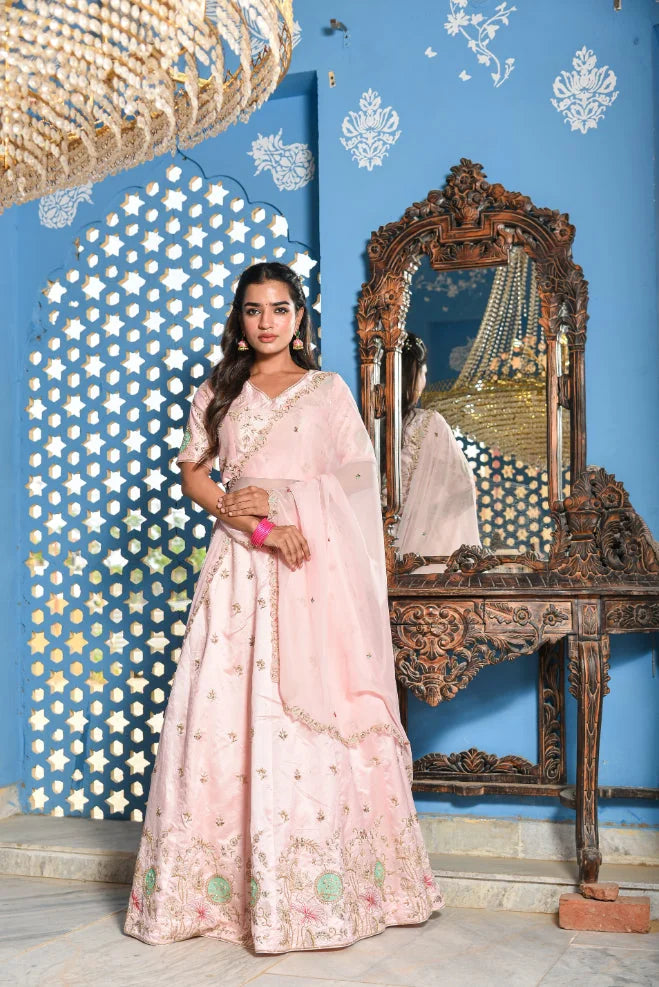
Instead, pick one anchor element. It could be a colour family (all jewel tones), a fabric (everyone in silk or silk-blends), or a motif (floral embroidery across different silhouettes). When a mother wears a rani pink silk saree, her daughters can wear blush, rose, or mauve lehengas. The photos will read as coordinated because the eye tracks the fabric sheen, not the exact hex code.
Fabric First, Colour Second
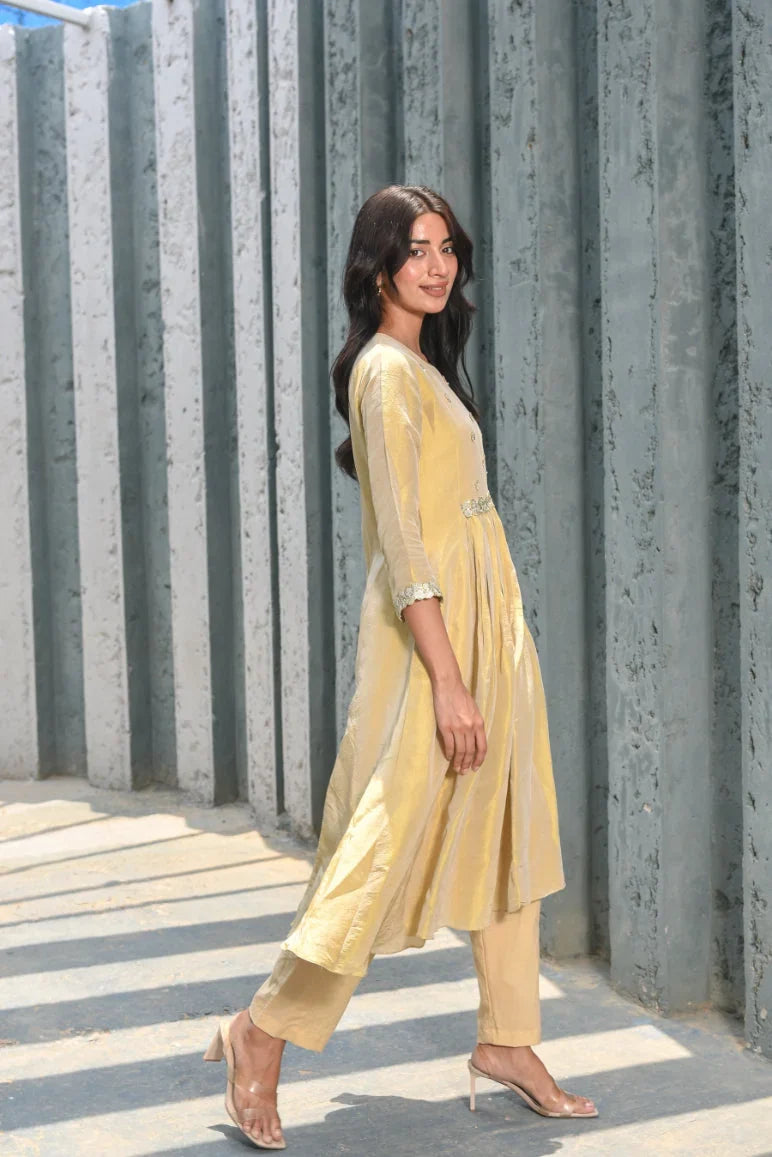
In our experience fitting families, fabric consistency photographs better than colour consistency. A group where three people wear raw silk, two wear Chanderi, and one wears georgette will look disjointed even if every outfit is mint green. But a group where everyone wears silk , in maroon, gold, teal, and peach , looks intentional and rich.
We recommend silk, silk-blend, or organza for the immediate family members who will be in the most photos. Heavier fabrics hold their shape across hours of ceremonies and hundreds of camera flashes.
| Family Role | Best Approach | Fabrics to Consider |
|---|---|---|
| Mother of bride/groom | Colour anchor , richest shade, heaviest fabric | Kanjeevaram silk, Banarasi, raw silk |
| Siblings | Variations on the anchor colour, different silhouettes | Silk, organza, Chanderi |
| Cousins | Same colour temperature, different shades | Georgette, crepe, cotton-silk blends |
| Kids | Mini versions of sibling outfits with comfort priority | Cotton-lined silk, soft Chanderi |
What to Avoid
Skip pure white and pure black as anchor colours for daytime ceremonies. White washes out in professional wedding lighting and black photographs flat without studio-grade equipment. If someone insists on black for a reception, pair them with gold-heavy jewellery and make sure at least two others in the group photo are in lighter tones to balance the frame.
Also avoid mixing matte and high-shine fabrics in the same colour. A matte cotton kurta in sage green next to a glossy silk lehenga in sage green will read as two different colours on camera. The shine disparity creates an optical mismatch.

Start With the Elders
Mothers and grandmothers should pick first. They have the fewest silhouette options (most prefer sarees or anarkalis) and the strongest preferences about what they feel good in. Once their colour and fabric are locked, the younger generation can build around it. When we style families at the boutique, we always seat the senior member first and build outward.
When in Doubt, Use Jewellery as the Bridge
If fabric and colour coordination feels overwhelming, jewellery does the work for you. A family where everyone wears gold temple jewellery , even in completely different-coloured outfits , photographs as unified. The metal catches light the same way across every frame. This trick works especially well for large extended families where coordinating eight people's outfits is logistically impossible.
For a softer approach, fresh flowers in hair or on wrists (mogra, jasmine) create an organic coordination that looks effortless on camera.
FAQs
How many weeks before the wedding should we start coordinating?
Three to four weeks minimum for families of four or more. Boutique orders with custom stitching need the lead time. Off-the-rack families can manage in two weeks if everyone is decisive.
Can men and women wear the same colour without looking strange?
Yes, but use different fabrics. A man's raw silk kurta in mustard paired with a woman's organza saree in mustard works because the texture difference prevents it from looking like a uniform.
What if one family member refuses to coordinate?
We see this often with teenagers and younger brothers. The fix: give them a small matching element (a pocket square, dupatta border, or watch strap) instead of a full outfit match. They feel independent. The photos still look connected.
Which colours work best for daytime vs evening weddings?
Pastels (peach, mint, lavender, powder blue) photograph beautifully in natural daylight. Jewel tones (emerald, wine, royal blue, deep maroon) look richer under evening lighting. For functions that bridge afternoon into night, mid-tones like teal or rust bridge the gap.
Do we need to coordinate across all wedding functions or just the main day?
Main day plus any function with formal family portraits. Mehendi and haldi can be looser. Most families coordinate the wedding ceremony and reception, then let everyone choose independently for the pre-wedding events.
We style families at our JP Nagar boutique every wedding season. If you are planning coordinated family looks and want someone to walk you through fabrics, colours, and silhouettes in person, book a consultation or browse our collections at sarojjain.com.