
Article: Custom Bridal Wear In Hsr Layout
Custom Bridal Wear In Hsr Layout
Updated: August 2026 | Written by: Saroj Jain Styling Team | Reviewed by: Saroj Jain Boutique Team
Custom bridal wear in hsr layout should solve more than colour and embroidery. It should fit your measurements, support your blouse, survive Bangalore weather, and let you sit, walk, bend, and complete every wedding ritual without constant adjustments. At SAROJ JAIN, we begin with the bride's venue, jewellery, ceremony length, comfort needs, and reference images. The result may be a bridal lehenga, silk saree, blouse, Anarkali, or coordinated family look. The right outfit is not simply made to look good on a hanger. It is built for the hours you will actually spend wearing it.
Quick answer: Choose a custom bridal outfit only after confirming the full scope of work. Ask about fresh pattern cutting, fabric, lining, embroidery, can-can, blouse support, dupatta finishing, number of fittings, alteration charges, and delivery date.
For Bangalore brides, three to six months is a practical planning window. Published local bridal listings show custom-made pricing from roughly ₹30,000 to ₹2,00,000, with premium handwork and designer pieces often priced higher.[3][6]
- What genuine customization includes
- Budget and inclusions
- Timeline and fitting schedule
- Best fabrics for Bangalore
- Regional bridal detailing
- Construction details that change comfort
- SAROJ JAIN styling picks
- Outfit comparison
- Silhouette guide
- What to avoid
- Frequently asked questions
- Visit our JP Nagar boutique
What Genuine Customization Includes
Minor alterations are not the same as a custom bridal lehenga Bangalore service. Genuine customization begins with a design discussion and ends with a garment tested on your body.
- Reference images translated into your preferred neckline, sleeve, waist, flare, and embroidery placement.
- Fabric and lining selected for the venue, season, ceremony, and wearing time.
- Fresh measurements with attention to posture, bust support, shoulder slope, and waist placement.
- Blouse pattern work rather than only side-seam adjustments.
- Trial fittings with corrections before final finishing.
- Dupatta, can-can, hooks, padding, and anchoring planned as part of the outfit.
Several HSR Layout studios advertise custom-designed and made-to-order bridal outfits, but the inclusions differ by studio.[1][3] Ask for the work list in writing before paying an advance.
Budget, Inclusions, and the Questions That Prevent Surprises
Local listings place custom-made bridal wear in a broad ₹30,000 to ₹2,00,000 range. Designer and heavily embroidered pieces can move beyond that range depending on handwork, fabric, and brand.[6]
Do not compare two quotes by total price alone. Compare what is inside the quote.
- Lehenga or saree fabric.
- Blouse fabric and construction.
- Embroidery and finishing.
- Can-can or inner volume layers.
- Lining and sweat-friendly comfort layer.
- Dupatta edging and anchoring.
- Padding, cups, hooks, and waist support.
- Number of trials and alteration charges.
- Delivery, packaging, and urgent work fees.
A low quote may exclude the blouse, lining, can-can, or final corrections. That is why the inclusions matter more than the headline number.
The Three-Stage Bridal Timeline
Start three to six months before the wedding. Heavy embroidery, fabric sourcing, family coordination, and correction rounds need time.
Stage one: Consultation and design lock
Bring jewellery photographs, footwear height, ceremony details, venue photographs, and two or three reference images. Decide the silhouette, colour family, fabric, and work level.
Stage two: First trial
Test the basic blouse and skirt structure. Check bust support, shoulder movement, waistband position, flare, and sitting comfort before final embroidery or finishing.
Stage three: Final fitting
Wear the actual footwear and jewellery. Walk, sit cross-legged, lift your arms, and turn quickly. Make final corrections at least two weeks before the wedding where possible.
At our JP Nagar 5th Phase boutique, we often see brides discover fit issues only when they sit on the floor or raise an arm during a ceremony rehearsal. Those movements should be tested before the outfit is packed.
Fabric Guide for Bangalore Weddings
Bangalore weather can shift from warm daylight to a cooler evening. Venue ventilation also changes the right choice. Fabric should follow the schedule, not just the mood board.
| Fabric | Best use | What to check |
|---|---|---|
| Lightweight silk | Traditional sarees and structured lehengas | Good drape with less weight than heavy silk |
| Raw silk | Lehenga skirts and fitted blouses | Strong structure, but check lining for warmth |
| Tissue | Light festive layers and dupattas | Can crease, so plan anchoring carefully |
| Organza | Dupattas, sleeves, and light overlays | Needs clean finishing and secure pins |
| Georgette | Soft dupattas and fluid silhouettes | Requires good edging to prevent stretching |
| Velvet | Cool evening venues and winter functions | Can feel warm during long indoor ceremonies |
For a daytime outdoor event, lighter silk, organza, and georgette usually feel easier. For an evening reception in a cool, ventilated venue, raw silk or velvet can provide more structure and visual weight.
We also check how the lining feels after several minutes in daylight. A beautiful outer fabric is not enough if the inner layer becomes sticky during a long ceremony.
Regional Bridal Detailing That Works
South Indian jewellery is visually strong. Your outfit needs enough surface detail to hold it, but not so much that the jewellery and embroidery compete.
- Kanjeevaram silk: Best for a traditional saree-led bridal look with temple jewellery, gold borders, and a structured blouse.
- Banarasi motifs: Useful when you want classic woven detail with a softer, less heavily embroidered finish.
- Kasavu-inspired borders: A clean option for Kerala-influenced styling, especially with ivory, cream, gold, and muted festive shades.
- Temple zari: Works well with traditional ceremonies, antique gold jewellery, and deeper jewel tones.
- Contemporary lehenga embroidery: Suitable when the ceremony is traditional but the reception calls for a lighter, more modern silhouette.
For bridal sarees and lehengas in Bangalore, we recommend deciding first whether the jewellery leads or the outfit leads. Both cannot carry maximum detail at the same time.
Construction Details That Change Comfort
Measurements are only the starting point. Construction determines whether the outfit stays comfortable after six hours.
- Blouse cup support: Cups should sit correctly without forcing the bust upward or outward.
- Corset structure: Use support where needed, but allow breathing and arm movement.
- Sleeve mobility: Test reaching forward, lifting arms, and adjusting the pleats.
- Waistband placement: The waistband should sit securely without digging in while seated.
- Lehenga flare: Add volume only when the venue and movement allow it.
- Can-can volume: Too much can make sitting and walking difficult.
- Dupatta anchoring: Use discreet hooks or loops when the dupatta needs to stay in place.
- Lining: Choose a smooth, breathable layer for long ceremonies and warm venues.
One of our most useful fitting checks is simple: sit cross-legged for several minutes. If the waistband cuts in or the skirt pulls across the knees, the outfit needs correction before finishing.
How to Adapt a Reference Image
Bring the reference image. Do not copy it blindly.
A designer should adapt the neckline to your bust support needs, adjust the blouse length to your torso, change the flare for your height, and select a fabric suited to Bangalore conditions. The same design may need a lighter lining, shorter sleeve, stronger hook placement, or a different dupatta fold.
Also consider the wedding ritual. A bride who will sit on the floor, walk between venues, or wear heavy jewellery needs a different construction from a bride attending a short indoor reception.
SAROJ JAIN Styling Picks for Bridal Events
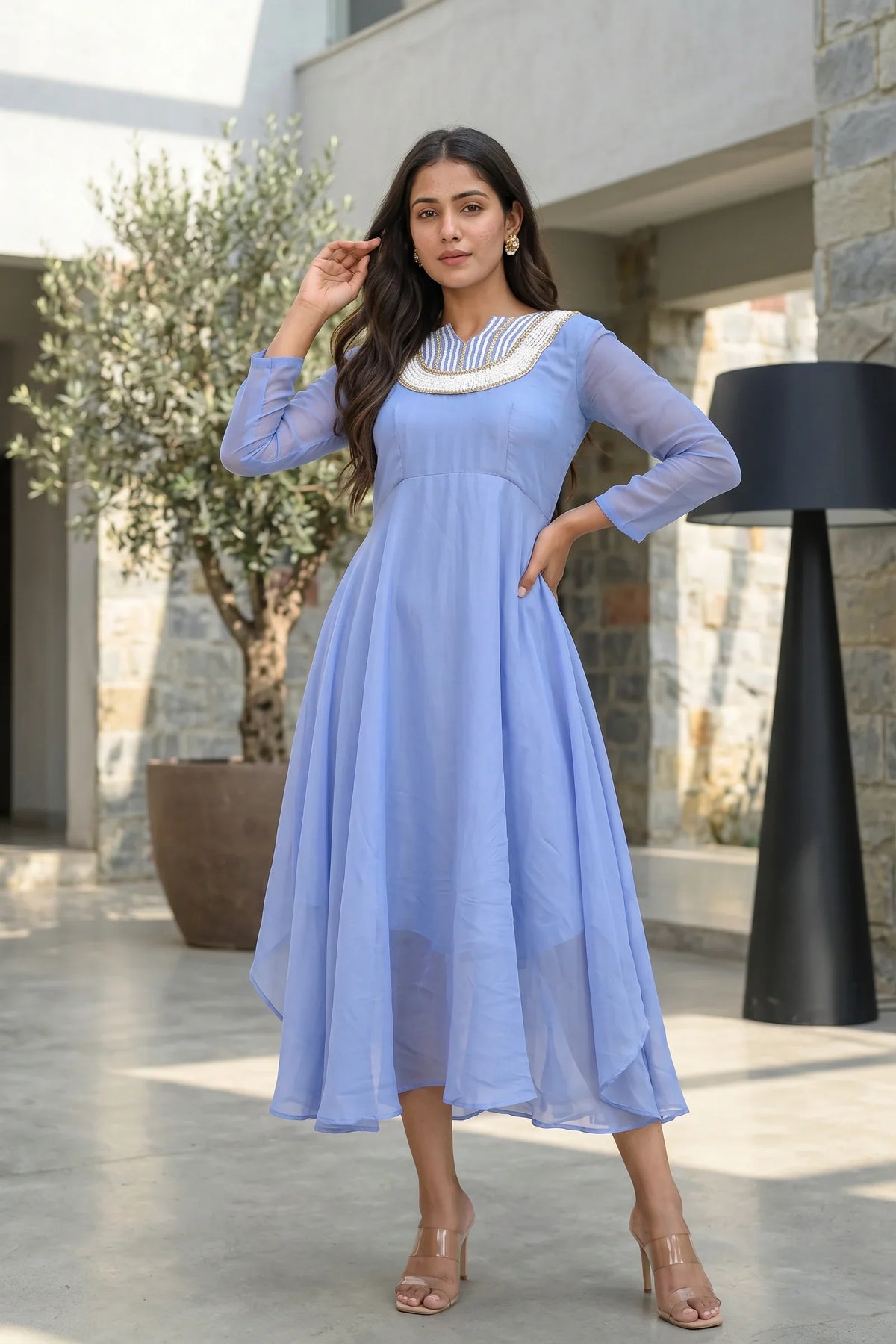
Saroj Jain pick: Baby Blue Asymmetrical Dress

Price: ₹2,336.19
Why it works: The asymmetrical line gives a lighter, contemporary option for a pre-wedding event or reception change.
Best for: Engagements, cocktail evenings, and sangeet functions.
Style with: Slim metallic heels, delicate earrings, and a compact clutch.
Avoid if: You need a traditional ceremony outfit with a saree drape or heavy jewellery balance.
Shop the Baby Blue Asymmetrical Dress
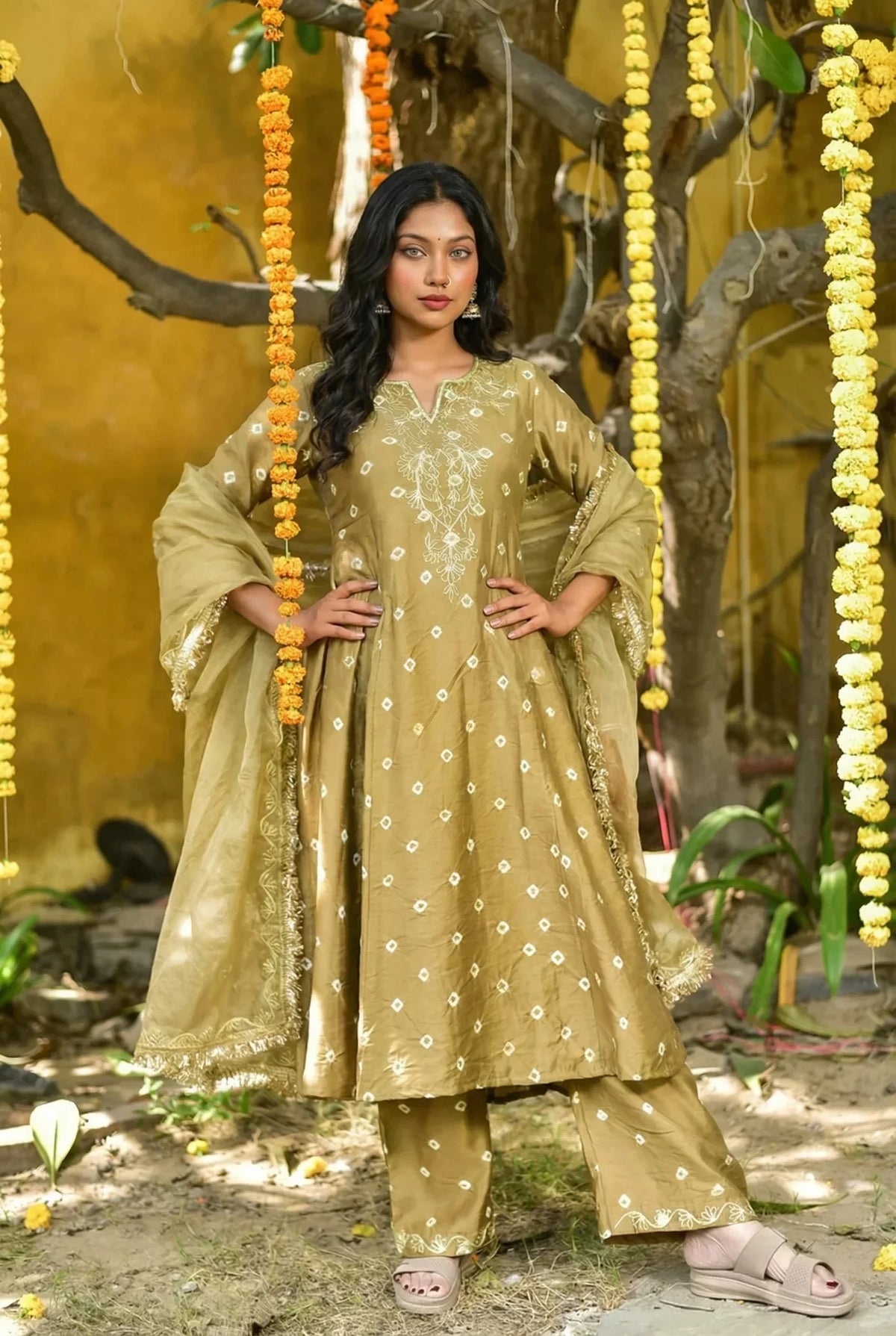
Saroj Jain pick: Bandhej Kurta and Pant Set

Price: ₹5,563.89
Why it works: The kurta and pant format gives movement and comfort when you are managing guests, rituals, or a long daytime schedule.
Best for: Mehendi, haldi, family lunches, and trousseau events.
Style with: Jhumkas, embroidered flats, and a contrasting potli.
Avoid if: You want a full bridal lehenga scale for the main ceremony.
Shop the Bandhej Kurta and Pant Set
Saroj Jain pick: Bandhej Kurta Set

Price: ₹4,673.49
Why it works: Bandhej adds festive character without requiring a heavily layered silhouette.
Best for: Haldi mornings, intimate pujas, and post-wedding gatherings.
Style with: Colourful bangles, simple sandals, and a small shoulder bag.
Avoid if: You want a minimal monochrome look without print contrast.
Saroj Jain pick: Beige Zari Silk Anarkali Set

Price: ₹2,781.39
Why it works: Zari silk gives festive polish with a flowing shape that is easier to wear than a very full skirt.
Best for: Receptions, family celebrations, and formal pujas.
Style with: Gold-toned earrings, embellished juttis, and a slim bracelet.
Avoid if: You prefer a fitted blouse and sharply defined lehenga waist.
Shop the Beige Zari Silk Anarkali Set
Outfit Comparison
| Outfit | Fabric or surface | Festive scale | Price |
|---|---|---|---|
| Baby Blue Asymmetrical Dress | Light contemporary dress | Modern, medium | ₹2,336.19 |
| Bandhej Kurta and Pant Set | Bandhej-inspired festive set | Festive, comfortable | ₹5,563.89 |
| Bandhej Kurta Set | Bandhej-inspired kurta set | Light festive | ₹4,673.49 |
| Beige Zari Silk Anarkali Set | Zari silk | Classic, polished | ₹2,781.39 |
Body Type and Silhouette Matrix
| Body type | Useful choices | Watch carefully |
|---|---|---|
| Petite | Higher waist, controlled flare, lighter dupatta, vertical embroidery | Very wide borders and excess can-can |
| Tall | Longer blouse, broader borders, layered dupatta, fuller flare | Very short blouse proportions |
| Curvy | Supportive blouse, clean waist placement, fluid skirt, structured shoulders | Unplanned bulk at the waist and tight armholes |
| Lean | Texture, layered drapes, moderate can-can, dimensional embroidery | Very flat fabrics with no shape support |
These are starting points, not rules. Posture, jewellery, footwear, and ceremony movement matter as much as body proportions.
What to Avoid
- Choosing the blouse size from a standard chart without a proper measurement session.
- Finalising a reference image before checking fabric weight and venue ventilation.
- Adding maximum can-can to a skirt you need to sit in for hours.
- Leaving the final fitting until the week of the wedding.
- Assuming the quoted price includes lining, blouse support, dupatta finishing, and alterations.
- Testing the outfit only while standing in front of a mirror.
- Wearing unfamiliar footwear at the final trial.
- Using heavy jewellery without checking neckline and shoulder balance.
Daylight also changes colour. At our Dollar Layout boutique, we check key shades in natural daytime light because gold, beige, blush, and pastel tones can read very differently under warm store lighting.
Frequently Asked Questions
Do bridal wear boutiques in HSR Layout offer genuinely custom-made outfits?
Some do. Local listings include studios advertising custom-designed and made-to-order outfits, but the service can range from fresh design work to simple alterations.[1][3] Confirm the pattern, fittings, construction, and corrections included.
What is a realistic price range for custom bridal wear?
Published local listings show custom-made bridal wear around ₹30,000 to ₹2,00,000, with higher pricing for premium fabric, dense embroidery, and designer handwork.[6] Ask for an itemised quote.
How early should I place my bridal order?
Three to six months is a practical window. Start earlier if you need hand embroidery, multiple coordinated outfits, imported fabric, or extensive blouse construction.
Can a designer recreate my reference image?
Yes, as a design direction. The final garment should be adjusted for your measurements, weather, movement, jewellery, rituals, and comfort rather than copied without changes.
Which fabric is best for a long Bangalore wedding day?
Lightweight silk, raw silk with a breathable lining, organza, and georgette can work well. The best choice depends on venue ventilation, ceremony length, drape, and the amount of embroidery.
Should can-can be added to every bridal lehenga?
No. Can-can adds volume, but excessive volume can make walking, sitting, and entering a car difficult. Choose the amount after checking the venue and your movement needs.
What should I bring to the fitting?
Bring the actual footwear, intended innerwear, jewellery photographs, and any dupatta or veil plan. Test walking, sitting, arm movement, and turning before the final approval.
Ready to Find Your Fit? Visit Our JP Nagar Boutique
Visit SAROJ JAIN at 57/1, 1st Cross Rd, opposite to Iyengar's Bakery, 5th Phase, Dollar Layout, JP Nagar Phase 5, Bengaluru, Karnataka 560078.
Bring your reference images, jewellery plan, wedding dates, and honest comfort concerns. We will help you decide whether the right answer is a custom lehenga, bridal saree, designer bridal blouse Bangalore option, Anarkali, or a lighter event outfit.
WhatsApp the Styling Team View the Lookbook Shop Collections Book a Boutique Meet
For a bridal outfit that fits your body, ceremony, weather, and real movement, start with custom bridal wear in hsr layout.