
Haldi Dress Code And Colour Etiquette
Updated: August 2026 | Written by: Saroj Jain | Reviewed by: Saroj Jain Boutique Team
Haldi dress code and colour etiquette becomes simple when you plan for turmeric, heat, movement and photographs together. Yellow is traditional, but guests do not need to dress exactly like the bride. Orange, marigold, pink, green, teal, coral and floral prints bring contrast while staying festive. The right fabric matters just as much. At our JP Nagar 5th Phase boutique, we see guests test whether an outfit allows easy sitting, reaching and walking before they commit. For an outdoor Bengaluru Haldi, breathable fabric and washable construction usually matter more than heavy decoration.
Quick answer: Wear a light, comfortable outfit in yellow, orange, marigold, mustard, pink, green, teal or coral. Choose cotton, mulmul, linen, rayon, chanderi or light georgette for a paste-heavy ceremony. Keep the jewellery light, carry a removable dupatta and avoid anything expensive or difficult to clean.
- How to Choose Your Haldi Colour
- Best Fabrics for Haldi Outfits
- Wet Haldi Versus Dry Haldi
- The Right Silhouette for Movement
- Saroj Jain Haldi Outfit Picks
- Outfit Comparison Table
- Body Type and Silhouette Guide
- What to Avoid
- Haldi Outfit FAQs
- Visit Our JP Nagar Boutique
How to Choose Your Haldi Colour
Yellow is the safest traditional choice because it reflects the turmeric ritual. Mustard, saffron and marigold are especially practical because small turmeric marks blend into the colour.
If the bride is wearing yellow, choose contrast. Orange, fuchsia, coral, emerald, teal and fresh green create separation in photographs without looking disconnected from the ceremony.
Lemon yellow and butter yellow can disappear into a yellow floral backdrop. Add contrast through a pink dupatta, green jewellery, orange footwear or a printed layer.
At our boutique in Dollar Layout, guests often hold two fabrics near their face in daytime light before choosing. A shade that looks strong under shop lighting can look flat outdoors.
Best Fabrics for Haldi Outfits
Cotton: Cool, breathable and practical for an outdoor function. It is a strong choice when the outfit may receive turmeric paste.
Mulmul and muslin: Soft, light and easy to wear for long daytime events. These fabrics work well for relaxed kurtas and dresses.
Linen and rayon: Comfortable for movement and heat. Look for fluid cuts rather than stiff tailoring.
Chanderi: Suitable when you want a little festive structure without wearing a heavy outfit. Pair it with minimal embellishment.
Light georgette: Useful for flowy dupattas, Anarkalis and dresses. Choose it for a dry or lightly managed Haldi, and avoid expensive finishes if paste application is planned.
Wet Haldi Versus Dry Haldi
For paste-heavy Haldi: Wear washable cotton, mulmul, rayon or a simple chanderi blend. Choose short or easy sleeves, a removable dupatta and minimal stonework.
For a dry or staged Haldi: Light georgette, organza, satin and a structured lehenga can work if the event is mainly for photographs and the invitation supports a dressed-up look.
Ask the host whether guests will apply turmeric paste. This single detail changes the fabric, colour and footwear decision.
We also recommend applying a light body moisturiser before leaving home. It can make turmeric easier to remove from skin, while a scarf or removable stole protects the neckline during travel.
The Right Silhouette for Movement
Choose silhouettes that let you sit cross-legged, bend forward and move through a crowded outdoor space. A straight kurta with palazzos, an easy Anarkali, a relaxed dress or a lightweight sharara usually performs well.
At the JP Nagar 5th Phase fitting room, we ask clients to sit down before finalising a Haldi outfit. If the waistband digs in or the hem catches under the foot, the outfit will become uncomfortable within the first hour.
Keep the dupatta secure with a small brooch or shoulder tuck. A removable layer is useful when the ceremony becomes active.
Saroj Jain Haldi Outfit Picks
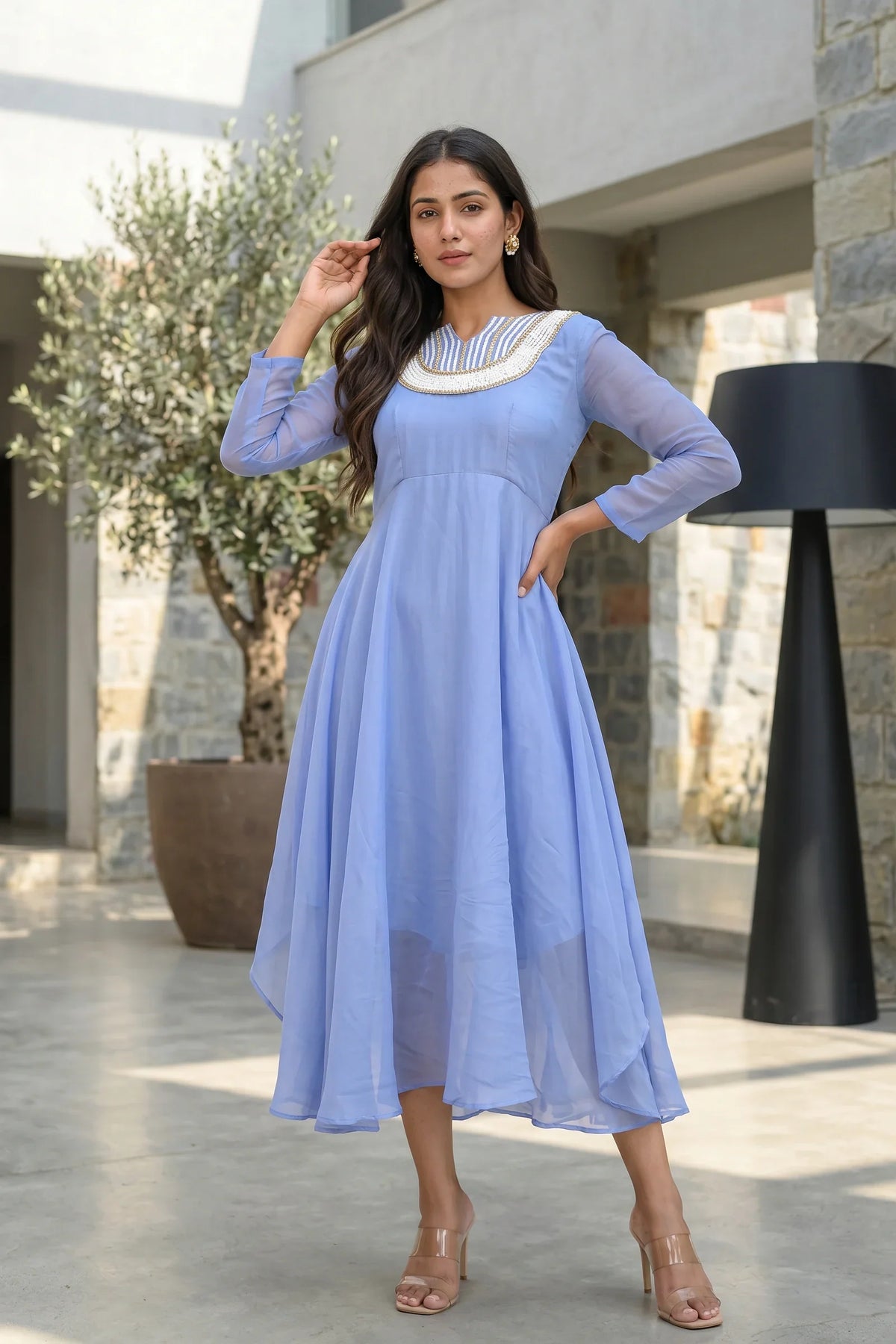
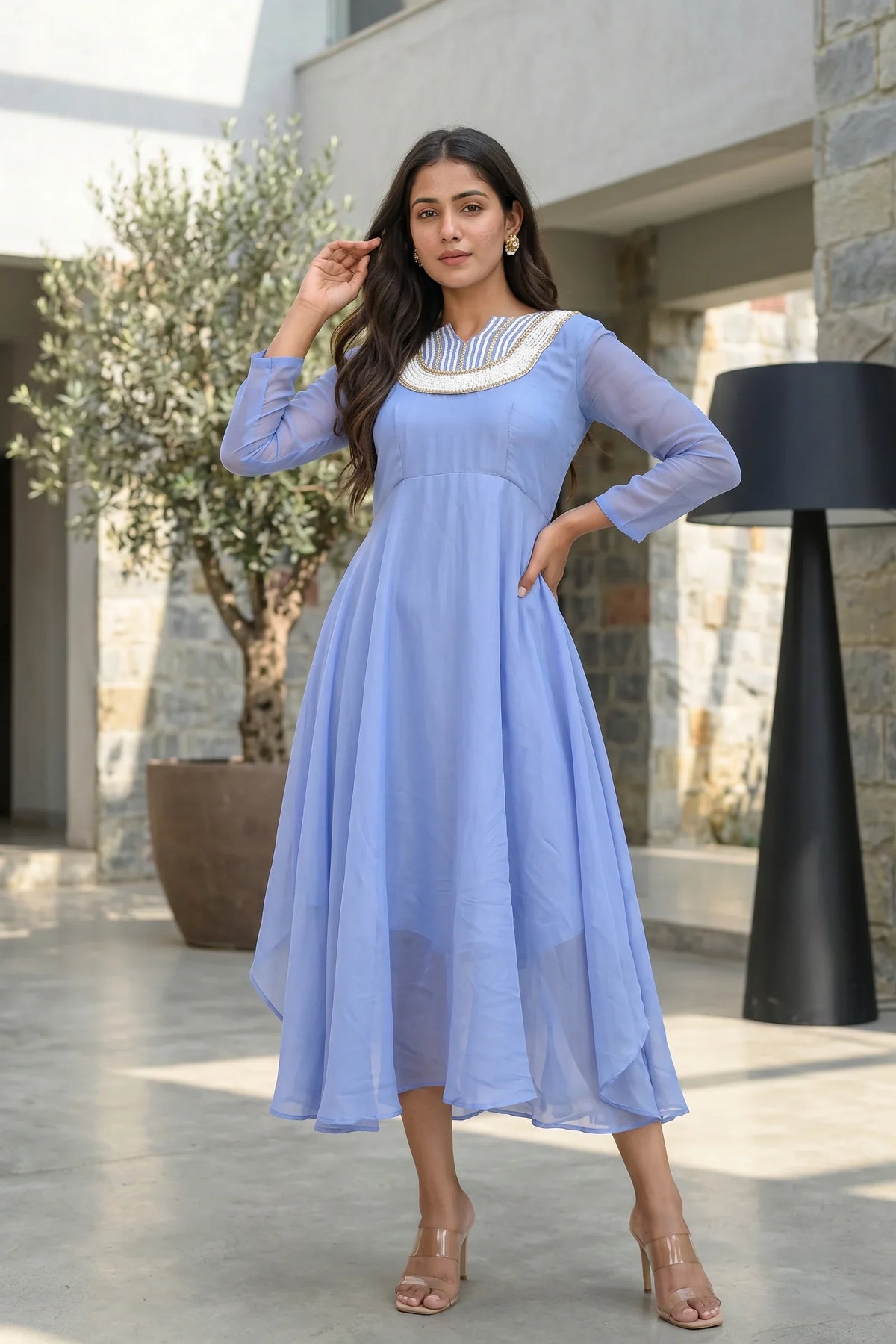
Saroj Jain pick: Baby Blue Asymmetrical Dress

Price: ₹2,336.19
Why it works: Baby blue gives clear contrast against yellow decor and works for guests who do not want to wear another warm shade.
Best for: A dry Haldi, daytime lunch or staged photo-led celebration.
Style with: Pearl studs, silver-toned earrings and comfortable metallic flats.
Avoid if: You expect direct turmeric application and want the lowest-stain-risk option.
Shop the Baby Blue Asymmetrical Dress
Saroj Jain pick: Cut Work Kurti

Price: ₹3,560.49
Why it works: Orange sits close to the traditional Haldi palette while giving more contrast than pale yellow.
Best for: Family guests, daytime functions and ceremonies involving movement or floor seating.
Style with: Straight pants, small jhumkas and tan or gold flats.
Avoid if: You prefer a fully relaxed outfit with no cut-work detailing near areas likely to receive paste.
Saroj Jain pick: Emerald Green Heavy Work Anarkali Dress With Dupatta

Price: ₹6,676.89
Why it works: Emerald green gives strong photographic separation from turmeric yellow and feels festive without copying the bridal colour.
Best for: A dry Haldi, close family role or event with a formal dress code.
Style with: Lightweight gold earrings, a low sandal and a secure dupatta drape.
Avoid if: The ceremony includes generous paste application and you would not be comfortable staining detailed work.
Shop the Emerald Green Heavy Work Anarkali Dress With Dupatta
Saroj Jain pick: Floral Mirage Satin Afghani Dress

Price: ₹4,450.89
Why it works: The floral direction brings colour variation into the look and avoids blending into a single-colour Haldi backdrop.
Best for: A dry celebration, indoor gathering or guest who wants a relaxed statement dress.
Style with: Small hoops, a compact clutch and flat sandals.
Avoid if: The event is outdoors in strong heat or includes prolonged sitting on the ground.
Shop the Floral Mirage Satin Afghani Dress
Outfit Comparison Table
| Outfit | Fabric direction | Festive scale | Price |
|---|---|---|---|
| Baby Blue Asymmetrical Dress | Light dress fabric | Fresh and contemporary | ₹2,336.19 |
| Cut Work Kurti | Kurti fabric with cut-work detail | Moderate and practical | ₹3,560.49 |
| Emerald Green Heavy Work Anarkali Dress With Dupatta | Structured festive fabric | High and formal | ₹6,676.89 |
| Floral Mirage Satin Afghani Dress | Satin | Printed and relaxed statement | ₹4,450.89 |
Body Type and Silhouette Guide
| Body type | Useful Haldi direction | Styling note |
|---|---|---|
| Petite | Shorter hemlines, vertical panels and one-colour looks | Keep the dupatta light and avoid very wide borders. |
| Tall | Long Anarkalis, asymmetrical dresses and printed layers | Use a defined waist or contrast dupatta to break up length. |
| Curvy | Fluid A-lines, open necklines and soft draping | Choose fabric that skims rather than clings around the waist. |
| Lean | Layered dupattas, florals, cut-work detail and gentle gathers | Texture and print can add visual volume without heavy padding. |
Jewellery, Footwear and Beauty Planning
Choose lightweight earrings, a slim bangle stack or one visible ring. Heavy necklaces can feel warm and may catch on a dupatta while you move.
Wear flat sandals, juttis or block heels with a secure strap. Avoid delicate stilettos if the ceremony is on grass, stone or an uneven garden surface.
Keep makeup fresh and sweat-aware. Waterproof eye makeup, a small blotting paper pack and a low-maintenance hairstyle are more useful than complicated finishing.
A Practical Stain Protocol
Decide before dressing whether the outfit can receive turmeric. If yes, choose a garment you can wash according to its care label and avoid dense embellishment where paste can settle.
Carry a separate scarf for travel and keep the main dupatta removable. Do not rub a fresh turmeric mark aggressively, as this can spread pigment through the fabric.
For a valuable or delicate garment, keep it away from direct paste and use a simpler outfit for the ritual. A beautiful outfit is not practical if you spend the ceremony protecting it.
What to Avoid
- White, ivory and very pale pastels if you are not comfortable with visible turmeric marks.
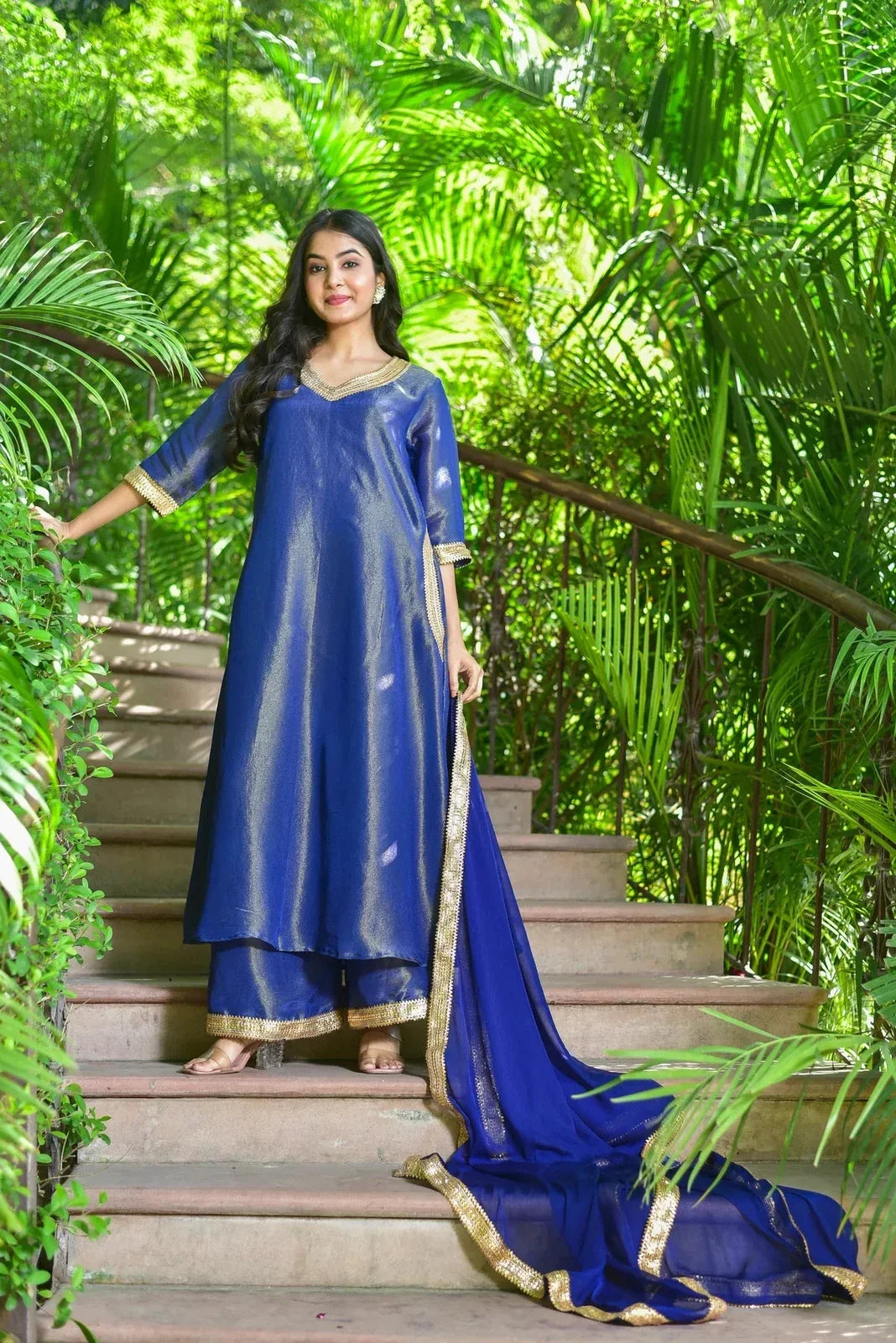
- Black, navy and very dark colours when the invitation sets a bright daytime palette.
- Velvet, heavy silk, thick brocade and stiff raw silk for hot outdoor ceremonies.
- Dense embroidery, loose sequins and deep textured work for paste-heavy rituals.
- Very long hems that drag through turmeric, grass or wet flooring.
- Unsecured dupattas that need constant adjustment.
- Expensive heirlooms that cannot be washed or repaired easily.
Haldi Outfit FAQs
Do guests have to wear yellow?
No. Yellow is traditional, but orange, marigold, mustard, pink, green, teal, coral and floral prints are all useful alternatives. Ask the host if the family has given a specific colour request.
What are the best Haldi outfit colour ideas for photographs?
Marigold, saffron, orange, terracotta, emerald, teal and fuchsia usually create stronger separation from yellow decor. Lemon and butter yellow need a contrasting dupatta or jewellery detail.
What should guests wear to a Haldi ceremony with turmeric paste?
Choose a washable cotton kurta, relaxed Anarkali, simple dress or easy co-ord. Keep the embroidery light and select footwear that supports standing, walking and sitting.
Can I wear white to Haldi?
Yes, if you accept that turmeric can mark it clearly. White works best when the ceremony is dry or when the outfit is inexpensive and easy to clean.
Is a lehenga too heavy for Haldi?
A lightweight lehenga can work for a dry or formal event. For paste-heavy ceremonies, a kurta, Anarkali or relaxed dress is usually easier to move in and less stressful to maintain.
Which fabrics should I avoid?
Avoid velvet, thick brocade, delicate silk, stiff raw silk and difficult-to-clean synthetics when the weather is warm or paste application is expected.
How can I dress differently from the bride without looking out of place?
Use a contrasting colour, simpler embellishment and lighter jewellery. Green, teal, pink and orange provide distinction while staying festive.
Ready to Find Your Fit? Visit Our JP Nagar Boutique
Visit SAROJ JAIN at 57/1, 1st Cross Rd, opposite to Iyengar's Bakery, 5th Phase, Dollar Layout, JP Nagar Phase 5, Bengaluru, Karnataka 560078.
Bring the invitation, tell us whether the Haldi is wet or dry, and try the outfit seated as well as standing. We will help you check colour contrast, comfort, dupatta security and footwear balance in real daylight.
WhatsApp the Styling Team View the Lookbook Shop Collections Book a Boutique Meet
For a comfortable, photograph-ready choice, use this haldi dress code and colour etiquette guide before selecting your outfit.
Visit the Saroj Jain Boutique
Discover our collections in person.
57/1, 1st Cross Rd, opposite to Iyengar's Bakery, Dollar Layout, J. P. Nagar Phase 5,Bengaluru, Karnataka 560078
+91-9314078524