
Haldi Outfit Ideas 2026
Updated: August 2026 | Written by: Saroj Jain Styling Team | Reviewed by: Saroj Jain Boutique Team
Finding the right haldi outfit ideas 2026 is not just about looking good in photos. It is about choosing something that survives turmeric splashes, outdoor heat, sitting cross-legged for hours, and still looking camera-ready when the music starts. Most blogs give you pretty mood boards. We are giving you what actually works from our fitting room in JP Nagar 5th Phase, Bengaluru, where we have styled hundreds of brides, sisters, and guests through real haldi ceremonies. This guide covers colors, fabrics, silhouettes, body types, and the practical details nobody else talks about.
Quick Answer: For haldi outfit ideas 2026, pick cotton or chikankari in pastel tones like lavender, sage mint, powder blue, or coral. Avoid silk, heavy embroidery near the hem, and stark white. Anarkali gowns and A-line kurtas work across body types. Pre-treat your outfit with fabric protector. Bring a backup dupatta. That is the short version. The full breakdown is below.
Table of Contents
- Why Haldi Outfit Planning in 2026 Is Different
- Colors Beyond Yellow That Actually Work
- The Fabric Guide: What Survives Turmeric and Heat
- Silhouettes That Photograph Well and Let You Move
- Haldi Outfit for Bride 2026: Our Top Picks
- Haldi Outfit Ideas for Guests and Family
- Saroj Jain Product Picks for Haldi 2026
- Outfit Comparison at a Glance
- Body Type and Silhouette Matrix
- What to Avoid: Real Warnings from Our Fitting Room
- Male and Family Guest Styling
- Underlayer and Sheer Fabric Planning
- Frequently Asked Questions
- Ready to Find Your Fit? Visit Our JP Nagar Boutique
Why Haldi Outfit Planning in 2026 Is Different
Haldi ceremonies have changed. Three years ago, most families did a quick backyard ritual with close relatives. Now, in 2026, haldi is a full production. Outdoor venues, coordinated decor, professional photographers, DJ setups, and 100-plus guest lists are standard.
That means your outfit needs to do more. It needs to look good in natural daylight photography, survive three to four hours of turmeric application, handle Bangalore's unpredictable August humidity, and still be comfortable enough to dance in.
At our JP Nagar boutique, we have noticed a clear shift this season. Brides are asking for two outfits: one for the ritual and one for the party after. Guests want outfits they can re-wear. Mothers want something dignified but not stiff. Everyone wants to know one thing: will turmeric ruin this?
Colors Beyond Yellow That Actually Work
Yellow is the classic haldi color. But in 2026, non-yellow haldi outfits are dominating. The reason is practical: turmeric on yellow fabric creates a monochrome mess in photos. There is no contrast, no depth, and the outfit looks stained even when it is not.
Here is what works instead:
Pastel lime green. Complements marigold decor beautifully. Turmeric blends into the warm undertone without looking dirty. This is our most requested non-yellow shade this season.
Lavender pink. Photographs exceptionally well in natural daylight. The cool tone balances the warm yellow-orange marigold backdrop. Turmeric stains are less visible on this shade than on most pastels.
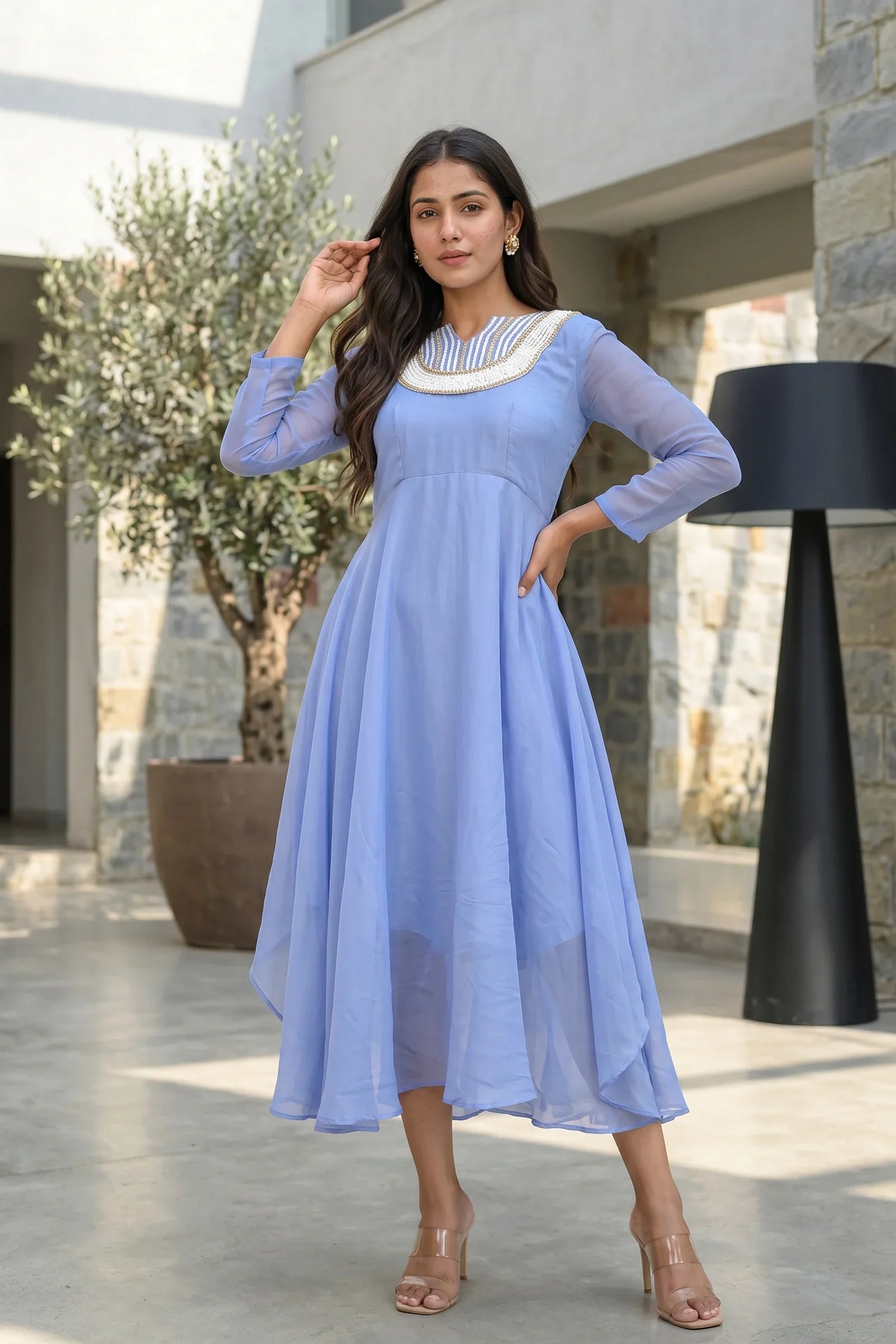
Powder blue and sage mint. Fresh, modern, and gender-neutral enough for family coordination. These tones stay cool under harsh afternoon sun.
Coral and peach. Warm enough to feel festive without competing with turmeric. Works especially well for brides who want a traditional vibe without wearing yellow.
What to skip: Neon shades look harsh in daylight photos. Deep reds and maroons absorb turmeric and look muddy. Stark white is the worst choice. Turmeric on white is permanent and visible from across the venue.
The Fabric Guide: What Survives Turmeric and Heat
This is the section most blogs get wrong. They recommend organza and georgette because they look pretty in flat-lay photos. But in a real outdoor haldi ceremony in August, those fabrics are a nightmare.
Cotton and mul-mul. The safest choice. Breathes in heat, absorbs less turmeric than synthetics, and washes out more reliably. Cotton chikankari is our top recommendation for any haldi outfit in 2026.
Lucknowi chikankari. The embroidery is thread-based, so turmeric sits on the surface rather than soaking into the weave. We have seen chikankari outfits come back from haldi ceremonies with minimal staining after one wash.
Georgette (with caution). Only if it is lined with cotton underneath. Unlined georgette becomes sheer when wet, and sweat plus turmeric creates visible patches. If you love the drape of georgette, budget for a proper cotton slip.
Avoid for haldi: Silk (holds turmeric permanently), velvet (traps heat and stains), heavy brocade (impossible to clean), and raw silk (turmeric bonds to the natural protein fibers).
One observation from our fitting room: clients who wear pure cotton to outdoor haldi events always look more comfortable in candid photos than those in synthetics. The fabric moves with the body instead of sticking to it.
Silhouettes That Photograph Well and Let You Move
Haldi is not a sit-still ceremony. You are sitting cross-legged on the floor, standing for rituals, dancing, and getting turmeric applied by enthusiastic relatives. Your outfit needs to handle all of that.
Anarkali gown. The A-line flare gives you room to sit on the floor without tugging at fabric. Photographs beautifully in motion. Works for brides, sisters, and guests equally.
A-line kurta with palazzo. Practical and comfortable. The palazzo lets you move freely, and the kurta length covers enough to protect your lower half from splashes.
Sharara set. Adds volume and drama. Best for lean frames that want more visual weight. The wide legs are easy to manage on the floor.
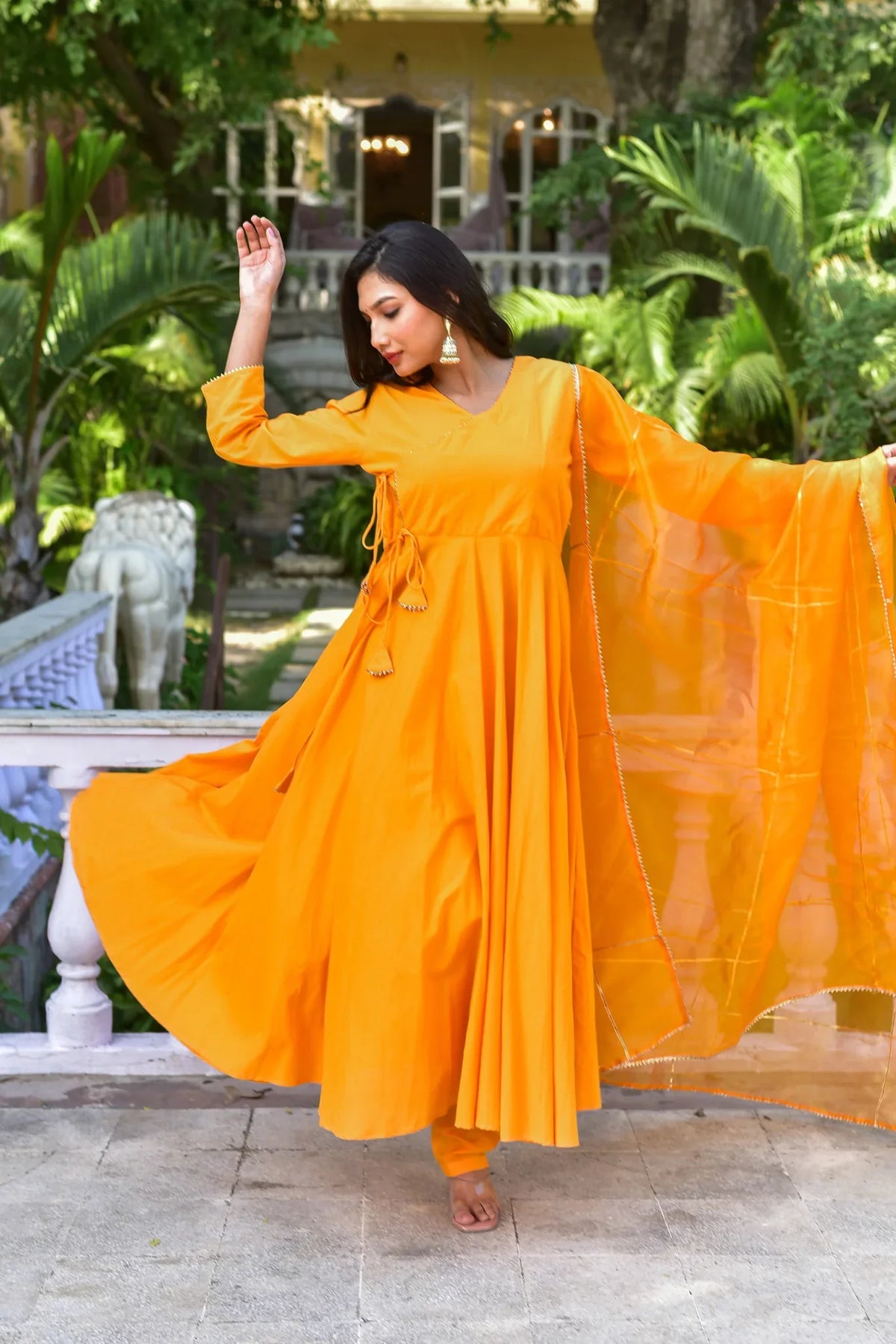
Angrakha style. The wrap front cinches the waist and creates a flattering V-line. Good for hourglass and pear shapes. The overlap also provides an extra layer of protection against chest-level turmeric application.
What to avoid: Tight-fitted lehengas with heavy canopies restrict movement. Floor-length gowns without a train hook will drag through turmeric puddles. Anything with a long trailing dupatta becomes a liability during the ceremony.
Haldi Outfit for Bride 2026: Our Top Picks
Brides in 2026 are choosing comfort over drama for haldi. The big lehenga moment is for the wedding day. Haldi is about being present, enjoying the ritual, and getting good photos without worrying about ruining a lakh-rupee outfit.
Our recommendation for brides: A chikankari anarkali gown in a pastel tone. It looks bridal enough for photos, costs a fraction of a designer lehenga, and survives turmeric without drama. Pair with statement jhumkas and fresh gajra. Skip the heavy necklace since it will get turmeric on it.
If you want to wear yellow, choose a muted mustard or turmeric gold instead of bright marigold. The turmeric paste will blend in rather than create visible splashes.
Keep your dupatta lightweight. A cotton or chanderi dupatta that you can drape once and forget about. You do not want to be adjusting fabric while your cousins are smearing turmeric on your face.
Haldi Outfit Ideas for Guests and Family
Guests have it easier. You are not the center of attention, so your outfit does not need to be bridal-level. But you still need to look put-together in group photos and survive the turmeric zone.
Sisters and close friends: Coordinated pastel sets work great. Pick a color family (all pinks, all greens, all blues) and let each person choose their own shade. This creates a cohesive photo without being matchy-matchy.
Mothers and aunts: A-line kurtas in rich pastels with churidar or palazzo. Avoid heavy sarees that are hard to manage on the floor. Cotton-silk blends are acceptable if pure cotton feels too casual.
Haldi outfit ideas for women attending as plus-ones or colleagues: A simple printed kurta set in cotton. You will likely be at the edge of the turmeric zone, so you do not need to plan for heavy splashes. But still avoid white and silk.
Saroj Jain Product Picks for Haldi 2026
These are the outfits we are recommending to clients walking into our JP Nagar boutique this season. Each one has been tried on, tested for comfort, and evaluated for haldi-readiness.
Saroj Jain Pick: Haldi Yellow Angrakha Anarkali Set

Price: ₹3,337.89
Why it works: The angrakha wrap creates a flattering waistline while the anarkali flare gives you room to sit cross-legged. The yellow tone is muted enough that turmeric paste blends in rather than creating harsh contrast. Cotton-based fabric breathes well in outdoor heat.
Best for: Brides who want a classic yellow haldi look without the risk of a designer outfit. Also works for sisters of the bride who want to coordinate with the yellow theme.
Style with: Gold jhumkas, fresh gajra in the hair, and kolhapuri chappals. Skip the heavy necklace. Keep the dupatta pinned so it does not drag through turmeric.
Avoid if: You are attending an outdoor haldi in peak afternoon sun and prefer a cooler tone. The yellow will photograph warm under direct sunlight.
Shop the Haldi Yellow Angrakha Anarkali Set
Saroj Jain Pick: Ombre Lavender Pink & Crimson Red Lucknowi Chikankari Anarkali Gown

Price: ₹4,499
Why it works: The ombre gradient from lavender pink to crimson red creates visual depth that hides turmeric splashes naturally. Chikankari threadwork sits on the surface, so turmeric does not soak into the embroidery. The anarkali gown silhouette is floor-length drama without the hassle of a separate lehenga and blouse.
Best for: Bridesmaids and sisters who want a statement outfit that is still haldi-safe. Also works for brides doing a non-yellow haldi theme.
Style with: Silver oxidized jhumkas, a low bun with baby's breath, and embroidered juttis. The ombre effect means you can pull accessories from either the pink or red end of the palette.
Avoid if: Your haldi is indoors with heavy artificial lighting. The crimson red can read darker under yellow bulbs. Best in natural daylight.
Shop the Ombre Lavender Pink & Crimson Red Chikankari Gown
Saroj Jain Pick: Ombre Pink & Lime Green Lucknowi Chikankari Anarkali Gown

Price: ₹4,799
Why it works: The pink-to-lime-green ombre is the most photogenic combination for outdoor haldi ceremonies with marigold decor. The lime green complements the yellow-orange flowers while the pink adds a feminine contrast. Chikankari fabric is breathable and turmeric-resistant.
Best for: Guests, cousins, and friends who want to stand out in group photos without outshining the bride. The color combination is festive without being bridal.
Style with: Meenakari earrings in pink or green, a braided hairstyle with fresh mogra, and metallic block heels. Add a thin gold belt at the waist for definition.
Avoid if: You prefer muted, understated tones. This ombre is vibrant and will be the center of attention in any group photo.
Shop the Ombre Pink & Lime Green Chikankari Gown
Saroj Jain Pick: Ombre Powder Blue & Sage Mint Green Lucknowi Chikankari Anarkali Gown

Price: ₹4,499
Why it works: Cool tones are the smartest choice for daytime outdoor haldi events. Powder blue and sage mint reflect light instead of absorbing it, keeping you cooler. The ombre transition is subtle enough for mothers and aunts who want elegance without loud color. Turmeric stains are least visible on this palette compared to any other option we have tested.
Best for: Mothers of the bride and groom, senior family members, and anyone who wants a sophisticated haldi look. Also excellent for engagement-mehendi crossover events.
Style with: Pearl drop earrings, a neat middle-part bun, and cream or nude kolhapuris. Keep jewelry minimal. The outfit speaks for itself.
Avoid if: Your haldi has a strictly traditional yellow-only dress code. This cool palette works best when the family is open to modern color choices.
Shop the Ombre Powder Blue & Sage Mint Green Chikankari Gown