
Highest Sales: Mixing Best Myntra Classics with Saroj Jain Mastery
Highest Sales: Mixing Best Myntra Classics with Saroj Jain Mastery
Before you scroll to the product link, let me earn your trust. Because we are not here to just sell you something. We are here to reframe how you think about ethnic wear investment — and then show you exactly where Saroj Jain sits in that framework.
Shop this category directly: Saroj Jain Collection →

Why This Category Works Across Occasions
The most underrated quality in ethnic wear is versatility — the ability to style a single piece across multiple occasions without looking repetitive.
A well-chosen Saroj Jain piece typically has three lives:
First wear: The occasion it was bought for. Full styling, complete jewellery set, matching dupatta pinned and pleated.
Second wear: A more casual version of the same event category. The dupatta worn loosely, the jewellery scaled back to studs and a single bracelet.
Third wear: Entirely repurposed. The kurta worn with jeans. The lehenga skirt worn as a maxi with a solid colour blouse. The saree blouse worn as a structured top with cigarette trousers.
This three-wear principle is what separates an investment piece from a disposable one — and it is the single most important consideration when you are choosing where to spend your ethnic wear budget in 2026.
The Fabric Dictionary: What You Need to Know Before You Buy
Most ethnic wear customers are not experts in textile science — and they should not need to be. But a basic working knowledge of the fabrics you are buying helps you make better decisions and understand why pricing varies.
Chanderi: A lightweight, semi-transparent fabric woven in Chanderi, Madhya Pradesh. Known for its golden zari border and subtle sheen. Best for: daytime functions, summer events, and as a saree drape fabric.
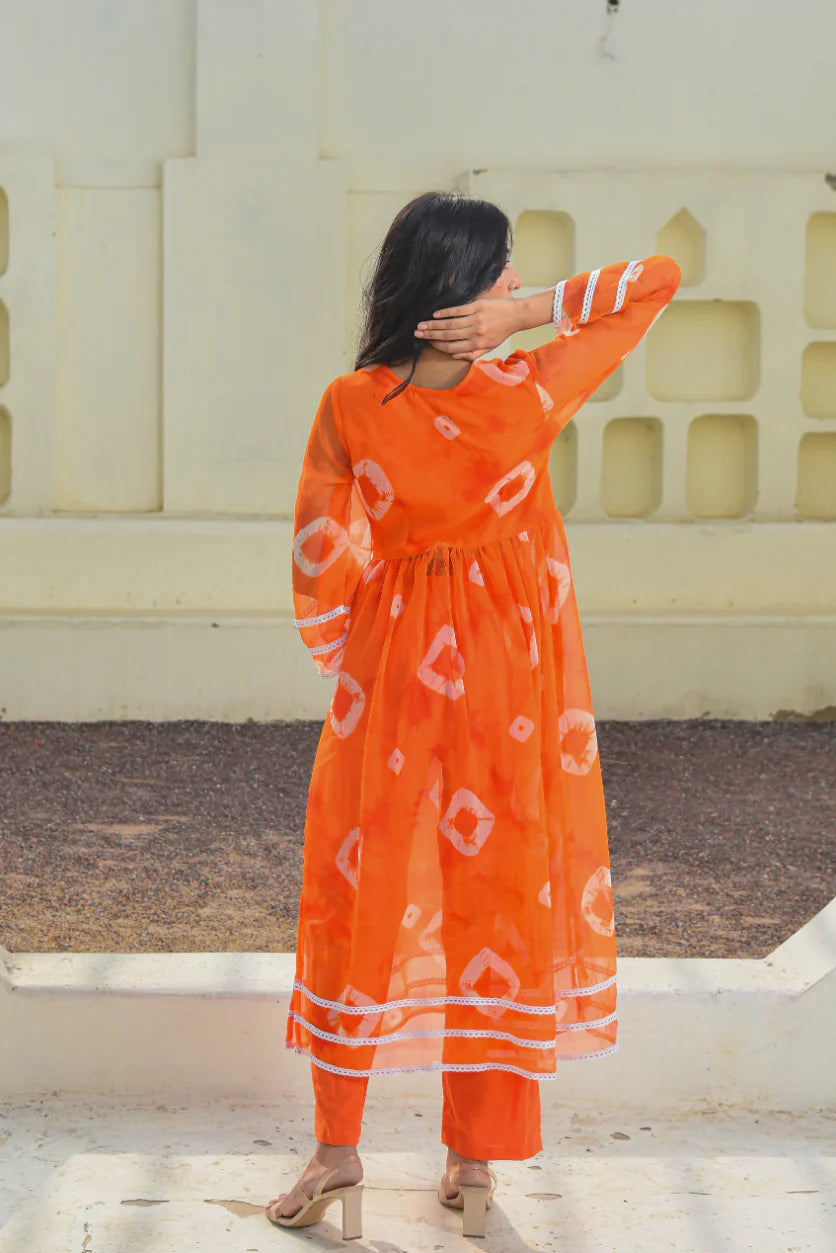
Georgette: A sheer, crepe-like fabric with a slightly rough texture. Flows beautifully in motion. Best for: dance-heavy events like sangeets, casual sarees, layered dupatta.
Organza: Stiff, transparent fabric with a high sheen. Holds its shape well. Best for: statement dupattas, structured blouse overlays, lehenga bottom layers.
Pure Silk (Katan/Zardozi base): The heaviest and most luxurious option. Natural temperature regulation, high drape weight, rich colour depth. Best for: weddings, receptions, any occasion where presence takes priority over comfort of movement.
Cotton Silk blend: The practical luxury option. Breathable like cotton, lustrous like silk. Best for: all-day events, South Indian climate, women who need comfort without sacrificing elegance.
Understanding these distinctions will make you a more confident shopper — whether you are buying from Saroj Jain, Myntra, or any other platform.
How to Style This Category Right in 2026
The 2026 ethnic wear moment is defined by one principle: intention over accumulation.
Gone is the era of the maximalist wardrobe where more meant better. The woman who commands a room in 2026 is the one who has clearly thought about every element — the fabric weight relative to the venue temperature, the embellishment density relative to the event formality, the colour relative to her skin undertone.
For daytime events and brunches: Choose lighter fabrics — chanderi, cotton-silk — in muted or pastel tones. Let the silhouette do the work. A clean A-line kurta set in pale ivory is more powerful than a heavily embroidered kurta in five competing colours.
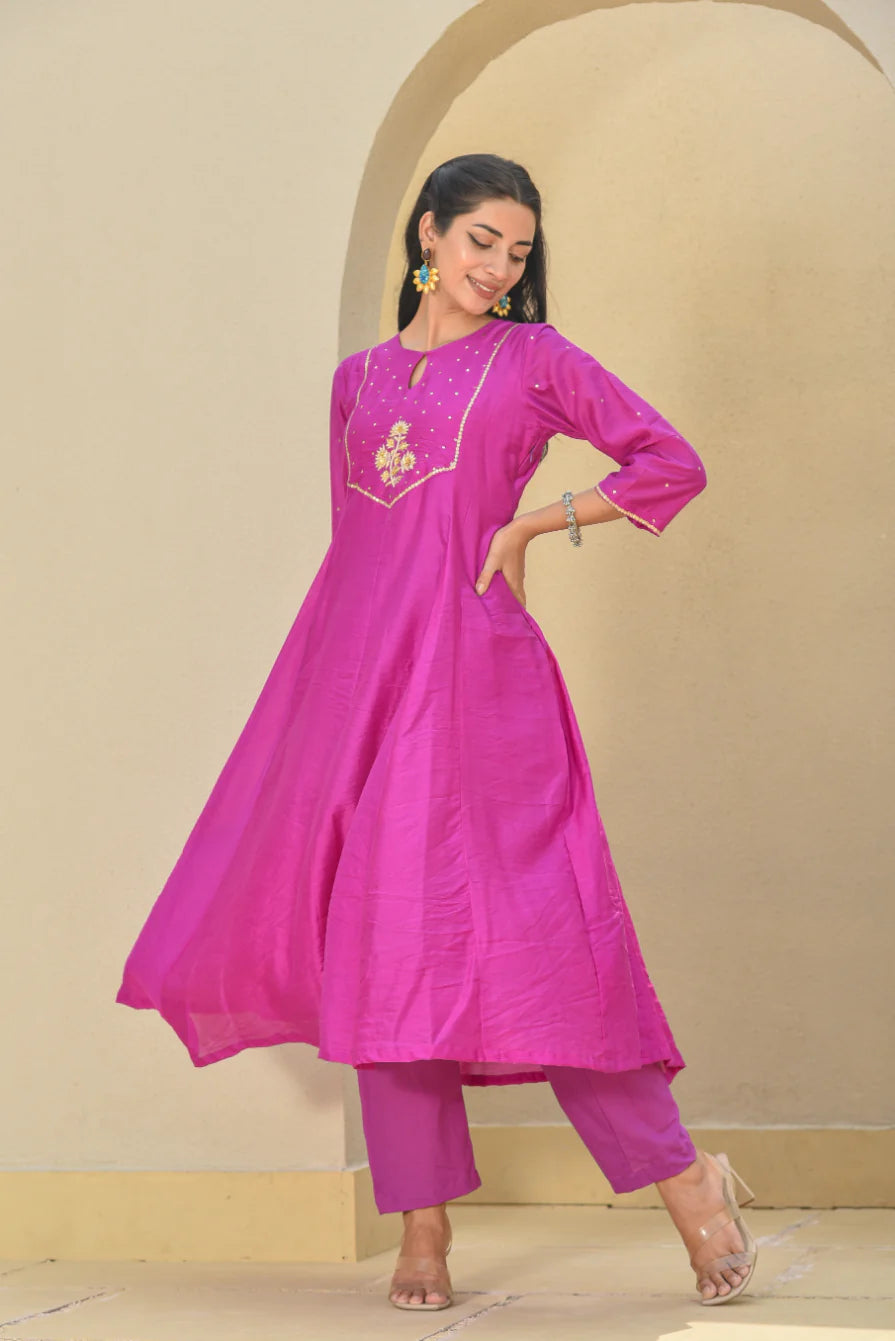
For sangeets and mehendi functions: This is where you earn the right to go full — but only if the 'full' is cohesive. A deep magenta sharara set with matching dupatta and minimal jewellery beats a hodgepodge of mixed pieces any day.
For weddings and receptions: The saree remains the undisputed authority look. Specifically, a silk or georgette saree draped in the Nivi style, with a structured blouse, is the signal of a woman who knows exactly what she is doing.
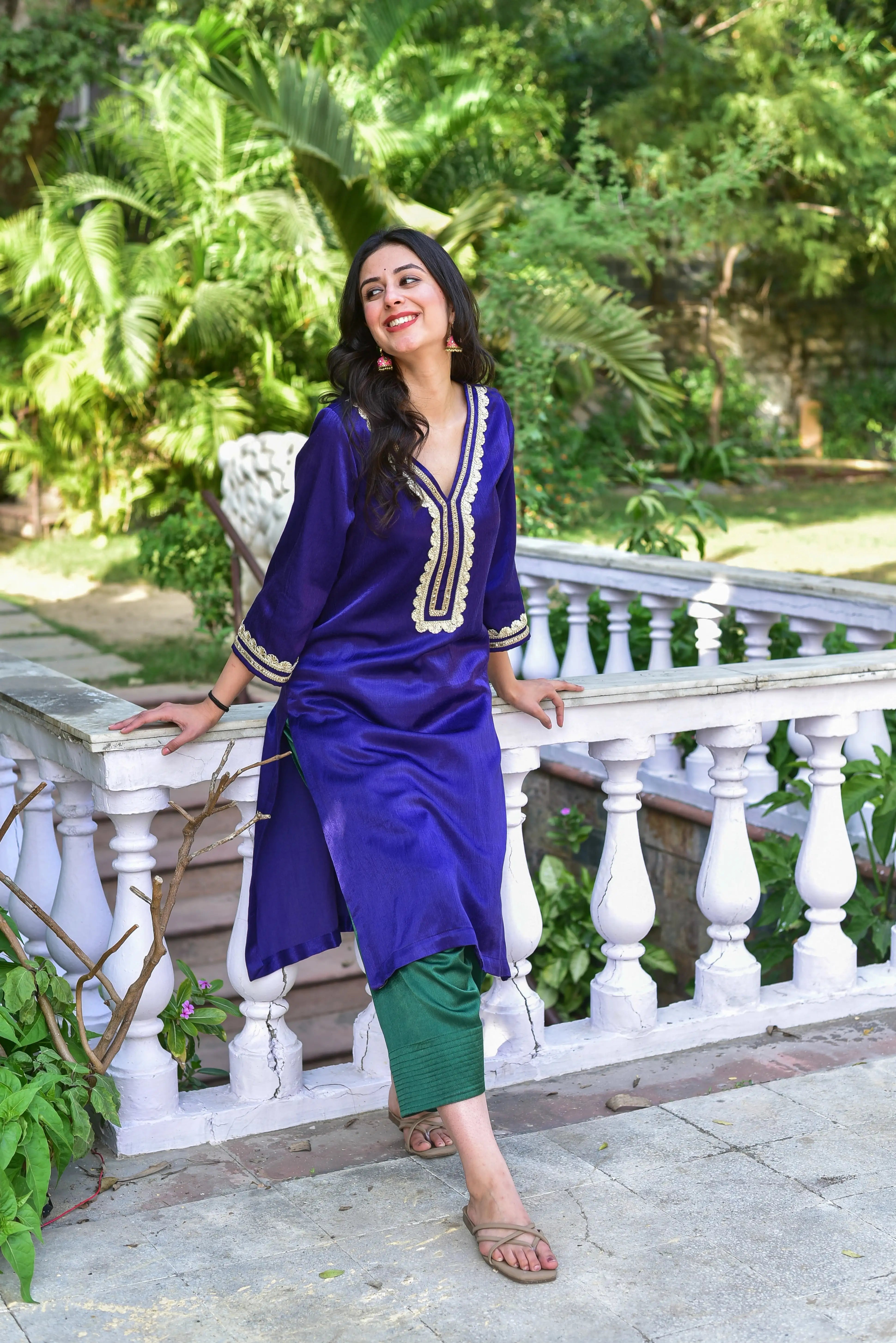
For corporate events with ethnic dress codes: The co-ord kurta set is the power move. Matching palazzo or cigarette pants, structured kurta with mandarin collar or V-neck, and a single statement piece of jewellery. Clean. Decisive. Memorable.
The Four Pillars of Quality That Saroj Jain Never Compromises On
1. Fabric Authenticity
Every fabric that comes into our studio is verified at source. We do not buy from intermediary markets. We work directly with weavers from Kanchipuram, Varanasi, Bhagalpur, and Chanderi. What this means for you: the silk you receive is real silk, with the natural lustre, weight, and drape that synthetic blends cannot replicate.
2. Structural Engineering
A beautiful fabric hanging on a hanger is only half the battle. The cut determines whether the same fabric looks like a masterpiece or an afterthought when it is on your body. Our pattern masters have over two decades of experience in silhouette architecture — the bias cut that slims without compressing, the A-line flare that adds volume without bulk.
3. Embellishment Integrity
Every zardozi thread, every gotta-patti strip, every mukesh work placement is done by hand. Not because we are romantic about tradition — because machine-applied embellishment has a mechanical uniformity that the human eye instinctively reads as cheap. Hand-done work has micro-variations that read as luxury.
4. Finishing Standard
The inside of a Saroj Jain garment is finished as carefully as the outside. French seams. Matched lining. Covered hooks. Because the moment of dressing is private and the quality of that moment matters to a woman who respects herself.
✨ Featured From Our Collection
Magenta Zardozi Anarkali Set — One of our most loved pieces. Handcrafted, authentic fabric, built to last.
Ice Blue Chanderi Kurta Set — A perennial bestseller for weddings, festive occasions, and beyond.
Also available on Myntra: Shop Saroj Jain on Myntra →

Frequently Asked Questions
Are the fabrics tested for colour fastness?
All our fabrics undergo wash testing before they enter production. We use dye-locking processes that ensure colour stability through at least 25 machine washes at 30 degrees. Dry cleaning is recommended for heavily embellished pieces. Detailed care instructions ship with every order.
Is the sizing true to standard Indian sizes?
Our sizing runs slightly generous compared to fast-fashion brands. We recommend measuring your bust, waist, and hip and referring to the size guide on the product page. For kurta sets, most customers find their regular size fits well. For lehengas and anarkalis, we recommend going by waist measurement.
What is the return and exchange policy on online orders?
We offer a 7-day exchange policy on all online orders. Items must be unworn, unwashed, and in original packaging with tags intact. We do not offer refunds, but exchanges for a different size or style are handled with priority. Reach out via email or WhatsApp to initiate.
Can I visit the JP Nagar studio without an appointment?
Walk-ins are welcome Tuesday through Sunday, 11am to 7pm. For bridal consultations, a prior appointment ensures a dedicated stylist is available for the full session. Call or WhatsApp +91-9414778524 to schedule. We are closed on Mondays for studio operations and inventory management.
Every piece at Saroj Jain carries the fingerprint of the artisan who made it. That is not marketing language. It is the literal truth of handmade fashion. When you wear it, you carry a piece of someone's mastery with you. We think that is worth saying.
Visit Saroj Jain in JP Nagar
📍 No 362, Ground Floor, 9th Main Road, JP Nagar 4th Phase, Bengaluru 560078
📞 +91-9414778524 | 💬 WhatsApp Us | ✉️ help@sarojjain.com