
Highest Sales: Scaling Heirloom for the Global Myntra Consumer
Highest Sales: Scaling Heirloom for the Global Myntra Consumer
You have thirty seconds to make a first impression. In fashion, that impression is made before you say a single word. The architecture of your silhouette communicates your attention to detail, your respect for craftsmanship, and your willingness to invest in yourself. This guide is for those who take that seriously.
Shop this category directly: Saroj Jain Collection →

Why This Category Works Across Occasions
The most underrated quality in ethnic wear is versatility — the ability to style a single piece across multiple occasions without looking repetitive.
A well-chosen Saroj Jain piece typically has three lives:
First wear: The occasion it was bought for. Full styling, complete jewellery set, matching dupatta pinned and pleated.
Second wear: A more casual version of the same event category. The dupatta worn loosely, the jewellery scaled back to studs and a single bracelet.
Third wear: Entirely repurposed. The kurta worn with jeans. The lehenga skirt worn as a maxi with a solid colour blouse. The saree blouse worn as a structured top with cigarette trousers.
This three-wear principle is what separates an investment piece from a disposable one — and it is the single most important consideration when you are choosing where to spend your ethnic wear budget in 2026.
The Fabric Dictionary: What You Need to Know Before You Buy
Most ethnic wear customers are not experts in textile science — and they should not need to be. But a basic working knowledge of the fabrics you are buying helps you make better decisions and understand why pricing varies.
Chanderi: A lightweight, semi-transparent fabric woven in Chanderi, Madhya Pradesh. Known for its golden zari border and subtle sheen. Best for: daytime functions, summer events, and as a saree drape fabric.
Georgette: A sheer, crepe-like fabric with a slightly rough texture. Flows beautifully in motion. Best for: dance-heavy events like sangeets, casual sarees, layered dupatta.
Organza: Stiff, transparent fabric with a high sheen. Holds its shape well. Best for: statement dupattas, structured blouse overlays, lehenga bottom layers.
Pure Silk (Katan/Zardozi base): The heaviest and most luxurious option. Natural temperature regulation, high drape weight, rich colour depth. Best for: weddings, receptions, any occasion where presence takes priority over comfort of movement.
Cotton Silk blend: The practical luxury option. Breathable like cotton, lustrous like silk. Best for: all-day events, South Indian climate, women who need comfort without sacrificing elegance.
Understanding these distinctions will make you a more confident shopper — whether you are buying from Saroj Jain, Myntra, or any other platform.
How to Style This Category Right in 2026
The 2026 ethnic wear moment is defined by one principle: intention over accumulation.
Gone is the era of the maximalist wardrobe where more meant better. The woman who commands a room in 2026 is the one who has clearly thought about every element — the fabric weight relative to the venue temperature, the embellishment density relative to the event formality, the colour relative to her skin undertone.
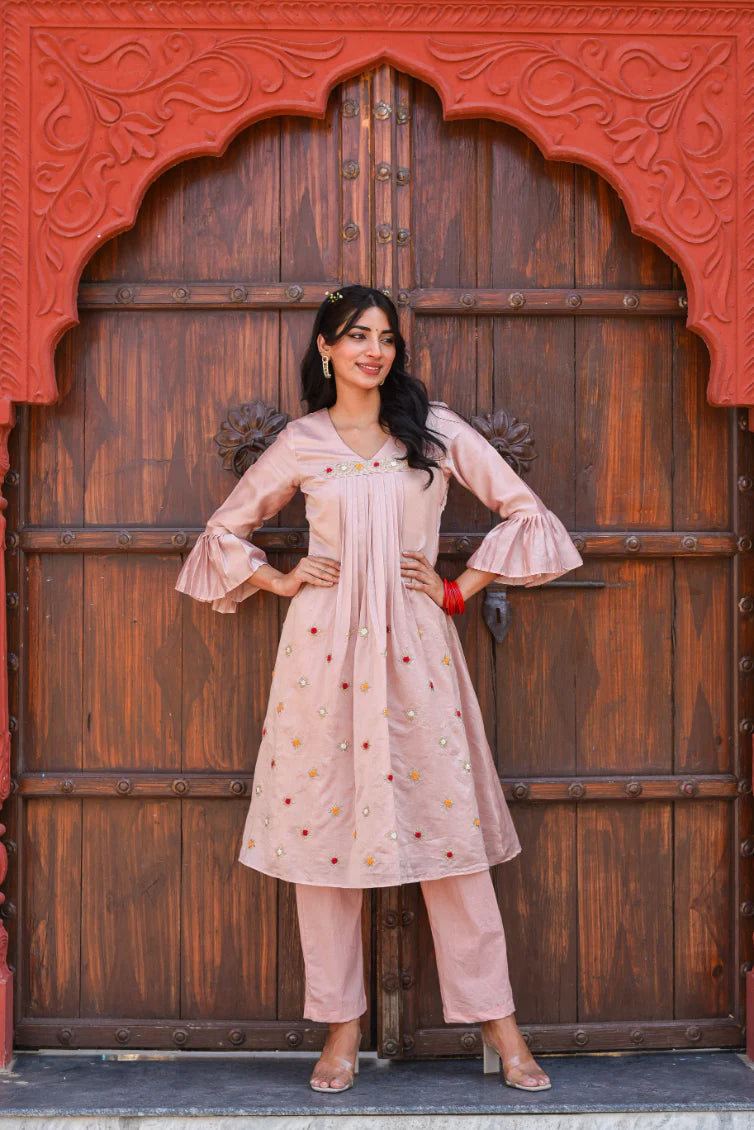
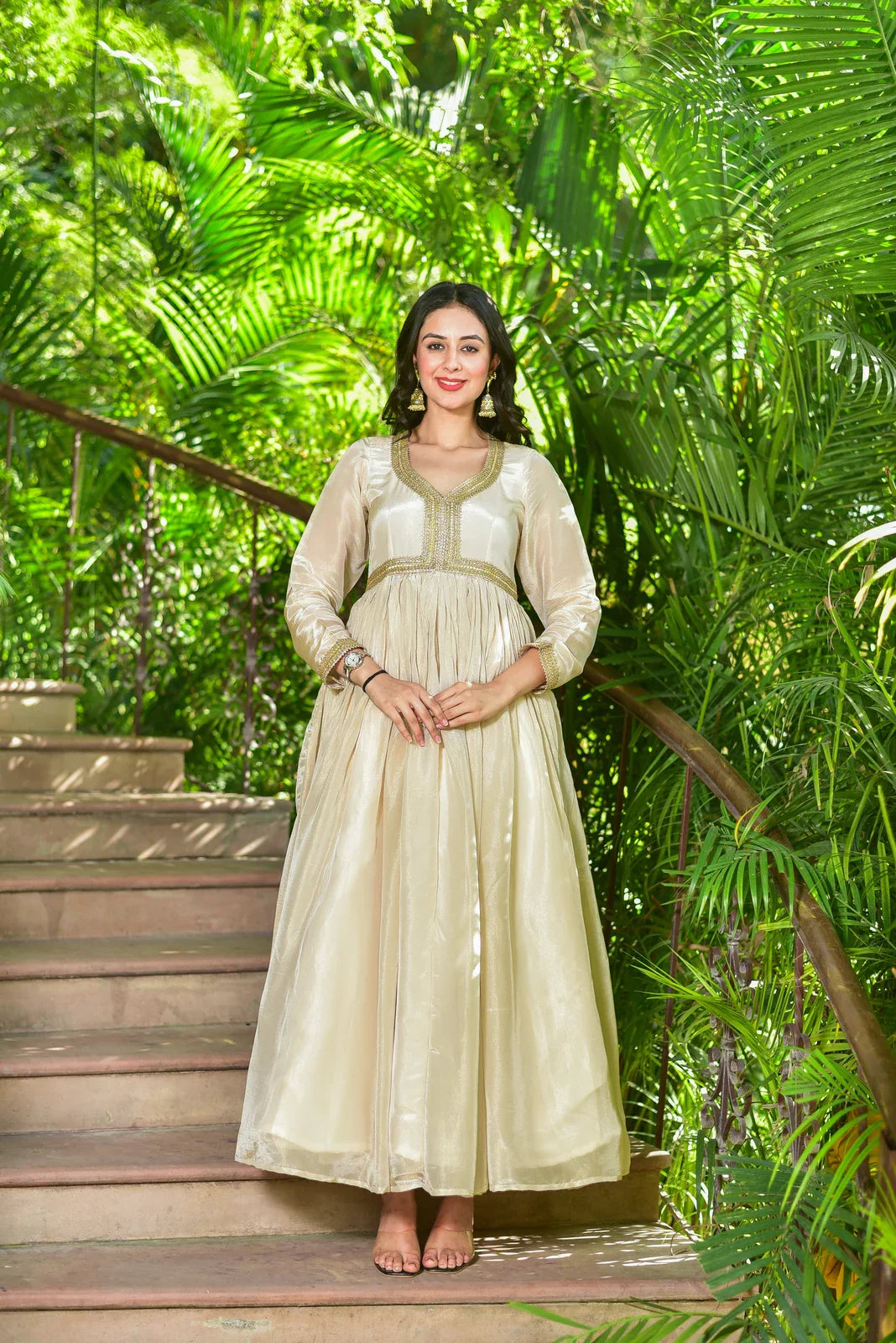
For daytime events and brunches: Choose lighter fabrics — chanderi, cotton-silk — in muted or pastel tones. Let the silhouette do the work. A clean A-line kurta set in pale ivory is more powerful than a heavily embroidered kurta in five competing colours.
For sangeets and mehendi functions: This is where you earn the right to go full — but only if the 'full' is cohesive. A deep magenta sharara set with matching dupatta and minimal jewellery beats a hodgepodge of mixed pieces any day.
For weddings and receptions: The saree remains the undisputed authority look. Specifically, a silk or georgette saree draped in the Nivi style, with a structured blouse, is the signal of a woman who knows exactly what she is doing.
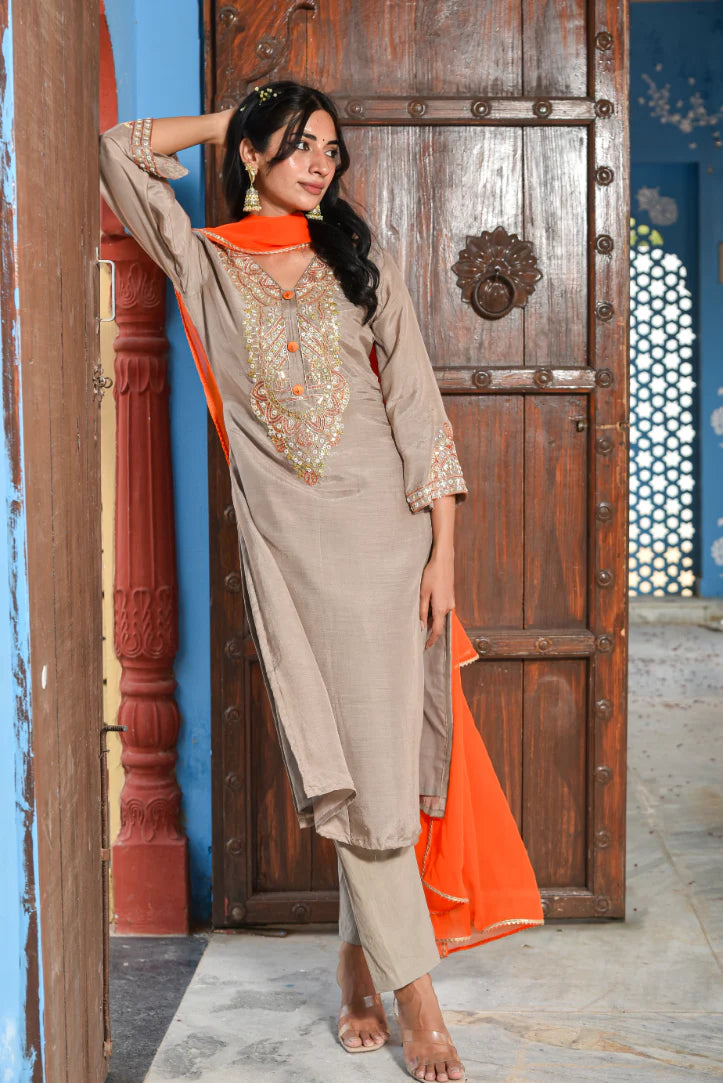
For corporate events with ethnic dress codes: The co-ord kurta set is the power move. Matching palazzo or cigarette pants, structured kurta with mandarin collar or V-neck, and a single statement piece of jewellery. Clean. Decisive. Memorable.
The Saroj Jain Difference: What You Are Actually Paying For
When you invest in a Saroj Jain piece, the cost breakdown looks nothing like a factory label.
Roughly 60% of cost goes into the raw material — pure silks, hand-woven chanderi, zari-embedded georgettes, and organza that breathes.
Another 25% goes into the labour — the karigars in Jaipur and Bengaluru who have trained for decades to get a pleat symmetrical on the first try.
The remaining 15% is design, quality control, and packaging.
Compare this to a mass-market brand where 50% of the cost is marketing, 30% is logistics, and 20% is actual fabric and stitching. The numbers tell the story that marketing language cannot.
This is why a Saroj Jain piece looks different under real lighting, feels different against your skin after six hours of wear, and holds its shape after ten washes. It is not magic. It is material mathematics.
✨ Featured From Our Collection
Dust Orange Lehenga Set — One of our most loved pieces. Handcrafted, authentic fabric, built to last.
Ice Blue Chanderi Kurta Set — A perennial bestseller for weddings, festive occasions, and beyond.
Also available on Myntra: Shop Saroj Jain on Myntra →

Frequently Asked Questions
How do I care for a chanderi or georgette piece after an event?
For chanderi: hand wash in cold water with a mild detergent, lay flat to dry, and steam iron from the reverse side. For georgette: the same process applies, with the addition of hanging dry rather than laying flat to preserve the natural drape. Never wring either fabric.
Is the sizing true to standard Indian sizes?
Our sizing runs slightly generous compared to fast-fashion brands. We recommend measuring your bust, waist, and hip and referring to the size guide on the product page. For kurta sets, most customers find their regular size fits well. For lehengas and anarkalis, we recommend going by waist measurement.
Can I visit the JP Nagar studio without an appointment?
Walk-ins are welcome Tuesday through Sunday, 11am to 7pm. For bridal consultations, a prior appointment ensures a dedicated stylist is available for the full session. Call or WhatsApp +91-9314078524 to schedule. We are closed on Mondays for studio operations and inventory management.
What is the return and exchange policy on online orders?
We offer a 7-day exchange policy on all online orders. Items must be unworn, unwashed, and in original packaging with tags intact. We do not offer refunds, but exchanges for a different size or style are handled with priority. Reach out via email or WhatsApp to initiate.
Your wardrobe is a statement about your values. When you choose Saroj Jain, you choose craftsmanship over convenience, heritage over hype, and quality over quantity. That is a choice worth making — and wearing — with confidence.
Visit Saroj Jain in JP Nagar
📍 57/1, 1st Cross Rd, opposite to Iyengar's Bakery, Dollar Layout, JP Nagar Phase 5, Bengaluru 560078
📞 +91-9314078524 | 💬 WhatsApp Us | ✉️ help@sarojjain.com
Visit the Saroj Jain Boutique
Discover our collections in person.
57/1, 1st Cross Rd, opposite to Iyengar's Bakery, Dollar Layout, J. P. Nagar Phase 5,Bengaluru, Karnataka 560078
+91-9314078524