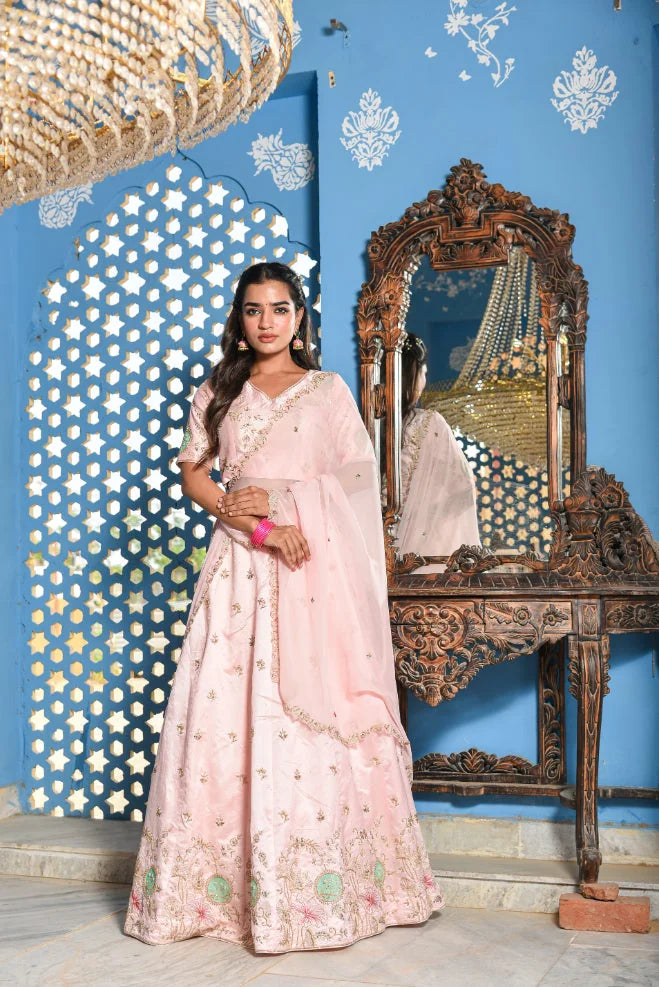


How to Accessorise Ethnic Wear — A Boutique Stylist's Guide
Updated: August 2026 | Written by: Saroj Jain Styling Team
What jewellery should I wear with this kurta? Will these earrings work with a saree? Should I carry a potli or a sling?
We hear these questions every day at our JP Nagar boutique. Customers pick a stunning outfit. Then they freeze at the accessories. The wrong pair of earrings can throw off an entire look. The right ones make you look like you walked out of a styling shoot.
This guide covers exactly how we help our clients accessorise. No fluff. Just what works.
Key Takeaways
- Match jewellery metal to your outfit's embroidery colour, not the fabric shade
- Heavy embroidery needs minimal accessories; plain fabrics can carry statement pieces
- Potli bags work for weddings and festive events; sling bags suit mehendi and haldi
- Footwear changes the silhouette . juttis for shararas, heels for sarees, kolhapuris for kurtas
- At our boutique, we find most clients over-accessorise. Start with two pieces and add only if the mirror says yes
Table of Contents
- How Do You Match Jewellery to Ethnic Wear?
- Jewellery Pairing by Outfit Type (Comparison Table)
- Footwear Guide for Every Silhouette
- Bag Selection by Occasion
- What We See at the Boutique (Common Mistakes)
- Saroj Jain Picks: Two Outfits We Love Accessorising
- FAQs
- Final Word
How Do You Match Jewellery to Ethnic Wear?
The rule we teach every client: match your jewellery to the embroidery thread, not the fabric. A pink kurta with gold zari work wants gold earrings. The same pink kurta with silver thread work needs silver. Simple, but most people miss this.
For outfits with mixed metal embroidery, choose the dominant shade. Hold the fabric under boutique lighting. Whichever metal catches light first is your jewellery colour.
Heavily embroidered lehengas and anarkalis do not need a heavy necklace. A choker or a statement pair of jhumkas is enough. The embroidery is already doing the work. Adding more metal creates visual noise.
Jewellery Pairing by Outfit Type
| Outfit Type | Best Jewellery | Footwear | Bag |
|---|---|---|---|
| Kurta Set | Jhumkas or chandbalis, light bangles | Kolhapuris or juttis | Sling bag or small potli |
| Anarkali | Statement earrings, skip necklace | Heels or wedges | Clutch or embellished potli |
| Saree | Necklace or temple jewellery | Heels (2-3 inches) | Potli bag |
| Lehenga | Choker + maang tikka for bridal; jhumkas for guest | Heels (at least 2 inches) | Embroidered potli |
| Sharara/Gharara | Chandbalis, cocktail ring | Juttis or block heels | Sling or mini potli |
Footwear Guide for Every Silhouette
Footwear is the accessory most people ignore until the morning of the event. At our boutique, we ask every client what shoes they are planning to wear. It changes how we do the fitting.
For sarees: Heels between 2 and 3 inches work best. The pallu drapes cleaner and the silhouette elongates. Block heels if the venue has grass. Stilettos for indoor receptions.
For kurta sets and shararas: Juttis or kolhapuris are the natural choice. Flat footwear keeps the silhouette relaxed and comfortable. If you want height, a 1-inch block heel jutti works without changing the drape.
For lehengas: Heels are non-negotiable if the lehenga is floor-length. Without heels, the hem drags and collects dust. We recommend getting the lehenga hemmed while wearing the exact heels you will wear to the event.
Bag Selection by Occasion
The bag rule from our styling sessions: the bag should match the formality of the event, not the formality of the outfit.
Wedding or reception: Embroidered potli or embellished clutch. Hands-free is not the goal here. You want something that photographs well and holds just your phone and lipstick.
Mehendi or haldi: Sling bag or small crossbody. Your hands will be busy. You need both hands free for mehendi application or eating. A potli becomes a nuisance when you are sitting on the floor.
Sangeet: Mini potli or wristlet. You will be dancing. Anything with a chain or strap gets in the way. A wristlet stays put through the most energetic garba.

What We See at the Boutique: Common Accessorising Mistakes
After fittings at our JP Nagar studio, we see the same mistakes repeat. Here is what to avoid:
Over-accessorising: Earrings plus necklace plus maang tikka plus hathphool plus heavy bangles. Pick two statement pieces. Three maximum. More than that and the outfit has no room to breathe.
Mismatched metals: Gold earrings with a silver-work chikankari kurta. The contrast pulls attention toward the mismatch, not toward you.
Wrong footwear height: Flat kolhapuris with a floor-length anarkali. The hem pools around your feet. It looks unintentional and shortens your frame.
Practical bag for formal events: A large sling bag at a cocktail party. It breaks the line of the outfit. Save the practical bags for daytime functions.
Decision Guide: What to Wear Where
Still not sure? Here is our quick decision framework:
If your outfit has heavy embroidery: Minimal jewellery. Studs or small jhumkas. No necklace. Let the embroidery speak.
If your outfit is plain or lightly embroidered: Statement earrings or a bold necklace. One focal point.
If your event is outdoors: Block heels or wedges. Stilettos sink into grass. Juttis work too.
If your event is at night: Go bigger. Chandbalis, kundan sets, an embellished clutch. Night lighting forgives more shine.

Saroj Jain Picks: Two Outfits We Love Accessorising
Bandhej Kurta Set
Price: Rs. 4,673
How we accessorise it: The bandhej print has enough visual texture to stand on its own. We pair it with gold chandbalis, a single stack of bangles, and nude kolhapuris. No necklace needed. The dupatta drapes beautifully over one shoulder.
Best for: Day weddings, festive lunches, mehendi
Blue Mastani Anarkali Set
Price: Rs. 2,781
How we accessorise it: The floor-length silhouette calls for heels. We style it with kundan jhumkas and a slim potli. Skip the necklace entirely . the anarkali's neckline and embroidery create their own frame. A single cocktail ring is enough.
Best for: Sangeet, reception, cocktail, evening puja
FAQs
Can I wear silver jewellery with a gold-embroidered kurta?
We do not recommend it. The contrast draws the eye to the mismatch rather than to you. Stick to the metal that appears in the embroidery thread. If the kurta has both gold and silver work, pick the dominant shade.
What footwear works with a sharara set?
Juttis or block heels work best. The sharara's flared silhouette looks balanced with flat or low-heel footwear. Avoid stilettos with shararas because the flare hides the shoe and the proportions feel off.
Do I need a dupatta with every ethnic outfit?
Not always. Co-ord sets and some kurta sets work without a dupatta for a modern look. For weddings, pujas, or formal events, a dupatta adds the traditional finish. If skipping it, compensate with a heavier earring or a statement watch.
How do I pick a bag for a wedding?
Pick a potli or embellished clutch that fits your phone and a lipstick. The bag should match the colour of your embroidery or jewellery metal, not necessarily the outfit colour. Avoid bags with long straps for formal events.
Can I repeat the same jewellery set across different functions?
Yes. A gold jhumka set works with almost every ethnic outfit if the embroidery metal matches. What changes is how much you wear. For the sangeet, wear the full set. For the haldi, just the earrings. Smart repetition is better than buying five sets you wear once.
Still figuring out what jewellery goes with your outfit? Send us a photo on WhatsApp at wa.me/919314078524 and our stylists will reply with recommendations. Or visit our boutique in JP Nagar, Bangalore, for a full styling session.
Explore our latest collection at sarojjain.com. Browse real client looks at lookbook.sarojjain.com.