
How to Choose Colours for Ethnic Wear: A Boutique Stylist's Guide
How to choose colours for ethnic wear without washing yourself out or looking louder than the occasion? We answer this in our JP Nagar boutique more than any other styling question. The fix is not more colours. It is knowing your undertone and letting one shade lead. Here is the simple way we help customers decide.
- Warm undertones glow in mustard, rust, and deep red.
- Cool undertones shine in teal, mint, and powder blue.
- Neutrals like beige and ivory work for everyone.
- Let one colour lead and keep the rest of the outfit quiet.
How Do You Pick a Colour That Flatters You?
Start with your undertone, not the season. Look at the veins on your wrist in daylight. Greenish veins point to a warm undertone. Bluish veins point to a cool undertone. If you cannot tell, you are likely neutral, which means you can wear almost anything. This one check removes most of the guesswork.
Which Colours Suit Each Skin Undertone?
Here is the chart we keep behind our counter. It matches each undertone to shades that lift the face rather than dull it.
| Undertone | Colours that flatter | Colours to skip |
|---|---|---|
| Warm | Mustard, rust, deep red, olive | Icy blues, stark white |
| Cool | Teal, mint, powder blue, fuchsia | Orange, mustard, beige-heavy tones |
| Neutral | Beige, ivory, dusty pink, navy | Very little, trust the mirror |
What Colours Suit Day Functions vs Evening Events?
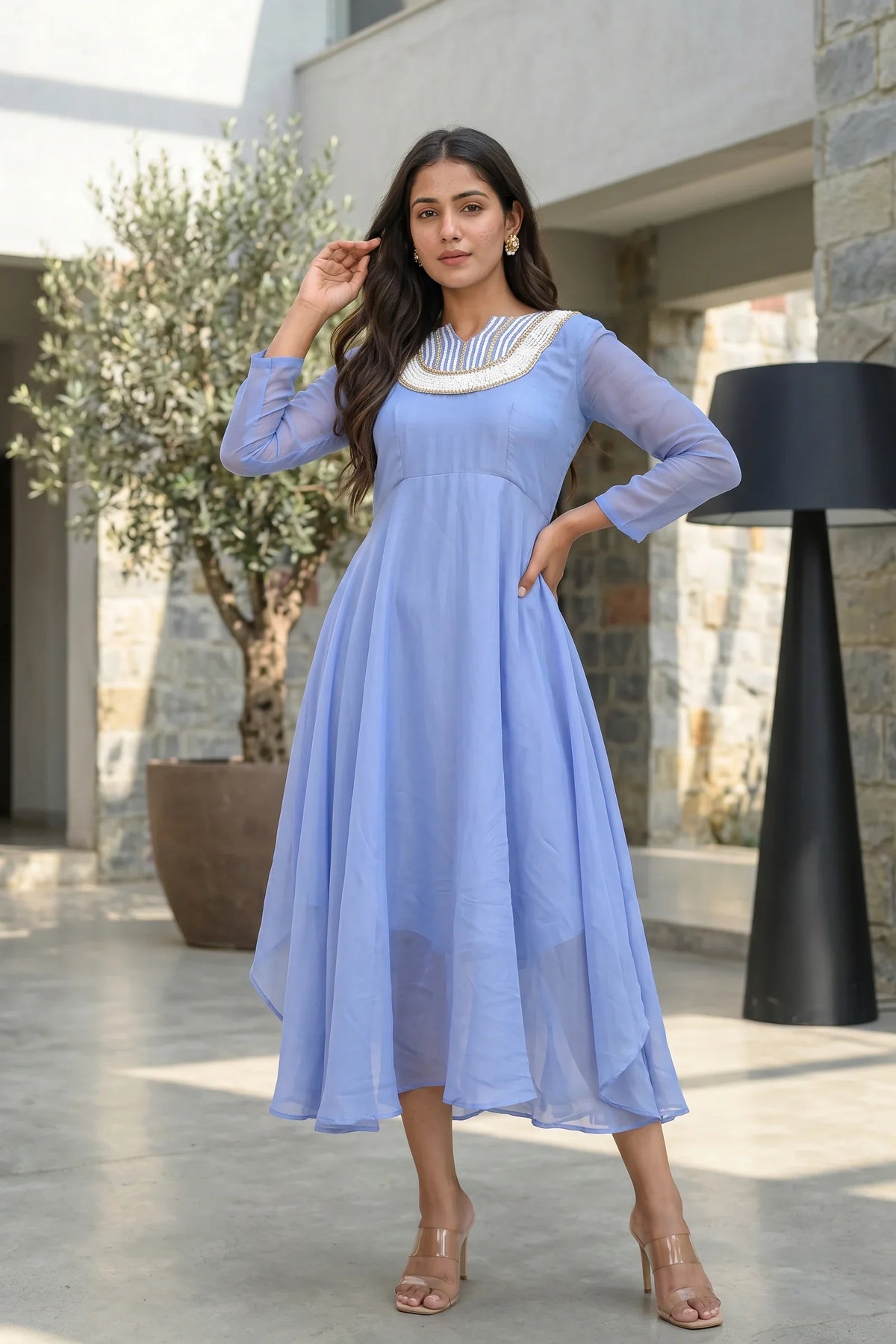
Day functions call for soft, breathable shades, pastels, sage, powder blue, and ivory. Evening events can carry deeper tones like wine, emerald, and rani pink. The rule we repeat most is this: the lighter the hour, the lighter the palette. One exception is haldi, where yellow leads by tradition no matter the time.
What Should You Avoid When Choosing Colours?
Matching every piece to one exact shade is the biggest mistake we see. A head-to-toe match looks flat. Instead, wear one strong colour and balance it with a neutral. Also avoid piling bright colours together unless the outfit itself is designed that way, like a multicolour bandhej. And check the colour in daylight before you buy. Boutique lighting lies.
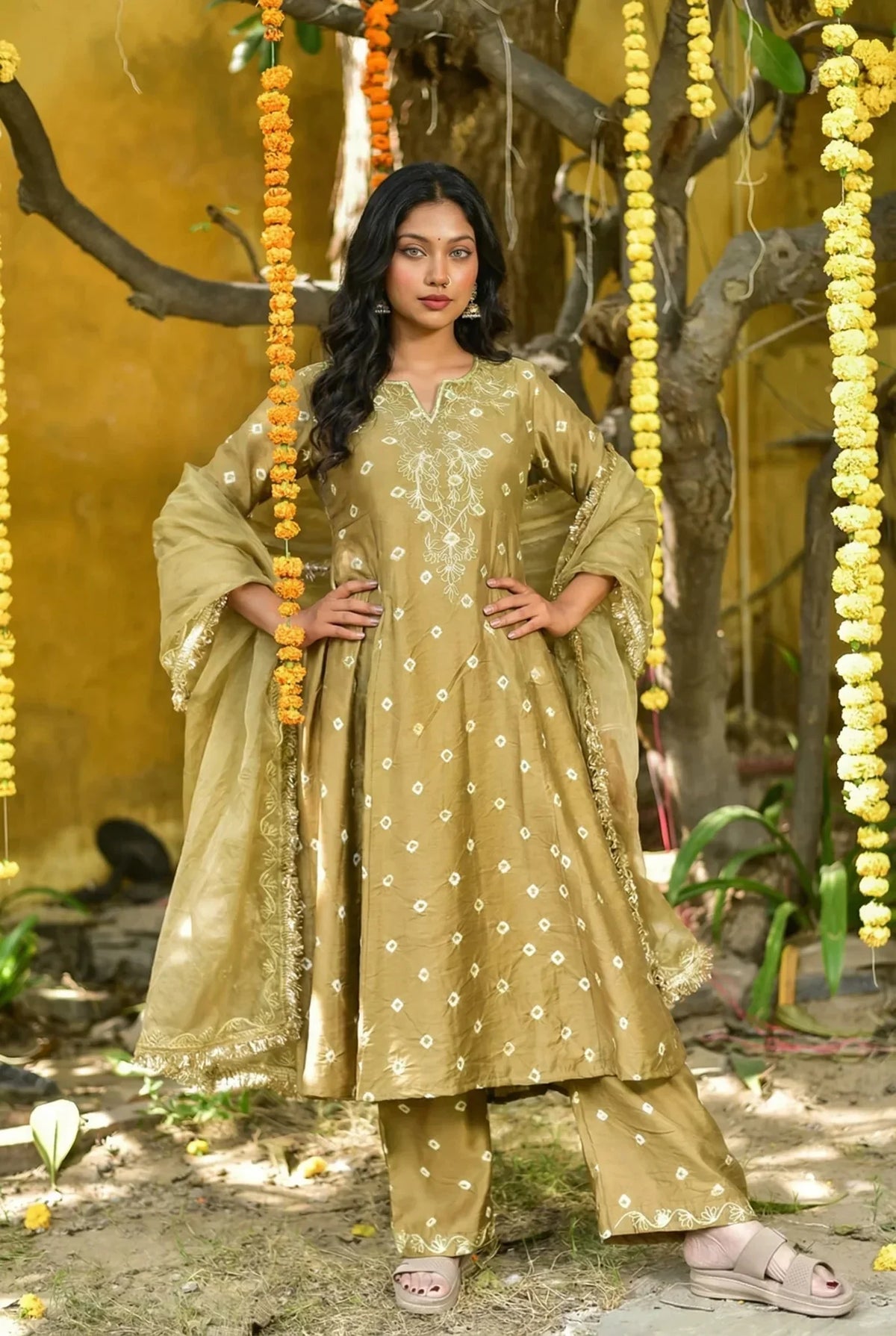
Saroj Jain pick: Bandhej Kurta and Pant Set
Price: Rs. 5,563
Why it works: Olive is a warm-leaning neutral that suits most undertones and takes gold or silver easily.
Best for: Daily wear, office, casual family gatherings
Style with: Small jhumkas and a thin stack of bangles

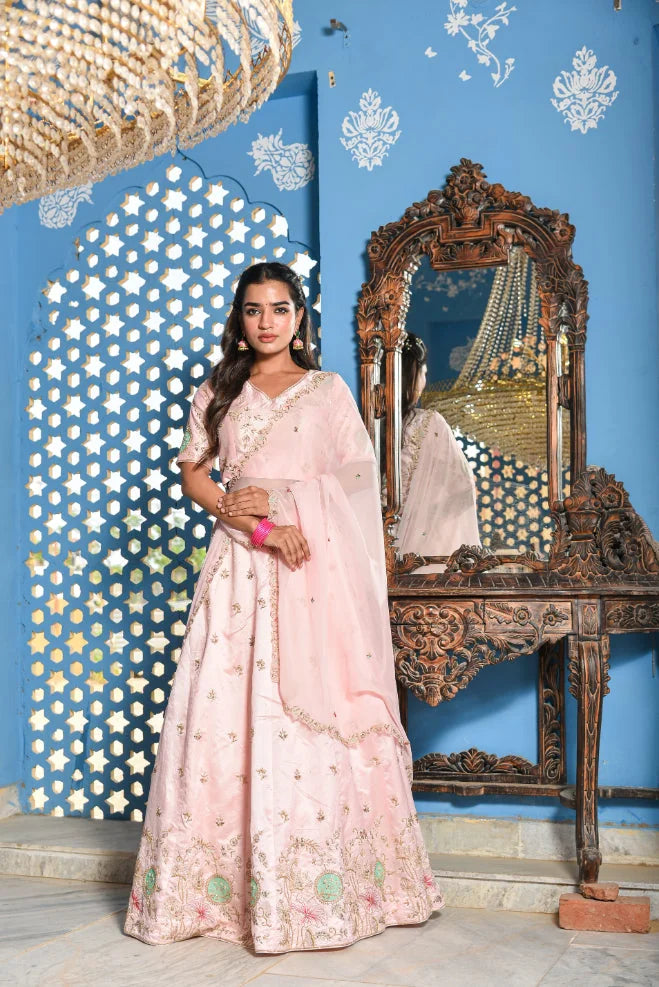
Saroj Jain pick: Baby Pink Bandhej Kurta Set
Price: Rs. 4,673
Why it works: Soft pink is a neutral-friendly shade that flatters both warm and cool undertones.
Best for: Day functions, lunch outings, festive mornings
Style with: Dainty pearl or silver studs and a pastel dupatta

Can One Colour Work for Every Occasion?
Yes, if you change the fabric weight and the styling. Navy works for office in cotton and for a dinner in silk. The same beige kurta set turns festive with a zari dupatta and jhumkas. Colour is not the limit. The drape and the accessories are what shift the mood.
Frequently Asked Questions
How do I know my undertone for ethnic wear?
Check your wrist veins in daylight. Greenish means warm, bluish means cool, and mixed means neutral.
What colour looks good on everyone?
Beige, ivory, and dusty pink flatter every undertone and pair with gold or silver.
Can I wear bright colours together?
Only when the outfit is designed that way, like a multicolour bandhej. Otherwise keep one bright shade against a neutral.
What colours should I avoid for a daytime function?
Deep wine, emerald, and heavy metallics read better after sunset. Save them for the evening.
Does jewellery change how a colour looks?
Yes. Gold warms up cool shades, while silver sharpens them. Test both against the fabric before you decide.
That is how to choose colours for ethnic wear without second-guessing yourself. Browse our kurta sets at sarojjain.com or book a styling session at our JP Nagar boutique, and we will match shades to your skin in person.