
How to Coordinate Family Ethnic Wear: A Boutique Stylist's Guide
Updated: July 2026 | Written by: Saroj Jain Styling Team
You have picked your outfit. Your partner has theirs. The kids are sorted. But when you stand together in front of the mirror, something feels off. The colours clash. One person looks overdressed while another looks like they wandered in from a different event entirely. This is the family coordination trap we see at our JP Nagar boutique all the time.
Coordinating family ethnic wear is not about dressing identically. It is about creating visual harmony so everyone looks like they belong in the same photograph. After years of helping families plan wedding and festival wardrobes, here is what actually works.
Key Takeaways
- Family coordination means shared colour families and fabric weights, not identical outfits
- Pick 2-3 colours from one palette and distribute them across family members
- Match fabric formality level, not exact fabric types
- Kids under 10 get one lighter-colour accent piece, not full matching outfits
- Plan the most photographed person first (usually bride or birthday person), then build outward
Table of Contents
- Why Coordination Actually Matters
- Pick the Colour Palette First
- Match Fabric Weight, Not Fabric Type
- Who to Start With
- Family Coordination at a Glance
- What About Kids?
- What to Avoid
- How We Help at Saroj Jain
- FAQs

Why Coordination Actually Matters
Wedding photographers tell us the same thing every season. Coordinated families produce 40% more usable photographs than mismatched ones. It is not about vanity. The camera sees colour relationships the way the eye glosses over them in person.
At our boutique, we ask every family one question before pulling a single outfit: what is the one colour you want running through every photograph? The answer shapes everything else.
Pick the Colour Palette First
This is where most families go wrong. They pick outfits individually and hope they work together. They rarely do.
Start with 2-3 colours from one palette. For a daytime wedding, think mustard, ivory, and sage. For an evening reception, try wine, blush, and gold. Assign one primary colour per person. No one wears all three colours. Each person wears one dominant colour with accents from the other two.
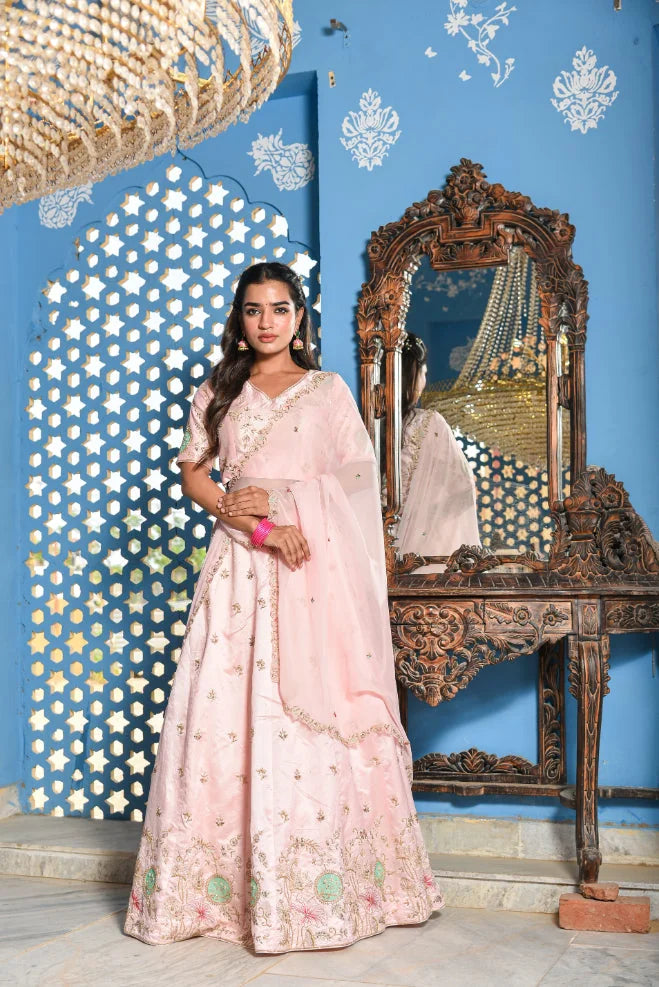
Our most-requested palette this season: dusty pink, mint, and cream. The bride or main celebrant wears dusty pink as the hero. Partner gets mint with cream dupatta. Kids get cream with mint or pink accents. It photographs beautifully without looking costume-y.
Match Fabric Weight, Not Fabric Type
You do not need everyone in silk. You need everyone at the same level of formality. If the bride is in heavy silk and zari, the rest of the family should avoid cotton and linen. Pick fabrics that share the same visual weight: silk, organza, brocade, and chanderi all sit at similar formal levels.
For a daytime mehendi, lighter fabrics like chanderi, cotton silk, and georgette work well together. One person in raw silk and another in crushed cotton creates the kind of visual mismatch that shows up in every photograph.
Who to Start With
Build the palette around the person who will be photographed the most. At a wedding, that is the bride. At a birthday, the celebrant. At Raksha Bandhan, often the sister or the eldest sibling.
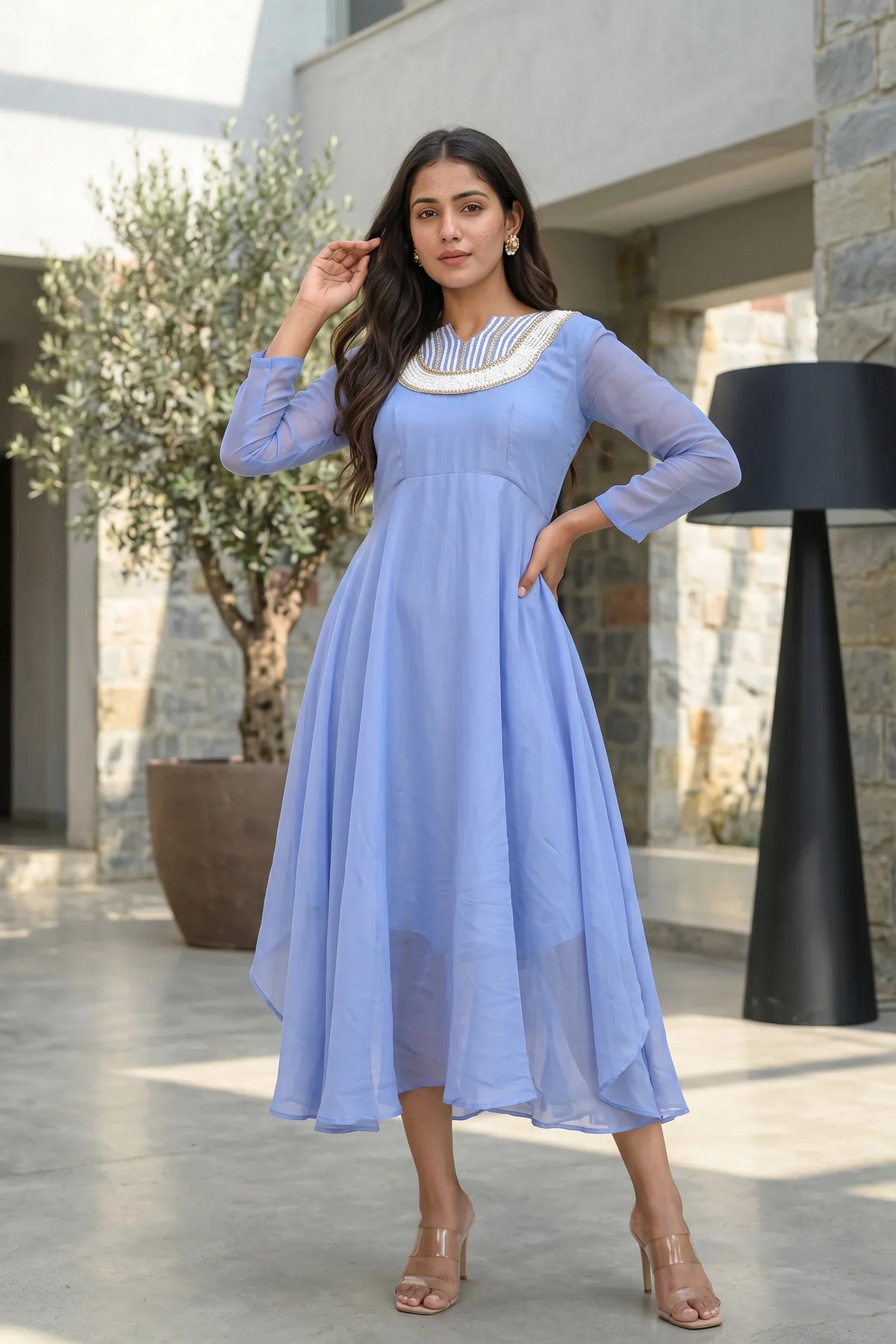
Once their outfit is decided, pull colours from it for everyone else. A beige zari silk anarkali on the main person gives you beige, gold, and zari tones to distribute across the family. The palette reveals itself from one well-chosen outfit.
Family Coordination at a Glance
| Family Member | Colour Role | Fabric Weight | Example Outfit |
|---|---|---|---|
| Bride / Main | Hero colour | Heavy silk, brocade | Blush pink lehenga |
| Partner | Complementary | Silk, chanderi | Beige zari anarkali |
| Mother | Accent or jewel tone | Silk, organza | Deep mint suit with gold border |
| Siblings | Shared accent | Chanderi, cotton silk | Cream kurta set with hero-colour dupatta |
| Kids (under 10) | Single accent piece | Soft cotton, light silk | Cream kurta with hero-colour pocket square |

What About Kids?
Kids under 10 do not need full matching outfits. They need comfort and one accent piece that ties them to the family palette. A cream kurta with a blush pink pocket square or dupatta. A lehenga in the family accent colour with a neutral blouse.
We have seen too many toddlers in heavy embroidered lehengas refusing to walk. Pick lightweight fabrics, shorter hemlines, and one colour accent. They will look cohesive without the discomfort.
What to Avoid
- Identical outfits on everyone. This photographs like a uniform, not a family celebration.
- Mixing metallics. Gold jewellery with silver embroidery reads as a mistake, not a choice.
- One person in neon while everyone else is in pastels. Even a bright dupatta can throw off the entire group photograph.
- Forgetting about the backdrop. If the wedding mandap is red, avoid red-heavy outfits or you disappear into the decor.
- Last-minute shopping. Coordination needs planning. Give yourself at least 3 weeks.
How We Help at Saroj Jain
At our boutique in JP Nagar, Bangalore, we sit down with families and plan everyone together. We pull fabrics, compare swatches side by side, and check how colours read under different lighting. It takes about 90 minutes for a family of four. We handle custom stitching, alterations, and fitting sessions so everyone walks out ready.
We also ship across India through sarojjain.com. For virtual family consultations, book a call here.
FAQs
How many colours should a family coordinate with?
Stick to 2-3 colours from one palette. More than 3 creates visual noise. Less than 2 looks unplanned.
Can men and women wear different fabrics?
Yes. What matters is fabric weight and formality, not the exact material. A silk kurta and a silk saree read as cohesive even if the weave is different.
Should kids match exactly or just coordinate?
Coordinate, never match exactly. Kids need comfort first. One accent piece in the family colour is enough.
What if family members have different skin tones?
Pick a palette that works across undertones. Pastels suit most skin tones. Jewel tones like emerald and ruby are flattering across the board. Avoid colours that wash out the palest or richest skin tone in the group.
How far in advance should we plan family outfits?
Start 4-6 weeks before the event if you need custom stitching. Ready-to-wear coordination needs 2-3 weeks for alterations and accessories.
Need help coordinating your family's wedding or festival looks? Visit us at sarojjain.com or WhatsApp us at 919314078524. We plan family wardrobes from our JP Nagar boutique and ship across India.
Explore our lookbook for real family coordination examples: lookbook.sarojjain.com.