

Indian Ethnic Wear Fabrics Guide: Silk, Cotton, Georgette & More
Updated: July 14, 2026 | Written by: Saroj Jain Styling Team
At our JP Nagar boutique, we hear the same question at least five times a day: "Which fabric should I pick?" A customer walked in last week holding a phone full of Pinterest saves. She loved organza, silk, and georgette looks but had no idea which one would actually work for her July engagement in Bangalore humidity. By the time she left, she had ruled out three fabrics and zeroed in on one. That fifteen-minute conversation is exactly what this guide is about.
Key Takeaways
Key Takeaways
- Silk drapes beautifully but traps heat. Save it for evening events or air-conditioned halls.
- Cotton and cotton-silk blends are the safest bet for daytime functions and humid weather.
- Georgette and crepe give you movement without weight. Ideal for dance-heavy sangeets.
- Chanderi and tissue fabrics sit at the intersection of lightweight and occasion-ready.
- Fabric choice matters more than design. A well-draped cotton anarkali beats a poorly cut silk lehenga.
Table of Contents
- Why Fabric Comes First
- Silk: The Heavyweight Champion
- Cotton and Cotton Blends: The Daytime Hero
- Georgette vs Chiffon: What Is the Difference
- Chanderi and Tissue: The Lightweight Luxe
- Crepe: The Movement Fabric
- Comparison Table
- How We Help Clients Choose
- FAQs
- Final Word
Why Fabric Comes First
Most people start with colour or silhouette. At our boutique, we start with fabric. The reason is simple: fabric determines how an outfit moves, how it photographs, how long you can wear it comfortably, and whether it wrinkles before you reach the venue. We have seen brides walk into the trial room convinced they want a raw silk lehenga for a morning haldi, only to switch to a cotton chikankari set within minutes of trying it on. Fabric is the decision that makes every other decision easier.

Silk: The Heavyweight Champion
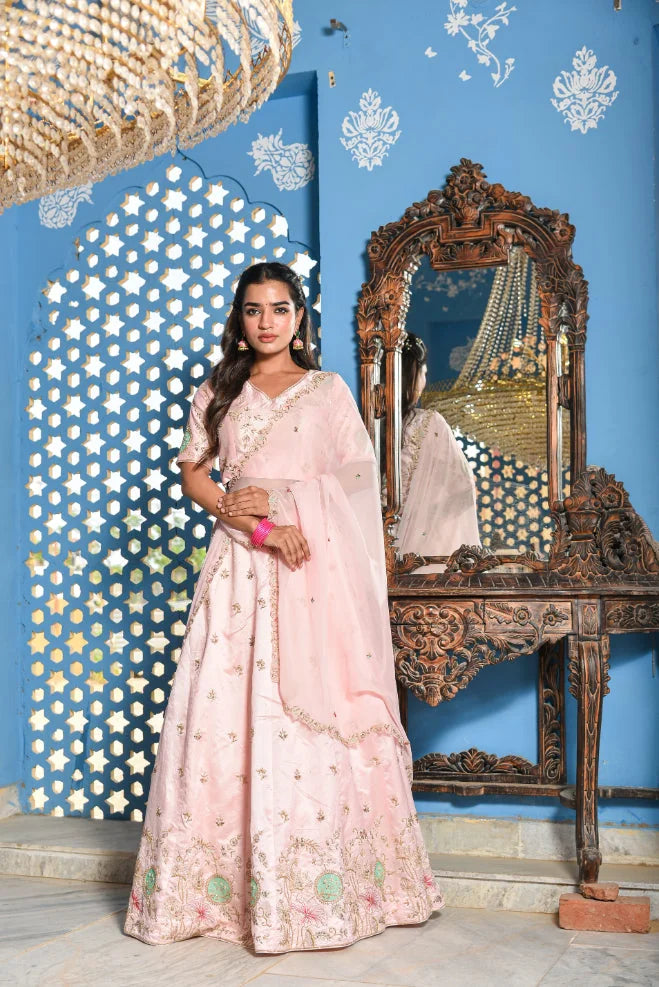
Silk is the gold standard for Indian weddings. Raw silk, Banarasi silk, Kanjeevaram silk, and Mysore silk each bring a different weight, sheen, and drape. Raw silk holds embroidery well but is stiff. Banarasi silk has a rich brocade pattern woven into it, so the fabric itself becomes the ornament. We recommend silk for receptions, evening pheras, and any function where you will be seated more than you will be moving. The trade-off: silk traps body heat. A three-hour outdoor mehendi in silk is not something we would wish on anyone.

Cotton and Cotton Blends: The Daytime Hero
Cotton breathes. That one word explains why half our boutique walk-ins during wedding season ask for cotton or cotton-silk blends. A pure cotton kurta set can handle five hours of running around, sitting on the floor for rituals, and posing for photos without making you miserable. Cotton-silk blends add a slight sheen and better drape while keeping most of the breathability. For haldi, mehendi, and morning pujas, cotton is what we reach for first.
Georgette vs Chiffon: What Is the Difference
Clients mix these up constantly. Both are lightweight, sheer-ish, and flowy. The difference: georgette has a slightly grainy texture and more body. It holds pleats better and does not cling. Chiffon is smoother, lighter, and more transparent. It moves beautifully but needs a lining. For sarees that need to stay in place through a sangeet performance, we pick georgette. For a dupatta that needs to float behind you in photographs, chiffon works beautifully.
Chanderi and Tissue: The Lightweight Luxe
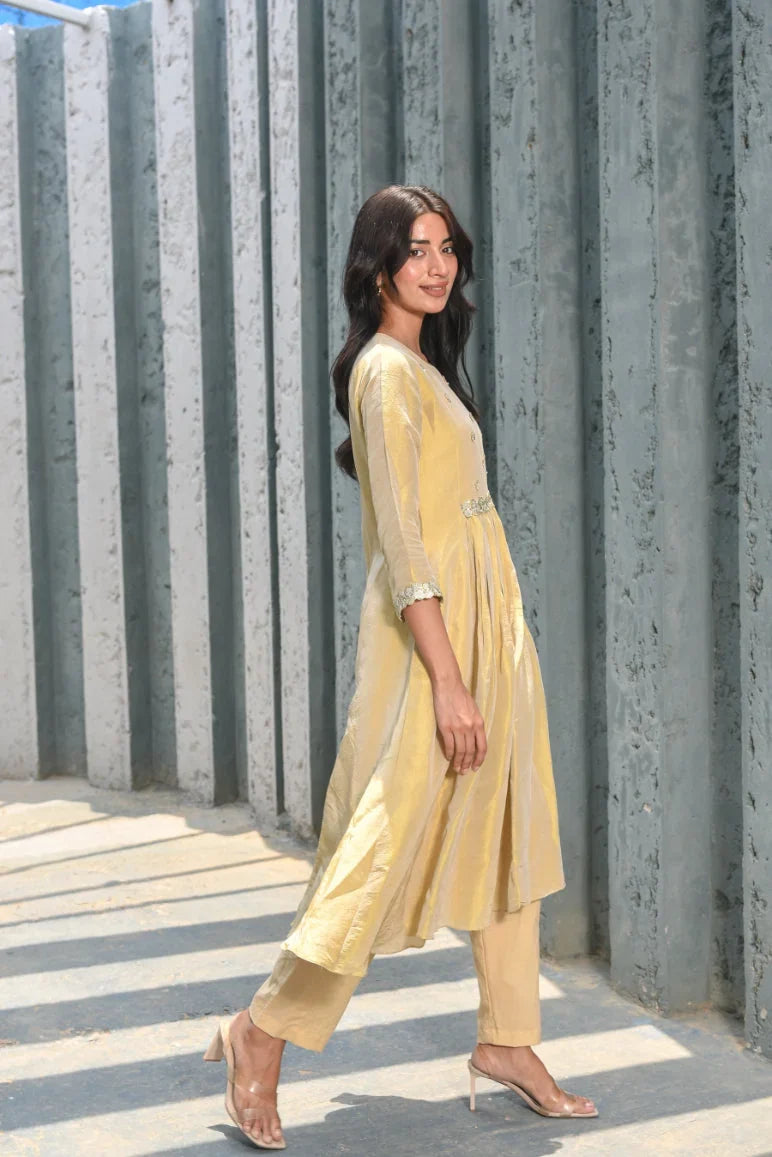
Chanderi is a handwoven fabric from Madhya Pradesh that mixes silk and cotton. It has a subtle sheen, a light body, and often features zari motifs woven into the fabric rather than embroidered on top. Tissue fabric is even more distinctive: a metallic-thread weave that catches light like silk but weighs half as much. We stock both for clients who want the festive look of silk without the weight. They work especially well for daytime wedding functions and summer receptions.
Crepe: The Movement Fabric
Crepe has a distinctive crinkled surface and drapes with more fluidity than almost any other fabric. A crepe saree moves when you move and settles when you stop. It does not crush easily, which makes it practical for travel. We recommend crepe for sangeet performances, cocktail parties, and any event where you plan to be on the dance floor. The one thing to know: crepe shows sweat less than silk but more than cotton. A slip or lining solves that.
Comparison Table: Fabrics at a Glance
| Fabric | Best For | Weight | Breathability | Wrinkle Resistance |
|---|---|---|---|---|
| Silk (Raw/Banarasi) | Reception, evening wedding | Heavy | Low | Good |
| Cotton | Haldi, mehendi, puja | Light | High | Poor |
| Cotton-Silk Blend | Day weddings, festive | Medium | Medium | Fair |
| Georgette | Sangeet, sarees, pleats | Light | Medium | Good |
| Chiffon | Dupattas, flowy sarees | Very light | High | Fair |
| Chanderi | Day functions, summer | Light | High | Fair |
| Tissue | Reception, festive | Light | Medium | Good |
| Crepe | Cocktail, dance, travel | Medium | Medium | Excellent |
How We Help Clients Choose at the Boutique
At our JP Nagar studio, the fabric conversation happens before anything else. Before measurements. Before colour swatches. Before the design sketch. We ask three questions: What time of day is the function? Will you be mostly sitting, standing, or dancing? How far do you have to travel to the venue? The answers usually eliminate half the fabric options within seconds. A client planning a June cocktail party in Chennai gets a different recommendation than one attending a December reception in Delhi. The climate, the timeline, and the activity level decide the fabric. The design follows.
Frequently Asked Questions
Which fabric is best for a summer wedding?
Cotton-silk blends, Chanderi, and tissue fabric. They give you the festive look without trapping heat. At our boutique, about 60 percent of summer wedding clients choose these three fabrics for daytime functions.
Can I wear georgette to a daytime function?
Yes. Georgette is lightweight enough for daytime but has enough structure to look dressed up. Pair it with minimal jewellery and matte makeup for a balanced day look.
What fabric photographs best?
Silk photographs richly because of its natural sheen. Tissue fabric catches light in a way that looks stunning in flash photography. For outdoor daylight shots, Chanderi and cotton-silk blends hold their own without looking flat.
How do I store silk during the monsoon?
Never store silk in plastic covers. Use a muslin or cotton cloth bag. Add silica gel packets to absorb moisture. Check every two weeks for any musty smell. Air the saree in indirect sunlight for an hour once a month during rainy season.
What is the most low-maintenance fabric?
Crepe. It resists wrinkles, packs flat, and does not need elaborate maintenance. Walk into our boutique and ask for a crepe saree for a destination wedding, and we will probably pull five options before you finish the sentence.
The Final Word
Fabric is not the most exciting part of putting together an outfit. Colour and design grab attention first. But fabric is what decides whether you enjoy wearing the outfit or spend six hours adjusting it. At Saroj Jain, we stock fabrics that work for real Indian events: humidity, dance floors, sitting on the floor for pheras, standing for hours at receptions. The right fabric lets you forget what you are wearing. That is the whole point.
Explore our fabric range at sarojjain.com/collections/all or visit our JP Nagar boutique. Book a consultation or WhatsApp us with your fabric questions. Browse real boutique work at lookbook.sarojjain.com.