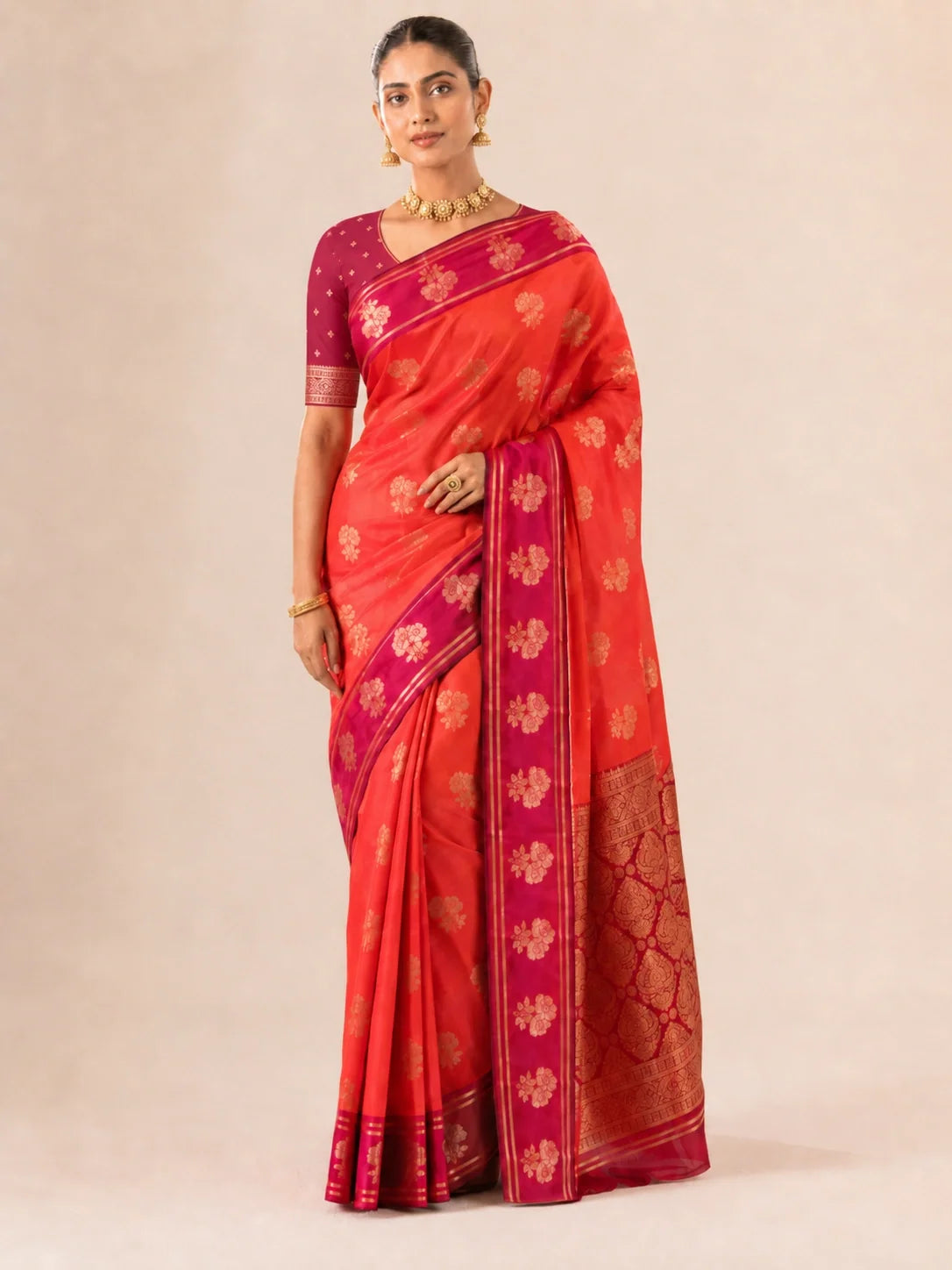

Indian Wedding Dress Code Explained
Updated: August 2026 | Written by: Saroj Jain Styling Team | Reviewed by: Saroj Jain Boutique Team
Indian wedding dress code explained starts with one simple rule: dress for the function, for the wedding invitation. Haldi needs washable clothes, mehendi needs easy movement, sangeet needs dance-friendly structure, pheras need greater modesty, and the reception allows a sharper evening finish. In our JP Nagar 5th Phase fitting room, we see guests choose better when they consider sitting cross-legged, walking on uneven venue floors and managing Bangalore’s warm daytime weather. The right outfit should look festive in daylight, stay comfortable for hours and pack without becoming a travel problem.
Quick answer: Wear light, washable Indian or Indo-western clothing for Haldi and Mehendi. Choose movement-friendly festive wear for Sangeet. Select a polished saree, Anarkali, lehenga, kurta set or sherwani for the pheras. Reserve richer fabrics and stronger embellishment for the reception.
Keep bridal red, pure white and highly ceremonial pieces aside unless the family has given different instructions. For Bangalore, choose breathable daytime fabrics and warmer evening layers when the venue is air-conditioned.
Contents
- Indian wedding function-wise dress code
- What to wear to Haldi
- What to wear to Mehendi
- What to wear to Sangeet
- What to wear to Pheras
- What to wear to the Reception
- Fabric guide for comfort and movement
- Colour etiquette
- Saroj Jain outfit picks
- Body type and silhouette guide
- What to avoid
- Frequently asked questions
Indian wedding function-wise dress code
The invitation wording gives the first clue. “Casual festive” allows a lighter kurta or dress. “Traditional” calls for Indian details. “Formal” means stronger finishing, better accessories and a more structured silhouette.
| Function | Best outfit direction | Comfort priority |
|---|---|---|
| Haldi | Washable kurta set, cotton-silk dress or simple Anarkali | Stain-friendly fabric and short practical hems |
| Mehendi | Printed kurti, sharara, A-line suit or light saree | Easy sitting and hands-free dupatta management |
| Sangeet | Flared Anarkali, gharara, lehenga or polished Indo-western look | Arm movement and secure footwear |
| Pheras | Saree, formal Anarkali, lehenga, sherwani or kurta set | Modesty, coverage and comfort during a long ceremony |
| Reception | Embellished saree, gown, Anarkali, brocade set or formal suit | Evening polish without excessive weight |
What to wear to a Haldi ceremony
Haldi is the least suitable function for precious clothing. Turmeric travels quickly, so choose cotton, cotton-silk, Chanderi or breathable viscose that can be cleaned without stress.
Yellow, mustard, orange, lime, pink and green work naturally. Avoid long sleeves that drag through turmeric and hems that collect outdoor dust. Flat sandals or washable juttis are more useful than delicate footwear.
At our JP Nagar boutique, we often advise guests to wear something they can sit cross-legged in without constantly adjusting the waist or hem. Haldi can run on its own clock, especially at home venues.
What to wear to a Mehendi ceremony
Mehendi is festive but usually less formal than the pheras. Pick a light kurti, sharara, printed saree, co-ord or A-line suit in georgette, cotton, Chikankari or chiffon.
Keep the dupatta short, pinned or placed over one shoulder. Wide sleeves and heavy bangles can interfere while the henna is being applied. Comfortable seating matters because guests may remain still for a long time.
Floral prints, green, coral, pink, teal and fresh yellow suit daytime lighting. Choose footwear that is easy to remove and put back on.
What to wear to a Sangeet
Sangeet dressing should support movement. A flared Anarkali, light lehenga, gharara, georgette saree or clean Indo-western outfit gives festive shape without restricting dance.
Test the sleeves before leaving. Raise both arms, sit down and take a few steps. If the blouse pulls, the skirt catches or the dupatta slips, the outfit needs adjustment.
In our fitting room, this movement test catches more problems than a mirror check. Guests often look polished while standing, then struggle once the music starts.
Jewel tones, plum, emerald, sapphire, fuchsia and metallic accents work well after sunset. Choose block heels, cushioned sandals or decorated flats with a secure strap.
What to wear to the pheras
The wedding ceremony calls for more formality and modesty. Sarees, formal Anarkalis, lehengas, silk-blend sets, sherwanis, bandhgala suits and embroidered kurta sets are suitable choices.
Keep shoulders and knees covered where the ceremony or family customs call for it. A manageable dupatta is useful, but avoid excessive trailing fabric near the mandap.
For men, a well-fitted kurta with churidar, kurta-jacket combination, bandhgala or sherwani works well. Choose footwear that can handle standing, walking and removing shoes when required.
What to wear to the reception
The reception usually allows the strongest evening finish. Embellished georgette, silk, brocade, organza, velvet, a formal saree, Anarkali, gown or tailored suit can all work.
For air-conditioned venues, heavier fabric is comfortable. For open venues, balance embellishment with a breathable base. Organza creates volume but may crease, so pack it carefully and check whether lining is needed.
Black can work well at a reception, especially with Indian jewellery or a festive drape. The safest approach is to follow the family’s stated preference when the invitation gives one.
Fabric guide for comfort and movement
| Fabric | How it performs | Best use |
|---|---|---|
| Cotton-silk | Breathable with a little festive sheen | Haldi and warm daytime ceremonies |
| Chanderi | Light, airy and softly structured | Daytime kurtas, sarees and suits |
| Georgette | Textured drape with useful grip for embellishment | Anarkalis, sarees, shararas and sangeet looks |
| Chiffon | Lighter and more fluid than georgette | Light sarees, dupattas and warm venues |
| Organza | Airy volume with a crisp finish | Dupattas, sleeves and evening silhouettes |
| Silk and brocade | Rich, structured and warmer | Pheras and air-conditioned receptions |
For Bangalore daytime functions, lightweight cotton-silk, Chanderi, georgette, chiffon and viscose are practical choices. Evening events can take silk, velvet or brocade, especially indoors.
Is black, white or red acceptable?
Black: Usually suitable for a sangeet, cocktail event or reception. For pheras, check the family’s customs and the invitation.
White: Pure white may feel too stark or unsuitable at some traditional ceremonies. Soft ivory, cream or white with colour can be safer when the family has no restriction.
Red: Red is not always prohibited, but bridal red should be avoided. Try wine, rust, coral, burgundy or a print that uses red without looking bridal.
When unsure, choose an Indian wedding guest outfit in a rich pastel, jewel tone, floral print or warm metallic accent. It reads festive without competing with the couple.
Saroj Jain outfit picks
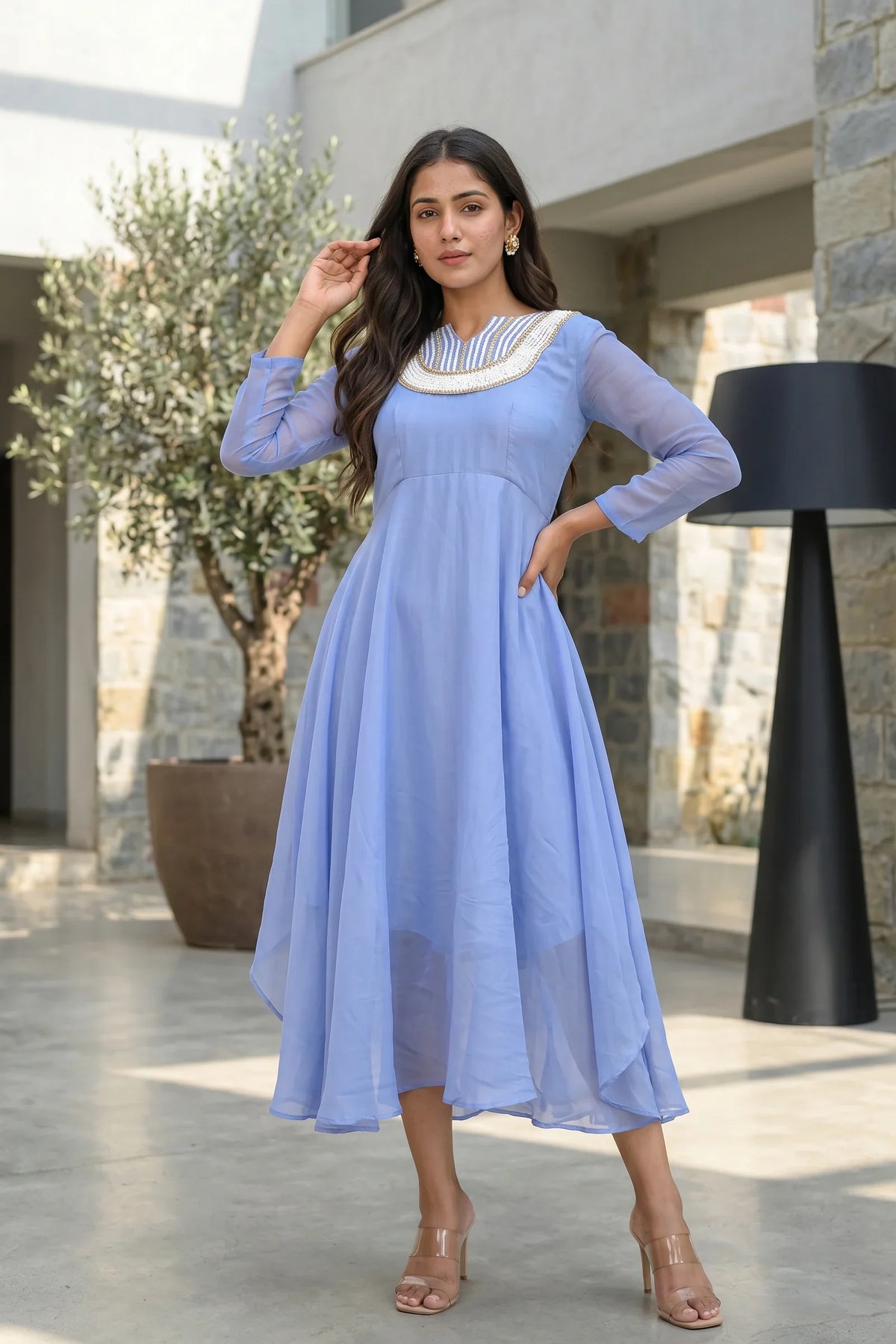
Saroj Jain pick: Baby Blue Asymmetrical Dress

Price: ₹2,336.19
Why it works: The asymmetrical line gives a modern festive shape without the weight of a full lehenga.
Best for: Mehendi, daytime sangeet or an Indo-western guest look.
Style with: Pearl drops, slim bangles and metallic flats or low block heels.
Avoid if: The invitation specifically requires traditional Indian wear or the venue involves a long outdoor ceremony.
Shop the Baby Blue Asymmetrical Dress
Saroj Jain pick: Cut Work Kurti

Price: ₹3,560.49
Why it works: Cut-work detail adds occasion interest while keeping the outfit easier to wear than a heavily layered look.
Best for: Mehendi, family lunch, daytime festive events or a relaxed Haldi.
Style with: Straight trousers, small jhumkas and comfortable embroidered flats.
Avoid if: You expect turmeric, food or outdoor dust to reach the hem and the fabric is difficult to wash.
Saroj Jain pick: Emerald Green Heavy Work Anarkali Dress With Dupatta

Price: ₹6,676.89
Why it works: The Anarkali shape brings formal volume and the emerald colour suits evening lighting without relying on bridal red.
Best for: Pheras, formal Sangeet or reception dressing.
Style with: Gold jhumkas, a compact clutch and low block heels. Pin the dupatta securely for movement.
Avoid if: The venue is hot, the ceremony is outdoors or you dislike managing a fuller hem.
Shop the Emerald Green Heavy Work Anarkali Dress With Dupatta
Saroj Jain pick: Floral Mirage Satin Afghani Dress

Price: ₹4,450.89
Why it works: The floral print and relaxed Afghani shape give festive character with room to sit, travel and move.
Best for: Mehendi, casual festive gatherings and destination wedding travel.
Style with: Small hoops, a simple cuff and flat sandals. Keep the jewellery light if the print is busy.
Avoid if: The invitation calls for full traditional formality or the satin finish feels uncomfortable in warm weather.
Shop the Floral Mirage Satin Afghani Dress
Which outfit works for which event?
| Outfit | Fabric direction | Festive scale | Price |
|---|---|---|---|
| Baby Blue Asymmetrical Dress | Light dress fabric | Soft Indo-western | ₹2,336.19 |
| Cut Work Kurti | Light kurti fabric | Daytime festive | ₹3,560.49 |
| Floral Mirage Satin Afghani Dress | Satin | Printed festive | ₹4,450.89 |
| Emerald Green Heavy Work Anarkali Dress With Dupatta | Embellished formal fabric | High festive | ₹6,676.89 |
Body type and silhouette matrix
| Body type | Useful silhouettes | Styling adjustment |
|---|---|---|
| Petite | Shorter Anarkalis, vertical embroidery, neat asymmetrical hems | Keep the dupatta compact and avoid very wide borders |
| Tall | Long Anarkalis, layered dupattas, floor-length dresses and sarees | Use a wider border or statement earrings to balance height |
| Curvy | Fluid A-line shapes, structured necklines and draped fabrics | Check sitting comfort and avoid stiff waistbands |
| Lean | Flared Anarkalis, layered skirts, peplum shapes and textured fabrics | Use volume through sleeves, dupattas or light pleats |
Fit matters more than size labels. In the boutique, we check arm lift, seated comfort, waistband pressure and hem clearance before recommending an outfit for a long wedding day.
What to avoid
- Do not wear an expensive silk or pure white outfit to Haldi.
- Do not choose a train or trailing dupatta for crowded venues.
- Do not wear shoes that have not been tested for standing and walking.
- Do not carry loose dupatta ends during Sangeet dancing.
- Do not select heavy sleeves that restrict arm movement.
- Do not use strong bridal red unless the family has confirmed it is acceptable.
- Do not assume a beautiful standing pose means the outfit will work while sitting cross-legged.
- Do not ignore Bangalore daylight. Very reflective embellishment can look stronger in photographs than expected.
Frequently asked questions
What should guests wear to an Indian wedding?
Choose according to the function. Wear washable light clothing for Haldi, comfortable festive Indian wear for Mehendi, dance-friendly pieces for Sangeet, formal modest clothing for pheras and richer evening wear for the reception.
How traditional does festive attire need to be?
Festive does not require a full lehenga or saree. A kurti with trousers, a modern Anarkali, a printed dress with Indian jewellery or a structured Indo-western set can work when the finish suits the invitation.
What should men wear to each function?
For Haldi and Mehendi, choose a light kurta set or kurta with trousers. For Sangeet, try a kurta-jacket combination. For pheras, wear a formal kurta, sherwani or bandhgala. For reception, a tailored bandhgala, suit or formal Indian outfit works well.
Can guests wear black to an Indian wedding?
Black is usually more comfortable for Sangeet, cocktail functions and receptions. For pheras, check the family’s customs and select another colour if the ceremony is strongly traditional.
Can guests wear white to an Indian wedding?
Pure white can be unsuitable for some traditional ceremonies. Ivory, cream or white combined with colour is generally easier to style, but the invitation and family preference should guide the final choice.
What fabric is best for dancing?
Georgette, chiffon and lighter silk blends usually offer a useful balance of drape and movement. Check that the hem does not catch and that sleeves allow the arms to lift comfortably.
How can wedding clothes stay comfortable during travel?
Choose fabrics that do not crease heavily, keep embellishment moderate, pack a secure dupatta and carry tested footwear. Steam or hang the outfit as soon as you reach the venue or hotel.
Ready to Find Your Fit? Visit Our JP Nagar Boutique
Visit SAROJ JAIN at 57/1, 1st Cross Rd, opposite to Iyengar's Bakery, 5th Phase, Dollar Layout, JP Nagar Phase 5, Bengaluru, Karnataka 560078.
Bring the invitation, share the function schedule and tell us whether you need to sit, dance, travel or manage an outdoor ceremony. We will help you choose the right fabric, proportion and finishing details.
WhatsApp the Styling Team View the Lookbook Shop Collections Book a Boutique Meet
For practical outfit choices that suit each ceremony, climate and comfort need, keep this indian wedding dress code explained guide close while planning your look.
Visit the Saroj Jain Boutique
Discover our collections in person.
57/1, 1st Cross Rd, opposite to Iyengar's Bakery, Dollar Layout, J. P. Nagar Phase 5,Bengaluru, Karnataka 560078
+91-9314078524