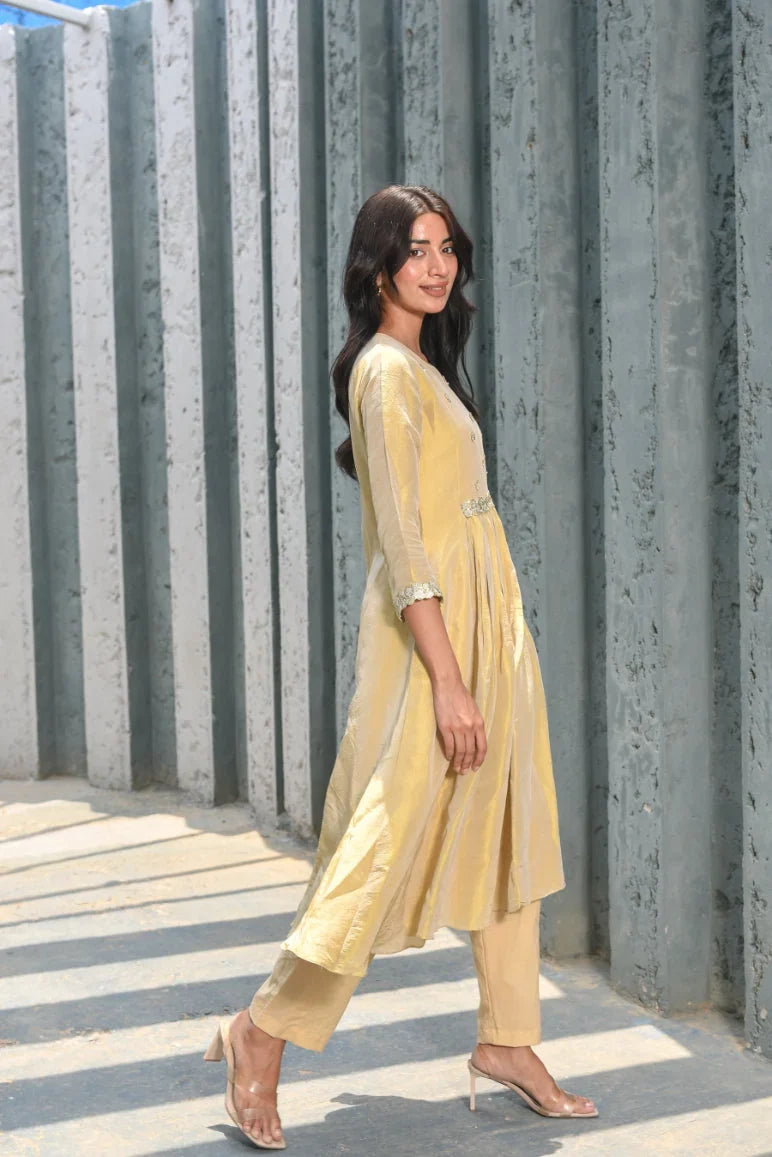


Janmashtami Outfit Ideas for Women: 6 Graceful Ethnic Looks for Krishna Janmashtami
Not sure what to wear for Janmashtami this year without looking overdone? You are not alone. Every August, the same question lands in our inbox: what do I wear to the temple in the morning and the dahi handi in the evening that feels festive but not heavy? The answer is simpler than you think. A thoughtful kurta set or anarkali in the right colour does all the work.

- Janmashtami outfits work best in blue, yellow, white, and soft gold tones. These colours honour Krishna's palette without looking costume-like.
- Kurta sets, anarkalis, and sharara sets are the three most practical silhouettes. They let you sit, stand, and move through temple visits and dahi handi events comfortably.
- Lightweight fabrics like cotton silk, chanderi, and bandhej cotton are ideal for August humidity.
- You can build a complete Janmashtami look across morning puja and evening celebration with 2 well-chosen pieces instead of buying separate outfits.
- At our JP Nagar boutique, we see most customers gravitate toward blue anarkalis and bandhej sets for Janmashtami. Both work beautifully.
Table of Contents
- What to Wear on Janmashtami
- 6 Best Janmashtami Outfit Ideas for Women
- What Fabric Works Best for Janmashtami in August?
- Janmashtami Colour Guide: What Works and What to Skip
- Anarkali vs Kurta Set vs Sharara for Janmashtami
- How Do You Style a Janmashtami Outfit?
- What Should You Wear to Dahi Handi?
- What to Avoid When Dressing for Janmashtami
- Saroj Jain Picks for Janmashtami 2026
- FAQs
What to Wear on Janmashtami
Janmashtami is a festival of devotion and celebration, not a black-tie wedding. According to the Hindu calendar, it falls during the monsoon month of Shravan (typically August), which means you are dressing for humidity, temple visits, and possibly a dahi handi event in the evening. The right outfit balances festive appeal with practical comfort.
At our boutique in JP Nagar, Bangalore, we tell customers the same thing every August: pick one outfit that transitions from morning puja to evening celebration. A blue anarkali or a yellow bandhej kurta set does exactly that. You do not need two separate looks. You need one well-chosen piece in the right fabric.
6 Best Janmashtami Outfit Ideas for Women
1. Blue Mastani Anarkali Set
Peacock blue is Krishna's signature colour, and a mastani anarkali in this shade ticks every Janmashtami box. The flared silhouette photographs beautifully at temple backdrops, and the flowing fabric keeps you cool through hours of puja seating. Our JP Nagar clients often choose this exact piece for Janmashtami temple visits.
Best for: Morning temple puja and evening aarti.
Style with: Silver jhumkas, a small bindi, and kolhapuri flats. Skip the heavy dupatta draping. Let the anarkali flare stand on its own.
Avoid if: You plan to participate in dahi handi climbing. The flare can get in the way.
2. Baby Pink Bandhej Kurta Set

Not everyone wants to wear blue or yellow for Janmashtami and that is fine. A soft baby pink bandhej kurta set reads as festive without being obvious. The bandhej tie-dye technique gives the fabric visual texture, and the straight-cut kurta keeps the silhouette crisp.
Best for: Afternoon puja at home or visiting friends for prasad.
Style with: White churidar, pearl studs, and a delicate maang tikka. Keep the dupatta simple.
Avoid if: You want the traditional Krishna colour palette. Pink is a gentle departure from the expected blue and yellow theme.
3. Olive Green Bandhej Kurta and Pant Set

Olive green is an underrated Janmashtami colour. It is subtle enough for a morning temple visit but carries enough presence for evening festivities. This kurta and pant set in bandhej cotton is one of the most practical pieces we stock. The pant offers full ease of movement . useful if you are managing kids at a dahi handi or sitting on the floor for extended aarti.
Best for: All-day wear from temple to evening celebration.
Style with: Gold-toned earrings, a stack of colourful glass bangles, and juttis.
Avoid if: You want a more formal, floor-length silhouette. This is a kurta-pant set, not a long anarkali.
4. Beige Zari Silk Anarkali Set

For a more dressed-up Janmashtami look, beige zari silk hits the right note. The zari threads catch temple diya light beautifully, and the neutral beige base keeps the overall effect graceful rather than loud. This anarkali works especially well if you are attending a community Janmashtami event where the dress code leans a notch above everyday festive.
Best for: Evening aarti and community celebrations.
Style with: Gold chandbalis, a potli bag, and embroidered juttis. Add a light gold dupatta for photographs.
Avoid if: The event is outdoors in rain. Silk and drizzle do not mix well.
5. Baby Blue Asymmetrical Dress

Some Janmashtami events call for something lighter and more contemporary, especially if you are attending a friend's dahi handi gathering rather than a formal temple function. This baby blue asymmetrical dress bridges the gap. The hemline gives it a modern feel while the soft blue keeps it connected to the occasion's colour story.
Best for: Casual dahi handi gatherings and evening meetups.
Style with: Silver kolhapuri chappals, a long necklace, and natural waves. Skip the dupatta entirely.
Avoid if: The dress code requires traditional Indian silhouettes. This is a contemporary cut.
6. Blush Pink Heavy Embroidery Lehenga Set

If your Janmashtami includes a more formal family gathering or a community dinner after the puja, a blush pink lehenga with heavy embroidery makes a graceful statement. The blush base keeps it soft, and the embroidery does the festive work. This is the most dressed-up option on the list, suited for events where the celebration continues well past the aarti.
Best for: Formal Janmashtami dinners, community feasts, and family gatherings.
Style with: Polki jewellery, a sleek bun with gajra, and embellished heels.
Avoid if: You are spending most of the event sitting on the floor. A lehenga can feel restrictive over long periods.
What Fabric Works Best for Janmashtami in August?
August means humidity across most of India. The Shravan month is defined by rain, and heavy silks turn uncomfortable within an hour. At our boutique, we guide customers toward three fabric choices for Janmashtami:
Cotton silk is the strongest all-rounder. It has the sheen of silk for photographs and the breathability of cotton for August weather. Approximately 7 out of 10 Janmashtami shoppers at our JP Nagar studio choose cotton silk anarkalis and kurta sets in August (based on our boutique's walk-in patterns, 2025-2026 season).
Bandhej cotton works beautifully for daytime puja. The tie-dye texture means the fabric already has visual interest, so you do not need heavy embroidery or embellishment to look festive.
Chanderi is a third option. Lightweight with a subtle zari shimmer, it photographs well without weighing you down. Avoid pure heavy silk unless the event is fully air-conditioned.
Janmashtami Colour Guide: What Works and What to Skip
Colour carries meaning on Janmashtami. Here is what works, what is safe, and what you should probably skip:
| Colour | Verdict | Why |
|---|---|---|
| Peacock Blue | Perfect | Krishna's colour. Universally appropriate for Janmashtami. |
| Yellow / Mustard | Excellent | Associated with Lord Krishna's pitambari. Bright and festive. |
| White / Ivory | Good | Clean and temple-appropriate. Pair with gold or silver accents. |
| Soft Pink / Peach | Safe Bet | Not traditional but widely worn. Gentle and feminine. |
| Olive Green | Good Alternative | Subtle and practical. Works for daytime puja. |
| Black | Skip | Considered inauspicious for puja and temple visits. |
| Bright Red | Skip | Better suited for weddings. Feels off for Janmashtami's devotional tone. |
Anarkali vs Kurta Set vs Sharara for Janmashtami
Three silhouettes dominate Janmashtami dressing. Which one fits your day? Here is how they compare:
| Silhouette | Comfort | Photogenic | Temple-Ready | Dahi Handi | Best For |
|---|---|---|---|---|---|
| Anarkali | High | Excellent | Yes | No | Morning puja, evening aarti |
| Kurta Set | Very High | Good | Yes | Yes | All-day wear, active events |
| Sharara Set | Moderate | Excellent | Yes | Limited | Evening events, photographs |
Our recommendation: If you attend one Janmashtami event, pick an anarkali. If the day runs from morning puja through evening dahi handi, a kurta set is the smarter choice. The pant gives you freedom to move, and the kurta length still reads as festive in photographs.
How Do You Style a Janmashtami Outfit?
Styling for Janmashtami is about restraint. This is a devotional festival, not a wedding reception. Here is a simple template that works every time:
Jewellery: One statement piece, not a full set. Silver jhumkas with a blue anarkali. Gold chandbalis with beige zari silk. A single maang tikka or matha patti if you want to dress up. Avoid heavy necklaces and stacked bangles that clink through the aarti.
Footwear: Flats or low-block heels. You will be standing for aarti, possibly sitting cross-legged on the floor, and maybe walking to a dahi handi location. Kolhapuri chappals, juttis, or embellished ballet flats are the most sensible choices.
Dupatta: Lightweight and easy to manage. Pin one end to your shoulder so it does not slide off during puja. A contrasting dupatta in gold or white works beautifully over a blue or pink outfit.
Hair and makeup: Fresh and simple. A low bun with a few loose strands or a half-up style with gajra if you are feeling festive. Kohl-lined eyes, a bindi, and a soft lip colour complete the look without overdoing it.
What Should You Wear to Dahi Handi?
Dahi handi is the active part of Janmashtami. If you are attending one, especially in Mumbai, Pune, or Bangalore where the celebrations can be large and energetic, your outfit needs to be practical. A floor-length anarkali or lehenga becomes a liability when you are navigating crowds, climbing temporary steps, or standing for hours to watch the human pyramid.
The kurta and pant set is the clear winner for dahi handi. Pair it with flat footwear and minimal jewellery. Leave the clutch at home. A small crossbody bag or phone pocket in your kurta is all you need. If you are only watching from the sidelines and want something more dressed, a shorter anarkali (calf-length rather than floor-length) is a reasonable compromise.
What to Avoid When Dressing for Janmashtami
After six years of dressing clients for Janmashtami at our JP Nagar boutique, here are the mistakes we see repeated every August:
- Wearing black. It is the most common mistake. Black reads as inauspicious for temple visits and puja. Even a black dupatta over a coloured outfit can raise eyebrows in more traditional settings.
- Heavy silk in August humidity. Pure silk looks regal for about 20 minutes. Then the sweat patches start. Choose cotton silk or chanderi instead.
- Too much jewellery. Janmashtami is devotional, not bridal. One statement piece reads as thoughtful. A full jewellery set reads as trying too hard.
- Floor-length lehengas at dahi handi. The hem drags through mud, water, and prasad. If you must wear a lehenga, choose one that ends at the ankle rather than the floor.
- Stilettos to a temple. Temple floors are stone or tile. Stilettos slip. Flats or wedges are the only sensible choice.
- Over-matching with family. Coordinating colours is lovely. Identical outfits for the whole family crosses into costume territory. Let each person wear their own interpretation of the Janmashtami palette.
Saroj Jain Picks for Janmashtami 2026
Every piece featured in this guide is available at our JP Nagar boutique and online at sarojjain.com. Here is a quick summary of the six picks with prices:
| Outfit | Price | Best For | Shop |
|---|---|---|---|
| Blue Mastani Anarkali Set | Rs. 2781.39 | Temple puja, evening aarti | View |
| Baby Pink Bandhej Kurta Set | Rs. 4673.49 | Afternoon puja, visiting | View |
| Olive Green Bandhej Kurta and Pant Set | Rs. 5563.89 | All-day wear, dahi handi | View |
| Beige Zari Silk Anarkali Set | Rs. 2781.39 | Evening community events | View |
| Baby Blue Asymmetrical Dress | Rs. 2336.19 | Casual dahi handi gatherings | View |
| Blush Pink Heavy Embroidery Lehenga Set | Rs. 33388.89 | Formal community dinners | View |
Still deciding? Browse our full festive collection at sarojjain.com/collections/all or message us on WhatsApp for a quick styling recommendation. We also offer virtual consultations at meet.sarojjain.com if you would like help picking the right outfit for your Janmashtami plans.
For a closer look at how these pieces drape and move in real life, visit our lookbook at lookbook.sarojjain.com.
FAQs
Can I wear a saree for Janmashtami?
Yes, a saree is always appropriate for temple visits. Choose a lightweight cotton or cotton silk saree in blue, yellow, or white. Avoid heavy silks in August humidity. A simple drape with minimal pleating works best for sitting through extended aarti.
Is yellow mandatory for Janmashtami outfits?
No. Yellow is traditional because of its association with Lord Krishna's pitambari, but it is not required. Blue, white, soft pink, olive, and beige all work beautifully. What matters more is that the outfit feels appropriate for a devotional setting.
What do kids wear for Janmashtami?
Most families dress young children as little Krishna or Radha for Janmashtami. For older kids who have outgrown the costume phase, kurta sets and little lehengas in cotton fabrics in blue, yellow, or white are the standard choice. At our boutique, we stock kids ethnic wear including coordinated family sets.
Can I wear western clothes for Janmashtami dahi handi?
For the dahi handi event specifically, a contemporary outfit like a baby blue dress or kurta-style tunic with jeans is acceptable at casual gatherings. The morning puja and temple visit call for traditional Indian wear. If in doubt, a kurta set covers both seamlessly.
How early should I shop for my Janmashtami outfit?
At least 7 to 10 days before the festival. August is monsoon season and courier delays are common across India. If you are ordering online, give yourself a two-week buffer. For custom stitching at our JP Nagar boutique, we recommend a three-week lead time to account for fittings and alterations.
What is the difference between a Janmashtami outfit and a regular festive kurta?
The main difference is the colour palette and the restraint. Janmashtami outfits lean toward blues, yellows, whites, and soft pastels. Regular festive kurtas might have heavier embroidery, brighter colours, or bolder embellishments. For Janmashtami, less is more. Let the colour do the talking.
Can I re-wear my Janmashtami outfit for other occasions?
Absolutely. A blue anarkali works for Navratri, Diwali puja, and even a daytime wedding function. A bandhej kurta set transitions smoothly to office festive days and family gatherings. We always design pieces at our boutique with multi-occasion wear in mind. No outfit should sit in your wardrobe for 364 days.
Updated: August 2026. Written by: Saroj Jain Styling Team. Reviewed by: Saroj Jain Boutique Team.
Saroj Jain is a fashion designer and boutique in JP Nagar, Bangalore offering sarees, lehengas, salwar suits, designer suits, party gowns, bridal dresses, wedding wear, engagement wear, festive wear, blouse stitching, and customized designer wear for women. We also create coordinated family outfits and design dresses as per your preferred style, fitting, fabric choice, and occasion. Visit us at sarojjain.com or explore our lookbook at lookbook.sarojjain.com.