

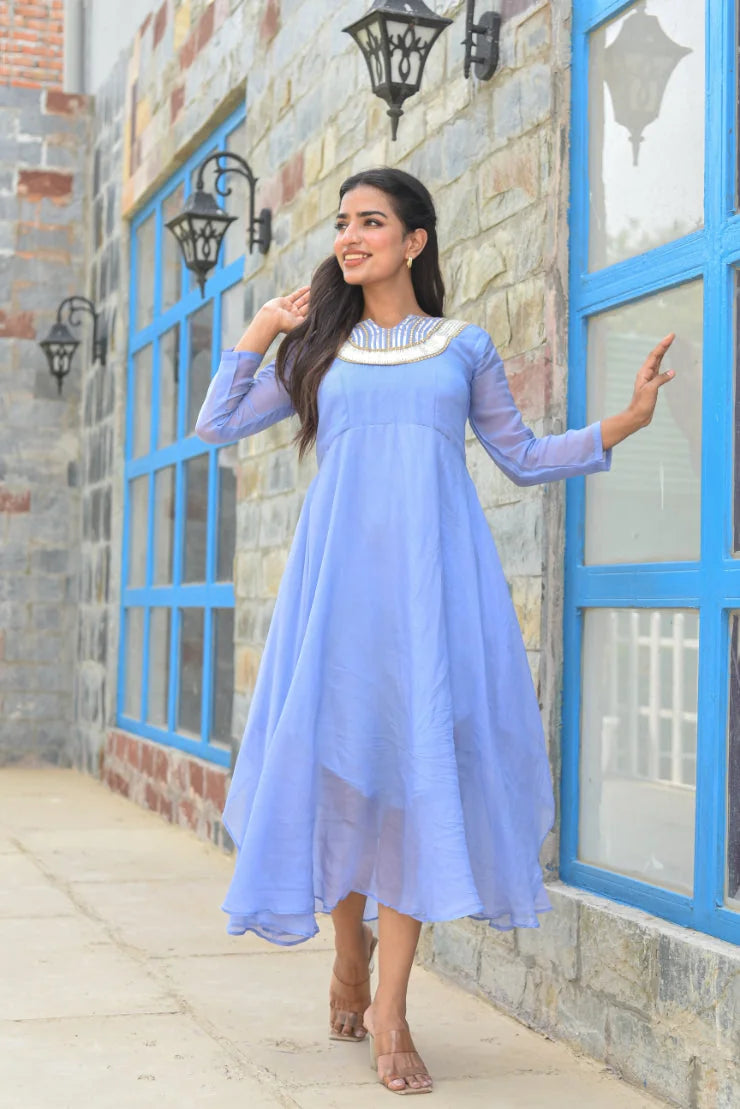
The Luxury of Craft: Understanding Indian Textiles
Quick Answer
Understanding luxury ethnic wear begins with the base material. Natural Silks (like Tassar) offer structural integrity and a rich sheen, ideal for formal heritage wear. Georgette provides a lightweight, fluid drape perfect for contemporary silhouettes, while techniques like Bandhej (tie-dye) and Zardozi (metal embroidery) add layers of artisanal complexity. Prioritizing natural fibers over synthetics ensures better breathability, longevity, and a superior aesthetic finish.
Key Takeaways
- Natural Fiber Supremacy: Silks and high-grade cottons offer unmatched thermal regulation and skin-friendliness compared to polyesters.
- Drape vs. Structure: Understand how fabric weight dictates the silhouette; use silk for structured volume and georgette for fluid motion.
- Artisanal Integrity: Hand-embroidery (Zardozi) and hand-dyeing (Bandhej) are non-fungible marks of true luxury.
- Investment Pieces: High-quality textiles retain their value and appearance for decades, making them sustainable "heirloom" choices.
The Textile as a Canvas: The Saroj Jain Philosophy
At the heart of the Saroj Jain atelier, the fabric is never an afterthought. It is the foundation upon which every design is built. When we source a bale of silk or a roll of georgette, we aren't just looking at color; we are analyzing 'grammage,' 'count,' and 'hand-feel.' This technical obsession is what ensures that our Women’s Kurta Sets maintain their majesty from the moment you put them on until the final toast of the evening.
1. The Majesty of Silk: Tassar, Zari, and Beyond
Silk is arguably the most prestigious fiber in human history. In India, it is woven into our spiritual and social fabric.
Tassar Silk: The 'Wild' Texture
Unlike 'mulberry' silk which is smooth and uniform, Tassar silk is produced by silkworms that live in the wild forest. This gives the fabric its signature textured look and a deeper, more 'copper' gold sheen.
- The Benefit: Tassar is incredibly robust. It doesn't lose its "crispness" easily, making it the perfect choice for Anarkalis and heavy straight-cut kurtas that need to look sharp all day.
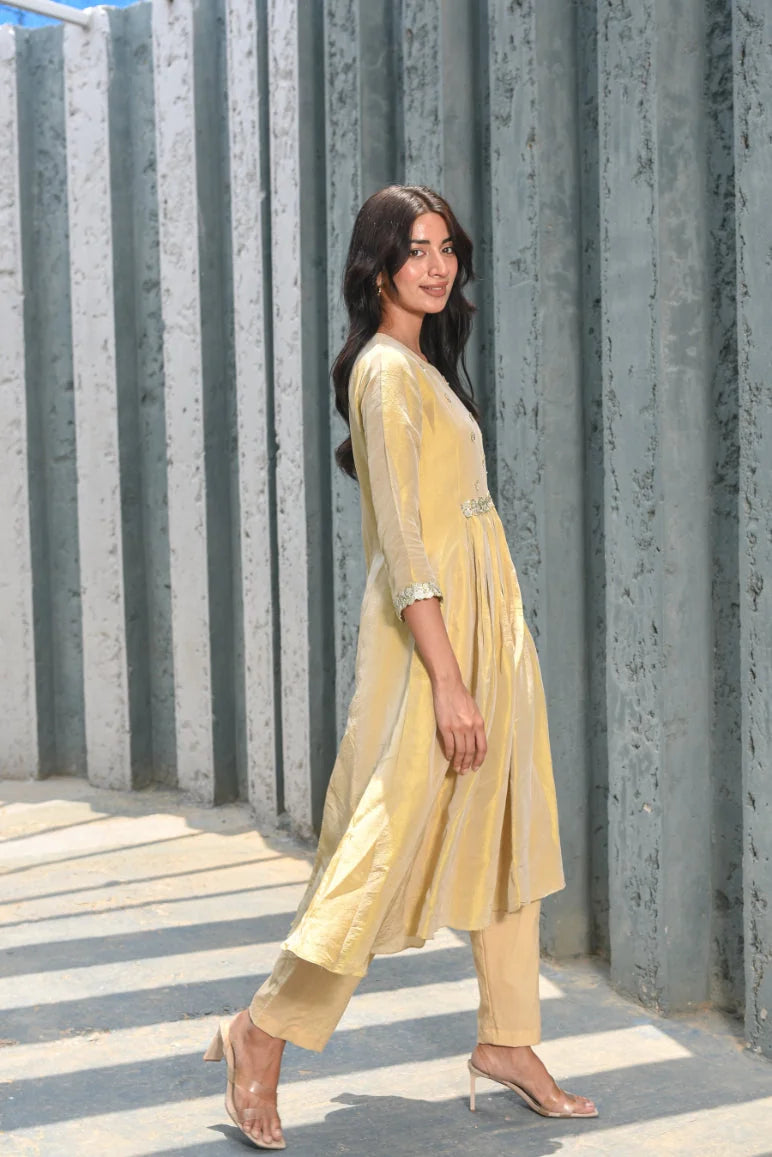
- Saroj Jain Insight: Our Beige Zari Silk Anarkali Set leverages the natural structural integrity of silk to create a flare that doesn't sag, even after multiple wears.

Beige Zari Silk Anarkali Set
*Alt text: Detailed view of the Beige Zari Silk Anarkali Set showing the rich texture of natural silk and intricate Zari embroidery.*
The Science of Zari
Zari is not a fabric, but a component of luxury. It is a thread made of flattened silver or gold, wound around a silk yarn. In Premium Indian Ethnic Wear, Zari adds a three-dimensional depth that synthetic "golden thread" cannot replicate. It catches the light with a warmth that is unmistakable.
2. Georgette and Crepe: The Architects of Fluidity
For the modern woman who values movement and comfort, Georgette is the supreme ruler.
Why Premium Georgette?
Lower-grade georgette (often synthetic) can feel scratchy and look 'shiny' in a way that feels cheap. Our premium georgette is made from highly twisted silk fibers. This gives it a matte finish, a soft 'pebble' texture, and an extraordinary drape.
- The Drape Factor: Our Bottle Green Georgette Sharara Saree Set is only possible because of the fabric's ability to be pleated like a saree and flowed like a trouser simultaneously. It is weightless luxury.
- Best for: Cocktail evenings, Sangeet functions, and social mixers where mobility is key.
3. Bandhej: The Ancient Art of the Knot
Bandhej (or Bandhani) is one of the oldest forms of tie-dyeing in the world, originating in the vibrant regions of Rajasthan and Gujarat. It involves tying the fabric with thread in thousands of tiny knots to create intricate patterns before dyeing.

Baby Pink Bandhej Kurta Set
*Alt text: Baby Pink Bandhej Kurta Set by Saroj Jain illustrating the delicate tie-dye technique and soft feminine palette.*
True Bandhej is recognizable by its texture—the 'crinkle' left by the knots. When you wear our Baby Pink Bandhej Kurta Set, you are wearing the result of days of meticulous manual labor. Each dot on the fabric was tied by hand. This unpredictability is the mark of a handcrafted masterpiece.
4. Zardozi: The Metal Embroidery Technique
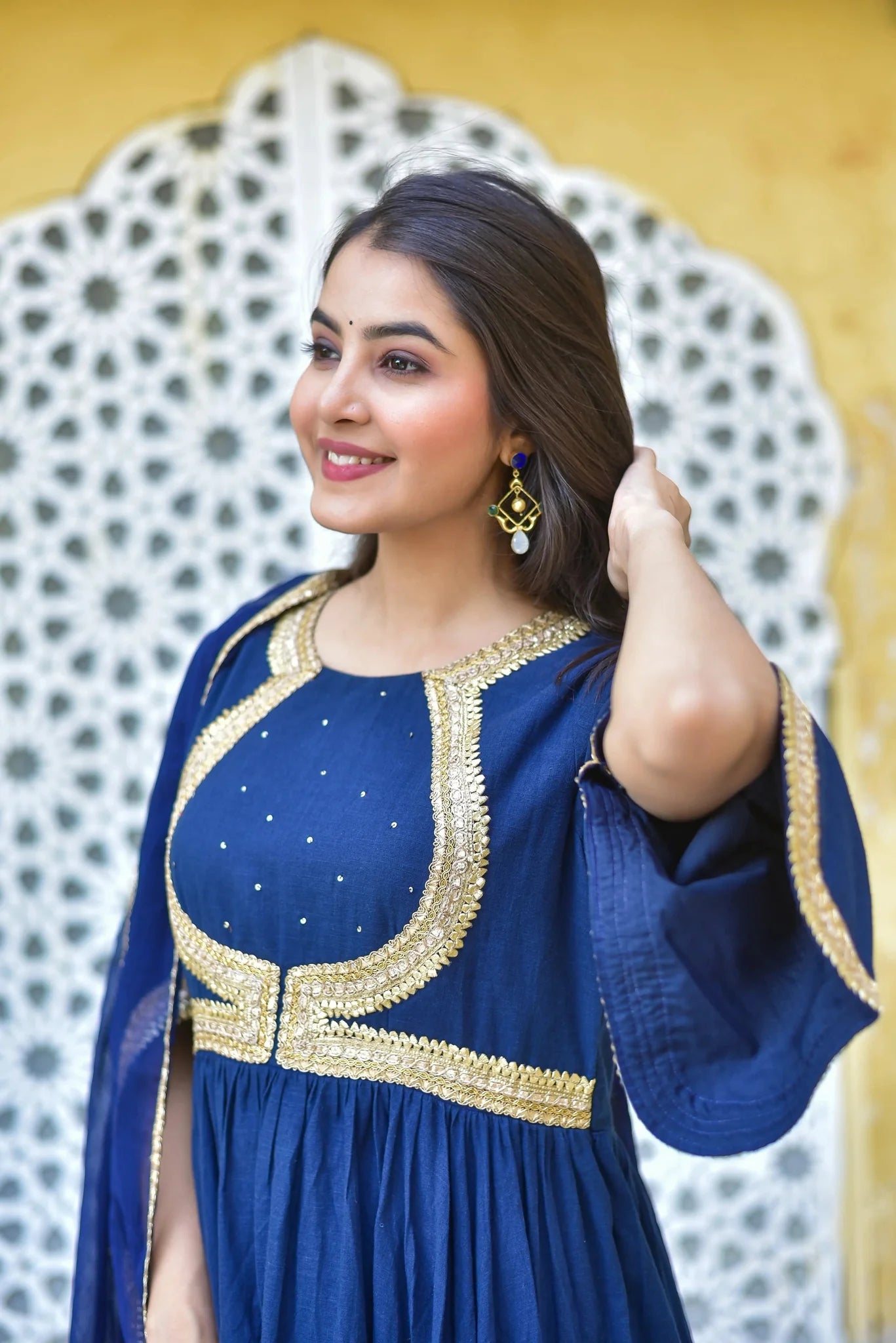
Zardozi is a type of heavy and elaborate metal embroidery that once adorned the robes of Persian and Indian kings and queens. It involves using metallic threads, beads, and gems to create embossed patterns.
- Historical Context: During the Mughal era, Zardozi used real gold leaf and silver wire. While modern luxury uses high-quality blends, the technique remains largely unchanged—a specialized craftsman uses a curved 'Aari' needle to embroider the fabric stretched on a large wooden frame (Karkhana).
- Legacy Value: A Zardozi piece from our Best Sellers collection is often considered an heirloom. It is the "Haute Couture" of the Indian subcontinent.
Sustainability through Longevity: The 'Slow Fashion' Move
At Saroj Jain, we often say that the most sustainable garment is the one you already own. By using premium natural textiles, we combat the 'dispose' culture.
1. Breathability: Natural fibers allow your skin to breathe, making them comfortable for the Indian climate. Synthetics trap heat, leading to discomfort and skin irritation.
2. Color Retention: High-quality silk and georgette hold dyes deep in their fibers. They don't 'wash out' or fade like polyester blends.
3. Heirloom Quality: A Tassar silk kurta from Saroj Jain can be passed down from mother to daughter. This multi-generational lifecycle is the ultimate form of sustainability.
Identifying Authentic Luxury Textiles
As a consumer, how can you tell the difference?
- The Burn Test: (Not recommended for your finished dress!) Natural silk smells like burnt hair and leaves a crushable ash. Synthetics smell like burning plastic and leave a hard bead.
- The Texture Check: Natural textiles always have slight irregularities. Perfectly flat, uniform, and "shiny" fabrics are often a sign of mass-produced synthetics.
- The Temperature Test: Natural silk feels cool to the touch in summer and warm in winter. It regulates temperature according to your body.
Caring for Your Curated Collection
To maintain the lifecycle of these premium textiles:
- Storage: Silk should be stored in muslin bags. Never use plastic covers, as they can trap moisture and damage the fibers.
- Light: Avoid direct sunlight for long periods, which can weaken silk fibers and fade colors.
- Professional Care: Always dry clean. The chemicals used in home washing machines can break down the proteins in silk and ruin the texture of georgette.
FAQ SECTION:
Q1: Why is Tassar silk more expensive than regular silk?A: Because it is "wild" silk. The silkworms are not domesticated, making the harvesting process more labor-intensive and the output more limited. Its unique texture and durability also command a premium.
Q2: Is georgette a natural or synthetic fabric?A: It can be both. At Saroj Jain, we prioritize high-twist silk georgette which offers a superior drape and breathability compared to common polyester georgette.
Q3: Can I find Bandhej patterns in modern silhouettes?A: Yes! Our Baby Pink Bandhej Kurta Set is a perfect example of traditional Bandhani work being applied to a modern, sleek kurta silhouette for a "contemporary-ethnic" fusion.
Q4: Does Zardozi embroidery make the garment heavy?A: Authentic Zardozi uses metal wires and beads, so it does add weight. However, by using premium lightweight base fabrics like Georgette, we balance the weight to ensure the garment remains comfortable for long durations.
Q5: Are these premium fabrics suitable for those with sensitive skin?A: Absolutely. Natural fibers like silk and cotton are hypoallergenic and far gentler on the skin than petroleum-based synthetic fabrics.
Q6: Where can I see more of Saroj Jain's craftsmanship?A: You can explore our collection on our Myntra store or watch our behind-the-scenes films on YouTube.
Q7: How do I verify the authenticity of a Zari work set?A: Authentic Zari has a soft, warm luster. It shouldn't feel scratchy against the skin. We encourage you to read our Reviews to understand our community's trust in our materials.
Frequently Asked Questions
Continue Your Style Journey
- Shop the craft: Women’s Kurta Sets
- Discover our best: Best Sellers
- Craftsmanship on Instagram
- YouTube documentaries: YouTube
- Verified quality: Reviews
Invest in the art of the loom. Discover the visceral beauty of Premium Indian Ethnic Wear at Saroj Jain. Whether you are moved by the texture of silk or the fluidity of georgette, find a piece that resonates with your personal narrative. Follow us on Instagram for a deeper look into our atelier, and share your experience by leaving a review.





%20offer%20structural%20integrity%20and%20a%20rich%20sheen,%20ideal%20for%20formal%20herita...)