

Mehendi Ceremony Dress Code
Updated: August 2026 | Written by: Saroj Jain Styling Team | Reviewed by: Saroj Jain Boutique Team
The right mehendi ceremony dress code is bright, comfortable, and easy to manage while sitting, eating, dancing, or waiting for henna to dry. Guests do not need heavy bridalwear. A printed dress, relaxed kurta set, light anarkali, or festive Afghani silhouette usually works better. At our JP Nagar 5th Phase fitting room, we check three things first: can you sit cross-legged, can your sleeves stay away from wet mehendi, and can you move without adjusting your dupatta every few minutes?
Quick answer: Wear a cheerful, breathable outfit in green, yellow, orange, pink, coral, lilac, or turquoise. Choose mul cotton, cotton-silk, Chanderi, or georgette based on the venue. Keep sleeves short or rollable, pin the dupatta behind your shoulders, wear flat footwear, and stay one step below the bride’s level of detail.
- What the dress code really means
- Colours that work
- Best fabrics for Bengaluru venues
- Comfortable silhouettes
- Wet-mehendi styling
- Saroj Jain outfit picks
- Outfit comparison
- Body shape and silhouette guide
- What to avoid
- Frequently asked questions
- Visit our JP Nagar boutique
What the Mehendi Ceremony Dress Code Really Means
A mehendi is festive, but it is usually more relaxed than the wedding or reception. Think colour, movement, and comfort rather than dense embroidery from neckline to hem.
For guests, the safest formula is a light Indian outfit with a cheerful colour story. Kurta sets, printed dresses, palazzo sets, anarkalis, shararas, and Afghani silhouettes all work when the hem is manageable.
Stay a notch below the bride and bridesmaids. If the invitation names a family colour, follow it. Otherwise, avoid copying the bride’s exact outfit, embroidery, or coordinated dupatta.
Colours That Work for a Mehendi
Green is an easy choice because it connects naturally with the occasion. Yellow, orange, pink, coral, fuchsia, lilac, teal, and turquoise also photograph well during daytime celebrations.
Mid-tone prints are especially practical. They add interest while disguising small food marks, folds, or accidental henna touches better than a plain pale pastel.
White can look beautiful, but it is not the easiest choice around mehendi cones, snacks, lawn seating, and active dancing. If you prefer a light palette, choose a print or add a coloured layer.
Best Fabrics for Bengaluru Mehendi Venues
Mul cotton: Best for a warm outdoor function. It feels cool and soft against the skin. It can crease across the lap, so choose a print that makes folds less visible.
Cotton-silk: A useful middle ground when you want shape without a heavy feel. It works well for daytime family functions and photographs neatly after sitting.
Chanderi: Light, festive, and suitable when the venue has some structure. Pair it with a simple lining and avoid a long trailing hem.
Georgette: Good for air-conditioned banquet halls because it drapes well and resists obvious creasing. Choose a breathable lining and avoid excessive layers.
Chiffon: Soft and fluid, but it needs sensible pinning. A loose dupatta can catch on chairs, food plates, or mehendi supplies.
At our 57/1, 1st Cross Road boutique in JP Nagar 5th Phase, we see the same issue repeatedly: a beautiful outfit becomes uncomfortable when the fabric traps heat or the hem gathers under the feet. The venue matters as much as the colour.
Comfortable Silhouettes for Sitting and Dancing
A flared kurta with straight pants or palazzos gives you room to sit cross-legged without pulling at the knees. It also lets you move between the mehendi area, buffet, and photographs without constant adjustment.
An anarkali works when the flare is light and the hem does not drag. Pick one with enough space through the waist and hips for floor seating.
A one-piece ethnic dress is practical when you want to avoid managing a dupatta. Look for a loose waist, comfortable armholes, and a hem that stays clear of the feet.
Sharara and Afghani styles suit guests who expect extended sitting. Wide trousers allow movement, but check that the fabric does not pool around the ankles.
How to Dress Around Wet Mehendi
- Choose sleeveless, short, elbow-length, or rollable sleeves.
- Keep cuffs away from the palms and wrists.
- Pin the dupatta behind the shoulders or wear it over one shoulder.
- Avoid heavy bangles on the arm receiving mehendi.
- Carry a hair tie so loose hair does not touch wet henna.
- Wear flat slip-on footwear that is easy to remove.
- Choose a hem you can lift clear of the feet during foot mehendi.
Our fitting-room test is simple: sit down, cross your legs, raise both arms, and reach forward. If the sleeve pulls or the dupatta falls into your lap, the outfit needs adjusting before the event.
Saroj Jain Outfit Picks for a Mehendi
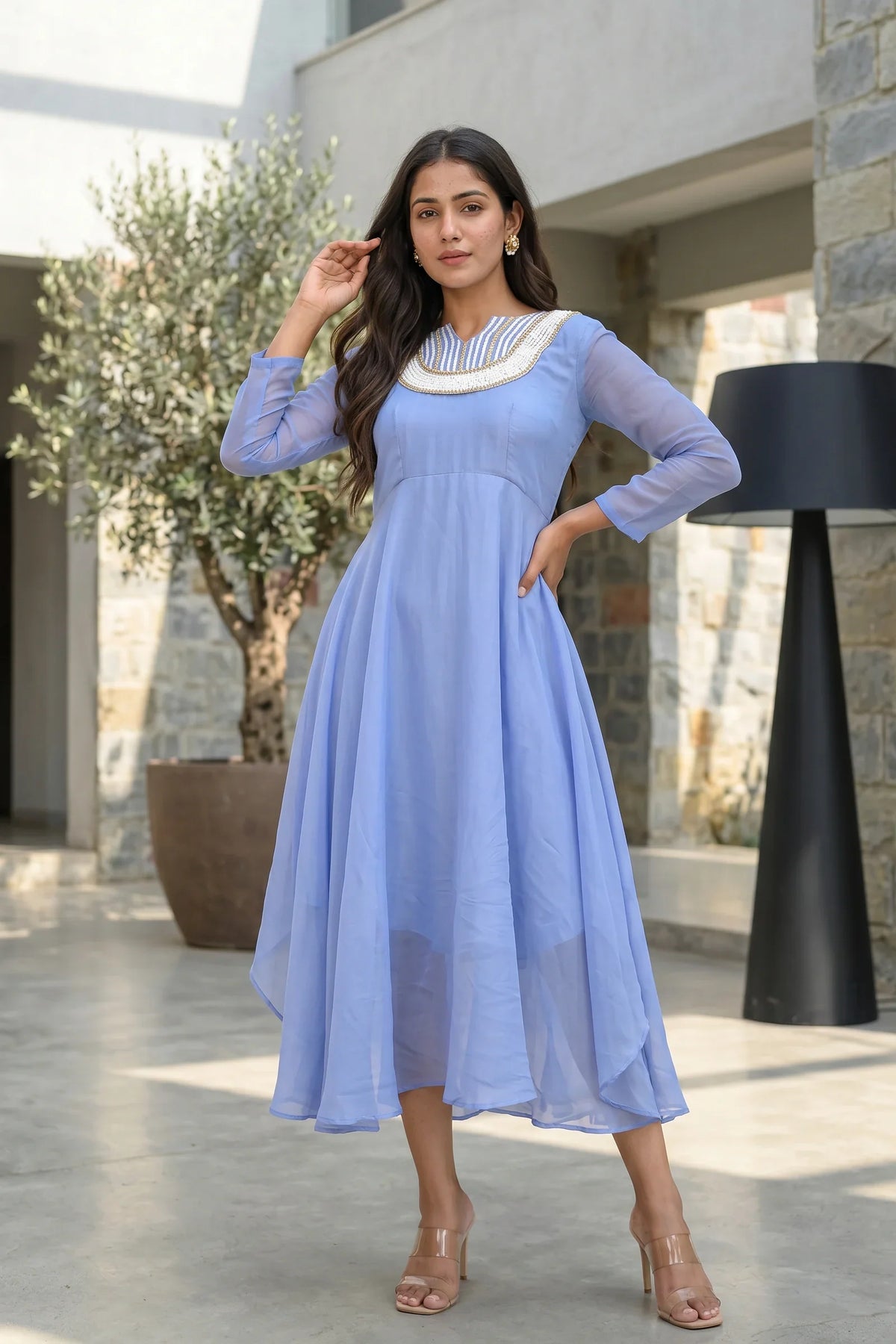
Saroj Jain pick: Baby Blue Asymmetrical Dress

Price: ₹2,336.19
Why it works: The asymmetrical hem gives a festive line without a long train. It is easier to move in than a floor-length layered outfit.
Best for: Daytime mehendi guests, younger family members, and guests who prefer a modern dress.
Style with: Pearl or silver earrings, a small potli, and flat metallic sandals.
Avoid if: You want a traditional dupatta-led outfit or expect heavy floor seating without checking the hem first.
Shop the Baby Blue Asymmetrical Dress
Saroj Jain pick: Cut Work Kurti

Price: ₹3,560.49
Why it works: A kurti is easy to pair with comfortable trousers or palazzos, giving you control over sitting comfort and movement.
Best for: Daytime family mehendis, intimate home functions, and guests who prefer separates.
Style with: Wide-leg pants, small jhumkas, a lightweight dupatta, and Kolhapuris.
Avoid if: Your chosen bottom is too narrow for sitting cross-legged or the cut-work detail may catch on rough seating.
Saroj Jain pick: Emerald Green Heavy Work Anarkali Dress With Dupatta

Price: ₹6,676.89
Why it works: Emerald green fits the mehendi colour story, while the anarkali shape gives festive presence without requiring a lehenga.
Best for: Evening mehendis, close family guests, and banquet-hall celebrations.
Style with: One pair of statement earrings, a low bun, and low block heels or embellished flats.
Avoid if: The event is a hot outdoor afternoon function or the bride has reserved emerald green for her closest group.
Shop the Emerald Green Heavy Work Anarkali Dress With Dupatta
Saroj Jain pick: Floral Mirage Satin Afghani Dress

Price: ₹4,450.89
Why it works: The relaxed Afghani shape gives generous room for sitting and movement, while the floral finish keeps the outfit event-ready.
Best for: Casual-to-festive mehendis, outdoor lawns, and guests who prefer an easy silhouette.
Style with: Lightweight earrings, a compact clutch, and flat sandals with a secure strap.
Avoid if: You dislike satin’s smoother feel or the venue involves rough floor seating that may catch the fabric.
Shop the Floral Mirage Satin Afghani Dress
Mehendi Outfit Comparison
| Outfit | Fabric direction | Festive scale | Price |
|---|---|---|---|
| Baby Blue Asymmetrical Dress | Light dress fabric | Soft and modern | ₹2,336.19 |
| Cut Work Kurti | Kurti with breathable separates | Daytime festive | ₹3,560.49 |
| Emerald Green Heavy Work Anarkali Dress With Dupatta | Structured festive fabric | High festive | ₹6,676.89 |
| Floral Mirage Satin Afghani Dress | Fluid satin finish | Relaxed festive | ₹4,450.89 |
Body Type and Silhouette Matrix
| Body shape | Helpful silhouette | Styling direction |
|---|---|---|
| Petite | Short kurti, controlled flare, or asymmetrical dress | Keep the hem clear, use smaller jewellery, and avoid too many fabric layers. |
| Tall | Long anarkali, Afghani dress, or wide-leg kurta set | Use a longer earring or printed dupatta to balance the full length. |
| Curvy | Soft A-line anarkali or relaxed straight kurta | Choose breathable lining, easy armholes, and prints that do not interrupt at the widest point. |
| Lean | Layered kurta set, flared anarkali, or textured dress | Use light gathers, cut work, or a printed dupatta to add visual balance. |
Jewellery, Dupatta, and Footwear
Pick one focus: earrings, a necklace, or bangles. Heavy arm jewellery is not practical when henna is being applied or drying.
Pin the dupatta behind the shoulders, place it over one shoulder, or use a light stole. Avoid long loose ends that drag through food, chairs, or wet mehendi.
Flat juttis, Kolhapuris, and slip-on sandals are safer than narrow heels. If you need height, choose a low block heel with a secure strap.
What to Avoid
- Long, tight sleeves that touch wet henna.
- Heavy brocade, velvet, or thick raw silk in a warm venue.
- Delicate trailing hems around lawn seating or food counters.
- Plain white outfits that show every mark.
- Heavy dupattas that need constant fixing.
- Large stacked bangles on the arm receiving mehendi.
- Stiff waistbands that make cross-legged sitting uncomfortable.
- Footwear that is difficult to remove or unsafe on grass.
- Bridal-level embroidery when you are a regular guest.
Mehendi Ceremony Dress Code FAQs
What should a guest wear to a mehendi without looking overdressed?
Choose a printed kurta set, light anarkali, relaxed Afghani dress, or modern ethnic dress. Keep embroidery moderate and use one statement accessory instead of a complete bridal jewellery set.
Can guests wear green, yellow, or orange?
Yes. Green, yellow, orange, pink, coral, lilac, teal, and turquoise are all suitable. Ask the host if the bridal party has been assigned a specific shade.
What is the best mehendi outfit for sitting cross-legged?
Wide-leg trousers, palazzos, anarkalis with a manageable flare, and loose Afghani silhouettes are comfortable. Test the outfit seated before the event.
Is cotton suitable for a Bengaluru mehendi?
Mul cotton is excellent for warm outdoor functions. It may crease across the lap, so printed cotton is often easier to wear than a plain pastel.
Should I wear a dupatta?
Wear one if it completes the outfit, but keep it light and secure. Pin it behind the shoulders or over one shoulder so both hands remain free.
What should I wear if I am getting mehendi applied?
Choose sleeveless, short, elbow-length, or rollable sleeves. Keep bangles away from the application area and wear clothing that does not need frequent adjustment.
Can I wear a dress instead of Indian separates?
Yes. A bright midi, asymmetrical dress, or ethnic maxi can work well. Add Indian jewellery and flat footwear if the invitation feels more traditional.
Ready to Find Your Fit? Visit Our JP Nagar Boutique
Bring the invitation, venue details, and the time of day. We will help you choose fabric, sleeve length, hem, and accessories for the actual function.
Visit SAROJ JAIN at 57/1, 1st Cross Rd, opposite to Iyengar's Bakery, 5th Phase, Dollar Layout, JP Nagar Phase 5, Bengaluru, Karnataka 560078.
WhatsApp the Styling Team View the Lookbook Shop Collections Book a Boutique Meet
For colour, comfort, and wet-mehendi practicality, use this mehendi ceremony dress code as your fitting-room checklist before you choose an outfit.
Visit the Saroj Jain Boutique
Discover our collections in person.
57/1, 1st Cross Rd, opposite to Iyengar's Bakery, Dollar Layout, J. P. Nagar Phase 5,Bengaluru, Karnataka 560078
+91-9314078524