
Pre-Draped Sarees And Contemporary Sarees
Updated: August 2026 | Written by: Saroj Jain | Reviewed by: Saroj Jain Boutique Team
Pre-draped sarees and contemporary sarees solve a simple problem: looking polished without spending an hour fixing pleats. The right design can feel as graceful as a traditional drape while giving you better movement, cleaner lines, and more reliable comfort.
At our SAROJ JAIN fitting room in JP Nagar 5th Phase, we check three things first: where the waistband sits, whether the hem clears the footwear, and how the pallu behaves when you walk. Bangalore’s October warmth and occasional rain also make fabric choice practical, not decorative.
This guide covers fit, fabric, alterations, event comfort, body proportions, and styling choices that make ready-to-wear sarees look intentional.
Quick answer: Choose pre-stitched sarees when you want speed, stable pleats, and easy movement. Measure your waist, hip, height, blouse size, and preferred footwear before buying. Silk and cotton hold sharper pleats. Chiffon, georgette, crepe, tissue, and knit fabrics give more movement but need careful lining and pinning.
- Why choose a pre-draped saree?
- How the fit is engineered
- Fabric guide
- Comfort and security
- Modern styling ideas
- SAROJ JAIN picks
- Quick comparison
- Body shape and height guide
- What to avoid
- FAQs
- Visit our JP Nagar boutique
Why Choose a Pre-Draped Saree?
A pre-draped saree gives you the visual structure of a saree with less dressing time. The pleats are formed, the pallu is positioned, and closures help keep the outfit stable.
It works especially well for receptions, cocktail events, office celebrations, destination weddings, and occasions where you need to sit, walk, or dance without repeatedly resetting the drape.
In our JP Nagar 5th Phase boutique, we often ask clients to sit cross-legged before finalising the fit. A saree that looks good standing can feel restrictive once the waist and hip area take pressure.
How the Fit Is Engineered
The waistband controls the whole silhouette. It should sit securely at your natural waist or the intended high-waist position without pinching when you sit.
Check whether the garment uses hooks, a zip, elastic, or a combination. Hooks offer size flexibility. Zips create a cleaner line but need more accurate measurement.
Fixed pleats cannot always be moved like hand-draped pleats. If the pleats sit too high, too low, or away from the centre, ask about alteration before wearing it to an event.
The pallu should reach a comfortable point around the hip or below, depending on the style. Height-based hemming is often needed for petite or tall wearers.
Fabric Guide: Pleats, Fall, Cling, and Movement
| Fabric | What it does | Best use |
|---|---|---|
| Silk | Holds structured pleats and gives a formal finish. | Weddings, receptions, evening ceremonies. |
| Cotton | Breathable with a firmer, crisp fall. | Day events, cultural functions, work celebrations. |
| Georgette | Light, fluid, and slightly clingy. It moves well. | Long events and dancing. |
| Chiffon | Soft, light, and fluid. It may need lining and secure pins. | Outdoor events and softer evening looks. |
| Crepe | Falls close to the body with a smooth, modern line. | Contemporary sarees and cocktail dressing. |
| Tissue | Reflective, airy, and slightly structured. | Festive dressing and statement borders. |
| Knit | Stretch-friendly and comfortable, with a close fit. | Casual contemporary styling. |
Silk and cotton are easier when you want defined pleats. Chiffon, georgette, and crepe create more movement but show fit issues quickly if the waistband is loose.
Tissue can look striking in daytime lighting, but avoid excessive volume if you prefer a close, minimal silhouette. At our store, we check the saree under natural daylight because shiny fabrics can appear very different under boutique spotlights.
Comfort and Security for Long Events
Comfort comes from three details: a stable waistband, a hem that clears the floor, and a blouse that allows full arm movement.
Use an anti-slip waistband or a thin tuck-in layer if the saree shifts. Secure the pallu near the shoulder and, when needed, add a second discreet pin near the blouse side seam.
For outdoor Bangalore events, choose lighter fabrics, breathable lining, and footwear that you can manage for several hours. Test walking, sitting, climbing stairs, and reaching forward before leaving home.
For dancing, avoid a pallu that is too long or loose. A shorter, anchored pallu gives better control without making the outfit look restricted.
Modern Saree Draping Styles That Look Natural
Keep the front pleats clean and let one element carry the drama. That could be a sculpted blouse, a bright border, metallic earrings, or a sharp belt.
For a contemporary saree, pair a clean pallu with a fitted blouse, pointed flats, block heels, or low sandals. Avoid adding a necklace, belt, heavy earrings, and ornate footwear all at once.
For traditional jewellery, keep the blouse simpler. For a modern blouse, use one strong jewellery shape such as sculptural earrings or a broad cuff.
SAROJ JAIN Picks for Contemporary Dressing
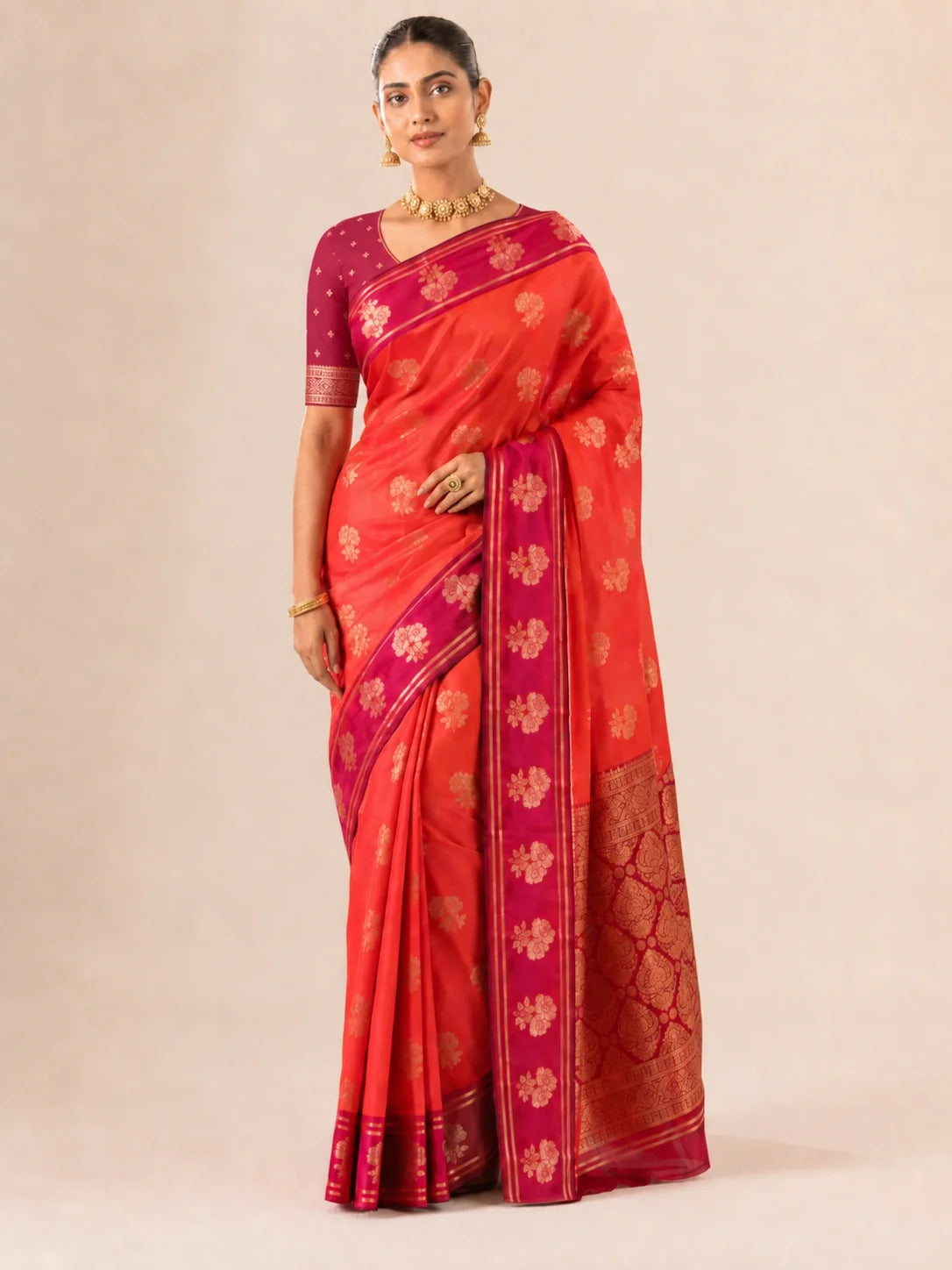
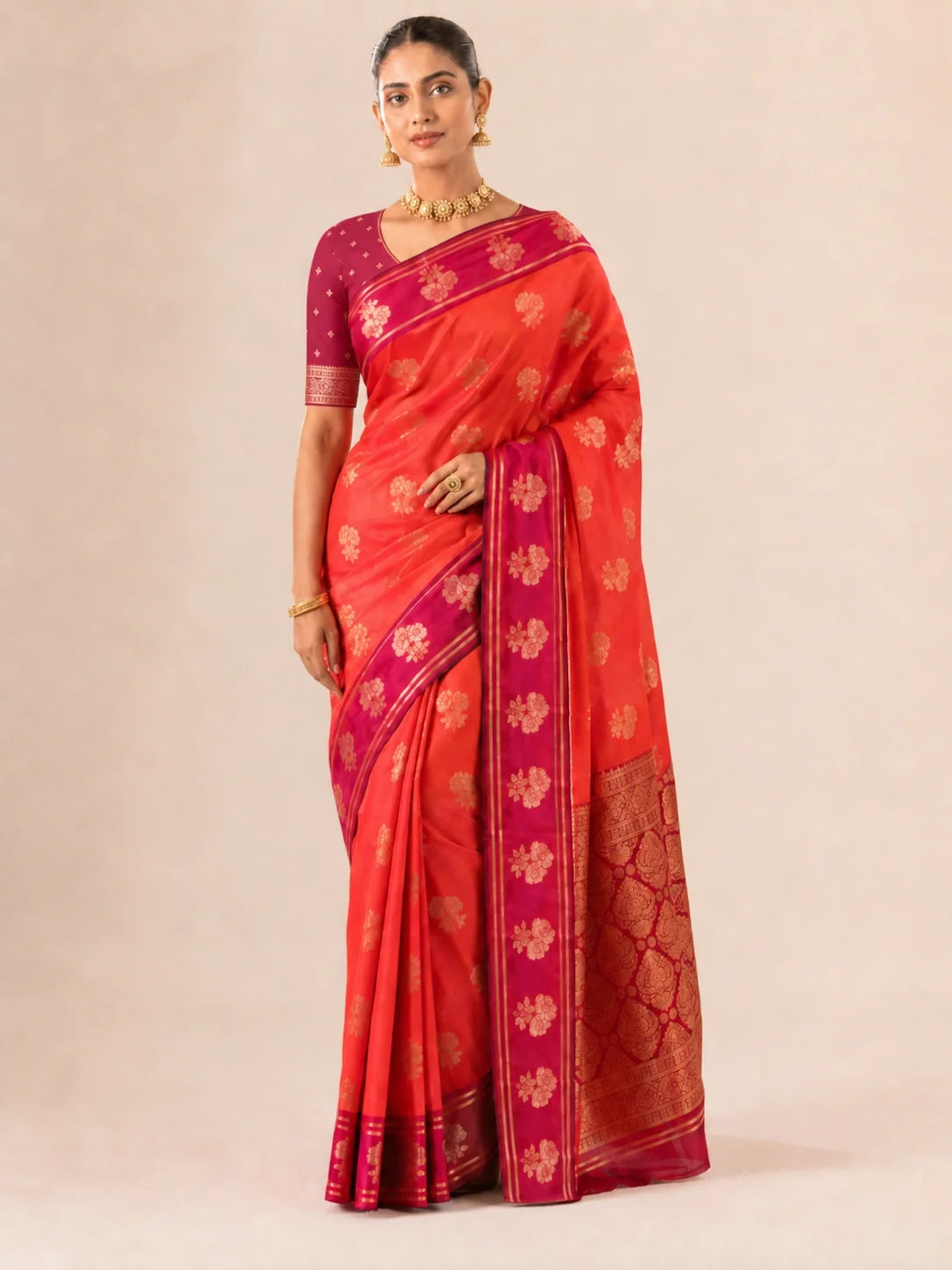
Saroj Jain pick: Scarlet Radiance Handwoven Tissue Fusion Saree (With Rich Fuchsia Woven Blouse)

Price: ₹946.05
Why it works: The tissue surface gives light-catching structure, while the fuchsia woven blouse creates a defined colour break.
Best for: Festive lunches, receptions, and evening celebrations.
Style with: Gold earrings, a compact clutch, and low block heels.
Avoid if: You prefer a soft, matte saree with minimal sheen.
Shop the Scarlet Radiance Handwoven Tissue Fusion Saree (With Rich Fuchsia Woven Blouse)
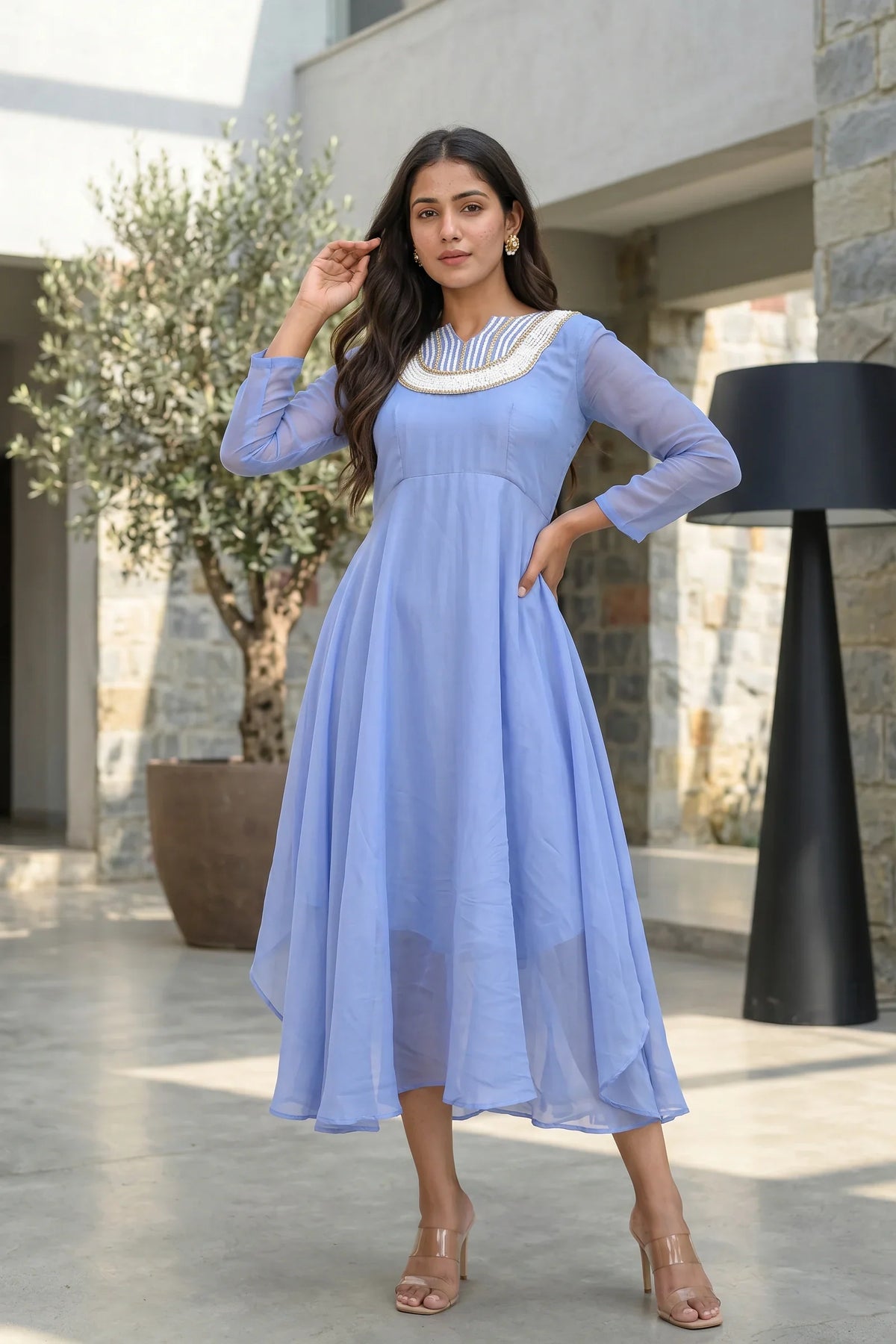
Saroj Jain pick: Baby Blue Asymmetrical Dress

Price: ₹2,336.19
Why it works: The asymmetrical line gives a contemporary alternative when you want the impact of modern occasionwear without a saree.
Best for: Cocktail events, dinners, and celebrations with frequent movement.
Style with: Minimal silver jewellery and pointed heels or dressy flats.
Avoid if: You need traditional saree draping for a formal ceremony.
Shop the Baby Blue Asymmetrical Dress
Saroj Jain pick: Bandhej Kurta and Pant Set

Price: ₹5,563.89
Why it works: The kurta and pant format offers easy sitting and walking while keeping a festive textile focus.
Best for: Day weddings, family gatherings, and festive lunches.
Style with: Jhumkas, embroidered flats, and a small potli bag.
Avoid if: You specifically want the length and movement of a saree pallu.
Shop the Bandhej Kurta and Pant Set
Saroj Jain pick: Bandhej Kurta Set

Price: ₹4,673.49
Why it works: The coordinated set gives a complete festive look with fewer fit decisions than separates.
Best for: Puja visits, daytime ceremonies, and family celebrations.
Style with: Pearl or gold studs, a structured handbag, and comfortable sandals.
Avoid if: You want a high-shine, evening-only look.
Quick Comparison
| Outfit | Fabric or finish | Festive scale | Price |
|---|---|---|---|
| Scarlet Radiance Handwoven Tissue Fusion Saree (With Rich Fuchsia Woven Blouse) | Handwoven tissue | High | ₹946.05 |
| Baby Blue Asymmetrical Dress | Contemporary dress finish | Medium | ₹2,336.19 |
| Bandhej Kurta and Pant Set | Bandhej kurta and pant | High | ₹5,563.89 |
| Bandhej Kurta Set | Bandhej coordinated set | Medium to high | ₹4,673.49 |
Body Type and Silhouette Matrix
| Proportion | What to choose | What to check |
|---|---|---|
| Petite | High-waist placement, narrow pleats, and a shorter pallu. | Hem length and excess fabric at the hip. |
| Tall | Longer pallu, fuller pleats, and a defined border. | Whether the hem and shoulder drape have enough length. |
| Curvy | Fluid georgette, crepe, or a structured waistband with a clean blouse line. | Waistband comfort, hip ease, and lining at the front. |
| Lean | Tissue, silk, cotton, textured pleats, or a stronger border. | Whether the fabric creates enough body without bunching. |
No body shape requires one fixed saree style. The correct result comes from proportion, placement, and ease around the waist and hips.
Alterations After Purchase
Common alterations include waist adjustment, hook relocation, hem shortening, pallu reduction, and minor blouse changes.
Pleat width is more technical because the pleats may be stitched into the waistband. A tailor may need to open and reset part of the construction rather than simply fold the fabric.
Bring the footwear you plan to wear. A two-inch difference in heel height can change the entire front fall.
Care and Storage
Check the care label before cleaning. Embellished sarees, tissue, silk, and delicate structured pieces are safest with professional dry cleaning.
Do not machine wash a stitched saree unless the care instructions clearly allow it. Steam from a distance, use low heat, and avoid pressing directly over fixed pleats.
After an event, air the saree in shade before storing it. Use a padded hanger or fold it with breathable tissue to protect the pallu and waistband.
What to Avoid
- Buying only by height while ignoring waist and hip measurements.
- Choosing a standard pallu length without checking your torso.
- Wearing new heels without testing the hem first.
- Using heavy pins that pull delicate chiffon, georgette, or tissue.
- Ignoring blouse arm movement before a long event.
- Washing embellished or structured sarees at home.
- Adding a tight belt over a waistband that already feels firm.
- Leaving the fitting until the day of the function.
Frequently Asked Questions
Will a pre-draped saree fit different heights and body shapes?
Yes, but standard sizing is only a starting point. Petite and tall wearers may need hem or pallu changes, while every wearer should check waist, hip, blouse, and footwear measurements.
Can pleats be adjusted after purchase?
Sometimes. Fixed pleats may require technical alteration, and the result depends on the seam allowance and construction. Ask for a fitting before approving changes.
Can the waist position be changed?
Often, yes. A tailor may move hooks, adjust the waistband, or alter the side closure. The amount possible depends on the internal structure.
Are ready-to-wear sarees secure for dancing?
They can be. Use a secure waistband, anchor the pallu at the shoulder, and keep the hem clear of the floor. Test movement before the event.
Do pre-stitched sarees look artificial?
They look natural when the fabric suits the construction and the pleats match your proportions. An incorrect waist position or overly rigid fabric creates the artificial effect.
What should be worn under a pre-draped saree?
Use the recommended petticoat or inner layer if supplied. The waist should provide support without adding bulk, especially under crepe, chiffon, and georgette.
How early should the fitting be done?
Complete the first fitting at least several days before the event. This leaves time for waist, hem, blouse, and pallu adjustments.
Ready to Find Your Fit? Visit Our JP Nagar Boutique
Visit SAROJ JAIN at 57/1, 1st Cross Rd, opposite to Iyengar's Bakery, 5th Phase, Dollar Layout, JP Nagar Phase 5, Bengaluru, Karnataka 560078.
Bring the footwear and blouse style you plan to wear. We will check the waistband, pleat placement, pallu length, sitting comfort, and movement in the fitting room.
For a polished fit that works in real life, visit SAROJ JAIN for pre-draped sarees and contemporary sarees.
Visit the Saroj Jain Boutique
Discover our collections in person.
57/1, 1st Cross Rd, opposite to Iyengar's Bakery, Dollar Layout, J. P. Nagar Phase 5,Bengaluru, Karnataka 560078
+91-9314078524