

Sangeet Dance-Friendly Outfits
Updated: August 2026 | Written by: Saroj Jain Styling Team | Reviewed by: Saroj Jain Boutique Team
Sangeet dance-friendly outfits should let you move, sit, spin and perform without repeated adjustments. The right look is about shine. It depends on the hem, flare, fabric, blouse fit, footwear and how securely the dupatta sits.
At our SAROJ JAIN boutique in JP Nagar 5th Phase, we ask clients to lift their arms, sit cross-legged and take a few turns during fittings. Bengaluru evenings can still feel warm inside crowded venues, so breathability matters as much as photographs.
This guide covers comfortable sangeet outfits, lightweight sangeet lehenga options, sharara sets, and Indo-Western sangeet outfits that stay practical through several hours of dancing.
Quick answer: Choose a lightweight georgette, crepe, chanderi or cotton-silk outfit with a secure blouse, ankle-safe hem and pre-pinned dupatta. For energetic dancing, a sharara or palazzo set gives the easiest leg movement. For spins, choose a light lehenga with reduced or detachable cancan.
- Choose the Right Sangeet Silhouette
- Fabric Guide for Heat and Movement
- Hem and Flare Engineering
- Secure the Dupatta Before Dancing
- Blouse and Fastening Details
- Footwear and Floor Safety
- SAROJ JAIN Picks
- Outfit Comparison
- Body Type and Silhouette Matrix
- What to Avoid
- FAQs
- Visit Our JP Nagar Boutique
Choose the Right Sangeet Silhouette
A sharara is often the easiest choice for energetic dancing because the legs remain separate. The flare begins lower on the leg, giving movement without the weight of a full circular skirt.
A palazzo set works well for repeated steps, floor-level choreography and long sitting. Choose a flat waistband, comfortable rise and enough room through the hips.
A lightweight lehenga gives the best spin effect. Ask for a soft flare, minimal cancan and a hem that does not sweep the floor.
Indo-Western sangeet outfits, including dresses with Indian detailing or kurta sets with statement jackets, are useful when you want movement with less fabric around the feet.
Fabric Guide for Heat and Movement
| Fabric | Movement | Heat and comfort | Best use |
|---|---|---|---|
| Georgette | Soft drape and easy flow | Breathable when lightly lined | Sharara, lehenga and dupatta |
| Crepe | Controlled movement with mild structure | Comfortable when not heavily layered | Palazzo sets and dresses |
| Chanderi | Light with gentle volume | Good for warm indoor venues | Anarkali and kurta sets |
| Tissue | Structured and photograph-friendly | Can feel warm with dense lining | Controlled flare and accents |
| Silk | Elegant but less forgiving when heavy | Can retain heat | Shorter events and lighter blends |
| Brocade | Firm with limited stretch | Can feel heavy during performance | Panels, borders and jackets |
| Velvet | Dense and less airy | Better for cool venues | Winter accents, not full dance looks |
Georgette, crepe and chanderi are usually easier for several hours of movement. Heavy silk, dense brocade and velvet can look rich but may feel warm and restrictive once the dance floor gets busy.
Hem and Flare Engineering
Ask for an ankle-safe hem. The skirt should clear the floor while standing in your actual footwear. A hem that is too long catches under the shoe during quick steps.
Layered georgette panels create movement without adding much weight. They are useful when you want a visible flare but do not want a stiff skirt.
Heavy cancan can make jumps, spins and footwork harder. A detachable or reduced cancan gives volume for photographs and easier movement during the performance.
At our JP Nagar fitting room, we ask clients to do one full turn and a shallow squat before approving the length. If the hem lifts under the foot or the lining pulls, it needs adjustment.
Secure the Dupatta Before Dancing
Pin the dupatta at the shoulder and secure the loose end at the waist. A discreet belt can keep it in place without hiding the embroidery.
A 2.5-metre dupatta with a light border is easier to manage than a heavy, floor-length piece. For maximum movement, choose a pre-draped dupatta, attached cape or short jacket.
Never leave a long end trailing near the feet. It can catch on footwear, chairs or another dancer. Test the complete drape with arm raises and turns before the event.
Blouse and Fastening Details
The blouse should allow full arm movement. Tight sleeves, stiff fabric and a narrow underarm can restrict choreography even when the skirt is comfortable.
Choose reinforced hooks, a dependable zip and a secure inner lining. Hidden stretch panels at the waist can provide comfort without changing the outer shape.
For fitted dresses and anarkalis, concealed shorts or a smooth inner layer can provide coverage during spins and floor movements. Avoid rough seams that rub when you are dancing for hours.
Footwear and Floor Safety
Choose footwear with a stable sole and a heel you have already tested. Anti-slip pads can help on polished indoor floors, but they should not replace a proper fitting.
Block heels, embellished juttis and soft flats are practical options. Avoid a new pair that has not been worn around the house.
Our boutique observation is simple: clients often focus on the outfit and forget the floor. A short dance test in the actual footwear reveals more than standing still in front of a mirror.
SAROJ JAIN Picks for a Dance-Friendly Sangeet
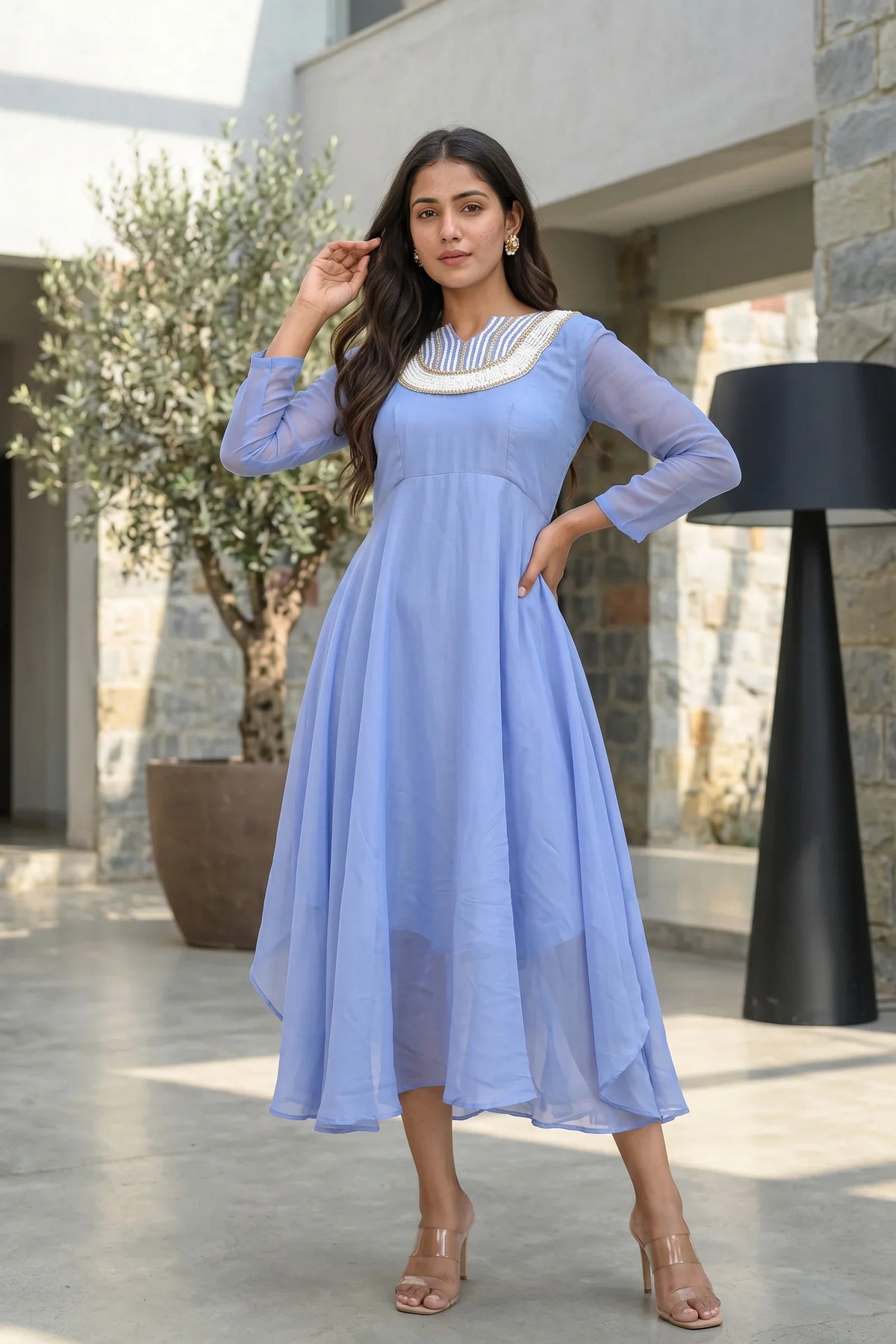
Saroj Jain pick: Baby Blue Asymmetrical Dress

Price: ₹2,336.19
Why it works: The asymmetrical shape gives a modern Indo-Western finish without a full floor-length skirt around the feet.
Best for: Guest performances, cocktail-style sangeets and clients who prefer a dress over separates.
Style with: Metallic studs, a compact clutch and stable block heels or embellished flats.
Avoid if: You need a traditional dupatta or a dramatic circular lehenga flare.
Shop the Baby Blue Asymmetrical Dress
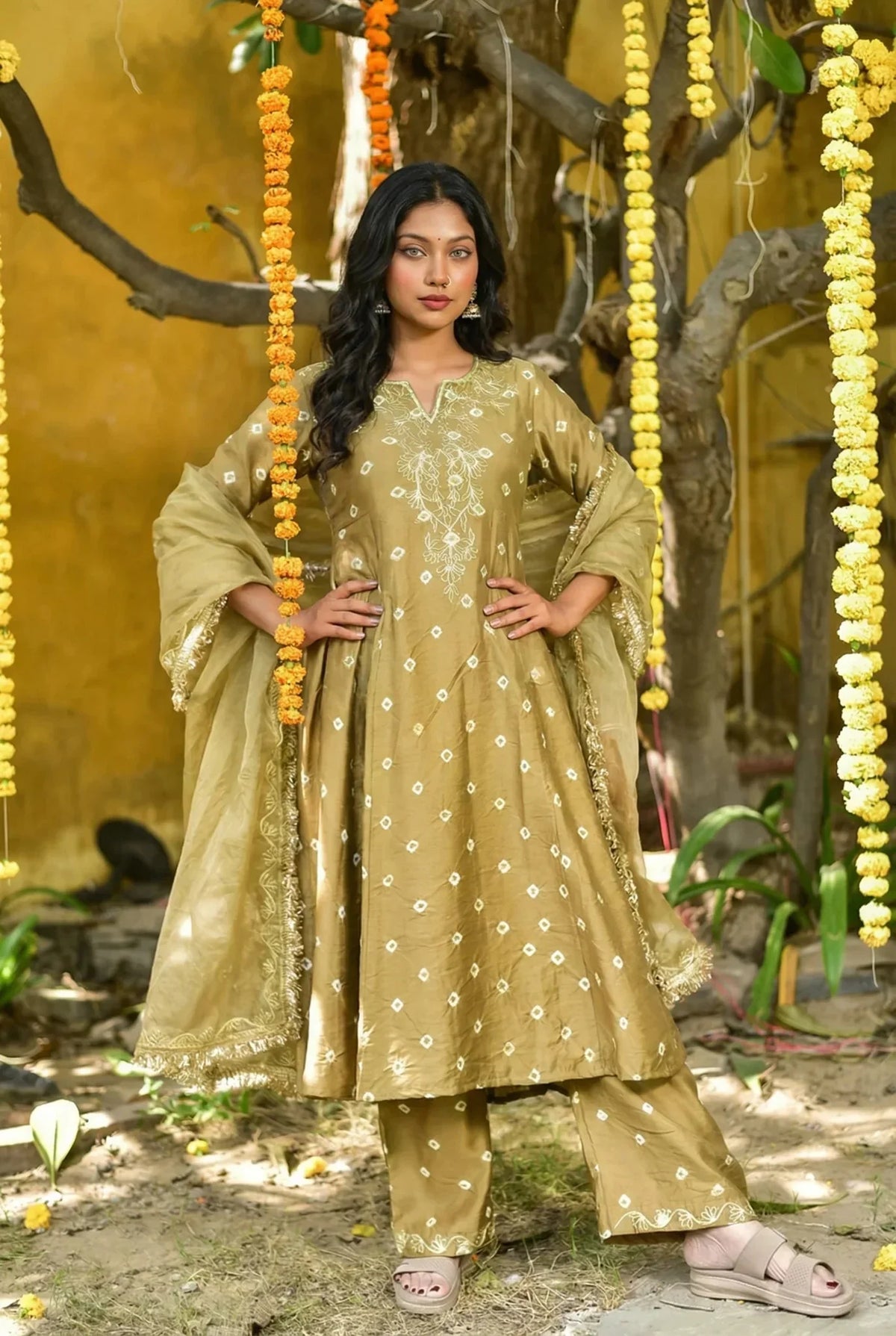
Saroj Jain pick: Bandhej Kurta and Pant Set

Price: ₹5,563.89
Why it works: The pant silhouette keeps the legs clear for choreography while the kurta maintains a festive Indian character.
Best for: Family sangeets, group performances and daytime-to-evening celebrations.
Style with: Jhumkas, a slim bangle stack and embroidered juttis with a secure sole.
Avoid if: The pant hem is too long for your footwear or the kurta pulls across the underarm.
Shop the Bandhej Kurta and Pant Set
Saroj Jain pick: Bandhej Kurta Set

Price: ₹4,673.49
Why it works: A coordinated kurta set gives a polished sangeet look with less fabric management than a lehenga.
Best for: Guests who want comfortable sangeet outfits for dancing, dining and sitting.
Style with: Colourful earrings, a compact potli and low block heels or flats.
Avoid if: You want a high-volume spin effect or a highly structured bridal-style silhouette.
Saroj Jain pick: Beige Zari Silk Anarkali Set

Price: ₹2,781.39
Why it works: The flowing anarkali shape gives festive volume without requiring a separate skirt and dupatta arrangement.
Best for: Evening sangeets, family events and guests who want a more traditional look.
Style with: Polki-style earrings, a neat bun and low block heels.
Avoid if: The lining is too long or the flare catches under your feet during a turn.
Shop the Beige Zari Silk Anarkali Set
Sangeet Outfit Comparison
| Outfit | Fabric direction | Festive scale | Price |
|---|---|---|---|
| Baby Blue Asymmetrical Dress | Light, easy Indo-Western movement | Moderate | ₹2,336.19 |
| Bandhej Kurta and Pant Set | Comfortable separates with leg freedom | High | ₹5,563.89 |
| Bandhej Kurta Set | Easy coordinated set | Medium to high | ₹4,673.49 |
| Beige Zari Silk Anarkali Set | Flowing silk-style festive drape | High | ₹2,781.39 |
Body Type and Silhouette Matrix
| Body type | Practical choice | Fitting note |
|---|---|---|
| Petite | Ankle-length sharara, short kurta or controlled lehenga | Keep the hem clear and avoid excess cancan or long dupatta tails. |
| Tall | Wide-leg sharara, long jacket or full-length anarkali | Use vertical panels and check the length with your actual shoes. |
| Curvy | Soft A-line lehenga, palazzo set or flowing anarkali | Use a comfortable waistband and avoid tight lining across the hips. |
| Lean | Layered georgette skirt, sharara or gathered anarkali | Light volume adds movement without needing heavy decoration. |
What to Avoid
- Floor-length hems that cover the front of the footwear.
- Heavy, stiff cancan that blocks leg movement.
- Loose dupattas trailing near the feet.
- Tight sleeves or armholes that limit raised-arm choreography.
- New footwear worn for the first time at the event.
- Dense velvet or brocade for a long, warm indoor performance.
- Delicate ties or weak hooks that can loosen during movement.
- Rough lining, scratchy seams and bulky waistbands.
At our Dollars Layout boutique, another common issue is sitting comfort. A look that works while standing may pull at the waist or crease uncomfortably when you sit cross-legged, so test both positions.
The Five-Minute Dance Test
Wear the full outfit, including jewellery, footwear and the final dupatta drape. Do ten steps, two turns, one squat, an arm raise and a seated movement.
Check whether the hem catches, the blouse pulls, the waistband digs in or the dupatta shifts. Fix these points before the event rather than relying on safety pins at the venue.
For a performance outfit, ask for reinforced fastenings, concealed shorts or lining, and a secure waist finish. Small alterations can change the entire experience on the dance floor.
FAQs About Sangeet Dance-Friendly Outfits
How can I dance comfortably in a heavy lehenga without tripping?
Reduce the cancan, shorten the hem to ankle level and remove any unnecessary train. Secure the dupatta at the shoulder and waist, then test spins in the final footwear.
Is a sharara, palazzo or lightweight lehenga better for energetic dancing?
A sharara or palazzo gives the clearest leg movement. A lightweight lehenga is better when you want a visible flare for spins. Avoid stiff, heavily layered skirts for fast choreography.
Which fabrics stay breathable during several hours of dancing?
Georgette, crepe, chanderi and cotton-silk are practical choices when the lining is light. Tissue can work with controlled layering. Heavy velvet, dense brocade and thick silk may retain heat.
How can I secure a long dupatta?
Pin it at the shoulder, secure the loose end near the waist and keep it above the floor. A belt, pre-draped style, attached cape or short jacket can reduce movement during dancing.
Can an anarkali work for a sangeet performance?
Yes. Choose a flowing, lighter anarkali with a clear hem and comfortable lining. Test the flare while turning and sitting before finalising the look.
What footwear is safest for a sangeet?
Stable block heels, embellished flats and well-fitted juttis are practical. Choose a pair with a reliable sole and wear it before the event.
Should I wear jewellery while doing the dance test?
Yes. Large earrings, layered necklaces or bangles can affect arm movement and balance. Testing them early helps you edit the look without losing the festive finish.
Ready to Find Your Fit? Visit Our JP Nagar Boutique
Visit SAROJ JAIN at 57/1, 1st Cross Rd, opposite to Iyengar's Bakery, 5th Phase, Dollar Layout, JP Nagar Phase 5, Bengaluru, Karnataka 560078.
Bring your performance footwear if possible. We can check the hem, blouse movement, waist comfort and dupatta security in real fitting-room conditions.
Choose the look you can dance, sit and enjoy in, because the best sangeet dance-friendly outfits never make you think about your clothes.
Visit the Saroj Jain Boutique
Discover our collections in person.
57/1, 1st Cross Rd, opposite to Iyengar's Bakery, Dollar Layout, J. P. Nagar Phase 5,Bengaluru, Karnataka 560078
+91-9314078524