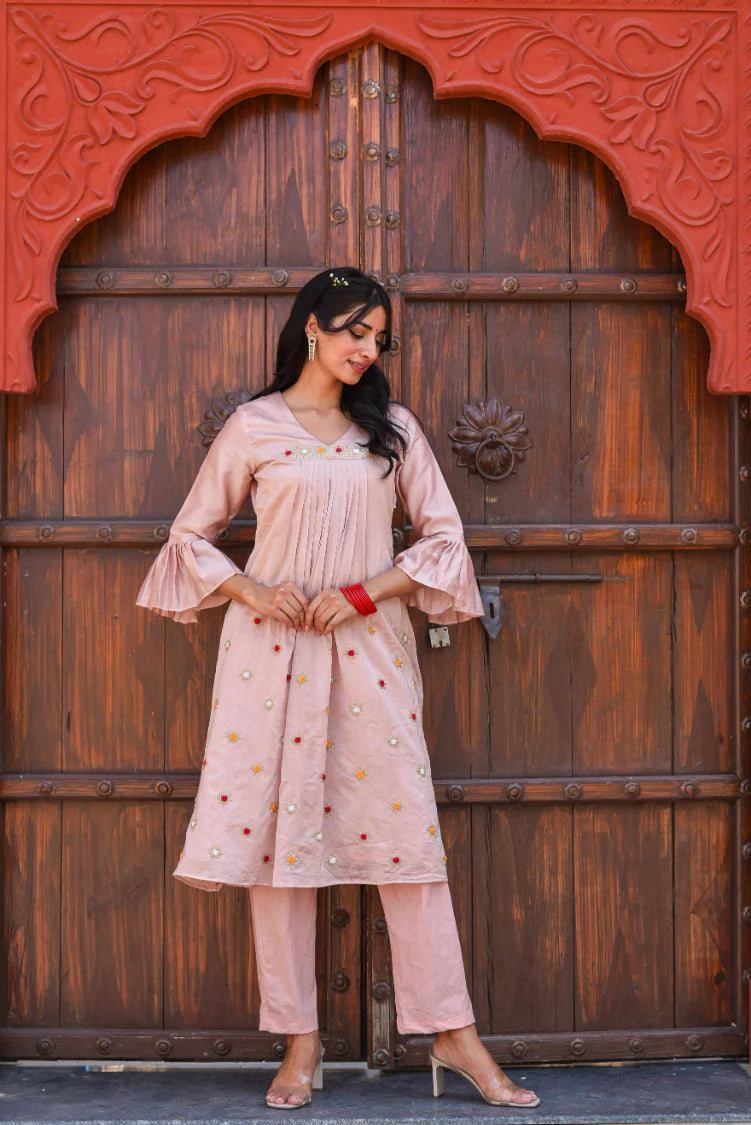


The Fabric Care Guide: Mid-Range Sets 3000-5000

You've spent 4,000 rupees on a beautiful SAROJ JAIN silk-blend set. It looks incredible today. But will it look the same in two years? At SAROJ JAIN, we don't believe in "Disposable Fashion." We believe in "Lifetime Wardrobes." But the way you treat your garment in the laundry room determines whether it stays a "Masterpiece" or becomes a "Duster."
The fabric care guide for mid-range sets between 3000-5000 is how you protect your style investment.
The Care Standards (3000-5000)
Under 5k, you are dealing with Natural-Base Fibers. Here is how to handle them: 1. The Dry-Clean Rule: For any set in the 3k-5k range with Hand-embroidery or Silk-content, professional dry cleaning is Mandatory. Home washing can cause "Fraying" of Zari and "Dulling" of Silk luster. 2. The "Shade-Dry" Secret: If you must home-wash a cotton-poly blend, never dry it in direct sun. The Indian sun is a powerful bleacher. Dry it inside-out, in a shady, breezy spot. 3. Steaming vs Ironing: Heavy irons can "burn" the delicate silk fibers in a blend. Invest in a small handheld steamer; it relaxes the fibers without the physical "Stress" of a metal plate.
Why SAROJ JAIN Quality is more Resilient
We use "Stability-Tested" Yarns. Our 3k-5k range is tested for "Piling" (forming small lint balls) and "Color-Bleed" before it ever reaches the design table. We use high-grade dyes that "Lock" into the fiber, ensuring your Navy Blue stays Navy, and doesn't become "Tired Grey."
The Storage Protocol
- Breathable Bags: Never store your 5k sets in plastic bags. It traps moisture and can cause "Foxing" (yellow spots). Use cotton or muslin bags.
- Separation of State: Store embroidered sets separately from plains. A stray Zardozi thread can "Snag" the fabric of your favorite silk kurta if they are touching.
- The Lavender/Neem Hack: Instead of chemical mothballs, use dried lavender or neem leaves in your cupboard. It smells better and won't damage the natural dyes.
Pro Tip: The "Cold-Store" Technique
During the humid monsoon months, take your high-end sets out for a "Breeze-off" every 3-4 weeks. Hang them in an air-conditioned room for a few hours. This removes the deep-seated humidity from the fibers and prevents the "Dull Smell" of storage.
FAQs
Q: How often should I dry clean? A: For occasional wear (once every 2-3 weeks), once every 5 wears is enough if you air it out after every use. For daily workwear, once every 3 wears is recommended.
Q: What if I spill something? A: Never rub! Blot it with a clean, dry cloth immediately and take it to a professional cleaner within 24 hours. Rubbing can break the delicate silk fibers permanently.
Q: Do natural dyes fade faster? A: Not if handled correctly. In fact, many high-quality natural dyes "age" beautifully, becoming softer and more "Royal" over decades.
Q: Why 3000-5000? A: Because at SAROJ JAIN, we believe that value is measured in years, not just rupees.
Q: Why choose SAROJ JAIN for your legacy wardrobe? A: Because we build for the generations, not just the season.
Quality preserved. Style perfected.
Maximize Your Investment → Durable Kurta Sets
Case Studies
Work-to-Dinner in a Hurry — Gurugram
Neutral co-ord + loafers by day; swap to strappy heels and cuff at night.
Wedding Guest in the Rain — Mumbai
Viscose-blend kurta set with ankle hems and rubber-soled block heels—no drags, clean photos.
Temple Ceremony Minimalism — Chennai
Plain Kanjeevaram-inspired saree, delicate gold, and low bun—elegant and respectful.
Buying Checklist
-
Shoulders clean, bust ease, hem length right for your shoes
-
Breathable lining; test arm movement and sit/stand
-
One neutral piece to mix across outfits
City Notes
- Global: Pick breathable fabrics and repeatable colors.
Ready to build your look? Explore New Arrivals