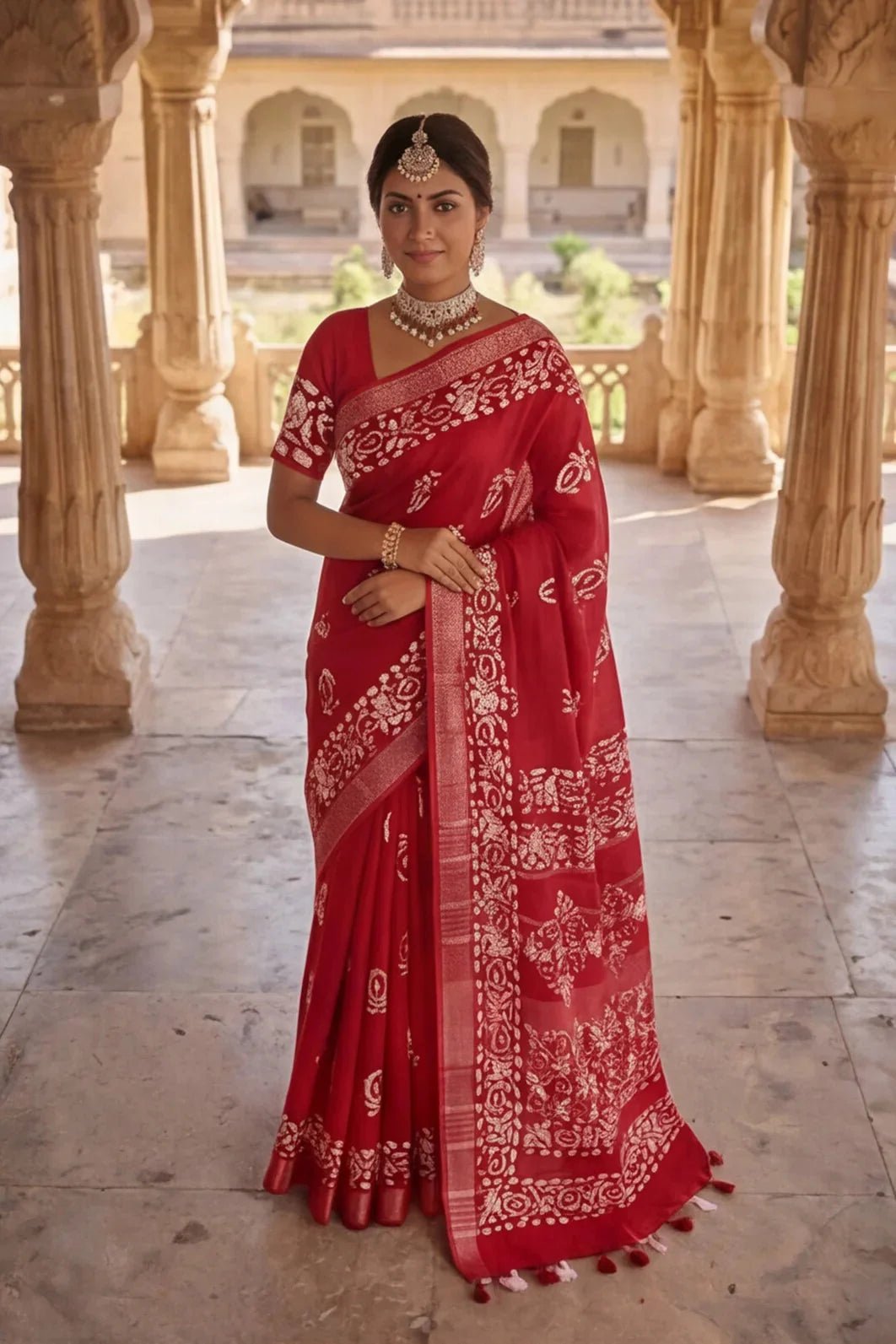

Top 10 Engineering Masterpieces: Why These Are the Best Kurtis
Blog 1: Top 10 Engineering Masterpieces: Why These Are the Best Kurtis
Looking for the best kurtis is like looking for a needle in a haystack made of cheap plastic and broken promises.
I’ve spent half my life in this industry.
I’ve seen it all.
I’ve seen the flashy logos.
I’ve seen the "designer" labels that fall apart if you look at them too hard.
Most brands focus on the "vibe."
I focus on the math.
I focus on the engineering.
Because if your clothes don't work, nothing else matters.
Here is the reality of the best kurtis.
1. The Double-Lock Stitch Protocol
Most clothes use a single-thread chain stitch.
It’s fast.
It’s cheap for the factory.
It’s a disaster for you.
One loose thread and the whole side of your kurta opens up while you're at lunch.
I hate that.
At SAROJ JAIN, we use a double-lock stitch on every seam.
It creates a mechanical bond that survives the agitation of a high-speed washing machine.
We tested it.
100 washes.
Zero failures.
That is engineering.
2. Fabric Memory and GSM Logic
Why does your favorite kurta look like a potato sack after three hours of sitting?
It’s called fabric fatigue.
Cheap cotton has no "memory."
When you stretch it, it stays stretched.
We use a specific high-twist yarn.
The fibers are wound tighter than a Swiss watch spring.
When you sit, they compress.
When you stand, they snap back.
We target a specific GSM (Grams per Square Meter).
Too heavy and you sweat.
Too light and it’s transparent.
Our sweet spot is 140 GSM.
Dignity and breathability combined.
3. The 45-Degree Bias Cut
Most manufacturers cut fabric straight to save material.
We cut on the bias (the diagonal).
It wastes 20% more fabric.
But it gives the kurta a natural stretch without using synthetic spandex.
It flows around your body like water.
It doesn’t bunch up under your arms.
It doesn’t pull at the chest.
It’s the difference between wearing a box and wearing a masterpiece.
4. Reinforced Side Slit Engineering
The side slit is the "weak point" of any kurta.
It’s where the most stress happens when you walk or sit.
I’ve seen thousands of kurtas rip right at the top of the slit.
We don't just stitch it.
We reinforce it with a triangular "tack" stitch and a hidden piece of stay-tape.
It’s like adding a steel beam to a skyscraper.
It distributes the force across the entire side seam.
No more ripping.
No more embarrassment.
5. The Mandarin Collar Architecture
A collar should frame your face, not choke you.
Most collars use cheap plastic fusing.
It bubbles when you iron it.
It wilts when it gets humid.
We use a high-density canvas interlining.
It’s stiff where it needs to be.
It’s soft against the skin.
It keeps its "structure" for years.
It’s the "alpha" look of the best kurtis.
6. Symmetrical Pattern Matching
Have you ever noticed a print that doesn't line up at the seams?
It’s lazy.
It’s a sign of a low-quality product.
We spend extra time manually aligning the patterns.
The flower on the left arm matches the flower on the right torso.
It creates visual harmony.
It tells the world you care about the details.
7. VAT Dye Permanence
Most indigo fades after one soak.
Your skin turns blue.
Your towels turn blue.
We use VAT dyes—the highest grade of color permanence in the textile world.
The color is pushed into the core of the fiber, not just painted on the surface.
It stays vibrant.
It stays deep.
It stays SAROJ JAIN.
8. The Armhole Radius Audit
Cheap clothes use a "unisex" armhole curve.
It’s a circle.
Humans aren't circles.
We use an elliptical armhole cut.
It allows for a full 180-degree arm movement without lifting the entire kurta up.
It’s hidden engineering that you only feel when you move.
9. Moisture Management Logic
Cotton is great, but "processed" cotton is better.
We use a mercerized finish.
It removes the "fuzz" from the yarn.
It creates a smoother surface area.
Sweat evaporates 30% faster.
You stay dry.
You stay fresh.
You stay confident.
10. The Longevity ROI
I don't sell clothes.
I sell a lower cost-per-wear.
If you buy a 500-rupee kurta and wear it 5 times before it dies, you paid 100 rupees per wear.
If you buy a SAROJ JAIN masterpiece for 3000 and wear it 100 times, you paid 30 rupees per wear.
The math doesn't lie.
The better engineering is the cheaper option in the long run.
FAQs
How do I care for my SAROJ JAIN kurtis?
Wash cold.
Turn inside out.
Hang in the shade.
Treat them like the machines they are.
Are these suitable for formal events?
The engineering provides a structure that rivals most suits.
Yes, they are the best kurtis for any high-stakes environment.
What is the return policy?
If our engineering fails, we fix it.
But it won't fail.
Do you use sustainable materials?
Every fiber is natural.
Every dye is eco-compliant.
We build things to last, which is the ultimate form of sustainability.
Why SAROJ JAIN?
Because I care about the thread you can't see.
Don't settle for "fashion."
Demand engineering.
Demand the best kurtis.