
Types of Silk Used in Indian Ethnic Wear: What Actually Works
Updated: July 08, 2026
Written by: Saroj Jain Styling Team
Walk into any Indian ethnic wear boutique and the first question you will hear is: what kind of silk do you want?
Most people freeze at this question. Not because they do not care. Because nobody ever broke down the options in plain language.
At our JP Nagar boutique, we answer this question 15 times a day. This guide covers the silk types that actually show up in Indian ethnic wear. No museum talk. Just what you need to know before you buy.
Key Takeaways
- Banarasi silk is the heaviest. Best for bridal and reception wear.
- Chanderi silk is lightweight and breathable. Best for day functions and summer weddings.
- Raw silk holds structure but can feel stiff. Good for structured lehengas.
- Tissue silk is sheer and luminous. Great for dupattas and layering.
- Always check the silk blend percentage before buying. Pure silk behaves differently from silk-cotton blends.
Table of Contents
- Banarasi Silk
- Chanderi Silk
- Raw Silk (Matka)
- Tissue Silk
- Quick Comparison Table
- How to Choose Based on Your Occasion
- Fabric Care Basics
- FAQs
Banarasi Silk: The Heavyweight
Banarasi silk is what most people picture when they think of bridal Indian wear. It is dense, lustrous, and carries intricate zari work. A genuine Banarasi silk saree can weigh over 800 grams.
At our boutique, we tell brides one thing: Banarasi silk holds heat. If your wedding is in May or June in Bangalore, you will feel every gram. It works beautifully for winter weddings and evening receptions where the temperature drops.
Best for: Bridal wear, reception lehengas, winter weddings.
Skip if: You run warm, or your event is outdoors in summer.
Chanderi Silk: The Lightweight That Breathes
Chanderi silk is a blend. Usually silk and cotton, sometimes silk and zari. It comes from Chanderi in Madhya Pradesh and has a sheer, almost translucent quality.
This is the fabric we recommend most for day functions. Haldi, mehendi, engagement ceremonies. It moves with you, does not trap heat, and photographs well under natural light. Many of our customers choose Chanderi for summer wedding guest outfits.
Best for: Day functions, summer weddings, mehendi, haldi.
Skip if: You want heavy drape and opulent shine.
Raw Silk (Matka): Structured and Earthy
Raw silk, also called matka silk, has a textured, nubby surface. It is not polished like Banarasi. It holds structure well, which makes it ideal for lehengas that need shape and volume.
The trade-off: raw silk can feel stiff against the skin. We always line raw silk garments with soft cotton to offset this. It is a popular pick for reception lehengas where you want the silhouette to stay sharp through hours of standing and photos.
Best for: Structured lehengas, reception wear, cocktail events.
Skip if: You prioritize softness and fluid drape over structure.
Tissue Silk: Sheer and Luminous
Tissue silk is the thinnest of the silk family. It is woven with metallic threads that catch light from every angle. You see it most often in dupattas and as an overlay fabric on lehengas.
The beauty of tissue silk is how it layers. A tissue dupatta over a plain silk lehenga transforms the entire look. It adds shine without weight. We stock tissue sarees too. They are perfect for cocktail parties where you want something that glimmers under evening lights.
Best for: Dupattas, cocktail sarees, layering pieces.
Skip if: You need full opacity or a heavy drape.
Quick Comparison Table
| Silk Type | Weight | Best Occasion | Drape | Breathability |
|---|---|---|---|---|
| Banarasi | Heavy | Bridal, Reception | Rich, structured | Low |
| Chanderi | Light | Haldi, Mehendi, Day | Sheer, flowy | High |
| Raw Silk | Medium-Heavy | Lehenga, Cocktail | Stiff, structured | Medium |
| Tissue Silk | Very Light | Dupattas, Evening | Sheer, luminous | High |
How to Choose Based on Your Occasion
Here is the simple framework we use at our boutique. Answer three questions and the fabric picks itself:
- What time of day? Morning or afternoon = Chanderi or tissue. Evening = Banarasi or raw silk.
- Indoor or outdoor? Outdoor = breathable fabrics. Indoor with AC = heavier silks work fine.
- How long will you wear it? 6+ hours = prioritize comfort. 2-3 hours for photos and dinner = you can handle the weight.
Fabric Care Basics for Silk
Silk is protein fiber. It behaves like your hair. Heat damages it. Harsh detergent strips it. Sunlight fades it.
Three rules we tell every customer:
- Dry clean only. Never machine wash silk. Even the gentle cycle shreds the fibers over time.
- Store in a cotton bag. Plastic traps moisture and causes yellowing. Muslin or cotton garment bags let the fabric breathe.
- No direct sunlight. Store silk in a dark cupboard. UV rays weaken silk fibers and fade the colour within months.
FAQs
What is the best silk for a summer wedding guest outfit?
Chanderi silk. It is the lightest of the four and breathes well. We dress wedding guests in Chanderi outfits at our boutique from March through October. Pair it with minimal jewellery. The fabric does the talking.
Can I wear Banarasi silk to a daytime function?
You can but you might regret it. Banarasi silk traps heat. For a daytime haldi or mehendi in May, you will be uncomfortable within an hour. Save Banarasi for evening receptions or winter weddings.
Is tissue silk durable?
Tissue silk is delicate. It is not an everyday fabric. It works well for dupattas and occasional wear. Handle it gently and dry clean only. With proper care, a tissue silk piece lasts years.
How do I know if silk is pure or blended?
Check the label for the silk percentage. Pure silk says 100% silk. Blends list the ratio (example: 60% silk, 40% cotton). At our boutique in JP Nagar, we tell every customer the exact fabric composition before they buy. Online, look for the fabric details in the product description.
What silk type works best for a structured lehenga?
Raw silk. It holds shape and gives the lehenga the volume and flare that photographs well. We use raw silk for reception lehengas at our boutique. The stiffness creates clean lines that look sharp in wedding photos.
Saroj Jain recommends:
Here are two silk pieces from our collection that show what we talked about in practice:
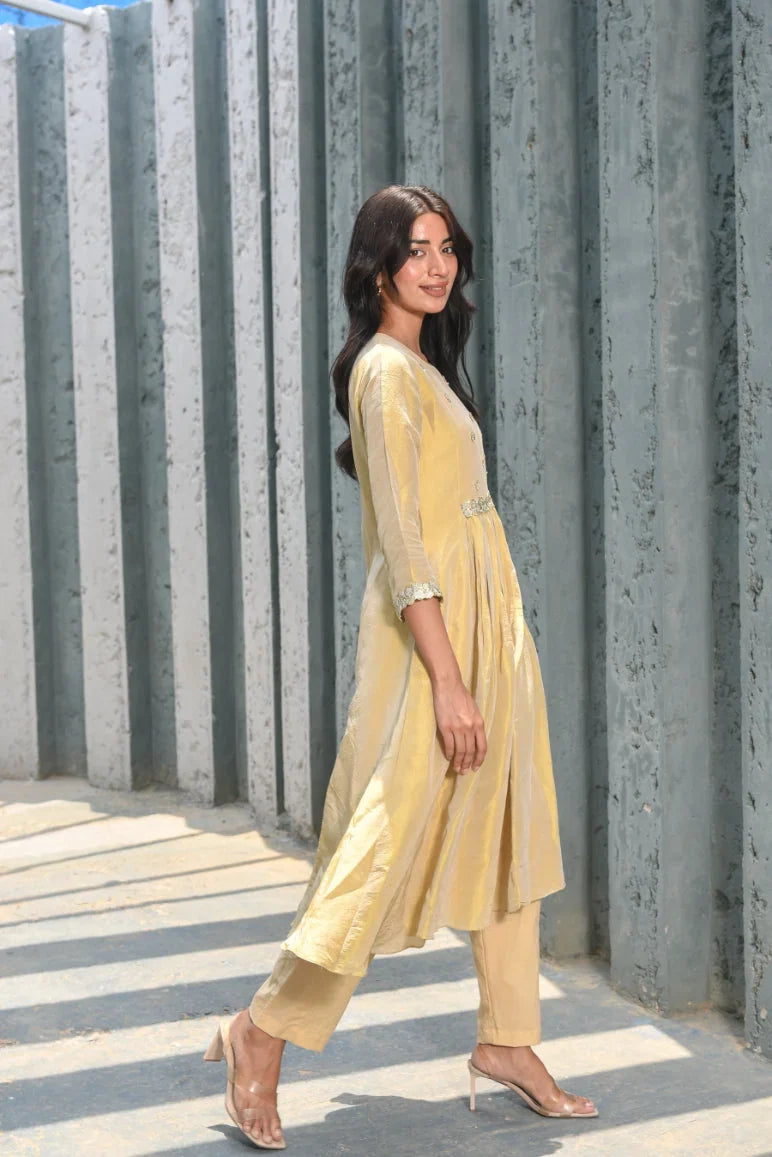
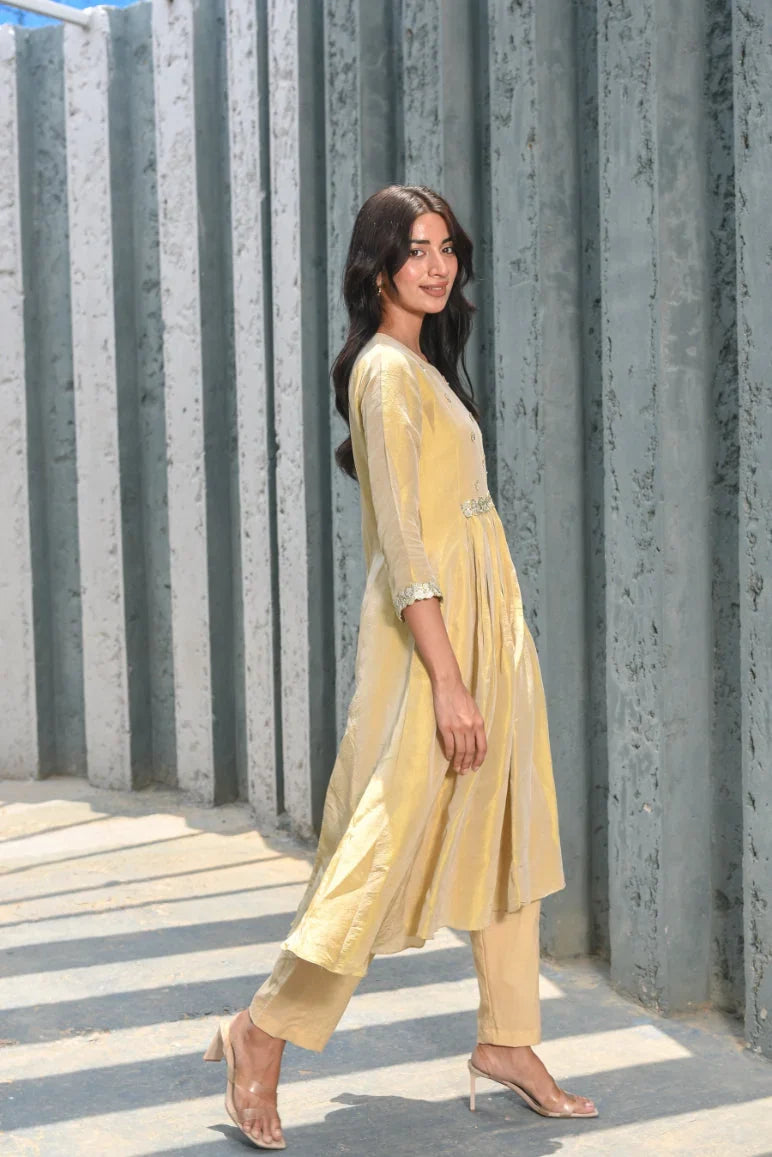
Beige Zari Silk Anarkali Set

A Chanderi silk blend anarkali in beige with zari detailing. Light enough for a mehendi or an engagement ceremony. The zari catches light without being loud. Pairs well with pearl jewellery.
Price: Rs. 4,990
View Beige Zari Silk Anarkali Set
Blue Mastani Anarkali Set

A structured silk anarkali in deep blue with a flared silhouette. The fabric holds its shape through long events. This is the kind of piece you wear to a reception or a formal dinner where you want presence without heaviness.
Price: Rs. 5,490
View Blue Mastani Anarkali Set
Still not sure which silk works for your event? WhatsApp us or book a consultation at our JP Nagar boutique. We walk you through fabrics, colours, and fits in person. No pressure. Just honest advice from people who work with these fabrics every day.
Shop the full collection at sarojjain.com