
What to Wear to a Destination Wedding: A Complete Guide
What to Wear to a Destination Wedding: A Complete Guide
Meta Description: Master destination wedding guest dressing with our complete guide. From beach ceremonies to palace receptions, discover what to wear — featuring Saroj Jain's curated ethnic wear for every venue.
There is a peculiar magic to destination weddings. The unfamiliar air smells of frangipani or mountain pine. The light falls differently — golden over sandstone forts, silver across moonlit beaches. And somewhere between the welcome dinner and the farewell brunch, you realize the real challenge wasn't booking the flight. It was decoding the dress code.
What does "festive formal" mean in Goa? Is a lehenga practical for a hill station mehendi? Can you wear chikankari to a palace wedding in Udaipur without looking underdressed?
This guide answers everything. Consider it your sarthetic compass — a complete manual to dressing brilliantly, appropriately, and memorably for every destination wedding scenario India (and beyond) throws at you.
The Golden Rule: Respect the Terrain
Before color palettes and embroidery densities, understand the landscape. A destination wedding is a three-dimensional event. The venue dictates the silhouette, the climate dictates the fabric, and the itinerary dictates the versatility your wardrobe needs.
Fabric is your first filter.
- **Beach/Humid Climates (Goa, Kerala, Sri Lanka):** Breathable cottons, mulmul, lightweight georgette, and chiffon. Avoid heavy silks and velvets — they cling, trap heat, and photograph with unflattering sheen under tropical sun.
- **Desert/Dry Heat (Rajasthan, Dubai):** Lucknowi chikankari, silk organza, and tissue fabrics work beautifully. The dry air allows for slightly heavier materials, but ventilation remains key.
- **Hill Stations (Shimla, Mussoorie, Coorg):** Layer-friendly fabrics — silk blends, lightweight brocades, and Kashmiri-inspired embroideries. Temperatures drop after sunset.
- **Heritage Properties (Udaipur, Jaipur, Hyderabad):** This is where you bring your most dramatic pieces. Zardozi, gota patti, heavy chikankari, and structured silhouettes feel appropriately regal against marble corridors and mirror-work halls.
Decoding the Modern Destination Wedding Itinerary
Most destination weddings follow a predictable rhythm. Master these five events, and you've mastered the wardrobe.
1. The Welcome Dinner — "Effortless Arrival"
The Vibe: Relaxed, conversational, jet-lag recovery in progress.
What to Wear: This is your softest introduction. Think flowing anarkalis in breathable fabrics, co-ord sets with delicate embroidery, or a well-cut kurta paired with palazzos. You want polish without pretension.
Saroj Jain Pick: A pastel chikankari co-ord set in mint or blush — comfortable after travel, photographable at golden hour, and appropriate for every venue from a Goan beach shack to a Jaipur haveli courtyard.
Pro Tip: Choose a forgiving silhouette. After a flight and a welcome drink, structured corsetry is not your friend.
2. The Mehendi — "Color, Movement, Joy"
The Vibe: The most energetic event. You'll be sitting cross-legged, dancing, and getting henna applied.
What to Wear: Functionality meets festivity. Lehengas with manageable dupattas, co-ord sets with elasticated waists, or anarkalis that allow floor seating. The color palette here should be unapologetically vibrant — marigold, fuchsia, emerald, tangerine.
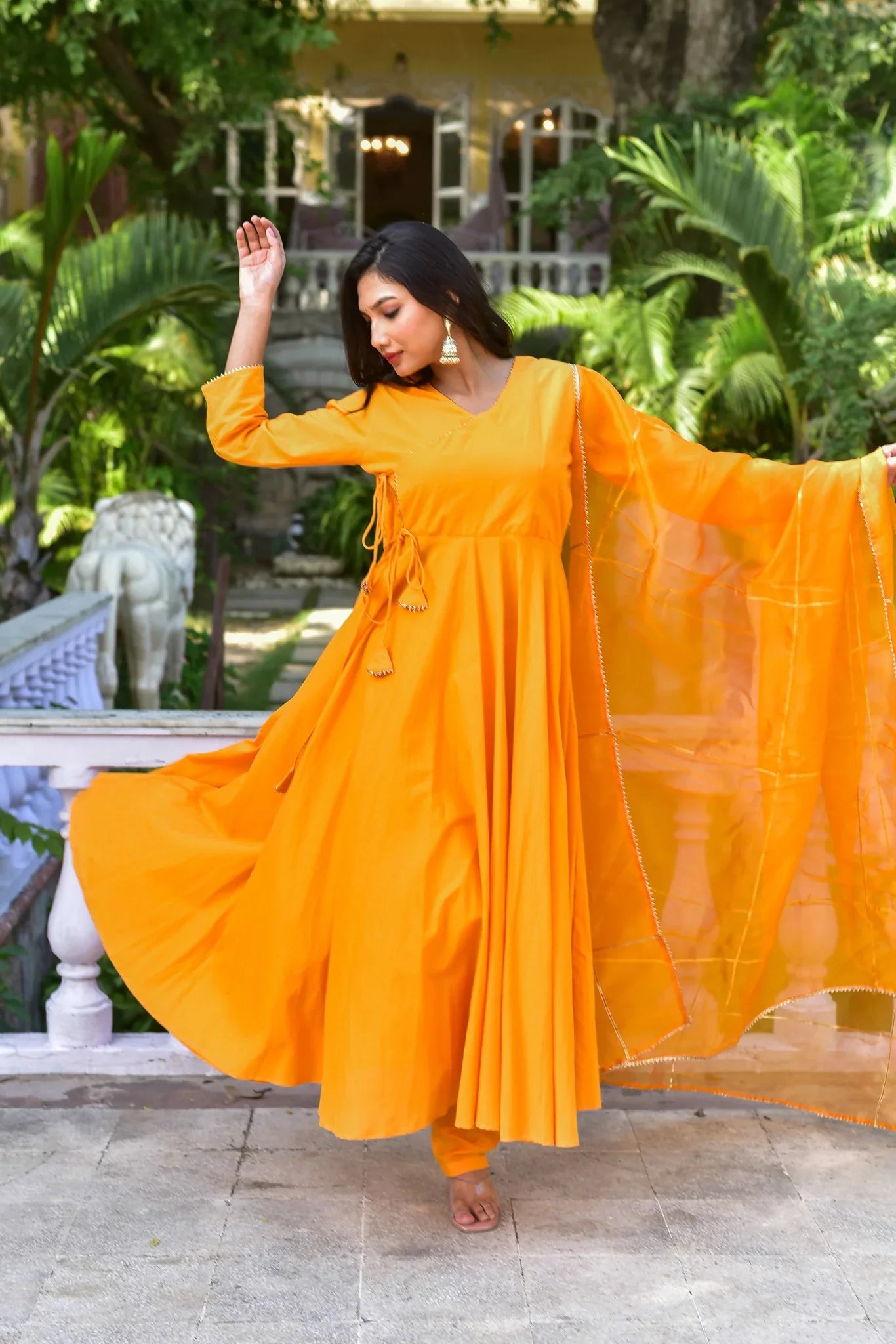
Saroj Jain Pick: The Yellow Chikankari Co-ord Set — currently India's most-loved mehendi outfit for a reason. The yellow photographs spectacularly against green mehendi backdrops, the chikankari keeps it breathable during outdoor ceremonies, and the co-ord construction means you move freely from henna station to dance floor.
Pro Tip: Avoid heavy lehengas with can-can. You'll be sitting on the ground for hours. Choose comfort; the photos will capture your smile, not your underskirt volume.
3. The Sangeet — "Glamour with Stamina"
The Vibe: The performance night. High-energy, heavily photographed, and often the most memorable sartorial moment.
What to Wear: This is where you bring the drama — but ensure you can move. Pre-draped sarees with attached pleats, lehengas with lighter dupattas, or heavily embroidered anarkalis. Sequins, mirror work, and metallic accents thrive under sangeet lighting.
Saroj Jain Pick: A mirror-work lehenga or an embroidered anarkali in midnight blue or wine. Pair with statement earrings and a low chignon — the neckline and back embroidery should do the talking.
Pro Tip: Sangeets run long. Test your outfit with 20 minutes of vigorous dancing before packing it. If anything digs, pinches, or risks a wardrobe malfunction, leave it home.
4. The Wedding Ceremony — "Sacred and Significant"
The Vibe: The emotional core. Tradition-heavy, often religious, and requiring the most cultural sensitivity.
What to Wear: This varies by faith and family tradition, but universally — err on the side of covered shoulders, modest necklines, and respectful hemlines. For North Indian ceremonies, a lehenga in auspicious reds, pinks, or oranges. For South Indian ceremonies, kanjeevaram-inspired silks or silk-blend sarees. For Muslim nikaahs, shararas or anarkalis with dupattas draped modestly.
Saroj Jain Pick: A crimson or rani pink chikankari lehenga. The hand-embroidery honors the occasion's significance while the silhouette keeps you comfortable through hours of ceremony.
Pro Tip: Bring a backup dupatta or shawl. Religious spaces often require additional covering, and air-conditioned mandaps can be freezing.
5. The Reception — "Your Main Character Moment"
The Vibe: The finale. Often the most "international" in dress code — black-tie-meets-Bollywood.
What to Wear: This is your license to go maximal. Gowns with Indian embroidery, sarees in experimental drapes, lehengas with architectural blouses. Metallics, jewel tones, and avant-garde silhouettes all work here.
Saroj Jain Pick: A contemporary saree in gunmetal grey or emerald with a sculpted blouse, or a lehenga in champagne gold with modern minimal jewelry. The goal is memorable — this is the last impression.
Pro Tip: Receptions involve extensive standing, mingling, and buffet navigation. Ensure your footwear has been broken in, and your outfit allows you to hold a champagne flute and a canapé plate simultaneously.
Destination-Specific Style Playbooks
Goa & Beach Weddings
- **Avoid:** Floor-sweeping lehengas on sand (they become mops), heavy velvet, dark colors that absorb heat.
- **Embrace:** Floral prints, lightweight co-ord sets, cape-style dupattas that catch the sea breeze.
- **Footwear:** Embellished juttis or block heels. Stilettos sink into sand and wooden deck gaps.
- **Saroj Jain Edit:** Cotton chikankari sets in white, aqua, or coral. Add shell jewelry or pearls for coastal elegance.
Rajasthan — Udaipur, Jodhpur, Jaipur
- **Avoid:** Underdressing. These venues are visually spectacular — your outfit should compete, not concede.
- **Embrace:** Gota patti, zardozi, heavy chikankari, jewel tones that complement sandstone and marble.
- **Footwear:** Comfortable embellished flats. Palace courtyards involve extensive walking on uneven stone.
- **Saroj Jain Edit:** A maroon or navy chikankari lehenga with gold accents. The craftsmanship honors the setting's artistry.
Kerala & South India
- **Avoid:** North-Indian-centric styling without acknowledging local aesthetic traditions.
- **Embrace:** Silk-blend sarees, temple jewelry-inspired accessories, kanjeevaram color stories — deep mustard, peacock green, temple red.
- **Footwear:** Gold-toned sandals or mojaris.
- **Saroj Jain Edit:** A silk-blend saree with minimal chikankari detailing, draped in the nivi or regional style. Respect the locale's visual language.
International — Thailand, Bali, Italy
- **Avoid:** Pure traditional Indian wear that feels costume-like against foreign landscapes.
- **Embrace:** Fusion wear — Indo-western gowns, saree-inspired drapes in contemporary fabrics, co-ord sets with global silhouettes.
- **Footwear:** Dependable block heels or designer flats. Cobblestones and resort lawns are unforgiving.
- **Saroj Jain Edit:** A structured chikankari gown or a draped co-ord set in ivory or sage. Looks Indian in origin, international in appeal.
The Capsule Destination Wedding Wardrobe
If you're checking luggage strategically, these seven pieces cover every event:
1. **The Statement Lehenga** — One heavily embroidered piece for sangeet or reception.
2. **The Versatile Co-ord Set** — Your mehendi and welcome dinner workhorse. [Saroj Jain's Chikankari Co-ord Sets](https://sarojjain.com) are engineered for exactly this.
3. **The Ceremony Saree or Anarkali** — Respectful, traditional, photographable.
4. **The Lightweight Day Set** — Cotton or mulmul for brunches, pool parties, or sightseeing.
5. **The Fusion Piece** — Indo-western for unpredictable dress codes.
6. **Statement Jewelry** — One dramatic necklace or earring set that transforms simple outfits.
7. **The Dupatta Multi-Tool** — A heavily embellished dupatta that elevates simple kurtas to event-ready.
Practical Wisdom: The Details That Matter
Packing: Roll lehengas with tissue paper between folds. Carry jewelry in your hand luggage. Steam, don't iron, delicate embroidery upon arrival.
Timeline: Always try on your full outfit — including undergarments, footwear, and jewelry — one week before departure. Destination weddings are the wrong venue for last-minute realizations.
Weather Contingency: A stylish dupatta or pashmina serves as sun protection, modesty cover, and air-conditioning armor. Never underestimate its utility.
Photography: Destination wedding photographers favor natural light. Outfits with texture (chikankari, gota patti, embroidery) photograph more dynamically than flat prints under golden hour conditions.
Final Thought: The Best-Dressed Guest Philosophy
The best-dressed guest at any destination wedding isn't the one in the most expensive lehenga. It's the person who understood the assignment — who dressed for the venue's poetry, the climate's demands, and the occasion's emotional register.
A beach wedding calls for wind-catching fabrics and sun-worshipping colors. A palace wedding demands architectural silhouettes and royal textiles. A mehendi requires yellow chikankari that glows against marigold decorations and henna-stained hands.
At Saroj Jain, we design for these moments. Each chikankari piece is hand-embroidered to travel well, photograph brilliantly, and honor the occasions that matter most. Because the right outfit doesn't just get you through the itinerary — it becomes part of the memory.
Ready to build your destination wedding wardrobe? Explore Saroj Jain's curated occasion wear — from the iconic Yellow Chikankari Co-ord Set to reception-ready lehengas — all designed for women who refuse to choose between comfort and consequence.
Saroj Jain is a female-led ethnic wear brand based in Bengaluru and Jaipur, crafting hand-embroidered chikankari and occasion wear for the modern Indian woman. Shop the collection at sarojjain.com or visit our boutique at No 362, Ground Floor, 9th Main Road, Near Vaishnavi Terraces Main Gate, JP Nagar 4th Phase, Bengaluru.