
Coffee Table Styling Ideas That Actually Work
A coffee table is the one surface in a living room that everybody sees and almost nobody plans. Most of us end up with a remote, a half-burnt candle, and a stack of mail that never quite gets filed. The fix is not more objects. It is a few decisions about height, scale, and empty space, made once, then repeated whenever the table starts to drift.
Start With Proportions, Not Decor
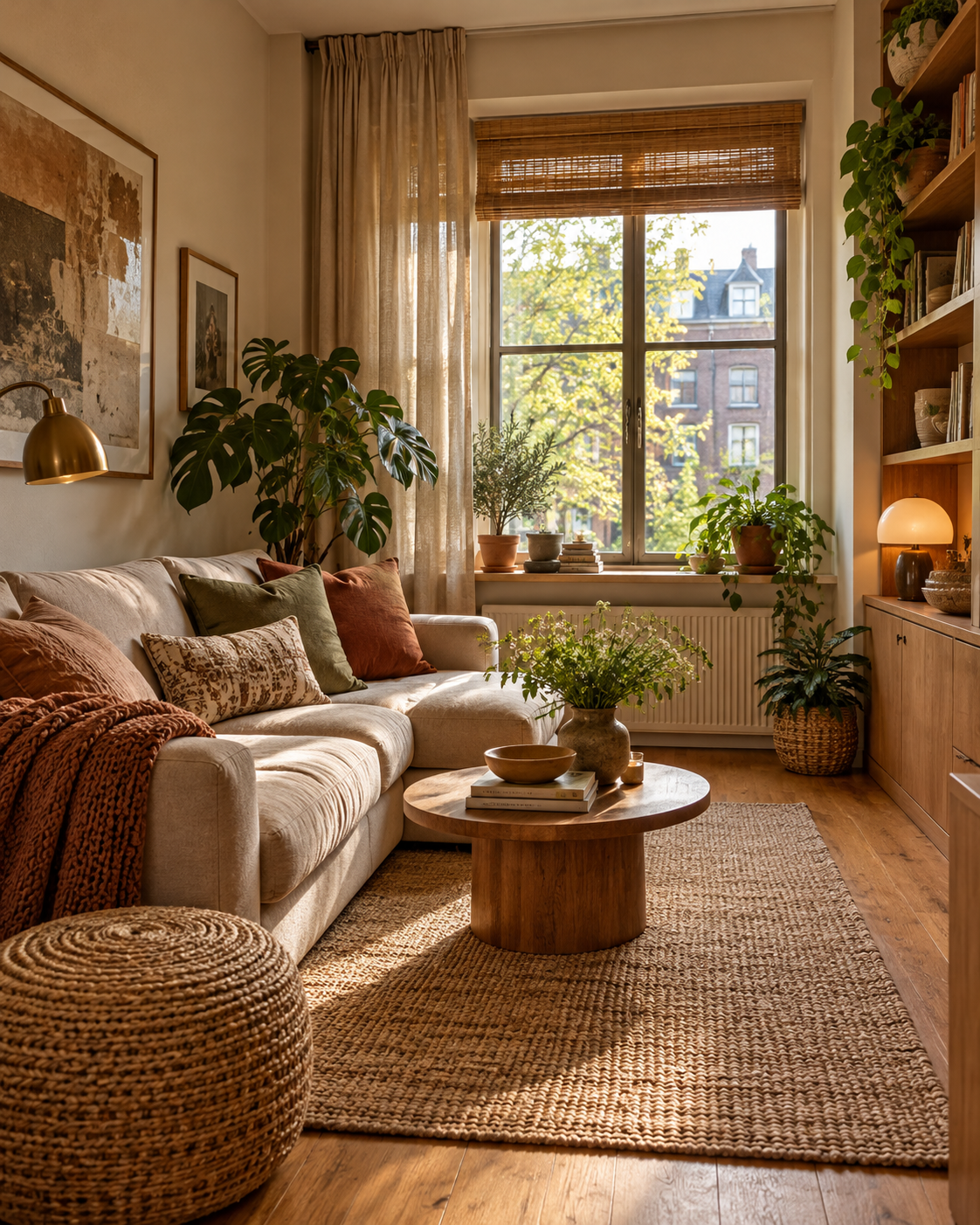
Before you buy a single bowl, check how the table sits against the sofa. You want 12 to 18 inches of walking space between the two, and 14 to 16 inches is the sweet spot for most rooms. Table height should land within an inch or two of the sofa seat, so around 16 to 18 inches for a standard seat of 18 inches.
Length matters just as much. A 48 by 24 inch rectangle suits a sofa roughly 84 inches long. In a small room, a 36 inch round table is more forgiving because there are no corners to walk into. If your table is less than two-thirds the length of the sofa, it will read as an afterthought. If it is deeper than 30 inches, you cannot reach the middle, and that middle will quietly become a storage zone.
The Three-Height Formula
Almost every arrangement that looks good has three distinct heights in it. Think of a tall element around 14 to 22 inches, a mid element around 6 to 10 inches, and a low element of 1 to 3 inches. A branch-filled vase, a stack of two books, and a shallow bowl. That is a complete composition, and it works with almost any style of room.

One rule keeps it from looking stiff: do not center the tallest piece. Shift it about a third of the way in from one edge. Symmetry on a coffee table tends to read as a hotel lobby, not a home.
Zone It With a Tray
A tray is the cheapest way to make a coffee table look intentional. On a 48 inch table, use one that is 14 to 16 inches across. On a 36 inch round, drop to 12 inches. The tray holds the things you actually use, like a candle, a matchbox, and a small dish for keys, while everything outside it stays bare.
Aim to leave 60 to 70 percent of the surface empty. That sounds like a lot until you try it, and then you notice how much calmer the whole room feels. If your table is narrow, say under 20 inches deep, skip the tray and cluster your objects in one corner instead. A tray on a skinny table just eats the space you need for a mug.
Books, Bowls, and Branches That Earn Their Place
- Books: two or three, largest on the bottom, total height under 12 inches. Thin paperbacks look flimsy here; a hardcover with a bit of heft holds its own.
- Bowls: 8 to 12 inches in diameter, and never wider than a third of the table's length. A bowl that spans the table has nowhere to breathe.
- Branches and stems: use three or five, not four. Cut them to roughly two-thirds the height of the vase so they sit up but do not loom.
- Materials: limit yourself to two. Wood and ceramic, glass and brass, stone and linen. Mixing four finishes is what makes a table look cluttered even when it is tidy.
- Color: pull one tone from the rug or a cushion, add one neutral, and stop there.
What to Keep Off the Table
Remotes belong in a lidded box or a drawer nearby. Coasters should live in a small holder rather than migrate across the surface. One candle is plenty; three reads as a bath shop. And if the table is doing real work in your evenings, resist the giant floral arrangement. A small vessel you can lift with one hand will always win over a statement piece you have to relocate before you can put your feet up.
If there are children or pets in the house, think about weight and edges. Stoneware and wood tolerate a knock far better than thin glass, and a lower profile arrangement means fewer things to grab. Also check the sightline between two people sitting at opposite ends of the sofa. Nothing tall should sit in the middle of that line.

Quick Questions
How many objects is too many? Five is the ceiling on a 48 inch table. Three or four is usually better. If you cannot name what each piece is doing, it is decoration for decoration's sake.
Does the table have to match the sofa? No, and it often looks better when it does not. What matters is scale and finish. A warm wood table under a grey linen sofa gives the room something to push against.
How do I keep it from looking staged? Leave one thing slightly imperfect. A book left open, a tray turned a few degrees off square, a stem leaning a little. Perfectly aligned objects read as a showroom.
Styling a coffee table is really an exercise in restraint. Pick a height mix, contain the small stuff, and let most of the surface stay empty. Then reset it once a week in about ninety seconds. That small habit is what separates a table that looks styled from one that just looks used.
Saroj Jain is a designer boutique in Bengaluru — visit us in person or get directions.