
Chikankari Fabric
Updated: August 2026 | Written by: Saroj Jain Styling Team | Reviewed by: Saroj Jain Boutique Team
Chikankari fabric looks delicate, but choosing the wrong base can make it feel transparent, stiff, hot or difficult to maintain. We help clients make this decision every week at our JP Nagar 5th Phase boutique. The embroidery is only one part of the garment. The fabric, stitch density, lining, fall and colour all decide how it performs. Cotton works differently from mulmul. Georgette photographs differently from muslin. Chanderi creates a dressier finish. This guide explains how to identify authentic handwork, choose the right fabric for your use, style it with modern separates and care for it without damaging the embroidery.
Quick answer: Choose cotton or mulmul chikankari for daily summer wear, muslin for a soft airy look, georgette for fluid festive outfits and chanderi for a slightly structured occasion finish. Check the reverse side before buying, inspect the lining requirement, test colour fastness and wash gently in cold water.
Table of Contents
- What is chikankari fabric?
- How the base fabric changes the outfit
- Hand chikankari versus machine work
- Why embroidery density matters
- Choosing fabric by occasion
- How to style chikankari
- Washing, shrinkage and care
- Saroj Jain product picks
- Fabric and outfit comparison
- Body type and silhouette guide
- What to avoid
- Frequently asked questions
- Visit our JP Nagar boutique
What Is Chikankari Fabric?
Chikankari fabric is a textile decorated with Lucknowi embroidery. The base may be cotton, mulmul, muslin, georgette, chiffon, chanderi or another suitable material.
The embroidery can be light and spaced out or dense and heavily worked. That difference affects breathability, transparency, weight and the way the garment falls on the body.
At our boutique, we ask one question first: where will you wear it? A fabric that feels perfect for a summer lunch may not provide enough coverage for a wedding or evening event.
How the Base Fabric Changes the Outfit
Cotton chikankari fabric: Breathable, practical and easy to wear. It suits daily kurtis, relaxed co-ord sets and warm Bengaluru afternoons. Check whether the cotton has been pre-washed, as natural fibres can shrink slightly.
Mulmul chikankari: Very soft and airy, with a light hand feel. It is excellent for summer, but its fine weave may need a lining depending on colour, embroidery spacing and lighting.
Muslin chikankari: Soft with a graceful, light fall. It can look especially refined in pale colours and shadow work. Examine the opacity before wearing it outdoors in strong daylight.
Georgette chikankari: Fluid, slightly textured and suited to festive silhouettes. It falls well in Anarkalis and long kurtas. A good lining gives it better coverage and a cleaner shape.
Chiffon chikankari: Light and floaty, but often more transparent. It needs thoughtful lining and careful handling, especially around heavier embroidery.
Chanderi chikankari: Slightly crisp with a subtle sheen. It works well for festive sets and structured shapes, but it may not feel as relaxed as cotton or mulmul.
How to Identify Real Hand Chikankari Versus Machine Work
Turn the garment inside out. This is the most useful first check.
- Handwork usually shows small variations in stitch length, thread tension and motif placement.
- You may see tiny knots or purposeful thread movement on the reverse.
- Machine work is often highly uniform, with repeated stitch patterns and a flatter backing.
- Hand-created jaali work is formed through the fabric structure. Cut or punched holes can indicate a machine imitation.
- Shadow work should show a visible stitch effect through the fabric rather than a printed design.
Do not reject a piece because the reverse is not perfectly tidy. Hand embroidery has human variation. The right question is whether the stitching is secure, considered and consistent with the design.
Why Embroidery Density Matters
Light embroidery keeps the fabric soft and breathable. It is usually the better choice for daily wear, travel and long hours of sitting.
Dense embroidery adds visual weight and can create a more polished festive finish. It may also make the garment warmer and reduce natural movement in the fabric.
We notice this often in the fitting room. Clients who sit cross-legged for hours usually prefer lighter work around the waist and hips. A dense panel can feel restrictive even when the garment looks beautiful on the hanger.
For photographs, dense work creates stronger texture. For daytime comfort, spaced motifs usually perform better.
Choose Chikankari Fabric by Occasion
Daily wear: Choose cotton, light mulmul or soft muslin. Keep the embroidery moderate and select a lining only where needed.
Office wear: Choose cotton, structured muslin or a controlled chanderi blend. Use straight trousers, minimal jewellery and a clean neckline.
Summer events: Mulmul and muslin feel light. Select a breathable lining instead of a heavy synthetic layer.
Weddings and festive dinners: Georgette, chiffon with lining or chanderi can create a more formal fall. Choose stronger colour, denser embroidery or an Anarkali shape.
Travel: Cotton chikankari kurti fabric and relaxed co-ords are the practical choice. Avoid very delicate fabric if the garment will rub against bags or frequent seating.
How to Style Chikankari With Jeans, Palazzos and Ethnic Sets
With jeans: Pair a short or mid-length chikankari kurti with straight-leg or relaxed jeans. Add small hoops, a leather sandal and one structured bag.
With palazzos: Match a flowing kurta with palazzos only when the top has enough length or shape to balance the volume. Keep the neckline and jewellery simple.
With ethnic sets: Use coordinated trousers, a matching dupatta or a tonal bottom. Let the embroidery carry the outfit instead of adding several competing prints.
For daytime: Choose ivory, white, powder blue, mint or soft pink with silver or pearl jewellery.
For evening: Choose deeper tones, ombre colour, a fluid georgette fall and slightly stronger earrings.
Bengaluru daylight can be surprisingly sharp, especially near windows and outdoor cafés. We check pale garments in natural light at the boutique because a piece that looks opaque indoors may need a slip outside.
Washing, Shrinkage and Care
Chikankari can lose shape, fade or pucker when it is treated like ordinary machine-wash clothing. The safest routine is gentle and simple.
- Test a hidden seam with a damp white cloth before the first wash, especially for coloured garments.
- Turn the garment inside out.
- Hand wash in cold water with mild detergent.
- Do not soak for long periods.
- Do not wring, twist or pull loose threads.
- Press water out gently and dry in shade.
- Iron on the reverse side using low to medium heat.
- Use professional cleaning for metallic work, zari or very delicate embellishment.
Cotton, mulmul and muslin may shrink slightly after the first wash. If you are buying fabric for stitching, pre-wash it before cutting whenever the seller confirms that the material allows it.
Saroj Jain Picks for Different Dressing Needs
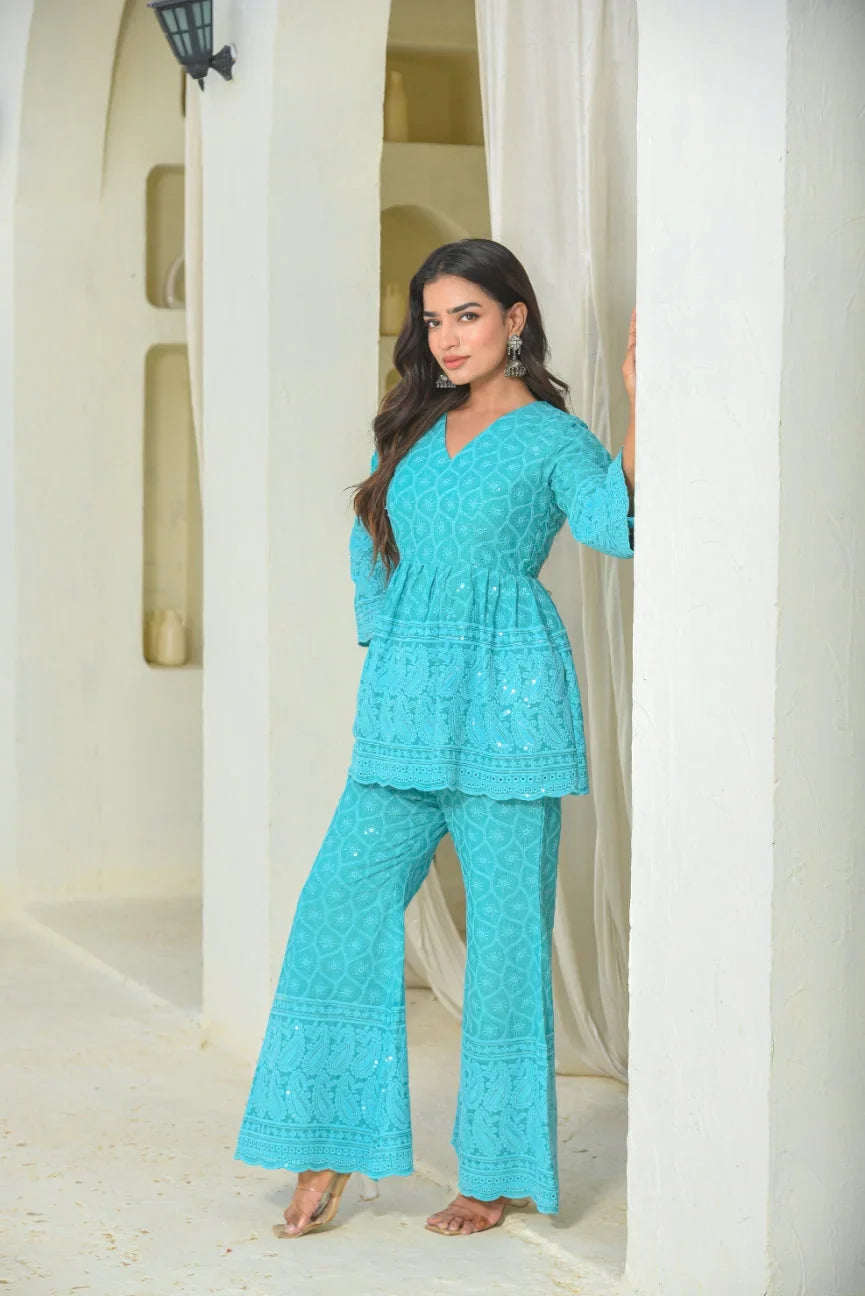
Saroj Jain pick: Chikankari Co-Ord Set

Price: ₹2,771.37
Why it works: A coordinated silhouette gives chikankari a clean modern shape without requiring complicated styling.
Best for: Brunches, travel, casual celebrations and polished daytime dressing.
Style with: Pearl studs, flat sandals and a compact shoulder bag.
Avoid if: You prefer strong contrast between the top and bottom or need a heavily formal wedding outfit.
Shop the Chikankari Co-Ord Set
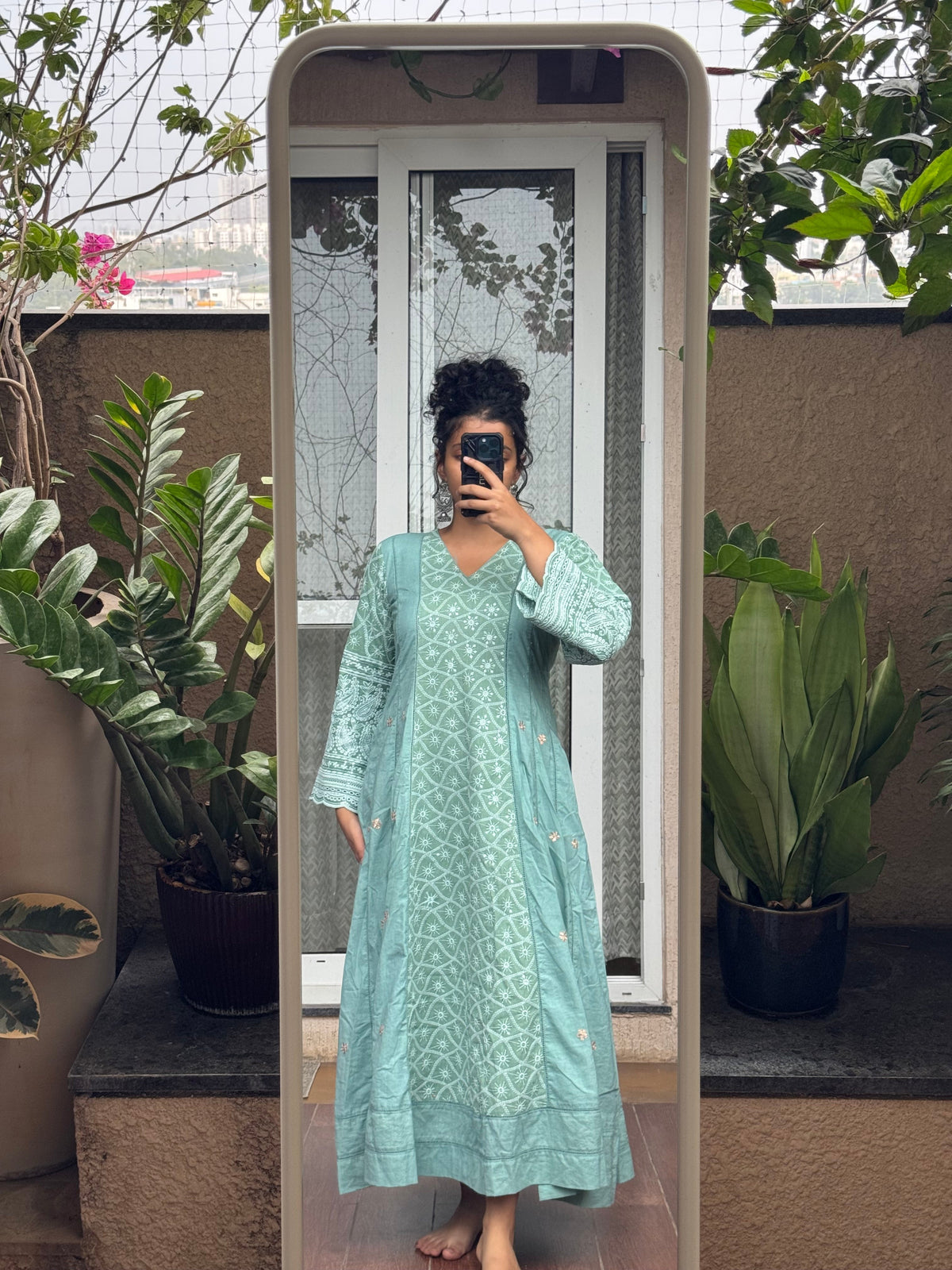
Saroj Jain pick: Mint Sea Green Lucknowi Chikankari Anarkali Gown

Price: ₹4,399
Why it works: The Anarkali shape gives chikankari a graceful vertical line and creates movement without excessive accessories.
Best for: Day weddings, festive lunches and family celebrations.
Style with: Pearl drops, soft metallic sandals and a light dupatta.
Avoid if: You need a compact outfit for crowded travel or frequent sitting on the floor.
Shop the Mint Sea Green Lucknowi Chikankari Anarkali Gown
Saroj Jain pick: Ombre Lavender Pink & Crimson Red Lucknowi Chikankari Anarkali Gown

Price: ₹4,499
Why it works: The ombre colour creates a stronger festive effect while the chikankari keeps the finish refined.
Best for: Evening functions, receptions and festive dinners.
Style with: Ruby-toned earrings, neutral heels and a small metallic clutch.
Avoid if: You want a quiet monochrome outfit for the office or a simple daytime wardrobe.
Shop the Ombre Lavender Pink & Crimson Red Lucknowi Chikankari Anarkali Gown
Saroj Jain pick: Ombre Pink & Lime Green Lucknowi Chikankari Anarkali Gown

Price: ₹4,799
Why it works: The fresh colour pairing gives the outfit presence while the Anarkali cut keeps the overall line fluid.
Best for: Haldi events, festive lunches and colourful family occasions.
Style with: Green or gold earrings, neutral sandals and a simple bangle stack.
Avoid if: You prefer muted colour or need an outfit that can be paired with many different accessories.
Shop the Ombre Pink & Lime Green Lucknowi Chikankari Anarkali Gown
Chikankari Outfit Comparison
| Outfit | Likely fabric direction | Festive scale | Price |
|---|---|---|---|
| Chikankari Co-Ord Set | Light, coordinated daily-wear styling | Low to medium | ₹2,771.37 |
| Mint Sea Green Lucknowi Chikankari Anarkali Gown | Flowing Anarkali finish | Medium | ₹4,399 |
| Ombre Lavender Pink & Crimson Red Lucknowi Chikankari Anarkali Gown | Fluid festive silhouette | High | ₹4,499 |
| Ombre Pink & Lime Green Lucknowi Chikankari Anarkali Gown | Colour-forward occasion finish | High | ₹4,799 |
Body Type and Silhouette Matrix
| Body type | Best direction | What to check |
|---|---|---|
| Petite | Shorter kurtis, narrow borders and controlled volume | Avoid very wide flare that can shorten the frame |
| Tall | Long Anarkalis, longer kurtas and layered dupattas | Check that the hem and sleeve length are proportionate |
| Curvy | Vertical embroidery, V-necks and soft A-line shapes | Ensure dense work does not add unwanted stiffness at the waist |
| Lean | Layered silhouettes, moderate flare and textured embroidery | Use fabric movement rather than excessive tightness |
What to Avoid When Buying Chikankari
- Do not buy only by looking at the front. Inspect the reverse side.
- Do not assume every white embroidered garment is hand chikankari.
- Do not ignore transparency under strong daylight.
- Do not choose a heavy lining for a summer garment.
- Do not expect untreated cotton or mulmul to behave like synthetic fabric after washing.
- Do not pull loose threads or cut them from the front.
- Do not pair a heavily worked outfit with equally loud jewellery, footwear and bag.
- Do not buy a dense design for daily wear if you spend long hours sitting or commuting.
Frequently Asked Questions
How can I tell whether chikankari is hand embroidered?
Inspect the reverse for slight irregularity, small knots and varied thread tension. Machine embroidery usually has a flatter, more repeated and mechanically consistent finish.
Which base fabric is best for summer?
Cotton, mulmul and muslin are strong choices for summer. They feel lighter and more breathable than many dressier bases, but always check opacity and lining needs.
Is georgette chikankari suitable for weddings?
Yes. Georgette has a fluid fall that works well for Anarkalis, long kurtas and festive sets. Add a suitable lining for coverage and shape.
Will chikankari become transparent?
It can, depending on the fabric, colour, embroidery spacing and lighting. Pale mulmul, muslin, chiffon and lightweight georgette deserve an opacity check in natural daylight.
Can chikankari shrink after washing?
Natural fabrics such as cotton, mulmul and muslin can shrink slightly. Cold-water hand washing, no wringing and shade drying help protect the garment.
Can I wear chikankari with jeans?
Yes. Pair a shorter chikankari kurti with straight or relaxed jeans, simple earrings and flat sandals. Keep the accessories restrained.
How should I store chikankari?
Store it clean and completely dry, preferably folded with a soft cotton layer between delicate pieces. Avoid hanging very light fabric for long periods if the shoulders may stretch.
Ready to Find Your Fit? Visit Our JP Nagar Boutique
We style chikankari in person at 57/1, 1st Cross Rd, opposite to Iyengar's Bakery, 5th Phase, Dollar Layout, JP Nagar Phase 5, Bengaluru, Karnataka 560078.
Bring the occasion, the footwear you plan to wear and any concern about lining or transparency. We will check the fall in daylight, review the fit while sitting and help you choose the right level of embroidery.
WhatsApp a Stylist View the Lookbook Shop Collections Book a Boutique Meet
Choose the base, check the reverse, test the fall and buy chikankari fabric that fits your real life.