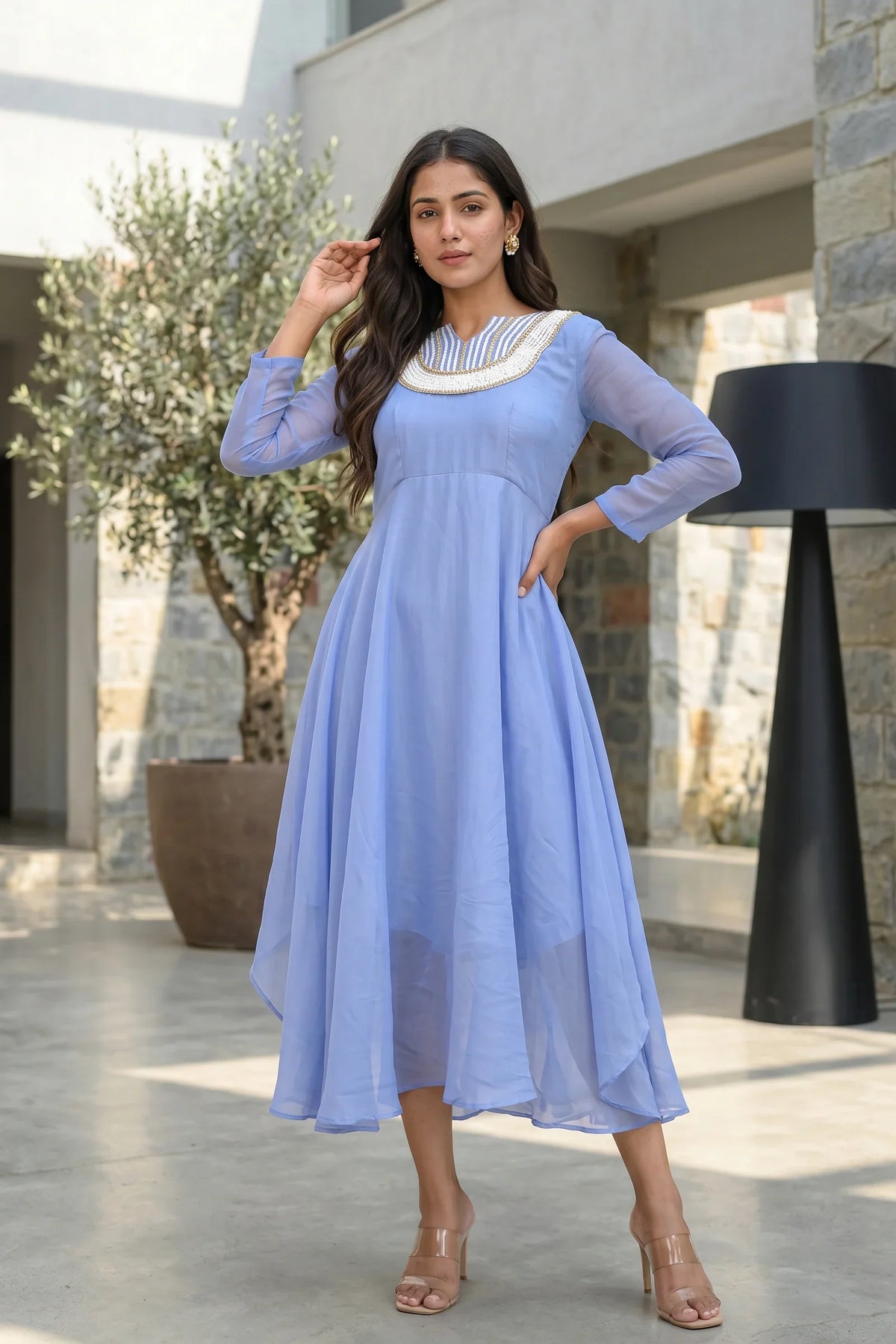

Chikankari Outfits
Updated: August 2026 | Written by: Saroj Jain Styling Team | Reviewed by: Saroj Jain Boutique Team
Quick Answer: Chikankari outfits are still in style in 2026, but only when they are hand-done with proper stitch density. Machine-made versions look cheap. In Bangalore heat, choose cotton or modal bases over sheer net. Layer with structured innerwear. For weddings, go for anarkalis with bakhiya and murri work. Avoid plastic storage during monsoons.
We see three types of shoppers walk into our JP Nagar 5th Phase boutique every week. One grabs the first pastel kurti they spot. Another asks for “authentic Lucknowi.” The third wants to know if chikankari is still cool or just another trend that peaked in 2019.
Here is what we tell them after 15 years of sourcing directly from Lucknow artisans and watching Bangalore weather eat through poorly stored pieces.
- Fabric Guide: Sheerness, Drape, and Innerwear Needs
- Stitch Density: How to Spot Real Hand-Chikankari
- Bangalore Weather: Heat, Humidity, and Monsoon Care
- Occasion Styling: From Mehendi to Wedding Guest
- Body Type Guide: Petite, Tall, Curvy, Lean
- Saroj Jain Product Picks
- Comparison Table: Which Chikankari Outfit Wins
- What to Avoid
- FAQs
- Ready to Find Your Fit?
Fabric Guide: Sheerness, Drape, and Innerwear Needs
Net chikankari kurtis are everywhere online. But here is the truth we see in our fitting room daily: sheer net without structure makes you look half-dressed under Bangalore’s harsh afternoon sun.
Cotton bases hold their shape. They breathe. They do not cling when humidity hits 80 percent.
Modal blends drape like silk but cost half as much. They are perfect for casual lunches in Indiranagar or weekend brunches in Koramangala.
Muslin is the sweet spot. Lightweight enough for 38-degree days. Structured enough to skip a slip dress underneath.
Silk chikankari exists but only for evening weddings. It creases in your car ride from JP Nagar to MG Road. Pack a steamer.
Layering rule: If you can see your bra outline through the fabric, it is too sheer. Add a cotton camisole or switch to a heavier weave.
Stitch Density: How to Spot Real Hand-Chikankari
We have held up fake pieces next to real ones under our boutique’s daylight lamps. The difference is visible at arm’s length.
Real chikankari uses 20 to 30 stitches per inch. You feel the texture when you run your finger along the embroidery.
Machine-made versions have 8 to 12 stitches per inch. The thread looks flat. The pattern looks stamped on.
Shadow work means the embroidery is done on the reverse side. Light shows through the front as a shadow. This is advanced work. It takes one artisan three days for one panel.
Jaali is open-work embroidery. It creates lace-like patterns. Jaali on a neckline or sleeve is a sign of skilled craftsmanship.
Murri is the tiny knot stitch. It creates dotted lines. Look for it along borders and floral stems.
Bakhiya is the satin-stitch fill. It covers large areas smoothly. If the fill looks patchy, the artisan rushed.
Check the back. Real chikankari has a neat, consistent reverse side. Fakes have loose threads and uneven tension.
Bangalore Weather: Heat, Humidity, and Monsoon Care
September in Bangalore means 26 to 32 degrees. Humidity swings between 40 and 85 percent. Chikankari must survive both.
We keep our boutique AC at 22 degrees. Customers sit cross-legged on our charpais trying on pieces. The fabric that survives that test survives anywhere.
Cotton chikankari kurtas do not stick to your skin. They air-dry in 20 minutes on our balcony rack.
Net pieces need a cotton slip. Always. No exceptions. We keep a stack of them behind the counter for customers who forgot.
Monsoon care: Do not wash chikankari unless it is visibly stained. Spot-clean with cold water and mild detergent.
Store in cotton pillowcases, not plastic bags. Plastic traps moisture. Moisture breeds odor and weakens threads.
Add neem leaves to storage boxes. They repel moths naturally. We learned this from our Lucknow supplier after one monsoon ruined 15 pieces.
Occasion Styling: From Mehendi to Wedding Guest
Chikankari is not just for summer lunches anymore. We dress our mannequins for three occasions every season.
Daytime mehendi: Light cotton kurti with straight-fit jeans or churidar. Jutti or kolhapuri. Minimal jewellery. Just jhumkas and a thin bangle.
Evening wedding guest: Anarkali with heavy bakhiya work. Pair with palazzos or a churidar. Heels are mandatory. The gown needs to flow.
Office wear: Chikankari yoke on a plain cotton shirt. Tuck into high-waisted trousers. No dupatta. Keep it sharp.
Haldi ceremony: Pastel anarkali with minimal embroidery. Yellow or orange dupatta. Flat sandals. You will be sitting on the floor.
Reception or cocktail: Ombre chikankari gown. Statement earrings. Heels. Clutch bag. The darker base hides any food stains.
Layering hack: A short cropped jacket over a chikankari kurti adds structure. It works for both day and night in Bangalore.
Body Type Guide: Petite, Tall, Curvy, Lean
We measure every customer who walks in. Not for sales. For fit advice. Here is what works for each body type.
Petite: Short kurti length. Cropped chikankari jackets. Avoid floor-length anarkalis that swallow your frame. Belted waists define your shape.
Tall: Floor-length anarkalis look effortless. Vertical chikankari panels elongate you further. Wide-leg trousers with a cropped kurti balance your height.
Curvy: A-line silhouettes with side chikankari panels flatter without clinging. Avoid tight fits around the bust. Empire waists create definition.
Lean: You can carry heavy embroidery without looking overwhelmed. Layered looks work best. Add volume with dupattas and wide sleeves.
Universal tip: Chikankari on the neckline draws attention upward. If you want to minimize your bust, choose plain necklines.
Saroj Jain Product Picks
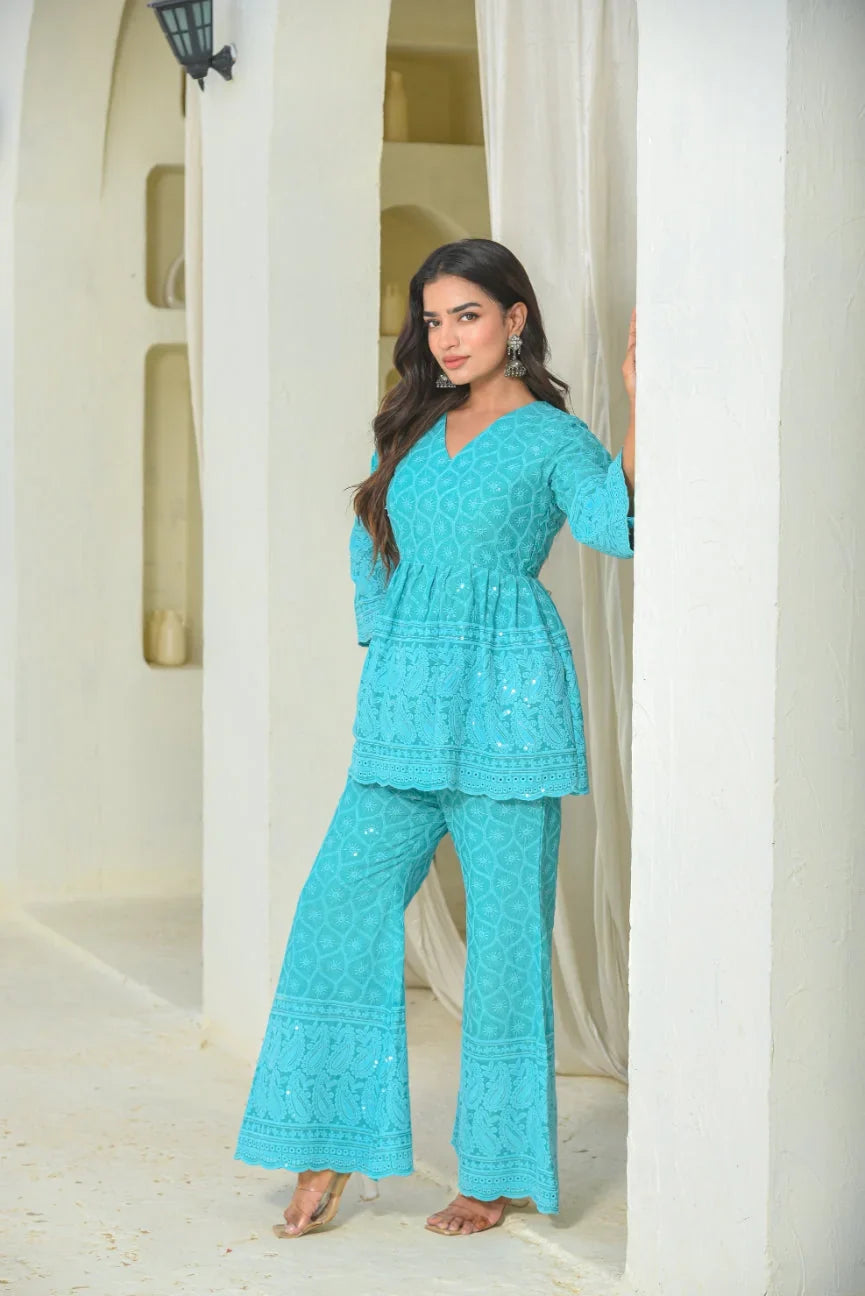
Saroj Jain pick: Chikankari Co-Ord Set

Price: ₹2,771.37
Why it works: The sea-green base is neutral enough for office wear. The co-ord fit keeps the silhouette clean. No extra dupatta to manage in Bangalore traffic.
Best for: Daytime meetings, casual lunches, travel-friendly dressing.
Style with: Nude juttis and a thin silver chain. Keep jewellery minimal to let the embroidery breathe.
Avoid if: You are attending an evening wedding. The set is too structured for formal events.
Shop the Chikankari Co-Ord Set
Saroj Jain pick: Mint Sea Green Lucknowi Chikankari Anarkali Gown

Price: ₹4,399
Why it works: The mint base reads fresh in Bangalore’s daylight. The anarkali cut flows without dragging on wet floors during monsoon.
Best for: Evening weddings, Diwali parties, family gatherings.
Style with: Nude heels and jhumkas. Add a clutch with mirror work to echo the Lucknowi theme.
Avoid if: You are under 5 feet 4 inches. The gown length will overwhelm your frame.
Shop the Mint Sea Green Anarkali Gown
Saroj Jain pick: Ombre Lavender Pink & Crimson Red Lucknowi Chikankari Anarkali Gown

Price: ₹4,499
Why it works: The ombre transition hides any monsoon stains. The crimson base adds drama without needing heavy jewellery.
Best for: Night weddings, cocktail events, Holi parties.
Style with: Gold jhumkas and block-heel mules. Keep the dupatta draped over one shoulder.
Avoid if: You work in a conservative office. The colour contrast is too bold for corporate settings.
Shop the Ombre Lavender Pink Gown
Saroj Jain pick: Ombre Pink & Lime Green Lucknowi Chikankari Anarkali Gown

Price: ₹4,799
Why it works: The lime green pops under Bangalore’s fluorescent office lights. The ombre effect hides any accidental food stains during dinner meetings.
Best for: Summer weddings, garden parties, photoshoots.
Style with: Nude heels and a thin waist belt. Let the gown’s cut do the talking.
Avoid if: You are attending a traditional South Indian wedding. The colours may clash with the decor.
Shop the Ombre Pink & Lime Green Gown
| Outfit | Fabric | Festive Scale | Price |
|---|---|---|---|
| Chikankari Co-Ord Set | Cotton blend | Low | ₹2,771.37 |
| Mint Sea Green Anarkali | Modal blend | Medium | ₹4,399 |
| Lavender Pink & Crimson Gown | Silk blend | High | ₹4,499 |
| Pink & Lime Green Gown | Georgette | High | ₹4,799 |
What to Avoid
Sheer net without a structured inner layer. We have sent customers home with a free cotton camisole more times than we can count.
Machine-made chikankari sold as “hand-embroidered.” Check the back. If the stitches look flat and uniform, it is machine work.
Storing chikankari in plastic bags during monsoon. Moisture builds up. Threads weaken. Stains set in.
Wearing heavy embroidery to daytime casual events. It looks like you tried too hard. Bangalore knows when you are trying too hard.
Ignoring the back of the garment. Poor finishing on the reverse means the artisan was rushing. The front will deteriorate faster.
Buying based on Instagram photos alone. Lighting hides flaws. Always ask for close-up shots of the embroidery and the reverse side.
FAQs
Is chikankari still in style in 2026?
Yes, but only when it is hand-done with proper stitch density. Machine-made versions look cheap and dated.
Where can I buy authentic chikankari in Bangalore?
Visit our JP Nagar 5th Phase boutique at 57/1, 1st Cross Rd, opposite Iyengar's Bakery. We source directly from Lucknow artisans.
Are net chikankari kurtis still fashionable?
Net works if the base layer is structured. Pair with a cotton or silk camisole and tailored trousers.
Can chikankari be worn to weddings?
Yes. Choose anarkalis with bakhiya and murri work for evening weddings. Light cotton kurtas work for daytime events.
How do I prevent chikankari from yellowing in monsoon?
Wash only when visibly soiled. Dry flat in shade. Store with neem leaves and avoid plastic covers.
What is the difference between shadow work and bakhiya?
Shadow work is done on the reverse side, creating a shadow effect on the front. Bakhiya is satin-stitch fill on the front surface.
How do I know if chikankari is hand-made or machine-made?
Check the back. Hand-chikankari has neat, consistent stitching. Machine-made has loose threads and uneven tension.
What innerwear should I wear with sheer chikankari?
A cotton or silk camisole in a matching tone. Avoid lace or patterned bras that show through the embroidery.
Ready to Find Your Fit? Visit Our JP Nagar Boutique
We are at 57/1, 1st Cross Rd, opposite Iyengar's Bakery, JP Nagar Phase 5. Come try before you buy. Our fitting rooms have daylight mirrors and full-length lamps.