
Chikankari Styling And Maintenance
Updated: August 2026 | Written by: Saroj Jain Styling Team | Reviewed by: Saroj Jain Boutique Team
Chikankari styling and maintenance becomes easy when you treat the fabric, embroidery, and occasion as one decision. At our JP Nagar 5th Phase boutique, we see the same problems repeatedly. A beautiful kurti is washed in hot water, hung while wet, then ironed directly over raised stitches. The result is stretching, loose threadwork, fading, or a changed fit. This guide gives you practical chikankari care tips for cotton, silk, georgette, and organza. You will also find chikankari kurti styling ideas, fabric-specific washing advice, storage rules, and outfit choices for Bengaluru days, family functions, and festive evenings.
Quick answer: Hand-wash simple cotton chikankari in cold water with mild detergent, then dry it flat or in shade. Do not wring or scrub.
Silk, georgette, organza, heavy jali, and embellished pieces are safer with professional dry-cleaning. Iron raised embroidery from the reverse side through a thin cotton cloth.
Store clean chikankari folded in cotton or muslin, never in sealed plastic. The care label on your garment remains the final authority.
- Why Chikankari Care Matters
- Fabric-Specific Care Guide
- How to Wash Chikankari
- Drying and Ironing Without Damage
- Chikankari Styling Ideas
- Our Chikankari Picks
- Outfit Comparison
- Silhouette Guide
- How to Store Chikankari Clothes
- What to Avoid
- Frequently Asked Questions
- Visit Our JP Nagar Boutique
Why Chikankari Care Matters
Chikankari is not just a printed surface. Threadwork, open jali, raised stitches, and fabric structure respond differently to water, heat, friction, and weight.
In our JP Nagar fitting room, we check whether a sleeve still moves comfortably after the wearer sits cross-legged for hours. That practical test matters as much as the first mirror view.
Bengaluru weather adds another concern. Humidity trapped inside a wardrobe can create a stale smell, yellowing, or mildew, especially when a garment is stored before it is fully dry.
Fabric-Specific Care Guide
| Fabric | Safer Cleaning Method | Drying | Ironing |
|---|---|---|---|
| Cotton or mulmul | Cold hand-wash with mild detergent | Flat or shaded drying | Reverse side, low to medium heat |
| Silk | Professional dry-cleaning | Air in shade if needed | Reverse side through a cloth |
| Georgette | Dry-cleaning preferred | Do not hang wet | Low heat, no direct contact with stitches |
| Organza | Dry-cleaning preferred | Keep away from rough surfaces | Low heat through a pressing cloth |
Cotton is usually the most forgiving option for regular wear. Silk, georgette, and organza need more control because water, friction, or heat can alter their drape and shape.
How to Wash Chikankari Without Loosening the Embroidery
- Read the care label before washing.
- Separate white, pastel, and dark garments. Wash a new coloured piece separately the first time.
- Fill a basin with cool water. Add a small quantity of mild liquid detergent.
- Dip and gently move the garment for a few minutes. Avoid long soaking.
- Do not brush, scrub, twist, or wring the embroidered areas.
- Press water out gently between your palms.
- Support the full garment when lifting it from the basin.
Machine-washing is not the default answer. Simple cotton may tolerate a short cold delicate cycle if the label permits it, but hand-washing gives you better control. Never machine-wash delicate jali, silk, georgette, organza, or heavily embellished chikankari without professional guidance.
Drying and Ironing Without Distorting the Work
Never hang chikankari while it is saturated. Wet weight pulls at openwork, sleeve seams, and the shoulder line.
For cotton, lay the garment on a clean towel in shade. For heavier pieces, roll the garment inside the towel to absorb excess water, then dry it flat. Keep direct sun away from white and pastel embroidery.
Iron from the reverse side. Place a thin cotton cloth over raised murri, phanda, or other textured stitches. Use low heat for delicate fabrics and avoid pressing directly on the threadwork.
Our fitting-room rule is simple. If the embroidery feels raised under your palm, it should not meet a hot iron directly.
Chikankari Styling Ideas for Real Bengaluru Dressing
For daytime: Choose cotton chikankari with flat sandals, small hoops, and a structured tote. This works for lunch, shopping, and warm JP Nagar afternoons.
For work: Keep the jewellery controlled. Add pearl studs, a slim watch, and neutral juttis. Let the embroidery create interest without making the outfit feel busy.
For festive events: Choose an Anarkali with statement earrings and low block heels. Match the scale of the jewellery to the density of the embroidery.
For long sitting: Check the armhole, waist ease, and hem volume before buying. You should be able to sit cross-legged without pulling the embroidery across the bust or hips.
For bright daytime lighting: Inspect white and pastel pieces near natural light. Bengaluru daylight can reveal transparency, lining gaps, and uneven colour more clearly than boutique lighting.
Our Chikankari Picks
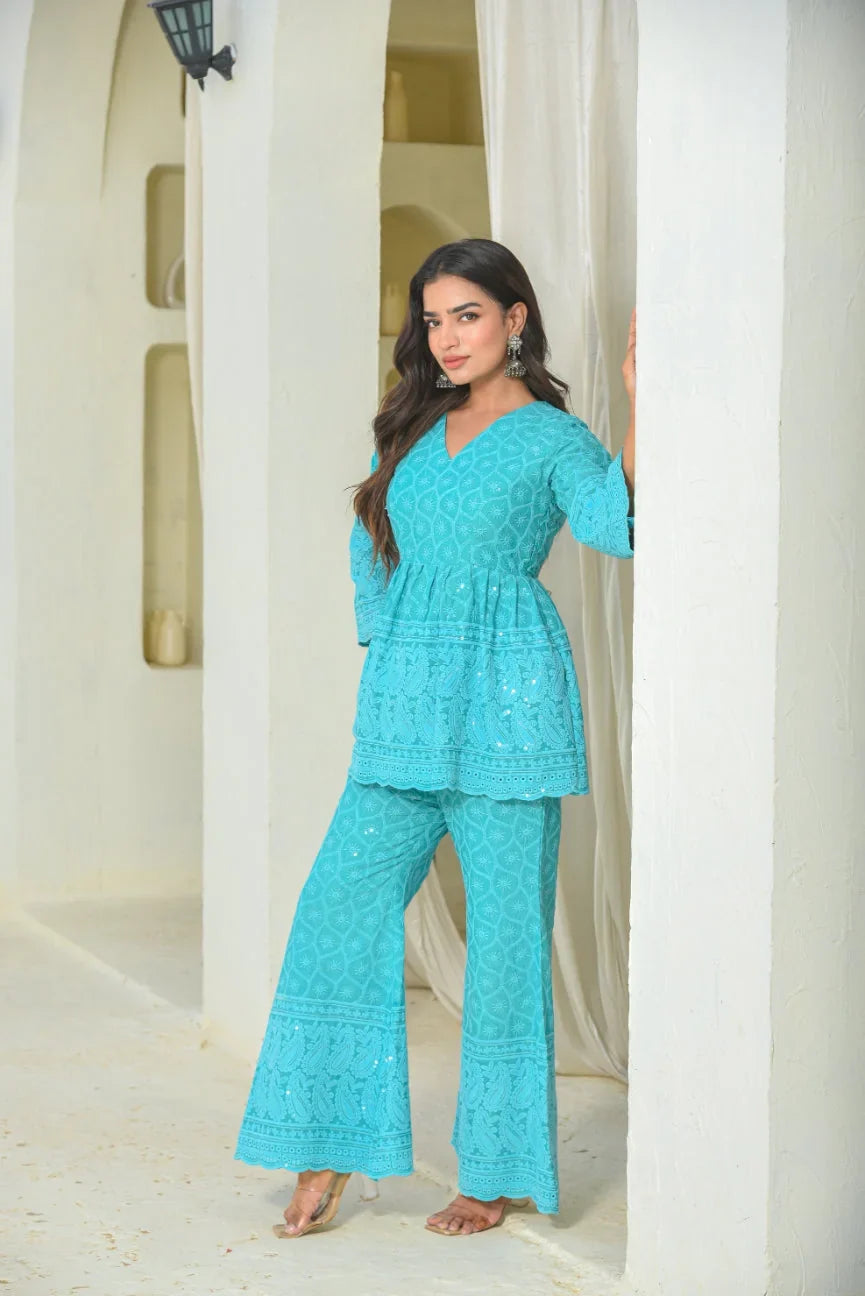
Saroj Jain pick: Chikankari Co-Ord Set

Price: ₹2,771.37
Why it works: A coordinated set gives you a polished outfit without forcing you to match separates. It is easy to dress up or keep relaxed.
Best for: Brunches, daytime celebrations, travel, and comfortable festive dressing.
Style with: Pearl studs, tan sandals, and a compact shoulder bag.
Avoid if: You prefer strong waist definition or need a very formal evening silhouette.
Shop the Chikankari Co-Ord Set
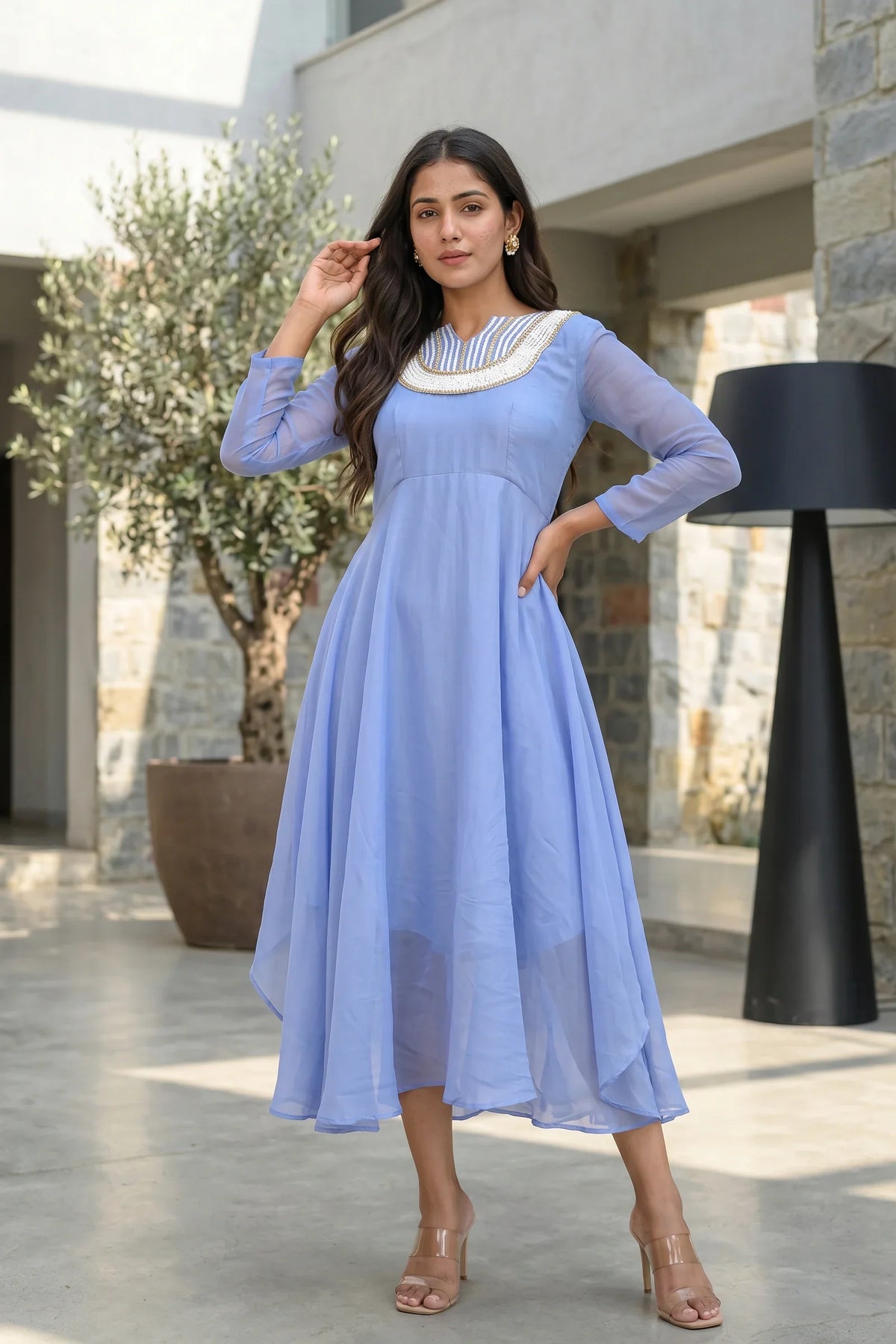
Saroj Jain pick: Mint Sea Green Lucknowi Chikankari Anarkali Gown

Price: ₹4,399
Why it works: The soft mint tone keeps the Anarkali graceful in daytime while the flowing shape gives you movement for family functions.
Best for: Day weddings, pujas, festive lunches, and engagement celebrations.
Style with: Silver-toned earrings, soft metallic sandals, and a small potli.
Avoid if: You will be outdoors in dusty conditions or cannot arrange suitable care for a delicate embroidered gown.
Shop the Mint Sea Green Lucknowi Chikankari Anarkali Gown
Saroj Jain pick: Ombre Lavender Pink & Crimson Red Lucknowi Chikankari Anarkali Gown

Price: ₹4,499
Why it works: The colour movement does much of the styling work, so you can keep accessories clean and focused.
Best for: Evening receptions, sangeet events, and festive dinners.
Style with: Crimson or antique-gold earrings, neutral heels, and a simple clutch.
Avoid if: You want a minimal single-colour outfit or need a garment for frequent home washing.
Shop the Ombre Lavender Pink & Crimson Red Lucknowi Chikankari Anarkali Gown
Saroj Jain pick: Ombre Pink & Lime Green Lucknowi Chikankari Anarkali Gown

Price: ₹4,799
Why it works: The pink and lime combination brings festive energy while the Anarkali shape keeps the outfit fluid and comfortable.
Best for: Haldi functions, daytime celebrations, and colourful festive gatherings.
Style with: Green glass bangles, delicate gold earrings, and nude or metallic footwear.
Avoid if: Your event calls for muted formal dressing or you cannot protect the garment from food and colour stains.
Shop the Ombre Pink & Lime Green Lucknowi Chikankari Anarkali Gown
Compare the Outfits Before You Buy
| Outfit | Fabric and Feel | Festive Scale | Price |
|---|---|---|---|
| Chikankari Co-Ord Set | Easy coordinated dressing | Low to medium | ₹2,771.37 |
| Mint Sea Green Lucknowi Chikankari Anarkali Gown | Flowing formal silhouette | Medium | ₹4,399 |
| Ombre Lavender Pink & Crimson Red Lucknowi Chikankari Anarkali Gown | Statement ombre finish | High | ₹4,499 |
| Ombre Pink & Lime Green Lucknowi Chikankari Anarkali Gown | Bright festive colour story | High | ₹4,799 |
Body Type and Silhouette Matrix
| Body Type | What Usually Works | Fitting Room Check |
|---|---|---|
| Petite | Shorter hems, smaller motifs, and a controlled flare | Check that the hem does not overwhelm your frame |
| Tall | Long Anarkalis, larger motifs, and stronger colour contrast | Check sleeve and hem proportions together |
| Curvy | Comfortable bust ease, vertical embroidery, and fluid flare | Sit and raise both arms to test pulling at the chest |
| Lean | Layered dupattas, fuller sleeves, and textured embroidery | Check that the outfit creates shape without excess fabric |
These are starting points, not restrictions. Your posture, comfort, and preferred coverage matter more than a fixed category.
How to Store Chikankari Clothes
Wash or dry-clean the garment before long-term storage. Body oils, perfume, food marks, and perspiration can darken or yellow fabric over time.
Fold clean chikankari in a breathable cotton or muslin cover. Avoid sealed plastic, which can trap moisture in Bengaluru’s changing weather.
Keep white pieces away from direct sunlight, damp walls, and crowded shelves. Refold them every few months to prevent deep permanent creases.
For delicate gowns, support the folds with soft, acid-free tissue or clean muslin. Keep jewellery, rough hooks, and sharp accessories away from the embroidery.
What to Avoid
- Hot water, which can shrink cotton and stress embroidery.
- Bleach, strong stain removers, and harsh detergents.
- Long soaking, especially for raised or openwork stitches.
- Scrubbing directly over embroidery.
- Wringing, twisting, or lifting a saturated garment by one shoulder.
- Hanging silk, georgette, organza, or heavy chikankari while wet.
- Direct high heat or steam on raised stitches.
- Storing a garment while damp or inside plastic.
- Pulling loose threads. Secure them with professional repair instead.
Frequently Asked Questions
Can chikankari clothes be machine-washed?
Simple cotton chikankari may tolerate a short, cold, delicate cycle when the care label allows it. Hand-washing is safer. Avoid machine-washing silk, georgette, organza, heavy jali, and embellished garments.
How should I wash cotton chikankari?
Use cool water and a mild liquid detergent. Dip gently, keep soaking short, press out water without wringing, and dry flat or in shade.
Why is my chikankari shrinking after washing?
Hot water, strong detergent, long soaking, high heat, and incorrect drying can shrink or distort the fabric. Cotton may also change slightly after its first wash, so follow the garment label closely.
Why is the embroidery becoming loose?
Machine agitation, scrubbing, twisting, and hanging the garment wet place stress on the threads. Wet-weight management is especially important for jali and other openwork.
Can I iron over murri and phanda stitches?
Iron from the reverse side through a thin cotton pressing cloth. Use low heat where possible, and never press a hot iron directly onto raised threadwork.
How do I remove a stain from white chikankari?
Blot quickly with a clean cloth and avoid rubbing. Do not apply bleach or a strong stain remover without testing and professional advice, especially on silk, georgette, organza, or coloured embroidery.
How often should chikankari be dry-cleaned?
Only when needed and according to the care label. Air the garment in shade after wear, remove visible marks promptly, and avoid cleaning delicate pieces more often than necessary.
Ready to Find Your Fit? Visit Our JP Nagar Boutique
Visit SAROJ JAIN at 57/1, 1st Cross Rd, opposite to Iyengar's Bakery, 5th Phase, Dollar Layout, JP Nagar Phase 5, Bengaluru, Karnataka 560078.
Bring the occasion, footwear, and comfort requirement. We will check the fit in movement, not just in a standing mirror.
WhatsApp the Styling Team View the Lookbook Shop Collections Book a Boutique Meet
Choose the right fabric, protect the embroidery, and make every wear count with practical chikankari styling and maintenance.