
How to Coordinate Family Outfits for a Wedding Without Looking Too Matchy
Updated: July 2026
Written by: Saroj Jain Styling Team
Reviewed by: Saroj Jain Boutique Team
You have 8 family members attending a wedding. Everyone wants to look coordinated in photos. But nobody wants to look like they are wearing a uniform. We see this challenge every week at our JP Nagar boutique. Families walk in with different body types, different ages, and very different opinions about what matching means. Here is how we solve it.

Key Takeaways
- Pick a colour palette of 2 to 3 shades instead of one matching colour
- Coordinate fabric finishes (all matte or all lustrous) for visual harmony across the group
- Vary silhouettes across family members. Same colour story, different cuts
- One anchor outfit sets the tone. Everyone else complements it
- At Saroj Jain, we coordinate 4 to 15 family members in a single consultation
Table of Contents
1. Why Full Matching Backfires
2. The Colour Palette Method
3. Fabric Coordination Rules
4. Silhouette Variation by Family Role
5. What to Avoid When Coordinating
6. Saroj Jain Product Picks
7. FAQs
Why Does Full Matching Backfire at Weddings?
When every family member wears the exact same colour and fabric, the result looks stiff. Photographers tell us this candidly. Identical outfits flatten depth in group photos. Everyone blends into one blob of colour. Worse, not every colour flatters every skin tone. Your sister-in-law in bright yellow might glow while your mother in the same yellow looks washed out. It is not about the outfit. It is about how colour interacts with complexion.
At our boutique, we guide families toward coordinated palettes instead of strict matching. The difference is dramatic. Photos look richer. Each person still feels like themselves. And nobody spends the evening adjusting an outfit they never wanted to wear.
What Is the Colour Palette Method for Family Coordination?
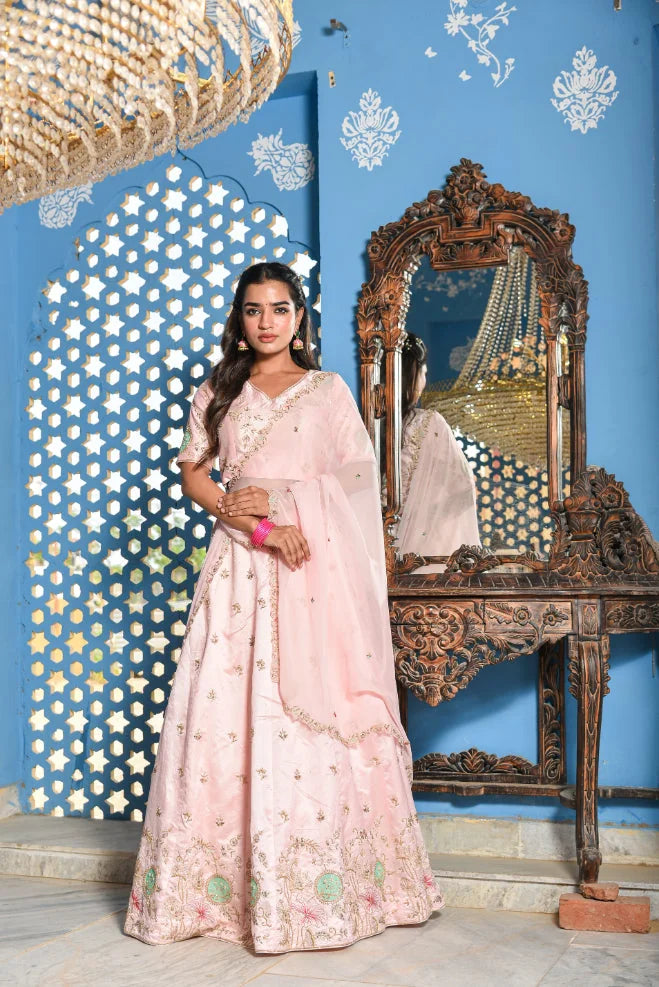
Pick 2 to 3 colours that sit near each other on the colour wheel or complement each other naturally. For example: blush pink, rose gold, and soft beige. Or teal, mint, and ivory. Then assign each family member a shade within that range based on what suits their skin tone best. The overall look reads as intentional. But up close, everyone has their own distinct outfit.
We recommend anchoring the palette to the most important family member. If it is your daughter's wedding, her lehenga colour sets the direction. Everyone else plays a supporting role with softer, lighter, or complementary tones. This applies to siblings, cousins, parents, and grandparents alike.
How Do You Coordinate Fabrics Across a Large Family Group?
Fabric finish matters more than most people realize. A glossy silk lehenga next to a matte cotton kurta creates visual friction even if the colours match. Our rule at the boutique: pick one finish direction and stick with it.
For summer weddings, we lean into breathable fabrics like chanderi, organza, and lightweight silk blends. Everyone stays comfortable and the sheen is consistent across the group. For winter receptions, raw silk, brocade, and velvet work beautifully together because they share a heavier, more structured finish. Mixed fabrics within the same finish family still read as coordinated.

How Do You Vary Silhouettes for Different Family Roles?
This is where coordination moves from matching to styling. Same colour palette, different silhouettes. Here is a framework we use at the boutique.
| Family Member | Recommended Silhouette | Why |
|---|---|---|
| Mother of the bride | Anarkali or tissue saree | Elegant, comfortable for long hours |
| Sister or cousin | Sharara or co-ord set | Youthful, easy to move in |
| Father or uncle | Bandhgala or Nehru jacket | Structured, photographs well |
| Younger sibling | Kurta set with jacket | Playful but polished |
| Grandmother | Silk saree in palette shade | Timeless, dignified |
The key is that everyone looks related without anyone looking like they borrowed someone else's outfit. Different cuts, same story.
What Are the Most Common Coordination Mistakes?
We see the same mistakes repeat across consultations. Here is what to avoid.
- Over-matching kids and adults. Children in miniature versions of adult outfits often look uncomfortable. Let kids have a slightly different shade or lighter fabric.
- Forcing one colour on everyone. Not every person looks good in mustard yellow or magenta. If someone hates their outfit, it shows in every photo.
- Ignoring the venue. Coordinated pastels at a nighttime reception disappear under dim lighting. Adjust your palette to the venue's natural light.
- Last-minute coordination. We have seen families try to coordinate 10 people three days before a wedding. It ends in compromise, not coordination. Start 4 to 6 weeks ahead.
- Skipping the trial fitting. Everyone tries on their outfit at different times. Nobody sees the full group together until the wedding day. Book one group trial fitting.
Saroj Jain Product Picks for Family Coordination
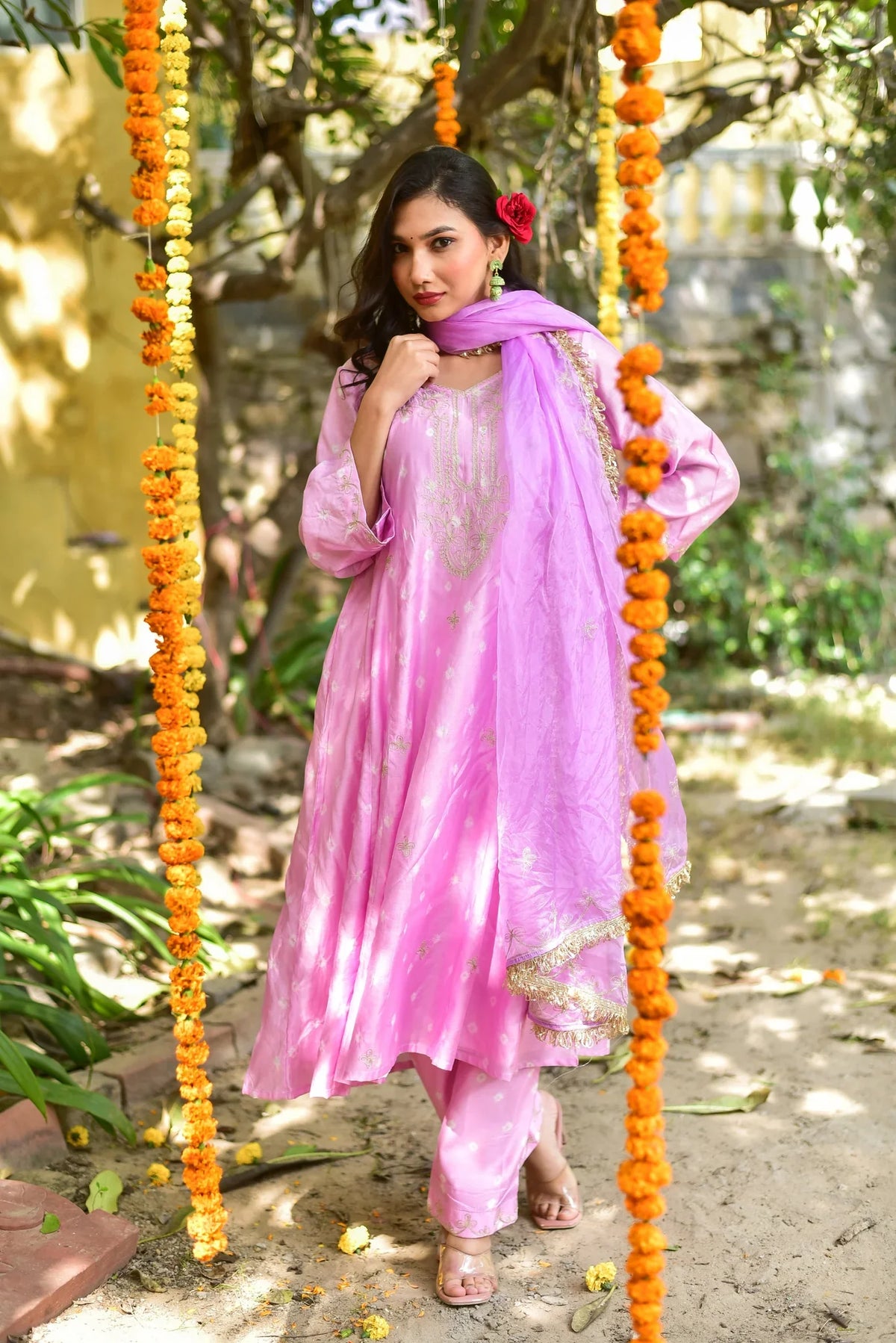
For her: Baby Pink Bandhej Kurta Set
Price: Rs. 2,490
Best for: Sisters, cousins, younger family members
Style with: Silver jhumkas, nude heels
Avoid if: You prefer heavy embroidery over subtle texture
For her: Blue Mastani Anarkali Set
Price: Rs. 3,490
Best for: Mother of the bride, older sisters
Style with: Pearl set, matching potli bag
Avoid if: You want something lightweight for a daytime function
For him: Olive Green Bandhej Kurta and Pant Set
Price: Rs. 2,990
Best for: Fathers, uncles, brothers
Style with: Kolhapuri chappals, simple watch
Avoid if: The wedding requires formal sherwani-level dressing
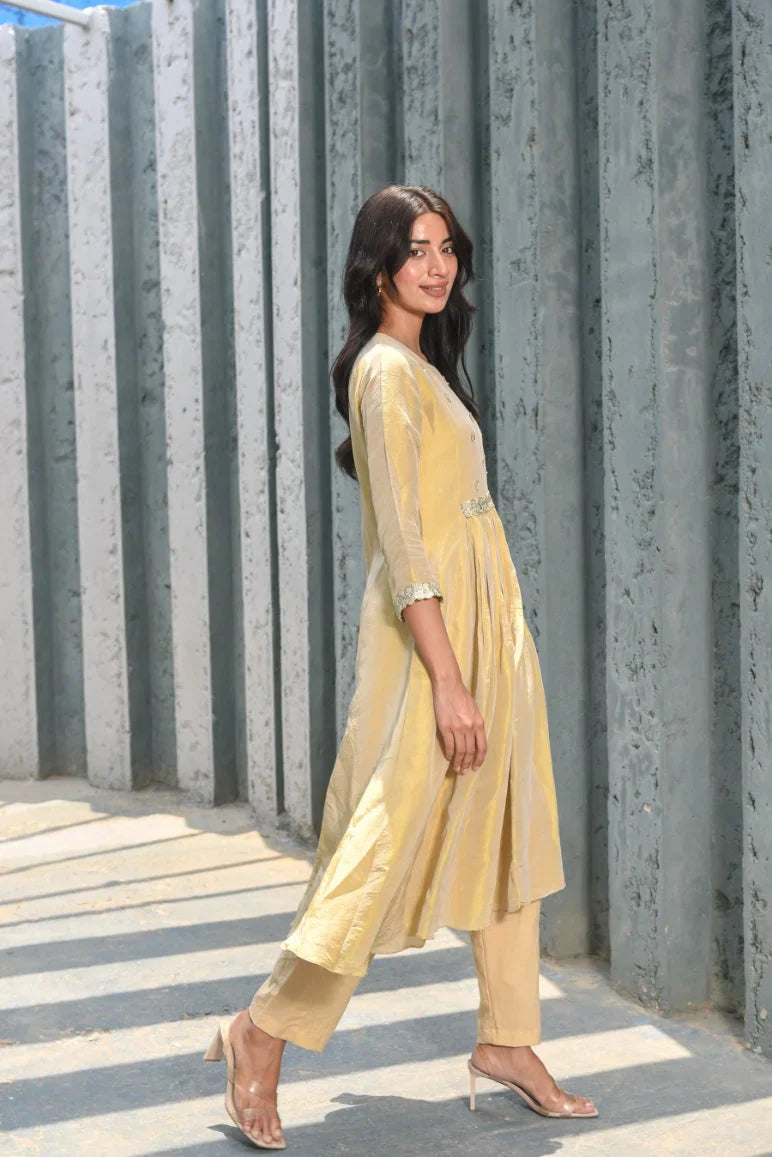
For her: Beige Zari Silk Anarkali Set
Price: Rs. 3,990
Best for: Grandmothers, aunts, anyone who prefers traditional elegance
Style with: Gold temple jewellery, silk potli
Avoid if: You prefer modern cuts over classic anarkali drapes
FAQs
How many colours should a family use for coordination?
Two to three colours maximum. More than three and the group looks scattered instead of coordinated. Pick one dominant shade and two supporting tones. Everyone gets assigned within that range.
Can men and women wear different fabrics and still look coordinated?
Yes, as long as the finish is consistent. If the women are in matte chanderi, the men should avoid high-shine brocade. Match the finish, not the exact fabric. A matte silk kurta coordinates well with a chanderi saree.
What if family members have very different budgets?
Coordinate by colour, not by price point. A Rs. 1,500 kurta in blush pink still reads as coordinated next to a Rs. 15,000 blush pink lehenga. The palette does the heavy lifting. We routinely handle family orders with mixed budgets at the boutique.
Should kids match exactly with adults?
No. Let children have a lighter or brighter version of the palette colour. A baby pink kurta set for a 7-year-old next to a dusty rose lehenga for her mother reads as intentional coordination without looking costume-like.
How far in advance should we start coordinating family outfits?
Four to six weeks before the wedding. This gives time for custom stitching, alterations, and at least one group trial fitting. Families who start two weeks out almost always end up compromising on fit or colour.
Ready to coordinate your family's wedding look? Visit us at sarojjain.com or book a group consultation at meet.sarojjain.com. We coordinate families of 4 to 15 members in a single session at our JP Nagar boutique. WhatsApp us at wa.me/919314078524 to share your palette ideas and we will send you personalized recommendations.
Also read: our full collection and check real customer outfits at lookbook.sarojjain.com.