

The History of Silk in India: From Ancient Vats to SAROJ JAIN

Silk is the "Eternal Glow of the East." While the world often looks to China for silk origins, India has its own legendary timeline. We were the pioneers of "Wild Silks" (Tussar and Eri) and for two thousand years, our weaving clusters have been the gold standard for Royal Drapery. From the Vedic mentions of 'Hiranya-drapi' (golden garments) to the modern looms of SAROJ JAIN, silk has been our Status Code. You want "The Weight of Two-Thousand Years."
The History of Silk is your roadmap to understanding why a silk set is the ultimate statement of Indian success.
The Historical Milestones (2026)
To understand your SAROJ JAIN set, you must understand the timeline:
1. The Ancient "Wild" Era (300 BCE)
Before commercial sericulture, Indian forest tribes were harvesting Tussar and Muga silks. These "Wild Silks" were prized for their golden hue and unshakeable strength. Our Tussar Treasures range is a direct continuation of this organic, forest-born heritage.
2. The Mughal Renaissance (16th Century)
The Mughals brought high-precision Persian weaving techniques to Varanasi, merging them with Indian silk to create Banarasi. This was the birth of the "Jamdani" and "Zari" tradition we still lead today. Our gold-woven Banarasi sets are a living tribute to this era of maximalist majesty.
3. The Southern Glory (18th Century)
The courts of Mysore and Kanchipuram perfected the "Heavy-Sheen" Mulberry silk. This became the standard for the high-end social and festive life of the South. Our Mulberry HD series utilizes the same high-density logic to create unmatched vibrancy.
4. The SAROJ JAIN Innovation (2026)
We take this 2000-year knowledge and combine it with modern performance. We use Low-Impact Dyes and Technical Linings to ensure the legacy is comfortable for the modern, high-mobility woman.
Why SAROJ JAIN Silk is more Historical
We don't "Forget" the craft. Most brands treat silk as a commodity. SAROJ JAIN treats it as Heritage. We work with weaving clusters in Varanasi and Madhya Pradesh that have been operating for generations. We use Traditional Jacquard Motifs that are literally woven history. When you wear our silk, you're wearing the physical timeline of Indian royalty.
Top "Legacy" Picks from SAROJ JAIN
1. The Royal Crimson Banarasi Anarkali
A modern triumph of the Mughal-Varanasi fusion. Absolute, gold-woven majesty.
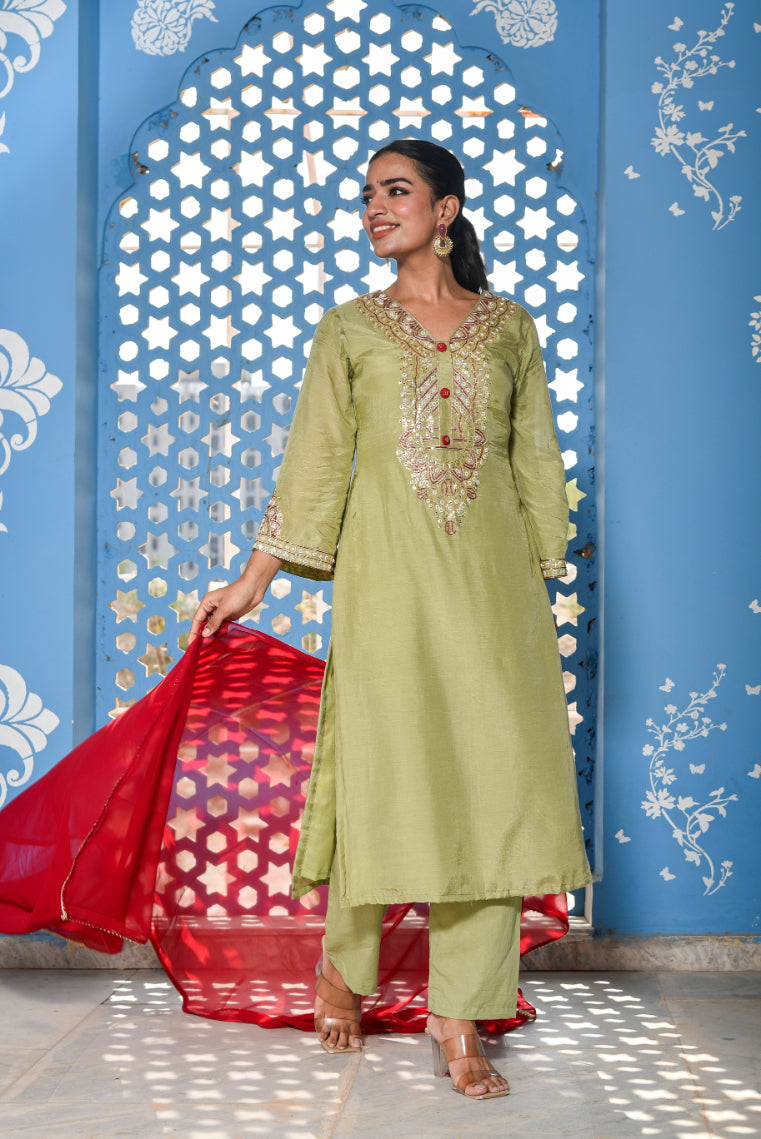
2. The Honey-Glow Tussar Straight Set
A tribute to the ancient forest-harvested "Wild Silks" of India. Organic, deep, and sophisticated.
3. The Pastel Chanderi Tunic
Bridging the gap between royal translucence and modern minimalist chic.
Pro Tip: The "Heirloom" Mindset
Next time you wear your SAROJ JAIN silk, remember you are part of a 2000-year continuity. You aren't just wearing "Fashion"; you're wearing Textile Knowledge. In the world of high-status fashion, "The Awareness of the Original" is the ultimate mark of class.
FAQs
Q: Is Indian silk still the best in the world? A: For ethnic wear, yes. Our climate and our thousand-year knowledge of the "Zari Weave" make Indian heavy silks the global benchmark for luxury.
Q: Are your designs authentic to history? A: Yes. Many of our Banarasi and Chanderi motifs are pulled directly from museum archives and traditional weaver "pattern-books."
Q: Why choose SAROJ JAIN for your historical connection? A: Because at SAROJ JAIN, we believe that your future is rooted in your past.
Honor the loom. Wear the majesty.
Discover Textile Legacy → SAROJ JAIN Heritage
Case Studies
Work-to-Dinner in a Hurry — Gurugram
Neutral co-ord + loafers by day; swap to strappy heels and cuff at night.
Wedding Guest in the Rain — Mumbai
Viscose-blend kurta set with ankle hems and rubber-soled block heels—no drags, clean photos.
Temple Ceremony Minimalism — Chennai
Plain Kanjeevaram-inspired saree, delicate gold, and low bun—elegant and respectful.
Buying Checklist
-
Shoulders clean, bust ease, hem length right for your shoes
-
Breathable lining; test arm movement and sit/stand
-
One neutral piece to mix across outfits
City Notes
- India: Pick breathable fabrics and repeatable colors.
Ready to build your look? Explore New Arrivals





%20and%20for%20t...)