
How to Choose the Right Fabric for Indian Ethnic Wear: A Stylist's Guide
Updated: July 2026
Written by: Saroj Jain Styling Team
Reviewed by: Saroj Jain Boutique Team
Walk into any Indian boutique and the first thing that hits you is not the colour. It is the fabric. Silk catches the light one way. Cotton falls another. Georgette floats. And here is where most people get stuck — standing in front of a rail of beautiful outfits, unsure which fabric actually works for a 4-hour sangeet versus a breezy morning haldi.
I see this every week at our JP Nagar boutique. A customer picks up a heavy raw silk lehenga and says she wants it for a daytime mehendi. We have a quiet conversation about fabric weight, weather, and how long she will be sitting on the floor. Usually, she walks out with something lighter — and happier.
This guide covers the six fabrics we recommend most often — what they feel like, when to wear them, and which ones survive Bangalore humidity without wilting.

Key Takeaways
- Cotton and chanderi are the best daytime fabrics — breathable and lightweight for 4+ hour functions.
- Silk and tissue work for evening events but trap heat; avoid them for outdoor summer weddings.
- Georgette and crepe drape well on most body types and travel without creasing.
- In our boutique, 7 out of 10 mehendi clients choose chanderi or cotton over silk.
- Always check the lining — a good lining makes even a heavy fabric comfortable.
Table of Contents
- Fabric Comparison Table
- Cotton: The Daytime Workhorse
- Silk: When You Want to Make an Entrance
- Chanderi: The Lightweight That Looks Expensive
- Georgette & Crepe: The Drapers
- Tissue: Sheer Drama
- What to Avoid
- Our Boutique Picks
- FAQs
Fabric Comparison Table
| Fabric | Best For | Weight | Breathability | Drape |
|---|---|---|---|---|
| Cotton | Haldi, mehendi, office | Light | Excellent | Crisp, structured |
| Silk | Reception, wedding | Heavy | Low | Rich, stiff |
| Chanderi | Mehendi, sangeet, day events | Ultra-light | Excellent | Soft, fluid |
| Georgette | Sangeet, cocktail, party | Medium | Good | Flowy, forgiving |
| Crepe | Cocktail, reception guest | Medium | Moderate | Sleek, elegant |
| Tissue | Reception, bridal entry | Light | Moderate | Crisp, structured shimmer |
Cotton: The Daytime Workhorse
If you are attending a haldi, mehendi, or a casual office Diwali lunch, cotton is your safest bet. It breathes. It does not stick to your skin in Bangalore humidity. And when tailored well — with a structured kurta or a fitted anarkali — it looks polished without trying too hard.
At our boutique, we stock cotton kurta sets and cotton silk blends specifically for customers who say: "I want something festive but not heavy." Cotton chikankari, in particular, has become our most recommended fabric for mehendi functions. You can sit cross-legged on the floor for two hours and still feel comfortable.
Best for: Haldi, mehendi, office festive wear, casual pujas
Avoid if: You want a grand formal look or if the event has a black-tie dress code
Silk: When You Want to Make an Entrance
Silk is the fabric of Indian weddings. It catches light. It holds embroidery without sagging. It photographs beautifully. But silk is also heavy, warm, and unforgiving on fit. If the blouse is off by half an inch, raw silk announces it to the room.
In our experience, silk works best for evening receptions and the main wedding ceremony. The cooler night air makes the weight bearable. We also recommend silk blends — like zari silk or organza silk — for customers who want the sheen without the full weight of a Banarasi weave.
One thing we always check during silk fittings: the shoulder and sleeve comfort. A heavy silk blouse with tight armholes will have you adjusting yourself every ten minutes. We build a small ease allowance into every silk piece we stitch.
Best for: Wedding ceremony, reception, bridal entry, evening formal events
Avoid if: Outdoor daytime event, summer wedding, or if you plan to dance for three hours straight

Chanderi: The Lightweight That Looks Expensive
Chanderi is the fabric we push most customers toward when they walk in saying "I want something light but it should look grand." It is a cotton-silk blend with a subtle sheen and zari motifs woven into the fabric itself — not printed on top. The result is an outfit that looks far more expensive than it actually weighs.
About 70% of our mehendi and sangeet clients end up choosing chanderi after trying on a few options. It travels well. It does not need heavy steaming. And it works across every body type because the fabric drapes without clinging.
Best for: Mehendi, sangeet, day wedding guest, festive lunches
Avoid if: You need the structure of a stiffer fabric for a sharply tailored silhouette
Georgette & Crepe: The Drapers
These two fabrics solve the same problem differently. Both drape beautifully. Both skim the body rather than hugging it. Both are forgiving if your weight fluctuates between fittings and the event.
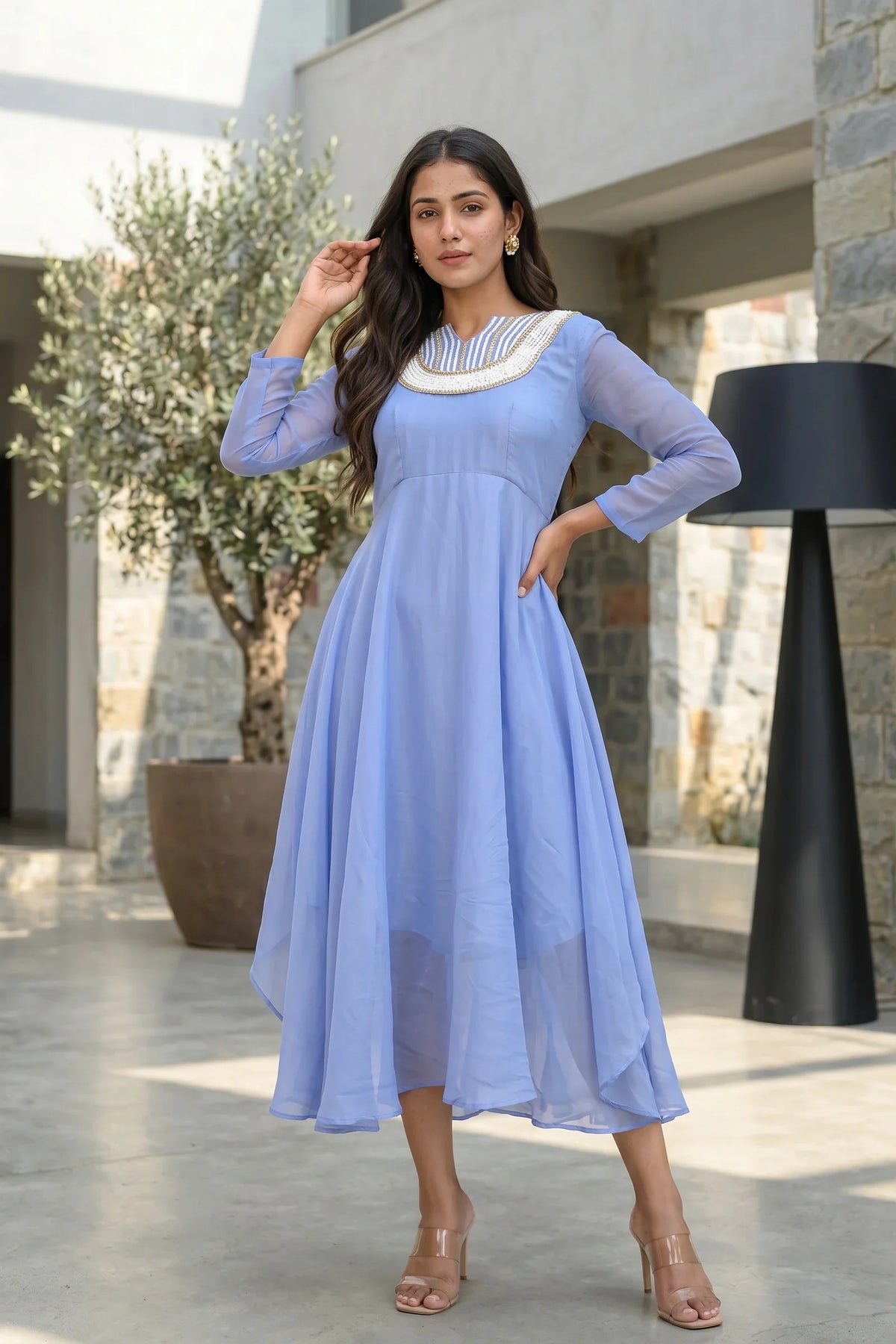
Georgette is lighter and slightly more textured. It is our default recommendation for sarees worn to cocktail parties and sangeet nights. The fabric moves with you on the dance floor.
Crepe is smoother, sleeker, and slightly heavier. It holds pleats better than georgette and photographs with a matte finish that looks refined. We recommend crepe for reception guests and formal evening events where you want a clean, modern silhouette.
Best for: Cocktail parties, sangeet, reception guest, evening events
Avoid if: You want a traditional Banarasi look — these fabrics read modern, not heritage
Tissue: Sheer Drama
Tissue fabric is having a moment. It is a lightweight silk-organza hybrid with a subtle metallic shimmer woven through. Tissue sarees and lehengas catch light in a way that looks almost liquid in photographs.
The trade-off: tissue creases easily and shows every fold. We recommend it only for events where you will be mostly standing or walking — receptions, bridal entries, and stage events. Do not pick tissue for a mehendi or haldi where you will be sitting on the floor.
Best for: Reception, bridal entry, stage events, evening parties
Avoid if: Daytime events, events with a lot of sitting, travel-heavy weddings
What to Avoid When Choosing Fabric
- Picking fabric first, occasion second. Always start with where you will be and what you will be doing. The fabric follows.
- Ignoring the lining. A cheap polyester lining under a beautiful silk outer layer will make you sweat through the event. Always ask about the lining.
- Buying online without a fabric swatch. Fabric photos lie. Colours shift. Texture does not translate on screen. If you cannot visit our boutique, ask us to WhatsApp a fabric swatch video before you order.
- Assuming heavy means premium. Some of the best outfits in our collection are lightweight chanderi and crepe pieces that cost more than heavier raw silk because of the handwork involved.
Our Boutique Picks
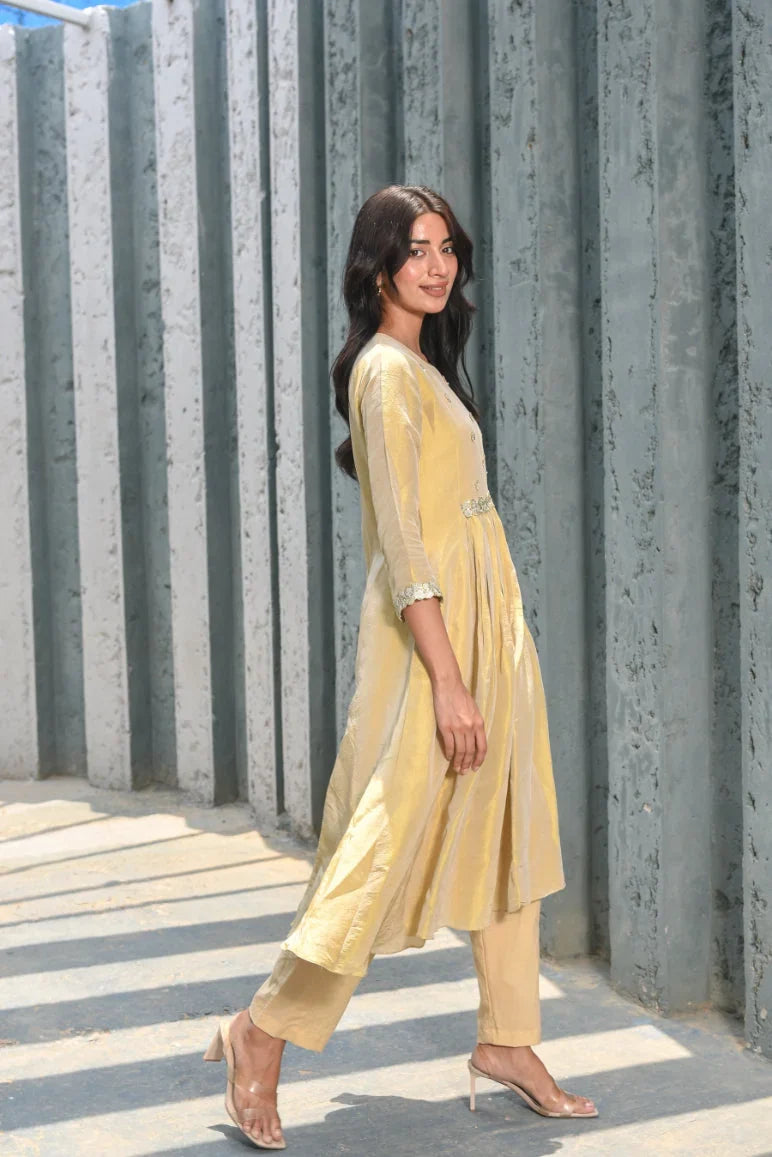
Saroj Jain Pick: Beige Zari Silk Anarkali Set
This is the piece we reach for when a customer wants one outfit that works for both a sangeet and a reception. The zari weave gives it evening polish while the beige tone keeps it versatile. The silk blend is lighter than pure raw silk, making it wearable for 4-5 hour events without fatigue.
Best for: Sangeet, reception, evening formal
Style with: Gold jhumkas, a matching potli bag, and a sleek low bun
Link: Beige Zari Silk Anarkali Set
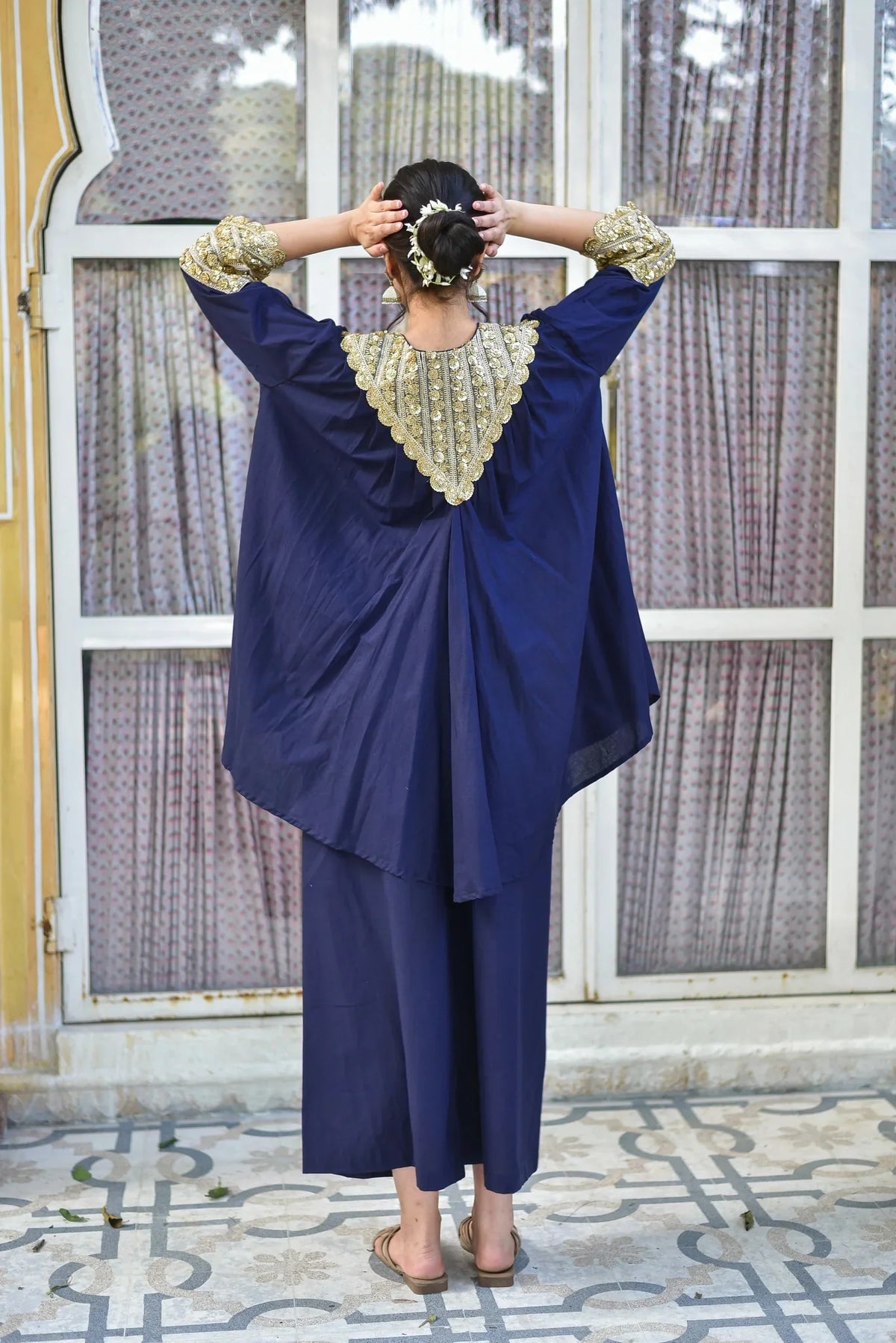
Saroj Jain Pick: Blueberry Gold Glaze Co-Ord Set
We designed this co-ord set for the customer who wants to look festive without the weight of a lehenga. The georgette-crepe blend drapes smoothly and the gold glaze detail catches stage lighting beautifully during sangeet performances. It packs flat, travels well, and does not need professional steaming.
Best for: Sangeet, cocktail party, reception guest
Style with: Statement earrings, metallic heels, and a loose wavy blow-dry
Link: Blueberry Gold Glaze Co-Ord Set
Still deciding? Browse our full fabric selection at sarojjain.com/collections/all or WhatsApp us at wa.me/919314078524 for a personalised fabric consultation.
Frequently Asked Questions
Which fabric is best for a summer wedding in India?
Chanderi and cotton-silk blends are your best options for summer. They breathe, they do not trap heat, and they still look festive with zari or embroidery work. Avoid pure silk and heavy brocade for outdoor summer events — you will be uncomfortable within the first hour.
Can I wear a silk saree for a daytime mehendi?
You can, but we rarely recommend it. Silk is heavy, warm, and stiff. A mehendi involves sitting on the floor for 2-3 hours, eating with your hands, and moving around for photos. A lighter fabric like chanderi or cotton chikankari will serve you better.
What is the difference between georgette and crepe?
Georgette is lighter, slightly textured, and has a soft crinkle feel. Crepe is smoother, heavier, and holds structured pleats better. Both drape well, but crepe reads more formal and modern. Georgette is more forgiving for dancing and movement.
How do I know if the lining is good quality?
Rub the lining between your fingers. If it feels plasticky or makes a crinkly sound, it is polyester — avoid it. Good linings are usually cotton or a soft cotton blend. At our boutique, we always show customers the inner lining before finalising an order.
Does heavier fabric always mean better quality?
No. Weight comes from the weave density and the embellishment, not necessarily from quality. A lightweight chanderi kurta with handwoven zari can cost more and last longer than a heavy machine-embroidered silk piece. Focus on the craftsmanship, not the scale weight.
Ready to find your fabric? Book a consultation at our JP Nagar boutique via meet.sarojjain.com or browse the full collection at sarojjain.com. We will help you pick the right fabric for your event, your body type, and your comfort.
See our latest work: lookbook.sarojjain.com