
How to Coordinate Family Outfits Without Looking Matchy-Matchy
Every Raksha Bandhan lunch, I watch families walk into events looking like someone hit copy-paste on the first outfit and changed only the size.
Matching head-to-toe isn't coordination.
It's a uniform.
Real coordination is harder to pull off. It takes a colour palette, fabric discipline, and knowing which piece anchors the look. At our JP Nagar boutique, we dress entire families for weddings and festivals. Here's what actually works.
- Pick a 3-colour palette for the family, not identical outfits
- Let one person wear the statement piece, others support with solids
- Fabric family matters more than exact colour matching. 60% of coordinated looks fail because of fabric clash, not colour mismatch.
- For siblings on Raksha Bandhan, try tonal coordination . same colour in different shades
Why Matching Outfits Feel Forced
You have seen those family photos. Everyone in the same yellow kurta set. The fabric is the same. The embroidery is the same. The result? Nobody stands out. Coordination should make each person look their best, not disappear into a group costume.
When a mother of three came to our boutique last Diwali, she wanted identical lehengas for herself and two daughters. We gently steered her toward a palette . ivory, dusty rose, and gold. Same festive DNA. Three distinct looks. The photos were stunning because each person had their own moment.
How to Build a Family Colour Palette
Start with three colours. One dominant. One accent. One neutral.
For a Raksha Bandhan lunch: marigold gold as dominant, ivory as neutral, a pop of teal or forest green as accent. The brother wears an ivory kurta with a gold-embroidered Nehru jacket. The sister wears a marigold sharara set with teal jewellery. Different. Connected. Intentional.
| Approach | Look | Photography Result | Best For |
|---|---|---|---|
| Identical outfits | Uniform, flat | No focal point | Dance performances, not families |
| Tonal coordination | Harmonious, intentional | Rich depth, each person visible | Siblings, parent-child, couples |
| Palette-based (3 colours) | Sophisticated, editorial | Magazine-worthy group shots | Weddings, family portraits |
Fabric Discipline Wins Every Time
You can nail the colours and still get it wrong if the fabrics clash. A heavy brocade lehenga next to a light cotton kurta reads as disconnected, even in the same shade of pink. Keep fabrics in the same weight class. If one person wears silk, everyone should lean toward silk or at least satin-finish fabrics.
At our boutique, we recommend anchoring the fabric choice to the most dressed-up person in the group. If the bride's mother is in a silk Kanjeevaram, the rest of the family should avoid matte cotton and choose fabrics with some sheen.
One Statement Piece Per Person
The biggest coordination mistake we see is competing statement pieces. Two embroidered dupattas in the same frame. Three heavy necklaces fighting for attention. Choose one hero piece per person and keep everything else quiet.
If your sister is wearing a heavily embroidered anarkali, you wear a solid kurta with an interesting dupatta. Complement. Do not compete.

Saroj Jain Picks for Coordinated Family Looks
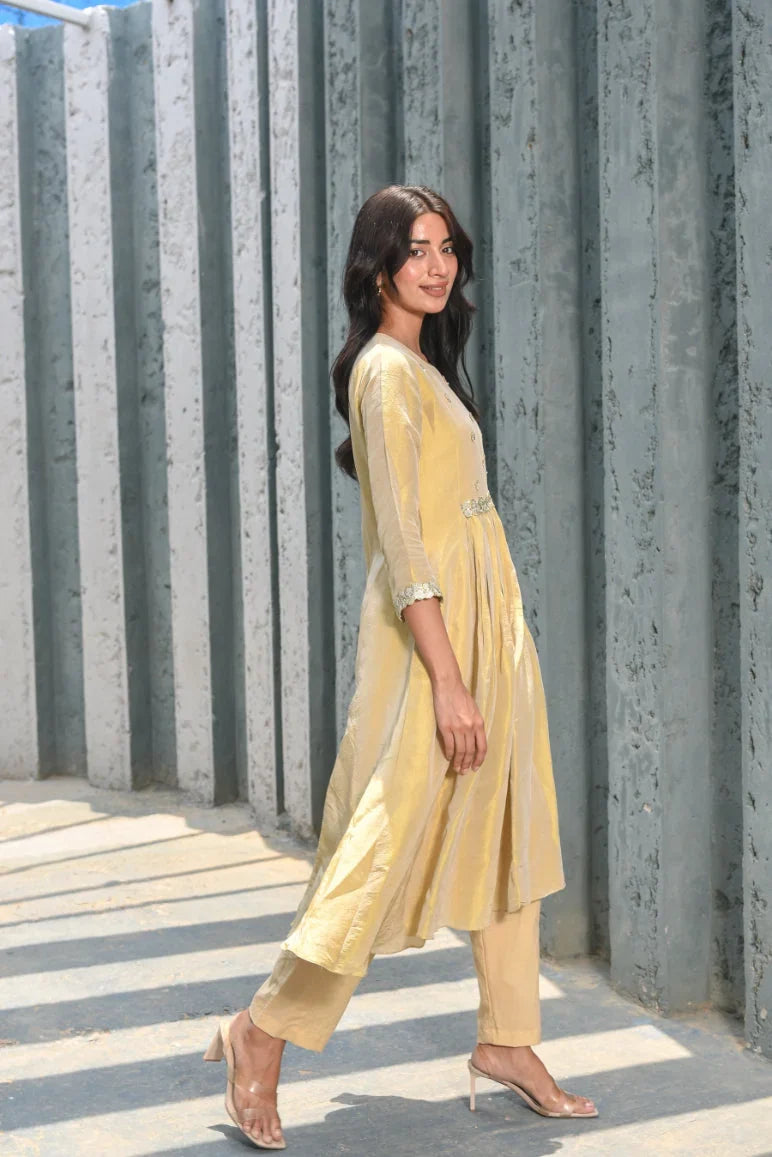
For her: Beige Zari Silk Anarkali Set
An ivory-based anarkali with zari work that anchors any family palette. The neutral base lets others wear colour without clashing. Best for: mothers, sisters hosting the event. Style with: gold jhumkas and a sleek bun. Price: Rs. 3,990.
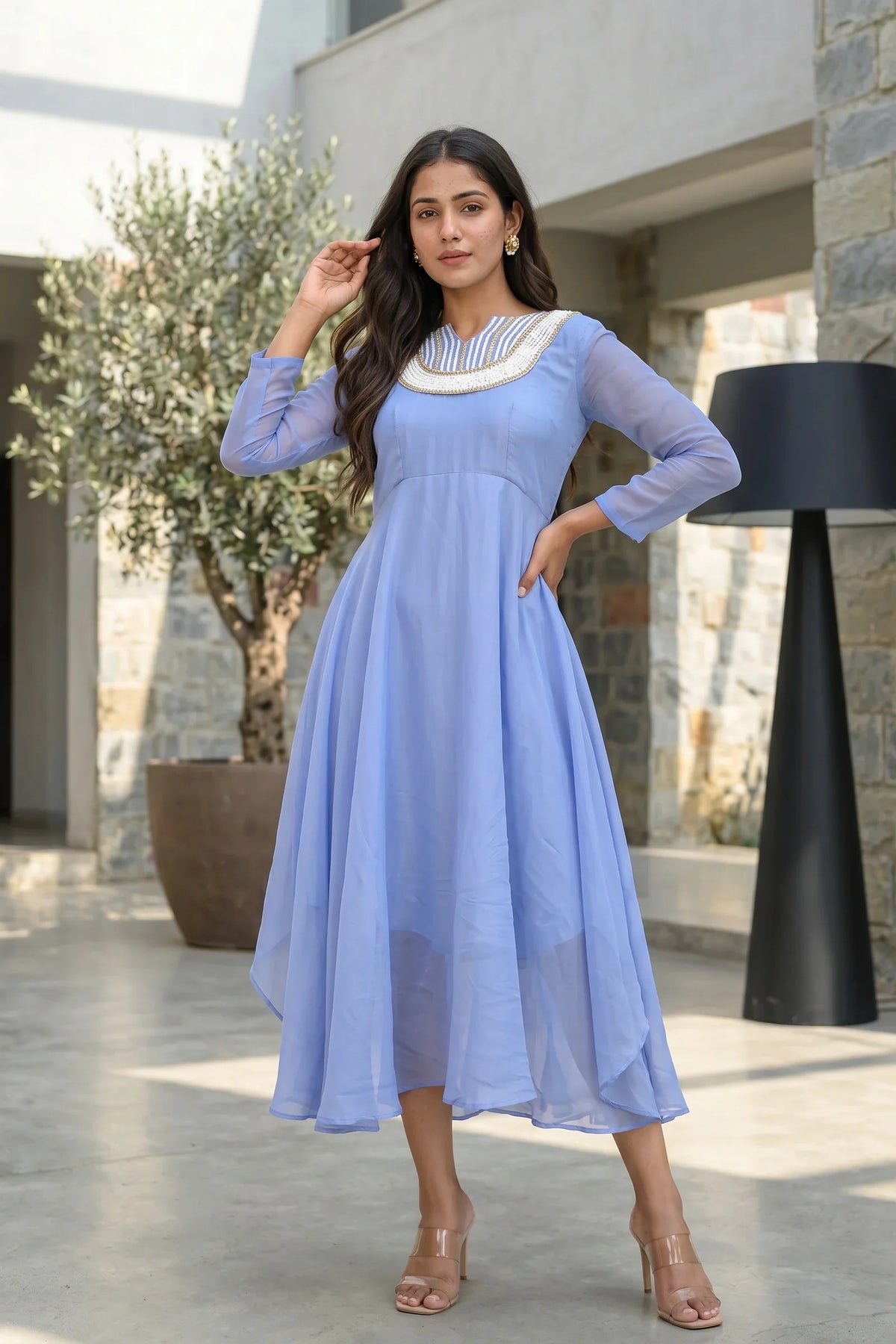
For her: Blueberry Gold Glaze Co-Ord Set
A rich jewel tone that works beautifully as the accent colour in a family palette. Pair with siblings in ivory or gold. Best for: the sister who wants to be noticed. Style with: kundan choker and soft curls. Price: Rs. 3,490.

What to Avoid
- Buying identical outfits in different sizes. It photographs flat and feels lazy.
- Mixing matte and shiny fabrics in the same group photo. One person catches all the light.
- Competing embroidery. More than one heavy zari piece per frame is visual chaos.
- Forgetting footwear and jewellery in the coordination plan. A silver necklace in a gold-toned palette breaks the look instantly.
Raksha Bandhan Sibling Coordination Tip
For siblings, tonal coordination works best. Choose one colour, like dusty pink. The sister wears it as a lehenga. The brother wears a white kurta with a dusty pink pocket square or Nehru jacket. Same colour DNA. Completely different outfits. Connected without being cute about it.
FAQs
Can I coordinate family outfits without buying new clothes for everyone?
Yes. Start with what each person already owns. Find one colour that appears in at least two wardrobes. Build the palette around that colour. Buy one new accessory . a dupatta, a stole, or jewellery . to tie the looks together. At our boutique, we often help clients restyle existing pieces with one new addition rather than starting from scratch.
What colours work best for family photos?
Jewel tones photograph beautifully. Emerald green, sapphire blue, deep maroon. Pastels work for daytime events but can wash out under flash photography. Avoid neon shades and pure white unless it is the bride's outfit. A colour palette of 3 shades . one rich, one soft, one neutral . gives the most editorial-looking results.
Should siblings match or coordinate?
Coordinate. Matching identical outfits on siblings works for kids under 10 but looks forced on teenagers and adults. For Raksha Bandhan, try the tonal approach . same colour family, different intensities, different silhouettes. It photographs as intentional without the copy-paste effect.
How do I coordinate if family members have different style preferences?
Start with the most opinionated person's outfit first. Build the palette around their choice. The person who knows exactly what they want to wear becomes the anchor. Everyone else takes a supporting role with solids, simpler silhouettes, or accessories in the anchor's colour. This reduces decision fatigue and keeps everyone happy.
Can men and women coordinate without looking odd?
Absolutely. Use the woman's dupatta colour as the man's kurta colour. Or pick a common accent colour like gold and use it in embroidery, buttons, or jewellery across both outfits. A man's Nehru jacket in the same shade as a woman's lehenga border is subtle enough to look coordinated without being matchy.
Still figuring out your family's festive look? Browse our collections at sarojjain.com or WhatsApp us at wa.me/919314078524 for a quick styling consult. We coordinate entire families every season. You will leave with a plan, not just outfits.