
Silk Fabrics in Indian Ethnic Wear: An Honest Guide From Our Boutique
Silk Fabrics in Indian Ethnic Wear: An Honest Guide From Our Boutique
Updated: July 2026
Written by: Saroj Jain Styling Team
Not all silk is the same. That sounds obvious. But you would be surprised how many customers walk into our JP Nagar boutique, touch a raw silk kurta, and ask if it is the same as the zari silk lehenga they saw online. It is not. Silk changes everything: how a garment drapes, how it photographs, how hot you feel after two hours at a wedding.
This guide walks through four silk types we stock regularly. Each one has a different personality. Each one suits a different occasion. By the end, you will know exactly which one to pick.
Key Takeaways
- Raw silk is textured and breathable. Best for daytime functions and office wear.
- Tussar silk has a natural golden sheen. Works beautifully for mehendi and haldi.
- Chanderi silk is the lightest option. Ideal for summer weddings and outdoor events.
- Zari silk is the heaviest and most formal. Reserved for receptions and bridal wear.
- All silks need dry cleaning. Store them in muslin cloth, never in plastic covers.
Table of Contents
- What Are the Different Types of Silk Used in Ethnic Wear?
- Raw Silk (Matka Silk)
- Tussar Silk
- Chanderi Silk
- Zari Silk
- Silk Fabric Comparison Table
- How Do You Care for Silk Ethnic Wear?
- FAQs
What Are the Different Types of Silk Used in Ethnic Wear?
At our boutique, we work with four silk types most often. Raw silk (also called matka silk), tussar silk, chanderi silk, and zari silk. According to the Indian Ministry of Textiles, India produces over 35,000 metric tonnes of raw silk annually (Central Silk Board, 2024). But production volume tells you nothing about which one belongs in your wardrobe.
Here is the real difference. Texture. Weight. Sheen. Breathability. And most importantly, how each one behaves after three hours of sitting through a puja or dancing at a sangeet.
How Can You Tell Different Silk Types Apart?
Touch is the quickest test. Raw silk feels slightly coarse, almost like a fine linen. Tussar is textured but smoother, with a natural gold tint. Chanderi is whisper-light. You barely feel it on your skin. Zari silk is heavy. When you pick up a zari silk anarkali, the weight tells you this is serious occasion wear.
A trick we use at the boutique: hold the fabric up to natural light. Raw silk scatters light. Tussar catches it unevenly because of the slub texture. Chanderi lets light through almost like a translucent curtain. Zari silk reflects light off the metallic threads woven in. That test alone tells you which silk you are holding.
Raw Silk (Matka Silk)
Raw silk is what we recommend most for office ethnic wear and daytime functions. It has texture. You can see the slubs, the slight unevenness, the natural fibre character. That is the point. It is not supposed to look machine-perfect.
Raw silk kurtas and sarees breathe well in Bangalore humidity. They do not cling. They hold their shape through long hours. A customer recently told us she wore a raw silk kurta set to a full-day conference and forgot she was in ethnic wear. That is the kind of feedback we chase.
Best for: Office ethnic wear, daytime pujas, housewarming events.
Avoid if: You want shine or lustre. Raw silk is intentionally matte.
Tussar Silk
Tussar silk is the wild silk. It comes from silkworms that feed on forest trees, not mulberry leaves. That diet gives tussar its signature golden-beige tone. You cannot dye tussar the way you dye mulberry silk. The natural colour always peeks through.
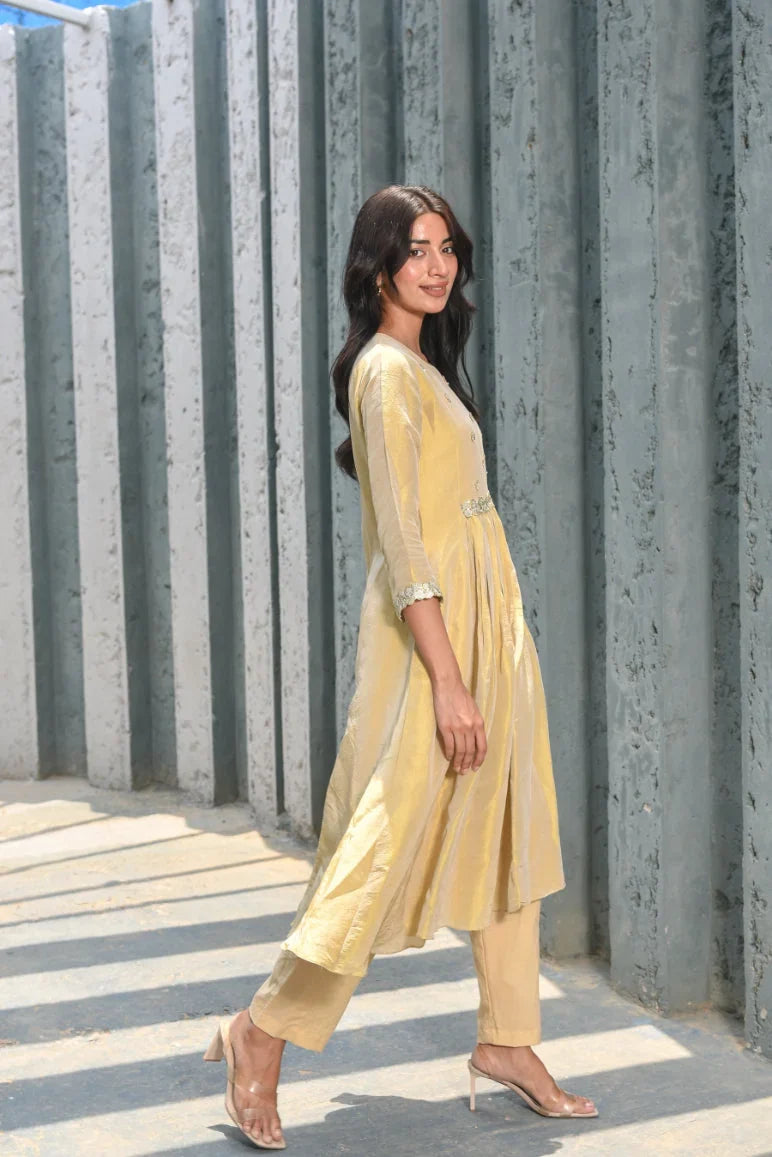
We love tussar for mehendi and haldi functions. The gold undertone flatters warm skin tones. It photographs beautifully in outdoor light. And the slubby texture hides creases better than smooth silks. If you are sitting cross legged on the floor for two hours of mehendi, tussar forgives you.
Best for: Mehendi, haldi, outdoor daytime weddings.
Style with: Temple jewellery or oxidized silver. Skip heavy gold sets; they compete with the fabric's natural sheen.
Chanderi Silk
Chanderi silk is what you pack for a summer wedding. It weighs almost nothing. Traditional chanderi comes from Madhya Pradesh and blends silk with cotton or zari. The result is a fabric that floats. It does not drape heavy. It moves with you.
At the boutique, we suggest chanderi to bridesmaids who will be running around coordinating things. You need an outfit that does not slow you down. Chanderi sarees and kurtas let you move fast, look polished, and survive 35-degree heat without melting.
Best for: Summer weddings, outdoor receptions, bridesmaid duties.
Avoid if: You want a structured, sculpted silhouette. Chanderi flows; it does not hold shape like raw silk.
Zari Silk
Zari silk is the heavyweight. The metallic zari threads woven into the silk give it structure, shine, and serious presence. This is what brides wear. This is what you wear to a reception when you want to look like you made an effort.
We stock zari silk anarkalis and lehengas at the boutique. The Beige Zari Silk Anarkali Set is one of our most requested pieces for wedding guests. The gold zari work catches light beautifully under mandap lighting and evening bulbs.

Best for: Receptions, bridal wear, evening functions, Diwali parties.
Avoid if: You will be outdoors in May. Zari silk traps heat. You will regret it by 8 PM.
Silk Fabric Comparison Table
| Silk Type | Weight | Sheen | Best Occasion | Breathability |
|---|---|---|---|---|
| Raw Silk (Matka) | Medium | Matte | Office, day pujas | High |
| Tussar Silk | Medium-light | Natural gold | Mehendi, haldi | High |
| Chanderi Silk | Very light | Subtle sheen | Summer weddings | Very high |
| Zari Silk | Heavy | High shine | Receptions, bridal | Low |
How Do You Care for Silk Ethnic Wear?
Silk is not forgiving. One wrong wash and a Rs. 8,000 kurta becomes unwearable. We tell every customer at the boutique: dry clean only. No exceptions. No hand wash with mild detergent. No cold water soak. Dry clean.
Storage matters just as much. Never hang heavy silk garments. The weight stretches the shoulders and distorts the shape. Fold them. Wrap them in muslin cloth, not plastic. Plastic traps moisture. Trapped moisture breeds mildew. And mildew on silk is permanent. You cannot fix it. We have seen customers bring in silk sarees ruined by one monsoon season in a plastic cover. It is heartbreaking and entirely preventable.
For zari silk specifically, keep the garment away from direct contact with other embroidered pieces. The zari threads can snag on neighbouring fabrics. Store each zari piece separately, folded with acid-free tissue paper between the folds.
What Silk Should You Pick? A Decision Guide
If you want breathability above all else: Chanderi silk. Nothing lighter exists in the silk family.
If you want texture and a natural look: Raw silk or tussar. Raw silk is more versatile; tussar has more personality.
If you want to look like the main character: Zari silk. It demands attention. Wear it to evening events where lighting flatters metallic threadwork.
If you are shopping for a summer outdoor wedding: Chanderi or tussar. Both breathe. Both photograph well in natural light.

Silk Fabrics for Ethnic Wear . FAQs
Can I wear raw silk to a wedding?
Yes, if it is a daytime wedding or a mehendi function. Raw silk looks understated. It does not compete with the bride. For evening receptions, skip raw silk. It photographs flat under artificial light.
Is chanderi silk real silk?
Traditional chanderi is a silk-cotton blend, often with zari. It contains real silk but is blended. The silk content ranges from 30% to 70% depending on the weave. The cotton gives it breathability; the silk gives it lustre.
How do I know if a silk fabric is genuine?
Three tests we use at the boutique. The burn test: real silk smells like burnt hair and leaves a crushable ash. Synthetic silk melts into a hard bead. The touch test: real silk warms up quickly in your hand. The ring test: a silk saree can pass through a finger ring; synthetic fabrics bunch up.
Can I store silk in a cupboard with mothballs?
No. Mothballs contain naphthalene, which discolours silk over time. Use neem leaves or cedar blocks instead. And always store silk in muslin, never in plastic.
Does zari silk scratch the skin?
Some zari work can feel rough on sensitive skin, especially around the neckline and sleeves. At our boutique, we check the inner lining on every zari piece. A good zari silk garment has a soft cotton or satin lining that sits between the embroidery and your skin.
Which silk is best for Bangalore weather?
Chanderi and raw silk. Bangalore humidity makes heavy fabrics uncomfortable after a few hours. Lightweight silks breathe. Tussar also works well for shorter functions. For full-day events in Bangalore, we always steer customers toward chanderi.
Still not sure which silk fabric suits your next function? Browse our silk collection at sarojjain.com or WhatsApp us at wa.me/919314078524. We help customers pick the right silk for their occasion every day at our JP Nagar boutique. No guesswork. Just honest advice from people who work with these fabrics daily.
Understanding silk fabrics in Indian ethnic wear starts with knowing what each type brings to the table. Now you do.