
Wedding Shopping Checklist: What to Buy and When
Wedding Shopping Checklist: What to Buy and When
Updated: August 2026
Written by: Saroj Jain Styling Team
Reviewed by: Saroj Jain Boutique Team
Most brides start wedding shopping with a long list of questions and no clear order to answer them in. A wedding shopping checklist fixes that. It tells you what to buy, when to buy it, and what you can safely leave for later. We see the same confusion at our JP Nagar boutique every wedding season, so here is the timeline we walk our own clients through.
Key Takeaways
- Start six to eight months out so custom pieces get time for sourcing, embroidery, and fittings.
- Buy your bridal outfit first, then the reception look, then each pre-wedding function outfit.
- Keep a separate budget for alterations, which nearly every outfit needs.
- Book blouse stitching and trial fittings early, never at the last minute.
When Should You Start Wedding Shopping?
We tell brides to begin six to eight months before the date. Custom lehengas and gowns take time. Fabric has to be sourced, embroidery done by hand, and two trial fittings scheduled before the final stitch. If your wedding falls in peak season, good tailors and designers book up fast, so lock in your outfit as soon as the venue is confirmed.
What Belongs on Your Wedding Shopping Checklist
Here is the order of priority we give every bride who walks in:
- Bridal outfit and matching blouse
- Reception or evening look
- Mehendi, haldi, and sangeet outfits
- Footwear for each function
- Jewellery, including one statement or heirloom set
- Dupattas, accessories, and a spare blouse
What to Buy First: A Simple Timeline
| Timing | What to Buy |
|---|---|
| 8 to 6 months out | Bridal outfit, reception look |
| 5 to 3 months out | Function outfits, footwear, jewellery |
| 2 months to the date | Final fittings, spare blouse, emergency kit |
Fabric and Fitting Tips From the Boutique
During a fitting we always ask one question: can you sit cross-legged in this? If the answer is no, we adjust the drape or suggest a lighter fabric. Bangalore weather turns quickly, so we lean toward breathable silks and georgettes for daytime functions. A heavy lehenga looks grand in photos but feels heavy by hour two. Buy for the day you will actually have, not the day you imagine.
What Most Brides Forget
Three things slip through almost every checklist we see. A spare blouse, because one ripped hook can end a night. Comfortable footwear you can stand in for hours, not just look at. And a small emergency kit with safety pins, double-sided tape, and a mini sewing kit. Pack all three before the functions begin.
Two Pieces Worth Considering Early

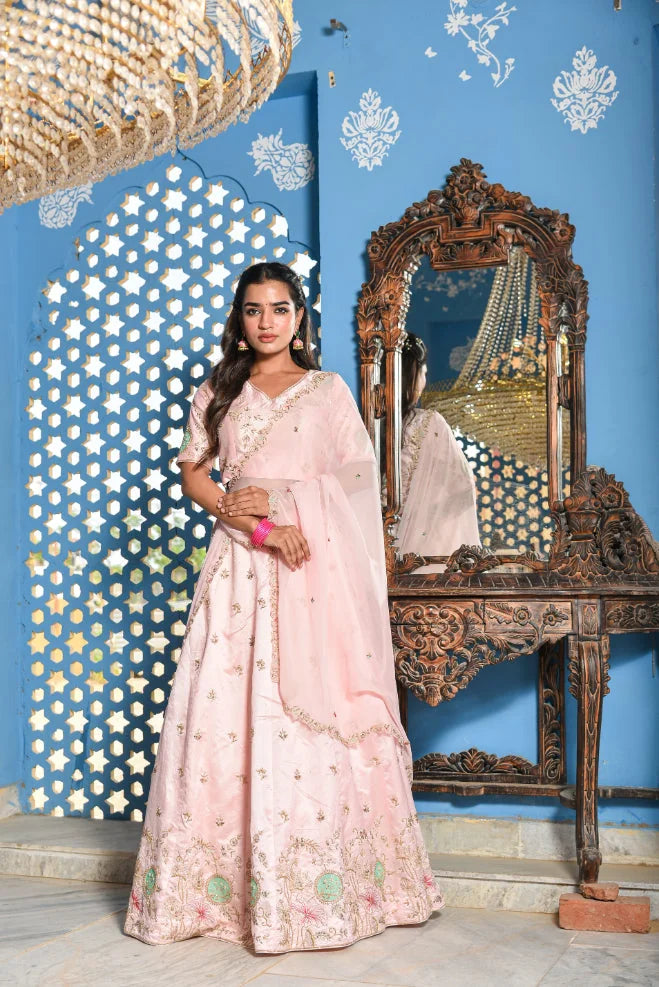
For a bride who wants a classic lehenga with rich handwork, a blush pink heavy embroidery lehenga set carries the ceremony well and photographs beautifully.

A blue Mastani anarkali set works for mehendi, sangeet, or a smaller reception. It is lighter than a lehenga, so you can sit, eat, and dance without fuss.
FAQs
When should I start wedding shopping?
Six to eight months before the date. Custom outfits need time for fabric sourcing, embroidery, and at least two trial fittings.
Do I need a different outfit for every function?
Not always. You can reuse a reception outfit for a sangeet or a mehendi outfit for a smaller gathering. Start with your bridal and reception looks, then fill in.
How many trial fittings will my outfit need?
Two is typical for a custom piece. The first checks the cut and drape, the second refines the fit before the final stitch.
Can I shop for bridal wear online?
Yes. Browse the collection on sarojjain.com, then book a consultation to confirm sizing and details before the order is cut.
What should I keep in a wedding day emergency kit?
Safety pins, double-sided tape, a mini sewing kit, spare blouse hooks, comfortable flats, and a small mirror.
Still working through your wedding shopping checklist? Visit sarojjain.com to explore the collection, or book a private consultation for custom bridal wear at our JP Nagar boutique.