
Wedding Shopping Checklist: What to Buy First and What to Skip
Wedding Shopping Checklist: What to Buy First and What to Skip
Updated: August 2026
Written by: Saroj Jain Styling Team
Reviewed by: Saroj Jain Boutique Team
Your wedding date is set, and the excitement is real. But so is the panic over everything you need to buy. I see it at our JP Nagar boutique every week. A bride walks in with a long list and no clear order of what to buy first. The result is rushed decisions and last-minute stitching stress. This wedding shopping checklist gives you a calm, practical order to follow, so you spend less and panic less.
Key Takeaways
- Start your trousseau three to four months before the wedding, not three weeks before.
- Buy your bridal outfit first, then match every other piece to its colour family.
- Five to seven outfits cover most weddings. More than that usually stays unworn.
- Set aside 15 to 20 percent of your budget for stitching and alterations.
When Should You Start Wedding Shopping?
Start three to four months before the date. The bridal outfit alone often needs four to six weeks for stitching and trial fittings. Brides who begin early pay less for rush work and get better fits. If your wedding is under eight weeks away, focus on the bridal outfit and one reception look, and skip everything else.
What Should You Buy First?
The bridal outfit comes first. Every other piece hangs off its colour and silhouette. Once you pick your lehenga or saree, you can match the sangeet, mehendi, and reception outfits to its tones. This simple order stops you from buying pieces that clash or go unworn.
How Many Outfits Do You Actually Need?
Five to seven outfits cover most weddings. Think one for mehendi, one for haldi, one for sangeet, the main bridal look, and one or two for the reception and engagement. You can rewear a lighter piece across two smaller functions. Nobody will notice. More outfits than this usually sit in the wardrobe with the tags still on.
What Do Most Brides Forget?
Alterations and undergarments. A lehenga that fits well in the trial will still shift after the blouse is stitched, so book a final fitting about a week before. Shapewear, padded blouse cups, and the right petticoat change how every outfit sits. We also tell brides to keep a small kit on hand: safety pins, double-sided tape, a spare dupatta pin, and one lipstick that works with every look.
What Should You Avoid?
Do not buy everything in one weekend. Decision fatigue leads to outfits you do not love. Also avoid ordering a heavy embroidered bridal outfit online without a video call or a proper measurement guide. Fabric weight and drape are hard to judge from a photo alone.
Our Picks for Your Trousseau
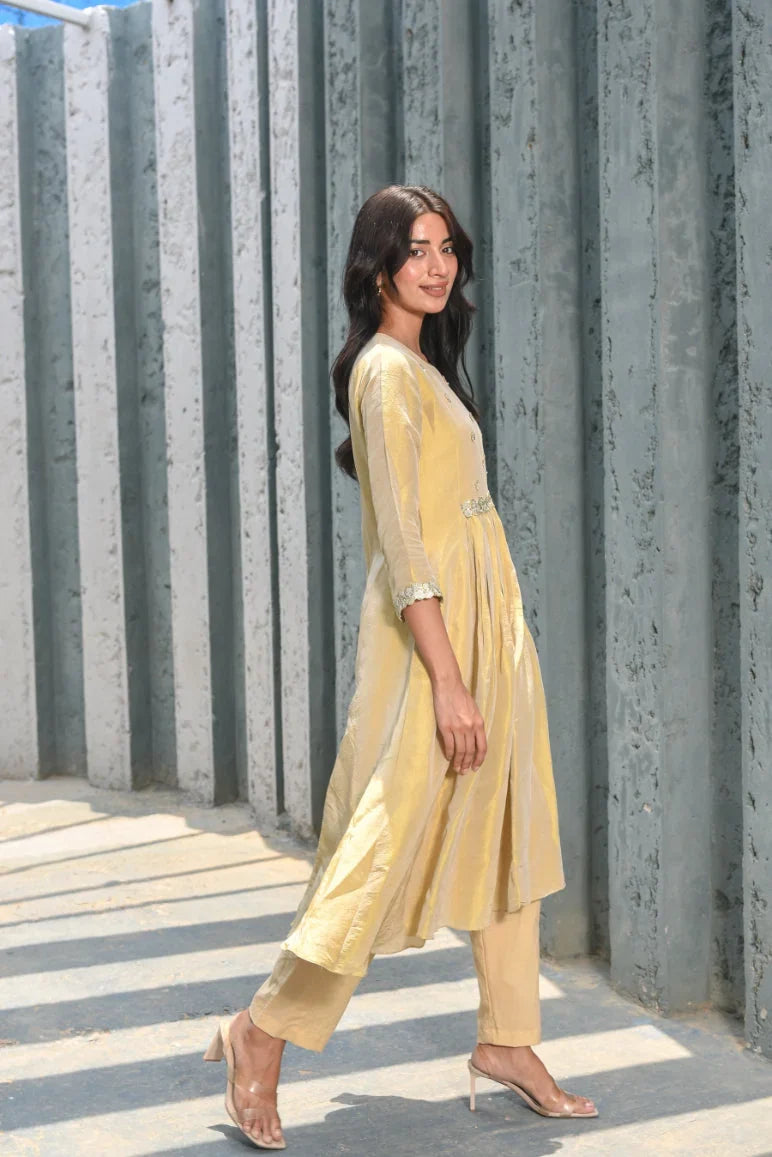
For the main bridal look, a hand-finished lehenga with a stitched blouse photographs well and sits comfortably through hours of functions. For the lighter day events, a zari silk anarkali or a soft bandhej kurta set keeps you comfortable without looking plain. Browse the full collection at sarojjain.com, or message us on WhatsApp for a styling call.
FAQs
When should I start wedding shopping?
Start three to four months before the wedding. The bridal outfit alone needs four to six weeks for stitching and trial fittings.
How many outfits do I need for my wedding?
Five to seven outfits cover mehendi, haldi, sangeet, the bridal look, and the reception. You can rewear a lighter piece across smaller functions.
Should I buy my bridal outfit online?
You can, but only with a video call or an accurate measurement guide. Heavy embroidery and fabric drape are hard to judge from photos alone.
What do brides forget to budget for?
Stitching, alterations, shapewear, and the right petticoat. Set aside 15 to 20 percent of your budget for these.
Can I wear one outfit to two functions?
Yes. A lighter anarkali or kurta set works for both mehendi and a daytime puja. Change the dupatta or jewellery to make it feel new.
Ready to start your trousseau? Visit our boutique in JP Nagar or browse the full collection at sarojjain.com. You can also reach us on WhatsApp for a free styling call.